

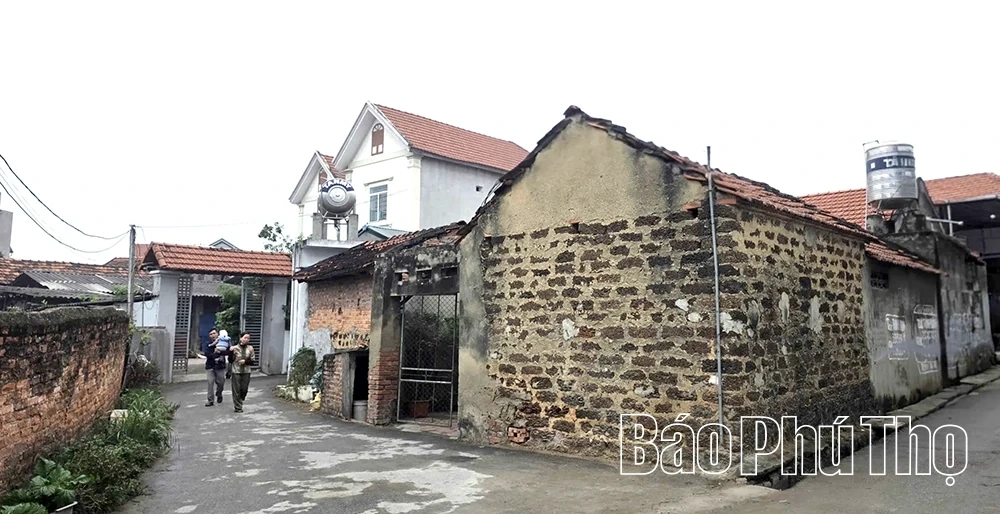
The tranquil beauty of Thich Chung village lies in its narrow, winding alleys, surrounded by dark yellow laterite stone walls that have withstood the test of time.
"Treasures" from the heart of Cactus Hill
Arriving in Binh Tuyen on a late afternoon at the end of the year, as the biting cold began to envelop the midland region, I was amazed by the tranquil beauty of Thich Chung village. Without ornate decorations or dragon and phoenix carvings, Thich Chung welcomes visitors with its narrow, winding alleys, surrounded by dark yellow laterite stone walls, as enduring as the very character of the people here.
Thich Chung village was originally one of the six ancient villages of the former Ba Ha district. According to the village's genealogy, 500 years ago, their ancestors knew how to touch the earth to awaken the shimmering golden laterite stones. Mr. Duong Van Chan, an elder in the village, his eyes lit up as he recounted the legend of Cactus Hill: "In the old days, the village had a strangely high hill in the middle of a flat area. People said it was the back of a dragon rising up. When they dug down, they found precious stones, and the villagers took the 'cactus' to build houses. Perhaps that's why the houses here are not only durable but also bring good fortune."

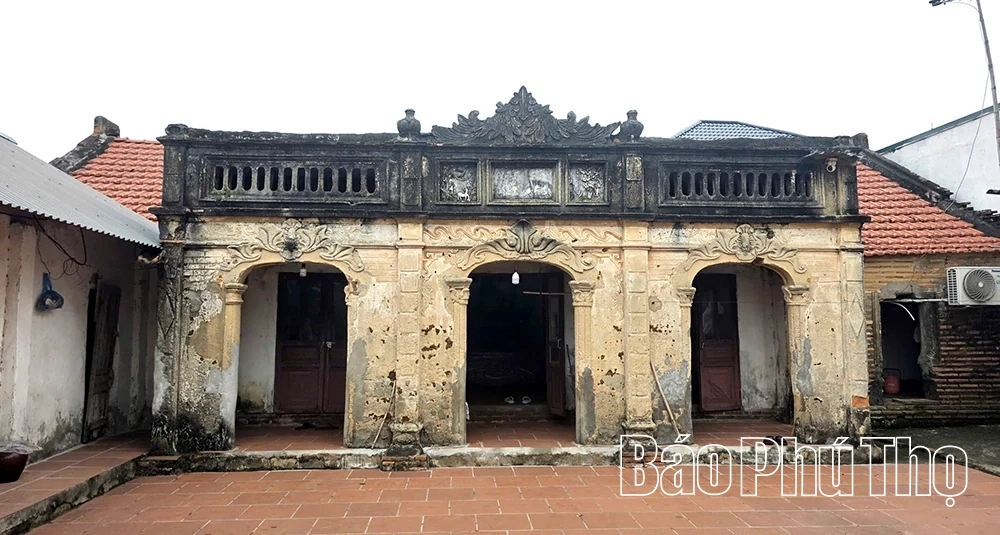
The laterite stone house of Mr. Tran Van Mon's family is the only house in Thich Chung that still retains its original architecture.
In reality, it was a massive natural laterite quarry. From this treasure, a class of stone-cutting artisans emerged. This profession was arduous and selective; only strong, intelligent young men were taught the trade. Stonecutters in those days were strictly categorized: novices were only allowed to cut stone; master craftsmen had to have keen eyesight, know how to "explore" the rock veins, and design structures to withstand the ravages of time.
The house "breathes" with time.
Leading me into the oldest house in the village, Mr. Tran Van Mon (over 60 years old) slowly stroked the rough stone surface of the wall, which is more than a century old. This is the only house in Thich Chung that still retains its original laterite stone architecture, from the gate to the surrounding walls and the main room.

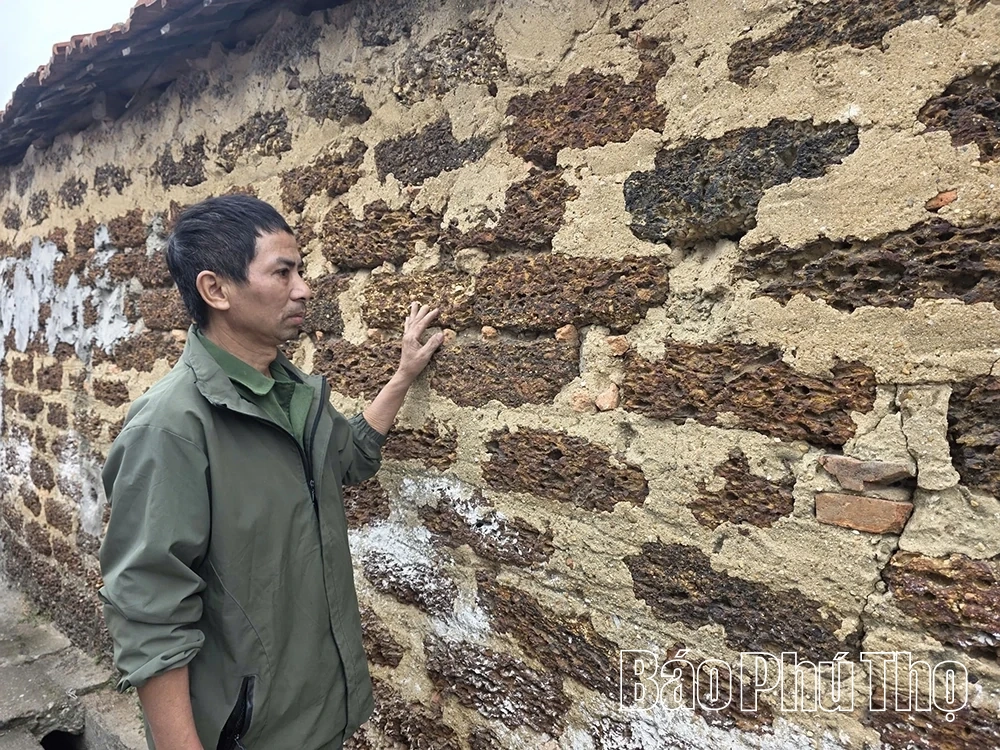
The laterite stone house of Mr. Tran Van Mon's family was tightly fitted together using a mixture of clay and dry sand.
"And yet, this house has been inhabited by four generations of the Tran family," Mr. Mon said proudly. Stepping through the doorway, a refreshing coolness washed over me, even though it was midday. Mr. Mon explained the miraculous property of laterite stone: it doesn't conduct heat. "It's cool in summer and warm in winter. This type of stone is amazing; it's exposed to sun and rain for hundreds of years. The outer layer may become pitted, but the core of the stone becomes harder and harder, as solid as cold iron. Even if you light a fire right next to the wall, the other side won't feel hot."
Upon closer observation, the laterite stone walls, 40-50cm thick, are tightly joined together with a mixture of clay and dry sand. Without a single meter of steel or a bag of cement, the house has remained unshaken for over 100 years, even during the most severe storms of this hilly region.
Amidst the currents of modernity
In the 1970s, Thich Chung was once the "capital" of laterite stone, with 100% of the houses bearing the distinctive yellow color. However, by 2026, even searching extensively throughout the village, only a few ancient houses remain. The encroachment of fired bricks, concrete, and modern architecture has gradually erased the mossy hues of the past.
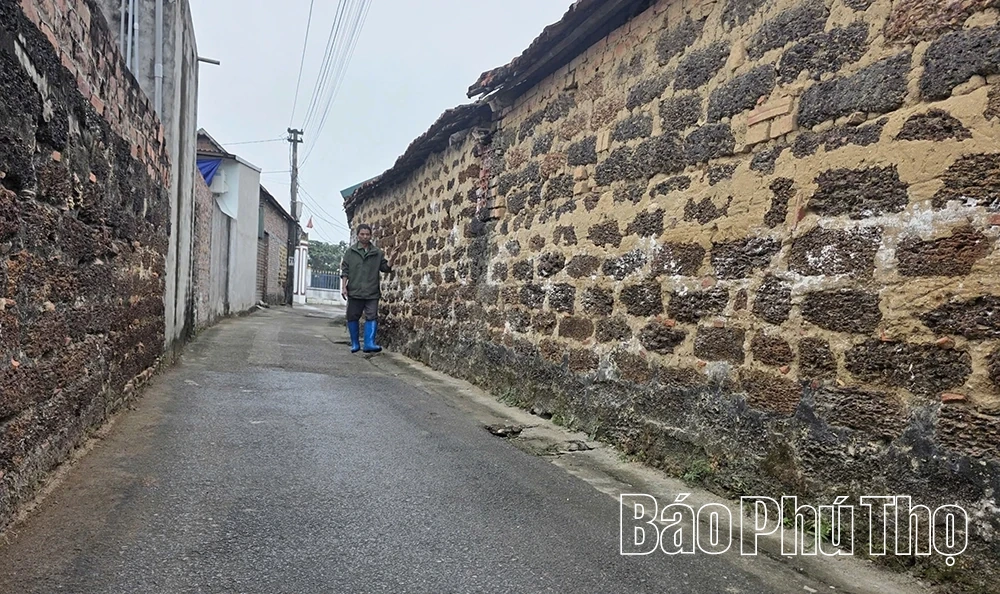
These fences, made of laterite stone with a rough surface, are over a century old.
Comrade Tran Thi Thanh Tam, Chairwoman of the People's Committee of Binh Tuyen commune, could not hide her regret: "In the North, apart from Thach That or Ba Vi (Hanoi), there are few places that preserve the clear traces of laterite stone like Thich Chung. However, the stone source at Xuong Rong hill has now been depleted. To obtain stone, one has to dig very deep, incurring extremely high labor costs. Preserving ancient architecture is facing a huge challenge between the economic and cultural dilemmas."
Leaving Thich Chung at sunset, the deep yellow hues of the laterite stone walls deepened under the setting sun. Mr. Mon's family home now resembled a "living museum," a quiet note amidst the chaotic symphony of urbanization. It was not merely a shelter from the rain and sun, but a fossilized memory, recounting an era when humanity and nature were harmoniously and enduringly intertwined.
Ngoc Thang
Source: https://baophutho.vn/lang-da-ong-tram-tuoi-giua-mien-dat-co-246802.htm

















































































Comment (0)