

The Thuy Ba area, now part of Vinh Thuy commune, Quang Tri province, was formerly the Thuy Ba district. When our ancestors came here from the North to clear the land, surrounded by dense forests, they had to overcome wild animals, especially tigers, in order to survive and settle down. They were forged in the harshness of nature, becoming resourceful, resilient, and courageous people.
The village of Thủy Ba now comprises three hamlets: Thủy Ba Đông, Thủy Ba Tây, and Thủy Ba Hạ. Generations still cherish the story of the formation of this unique village, from the time their ancestors first arrived here until today.
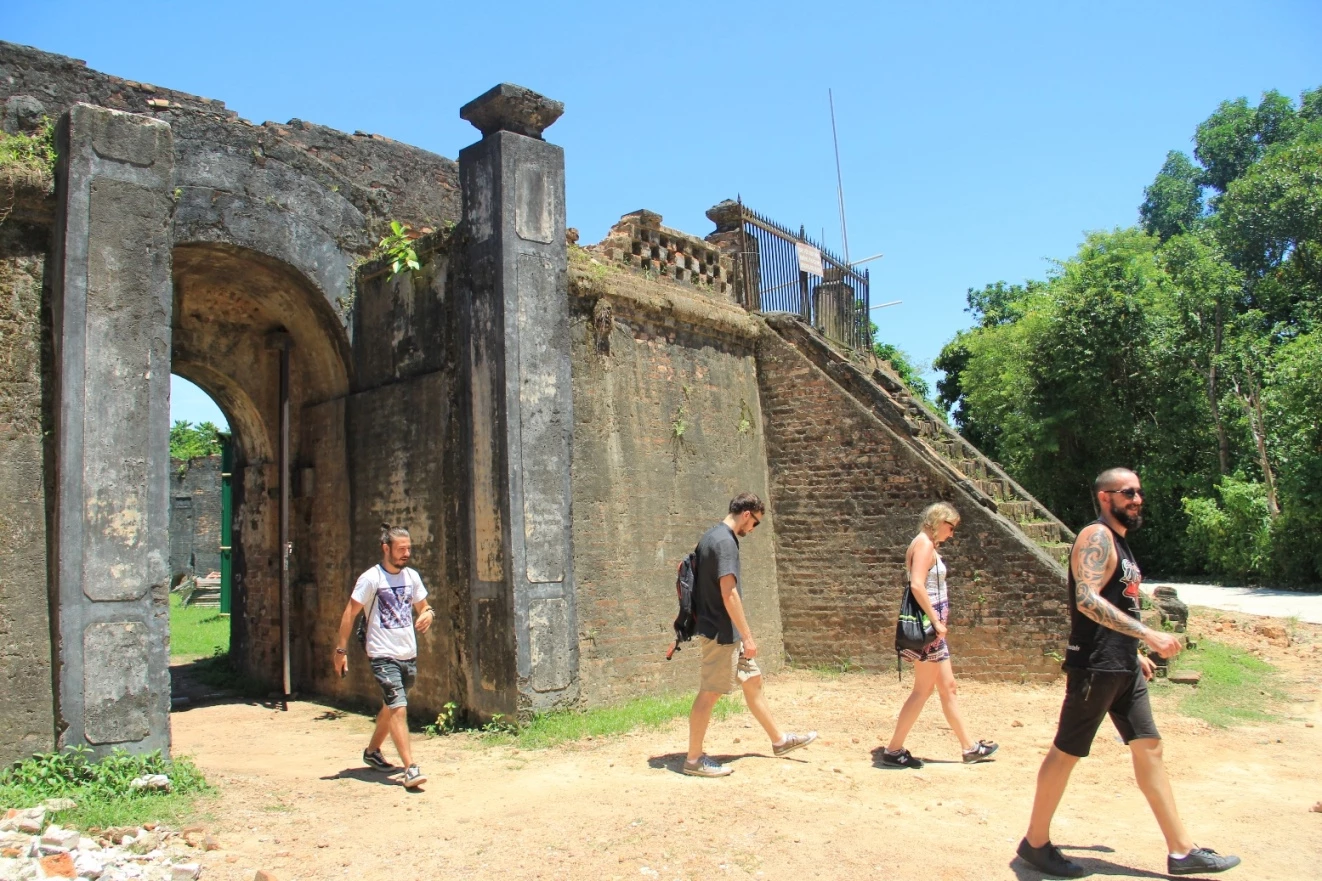 |
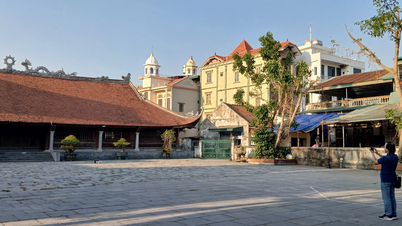
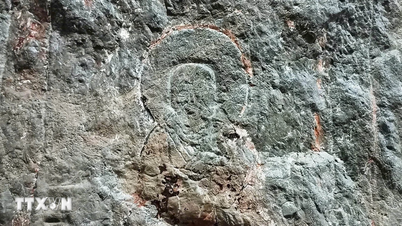
| Tiger Fist historical site in Hue - Photo: XD |
During a previous field trip to Thuy Ba, I met the tiger-hunting hero Nguyen Dang Hap (now deceased). He recounted his stories of the past with such enthusiasm, as if they were legends. Perhaps it was the harsh natural environment that forged this unique profession: tiger hunting. Living amidst ferocious beasts, the people here were able to cultivate an iron will.
He enthusiastically recited the folk poem about Thuy Ba catching a tiger: "On the sixth day of the lunar month, the king issued a decree to the district, ordering Thuy Ba to go immediately. The boat sailed to the Thua Thien pass, where the fierce demons and poisonous spirits were causing unrest in the country... Thuy Ba stood up in unison, hearing my shout, the tiger leaped up..." Looking at the old man with his white beard and hair, I imagined the glorious youth of those who created the legend of subduing the "king of the jungle".
Later, we sought out another rare witness, Mr. Nguyen The Dai (now deceased), who was nearly 90 years old at the time. Despite his advanced age, he still remembered the details of his father's tiger trapping with profound pride. Through his passionate storytelling, we felt as if we were reliving a vivid film about the courage of the people of this land.
According to historical records, the king "commanded" hunters from Thuy Ba to the capital to catch tigers to serve in deadly battles between the royal elephants and tigers at the Tiger Arena in Hue, for the king, officials, and subjects to watch a few times a year. A single fight involved not just a few tigers, but sometimes dozens of tigers that had been kept in cages beforehand.
 |
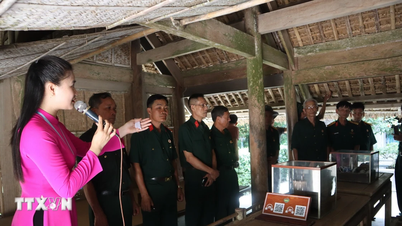
| The author converses with the villagers of Thuy Ba - Photo: XD |
The tiger-hunting group from Thuy Ba was known as the Vong Thanh group. In the article "Quang Tri Province" published in the journal "Do Thanh Hieu Co" (BAVH) in 1921 by the French Consulate A. Laborde, it is written: "One day in Thuy Ba Thuong village, a crow flew by and dropped a human bone. A medium claimed it was the bone of a god named Mai Quy Dong. Immediately, people built a temple to worship the god, and the god often possessed the medium's spirit to teach the people the art of tiger hunting." Therefore, the people of Thuy Ba became famous for their tiger-hunting skills and were always assigned the task of catching tigers to fight against the royal elephants. Sometimes, the people of Thuy Ba would even bring the tiger trap to Hue to offer the king the honor of personally killing a trapped tiger.
Researcher Phan Thuan An once described this battle: "The female elephant entered the arena seemingly proudly, walking back and forth in front of the tiger without a trace of fear. King Thanh Thai praised her, saying, 'This one is very courageous.' But suddenly, the tiger jumped onto the elephant's forehead. The elephant shook it off, and the tiger fell. The tiger jumped back onto the same spot. Enraged, the elephant roared, rushed forward, and used its head to forcefully push the tiger against the edge of the arena, using its immense strength to ram and press it tightly. When the elephant lifted its head, the tiger fell to the ground, and the elephant used its feet to crush the tiger to death..." The battle usually ended with the elephant's victory, symbolizing the elephant's military might and the king's authority.
Building on the traditions of a resilient and generous land, the local government and people are striving to develop socio -economic conditions. Today, Thuy Ba, within Vinh Thuy commune—a unit awarded the title of Hero of the People's Armed Forces during the resistance war and Hero of Labor during the đổi mới (renovation) period—is a prime example of new rural development.
Chairman of the People's Committee of Vinh Thuy commune, Thai Nam Son, shared: "The Party Committee, the government, and the people of Vinh Thuy commune are determined to continue the heroic tradition, build a strong national unity, and strive together to build our homeland into a model new rural commune."
The story of the tiger-hunting village, famous over time, may fade into the past, but the indomitable spirit, intelligence, and courage of the people of Thuy Ba will flow forever in the veins of future generations, creating the unique heroism and dignity of the people of Quang Tri.
Pham Xuan Dung
Source: https://baoquangtri.vn/van-hoa/202604/lang-thuy-ba-bat-cop-noi-danh-bbf1328/













![[Photo] General Secretary and President To Lam and his wife begin their official visit to Thailand.](https://vphoto.vietnam.vn/thumb/1200x675/vietnam/resource/IMAGE/2026/05/27/1779881249412_anh-man-hinh-2026-05-27-luc-18-10-51.png)




























































Comment (0)