

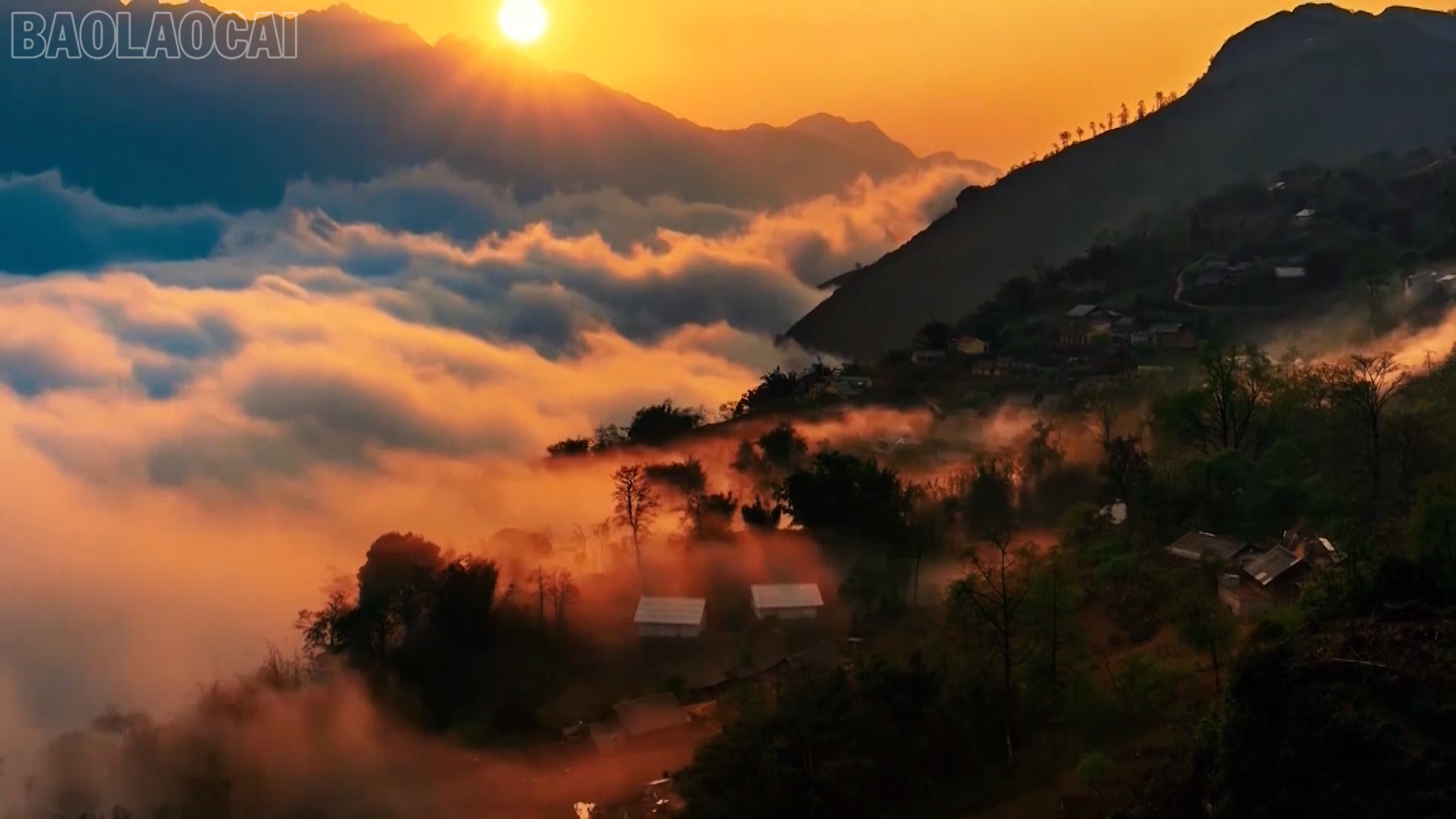
When traditional culture "lives" in the village.
Lao Cai is a land where many ethnic groups converge and live together. Each ethnic group preserves and promotes its own unique and distinct traditional culture, from customs, clothing, language, and beliefs to daily life habits, farming practices, and interactions with nature.
The Mu Cang Chai region possesses a rich and diverse cultural heritage system with many forms, deeply rooted in the traditional identity of the Mong ethnic group – who make up over 90% of the local population. These traditional cultural values are preserved and thrive within the community, closely linked to creating livelihoods, escaping poverty, and promoting sustainable development.
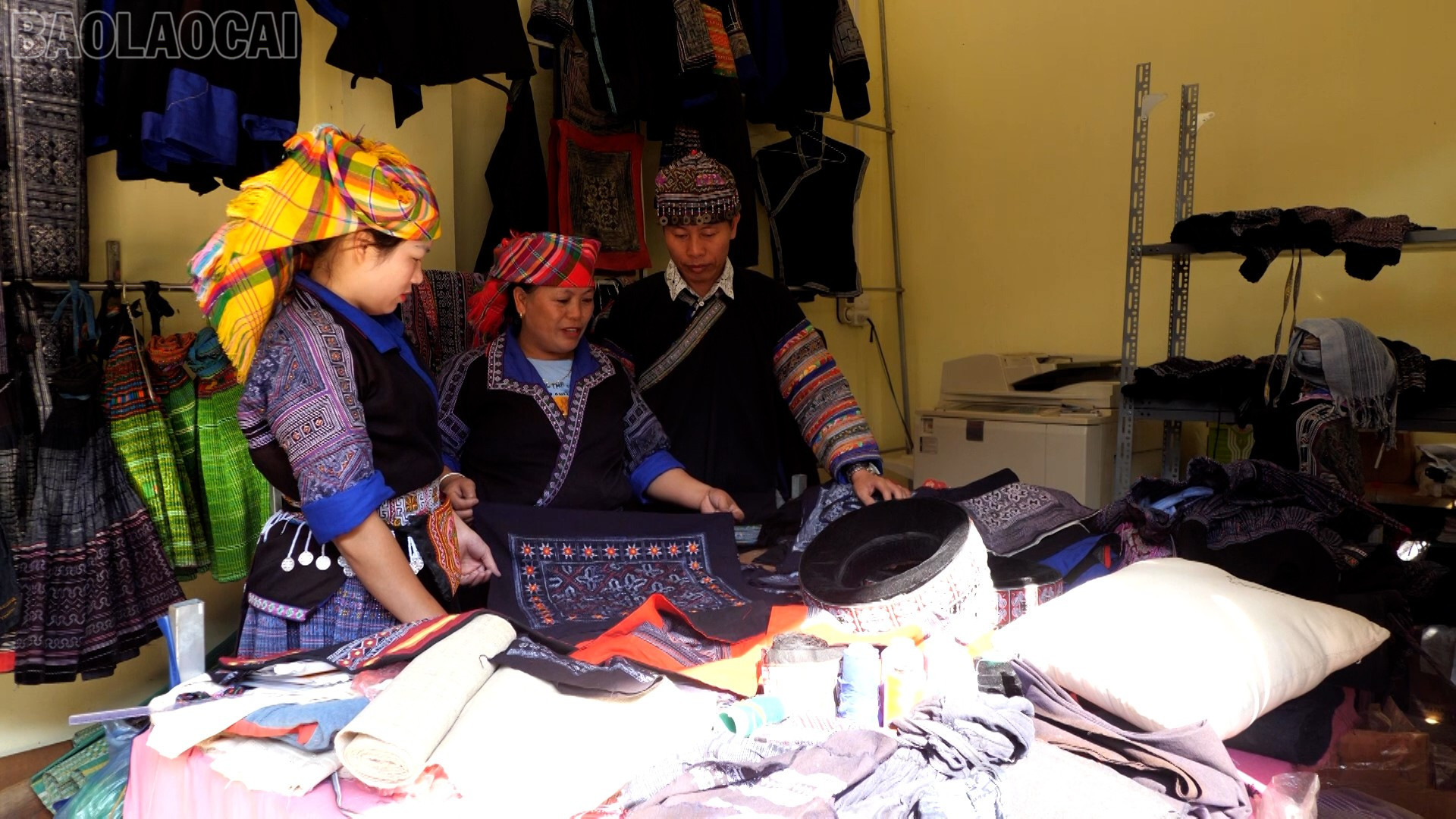
Mr. Giàng A Tạng, Vice Chairman of the People's Committee of Mù Cang Chải commune, said: The Party Committee of Mù Cang Chải commune has issued a specialized resolution on tourism development for the period 2025-2030, aiming to make Mù Cang Chải a key tourist destination of Lào Cai province, a destination that is unique, safe, and friendly.
With the policy of linking cultural preservation with tourism development, the people of Mu Cang Chai are supported in opening homestays, receiving tourism training, learning how to tell cultural stories through colorful Mong costumes, playing the khene (a traditional Hmong flute), and making traditional dishes... By 2025, Mu Cang Chai commune had welcomed approximately 117,000 tourists, generating revenue of over 123 billion VND.
Leaving Mu Cang Chai and arriving at the white plateau of Bac Ha, a region famous for its vibrant highland markets and unique traditional festivals, one can clearly see the efforts to preserve and promote the cultural identity of the 12 ethnic groups. These unique cultural values create a distinct appeal, forming a competitive advantage and a differentiating factor for tourism in Bac Ha.
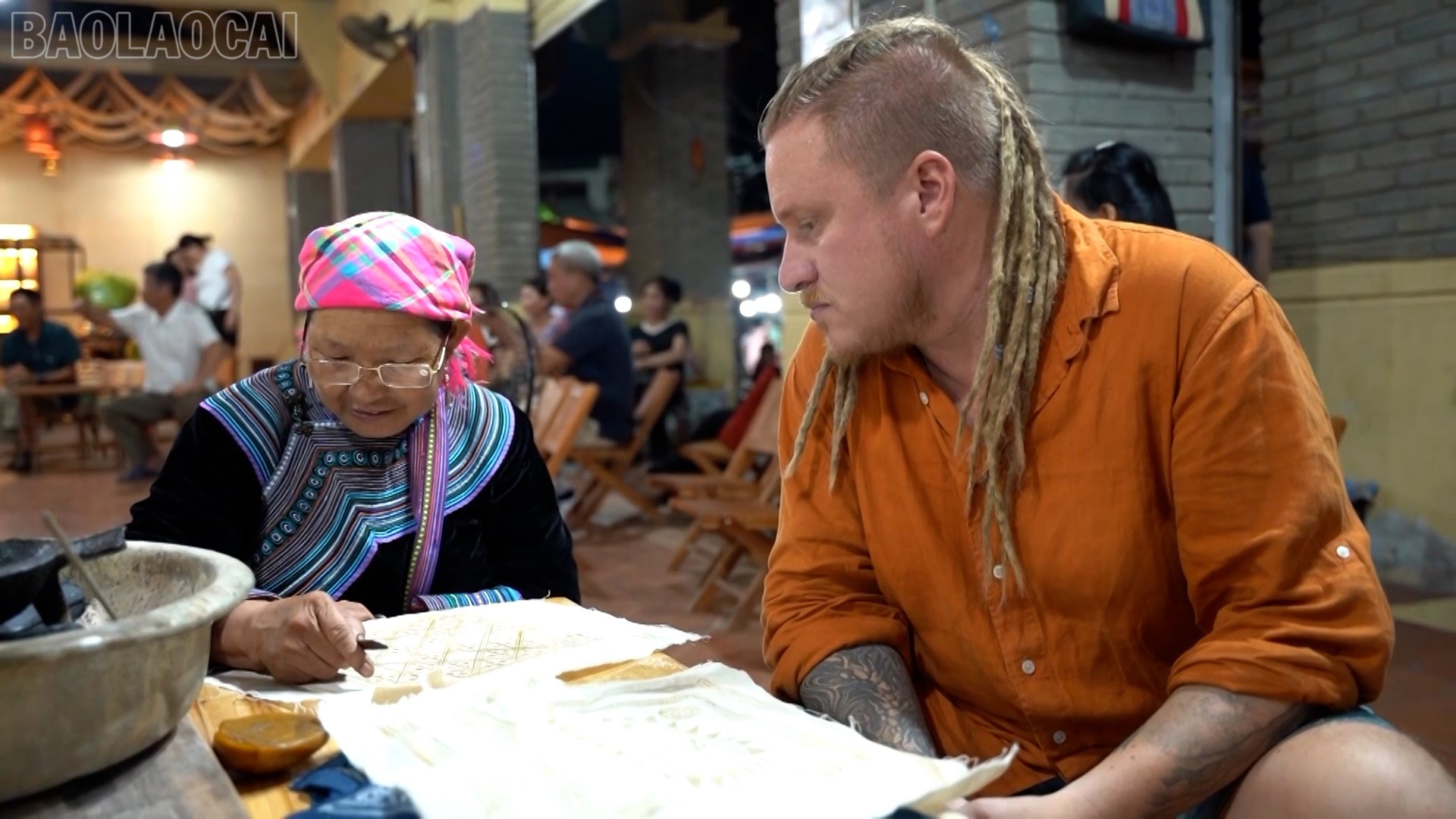
After a day exploring various destinations, Jonathan, a Swiss tourist, continued his journey at the Bac Ha night market. The lively atmosphere and rich local culture gave him a special feeling.
“I was very impressed with the handcrafted products here. Watching the artisans work live on the spot felt authentic and enjoyable,” Jonathan excitedly shared after experiencing beeswax painting.
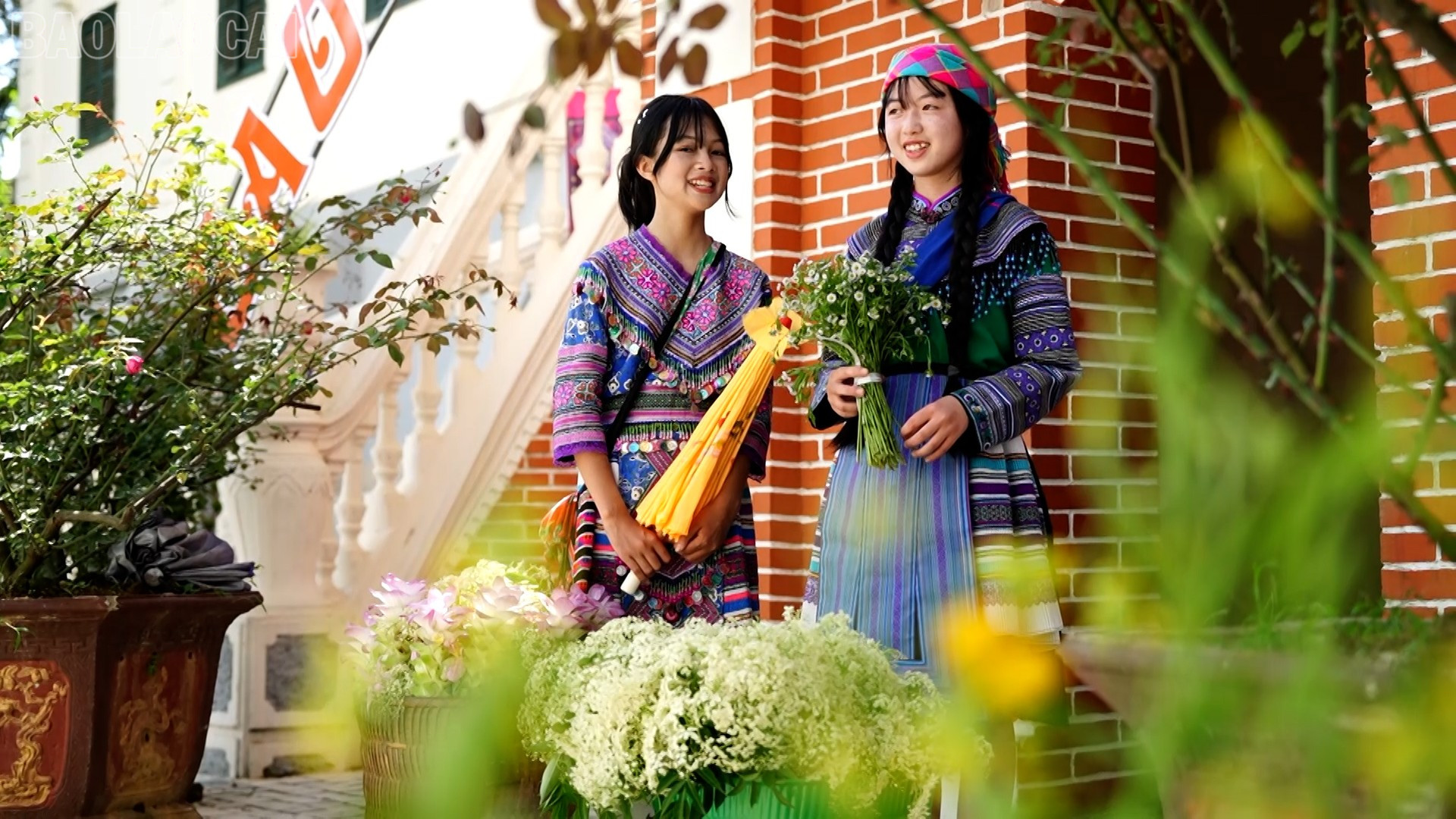
Leveraging its diverse and unique ethnic cultural identity, Bac Ha commune is focusing on developing five core, distinctive tourism products: "White Plateau Tourism," "Bac Ha Market Tourism," "Hoang A Tuong Mansion Heritage Tourism," "Traditional Horse Racing Festival," and "Adventure Sports Tourism." Many solutions are being implemented synchronously, with cultural values being effectively exploited, aiming to achieve the goal of welcoming 1.8 million tourists annually and gradually making tourism a key economic sector of the locality.
From the story of heritage preservation…
Possessing a rich cultural heritage of diverse ethnic groups, Lao Cai is actively promoting the preservation, honoring, and development of traditional heritage values, considering them a spiritual foundation and important resource for sustainable socio-economic development.
Currently, the province has 1 special national-level historical site, 34 national-level historical sites, 172 provincial-level historical sites, 56 national intangible cultural heritage sites, 3 national treasures, and 4 intangible cultural heritage sites representing humanity.
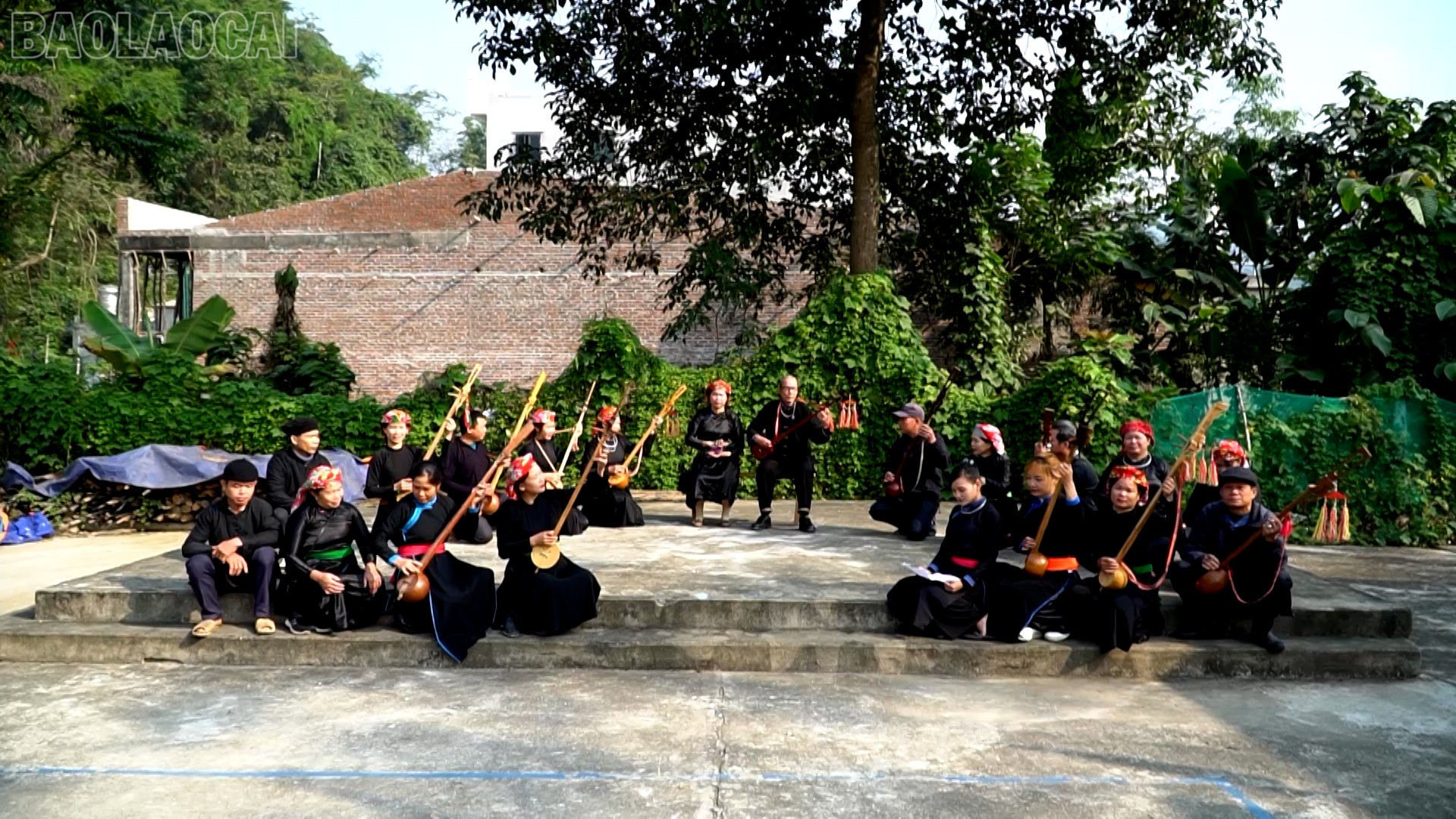
From 2020 to 2025, Lao Cai restored and renovated 18 national-level relics; compiled dossiers and proposed to UNESCO for the inscription of "Thai Xoe Dance Art" as a representative intangible cultural heritage of humanity; conducted a comprehensive inventory of intangible cultural heritage and compiled dossiers to submit to the Ministry of Culture, Sports and Tourism for the inscription of 21 cultural heritages. The province has preserved and promoted the value of 4 typical festivals, customs, and traditions. In particular, Lao Cai has developed a virtual tour model for the Mu Cang Chai terraced rice fields, a special national relic, and 12 other national relics in the province... contributing to preserving and promoting the value of heritage to domestic and international tourists.
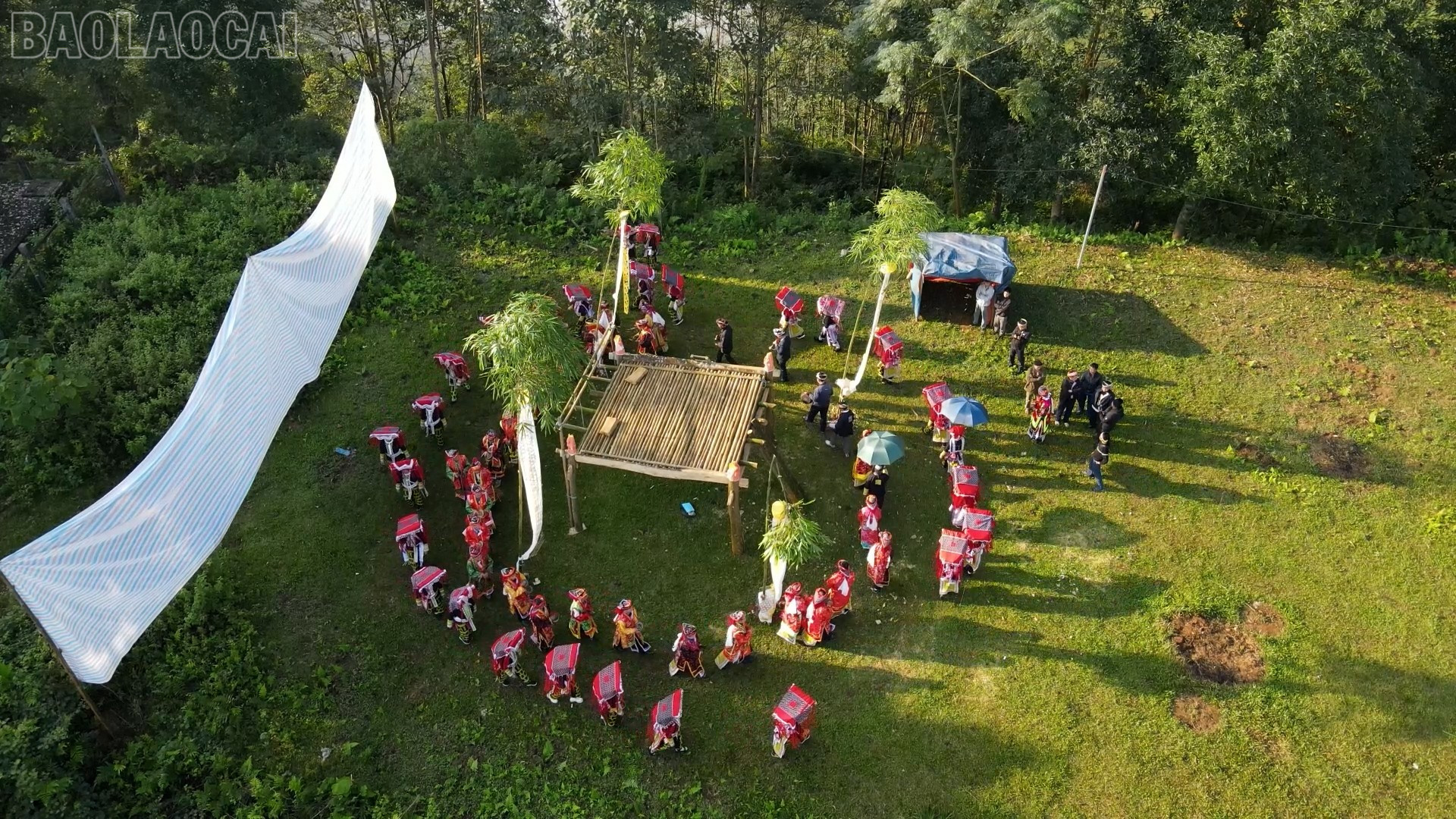
The achievements in preserving and promoting the value of traditional cultural heritage have made a significant contribution to the socio-economic development of the province. The total number of tourists visiting Lao Cai in 2025 is estimated at 10.5 million, with total tourism revenue reaching approximately 46,000 billion VND, an increase of 61.4% compared to the previous year, achieving 100.3% of the plan.
...to the development of the cultural industry
At the end of 2025, the People's Committee of Sa Pa Ward held the opening ceremony of the "Sa Pa – A Gathering of Quintessence" cultural space and launched the Community Connection Cultural Cooperative (CCC). This event marked the first cultural project formed under the public-private partnership (PPP) model in the field of culture and tourism in Sa Pa Ward, with the joint efforts of the local government, public service units, and the business and cooperative community.
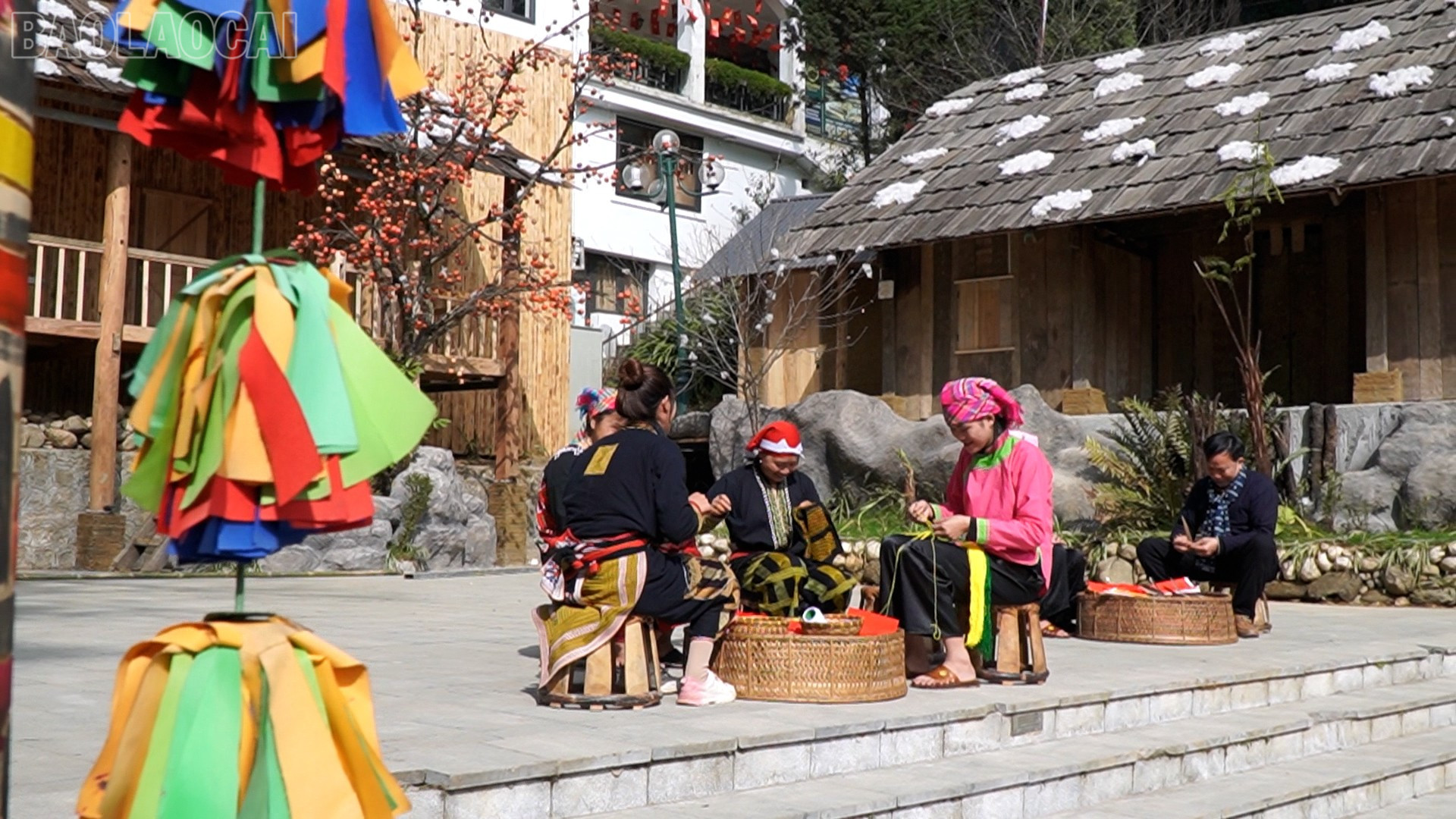
Ms. Hoang Thi Vuong, Chairwoman of the Board of Directors and General Director of the Community Connection Cultural Cooperative, stated: The cultural space "Sa Pa - The Quintessence of Culture" comprises five exhibition and performance booths showcasing typical traditional cultural products of five ethnic groups: Red Dao, Mong, Tay, Xa Pho, and Giay. This is a point for preserving and promoting the cultural heritage of ethnic groups, creating livelihoods for the people, and providing tourists with an authentic and emotionally rich experience.
“I am truly delighted that Resolution 80 has been issued. With over 30 years of dedication and contribution to the culture and tourism sector of Lao Cai province, and continuing to start businesses in the cultural field, I believe in the direction of making culture an intrinsic strength, transforming cultural values into economic values," shared Ms. Hoang Thi Vuong.
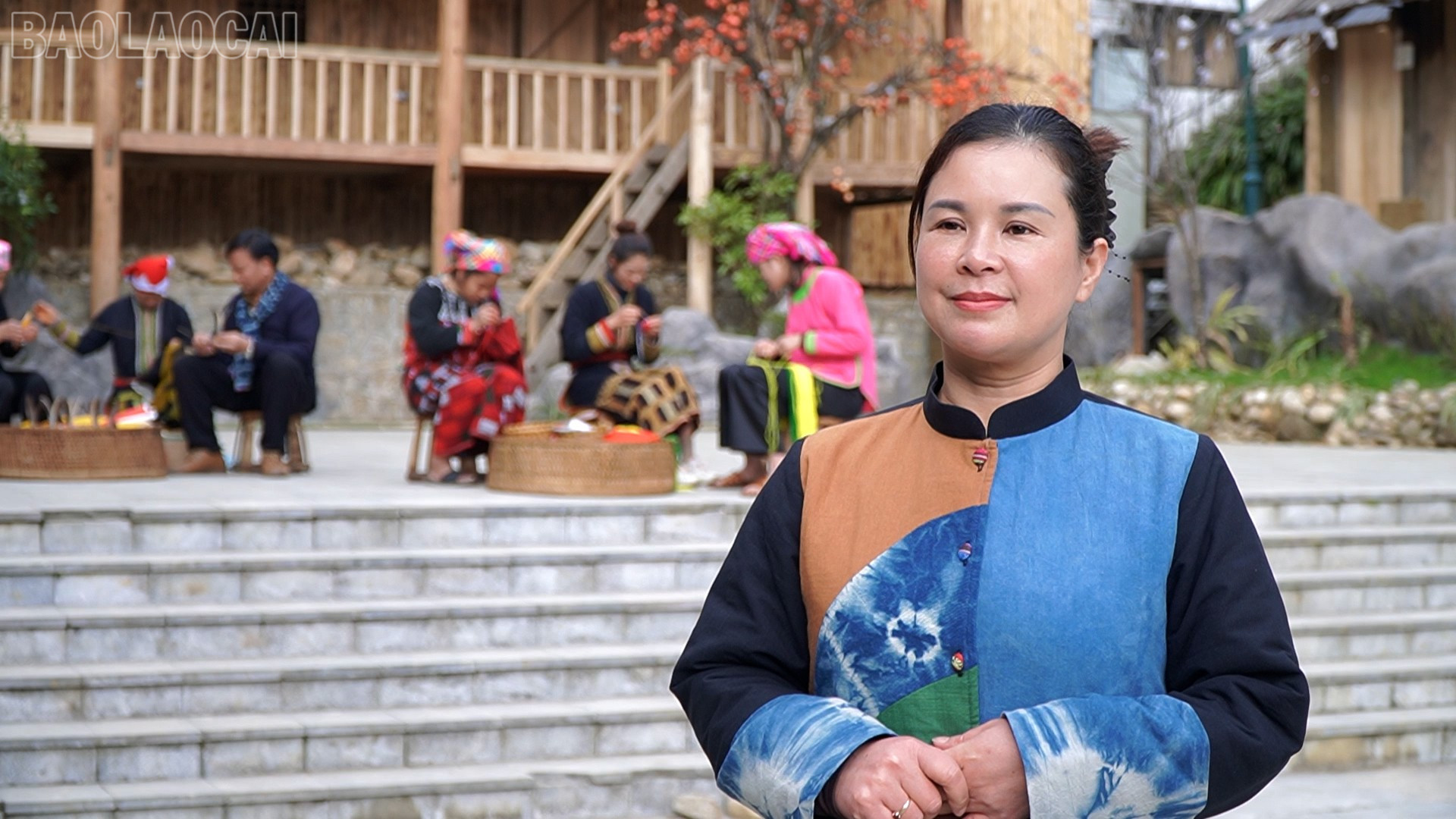
Ms. Hoang Thi Vuong emphasized: "I hope that the Party, the State, and local authorities will pay deeper, more substantive, and more sustainable attention to the issue of culture and the cultural industry."
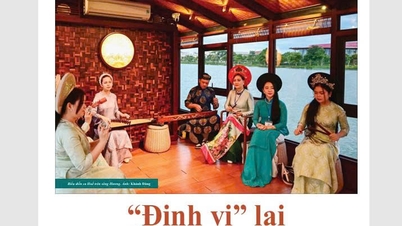
For the local people, the story of transforming heritage into assets, turning cultural values into cultural products, is understood in a simple yet profound way. Mr. Lo A Trung, a Then singer and Tinh lute player in Muong Bo, shared: "Previously, we only performed on a small scale, within the village and commune during festivals and holidays. But now, we know how to perform and introduce our culture to tourists, creating a highlight for local tourism. Heritage that was once only found in museums or remote villages is now brought to life in a more vivid and accessible way for visitors."
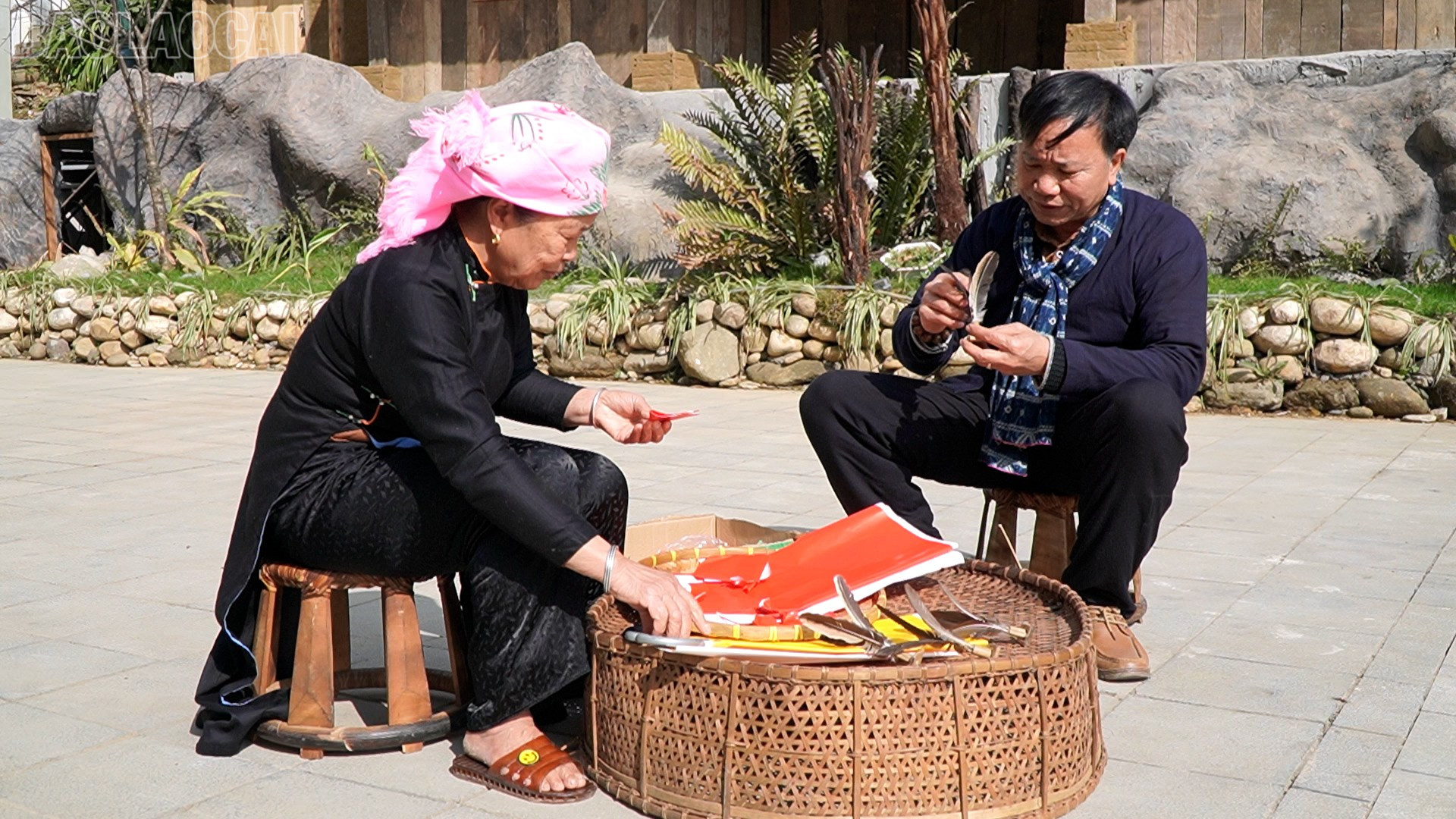
In the context of globalization, the concept of "cultural industry" is no longer a distant theory but has become a new, promising path for preserving and promoting cultural identity.
Mr. Duong Tuan Nghia, Deputy Director of the Department of Culture, Sports and Tourism of Lao Cai province, emphasized: Lao Cai province is very interested in the issue of cultural industry. The project on preserving and promoting the cultural identity of the people of Lao Cai in the period 2026-2030 identifies many related goals and tasks to develop culture and people into real resources. It is believed that Resolution 80 of the Politburo, once issued, will provide additional specific mechanisms and policies to transform heritage into assets, create many unique tourism products, and promote the development of the cultural industry in Lao Cai in the coming time.
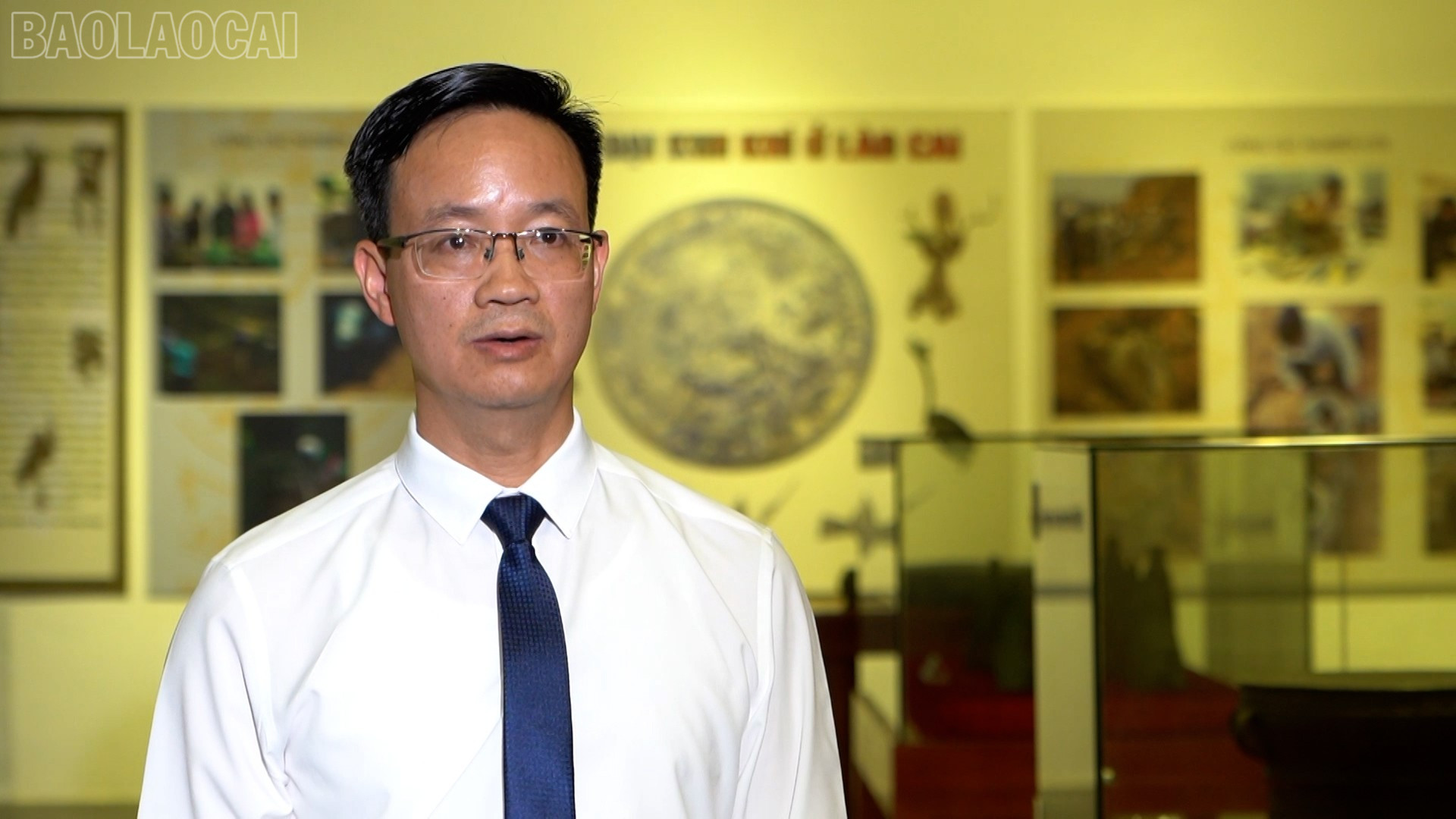
Mr. Duong Tuan Nghia emphasized: Cultural development must go hand in hand with preservation; exploitation must be linked to conservation in a systematic, scientific, and responsible manner, without sacrificing cultural values for purely economic gain.
Resolution 80 opens up a new approach, a new way of thinking, and a new responsibility for the development of Vietnamese culture. For Lao Cai, culture is not only an identity but also a resilience and a source of intrinsic strength in the journey of integration and green, sustainable development. When culture is cherished, deeply ingrained in social life, and promoted in the right direction, the border region of Lao Cai will surely confidently enter a new phase of development, modern yet deeply rooted in national identity.
Source: https://baolaocai.vn/lao-cai-khoi-day-suc-manh-noi-sinh-tu-van-hoa-post892129.html
![[Photo] Secretary of the National Assembly Party Committee, Chairman of the National Assembly presides over the meeting of the Standing Committee and Executive Committee of the National Assembly Party Committee.](https://vphoto.vietnam.vn/thumb/1200x675/vietnam/resource/IMAGE/2026/06/03/1780480353201_ndo_br_bnd-2585-jpg.webp)



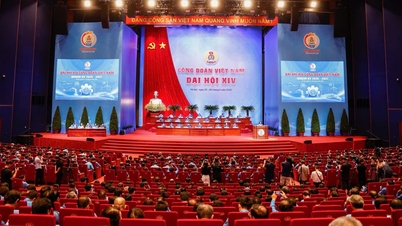
![[Photo] First session of the 14th Congress of the Vietnam Trade Union](https://vphoto.vietnam.vn/thumb/1200x675/vietnam/resource/IMAGE/2026/06/03/1780465947883_ndo_br_img-3852-jpg.webp)
![[Photo] General Secretary and President To Lam presides over a meeting with the Central Organizing Committee.](https://vphoto.vietnam.vn/thumb/1200x675/vietnam/resource/IMAGE/2026/06/03/1780482764658_a1-bnd-4741-3342-jpg.webp)

![[Infographic] Over 1.2 million candidates registered for the 2026 High School Graduation Exam](https://vphoto.vietnam.vn/thumb/402x226/vietnam/resource/IMAGE/2026/06/03/1780496872518_w_20260603205412.jpeg)





































![[Video] Sunset at Lap An Lagoon – Where the sun sets over the fishing nets](https://vphoto.vietnam.vn/thumb/1200x675/vietnam/resource/IMAGE/2026/05/31/1780192137701_beach-landscape-sea-water-nature-grass-745871-pxhere-com.jpeg)






























Comment (0)