According to CNN, Israeli Prime Minister Benjamin Netanyahu recently stated that eliminating Hezbollah leader Hassan Nasrallah was the first step in "shifting the balance of power in the region for years to come." Accordingly, Israel saw an opportunity to restructure power in the Middle East, and Netanyahu believed Hezbollah had been severely weakened. However, absolute victory remains elusive, and those who rush things often face regret.
Since September 17th, Israel has been relentlessly striking Hezbollah, the Iranian-backed armed group in Lebanon. Initially, this involved the destruction of pagers, followed by a major airstrike south of Beirut that killed senior commander Ibrahim Aqil and dozens of civilians. On the evening of September 27th, a crucial turning point in the conflict occurred when Hezbollah leader Nasrallah and several close associates were killed in a large-scale airstrike.
However, recent history has offered bitter lessons to Israeli leaders and those with grand ambitions to change the course of events in Lebanon and the Middle East.
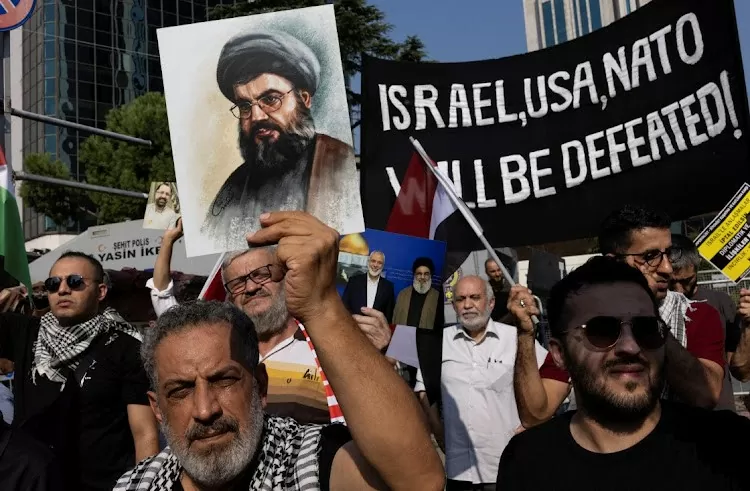 |
| A poster featuring Hezbollah leader Hassan Nasrallah at a symbolic funeral in Turkey on September 29. Photo: Reuters |
Lessons from the 1982 War
In June 1982, Israel launched its invasion of Lebanon with the goal of destroying the Palestine Liberation Organization (PLO). Furthermore, they hoped to establish a pro-Israel, Christian-led government in Beirut and expel Syrian forces from the country.
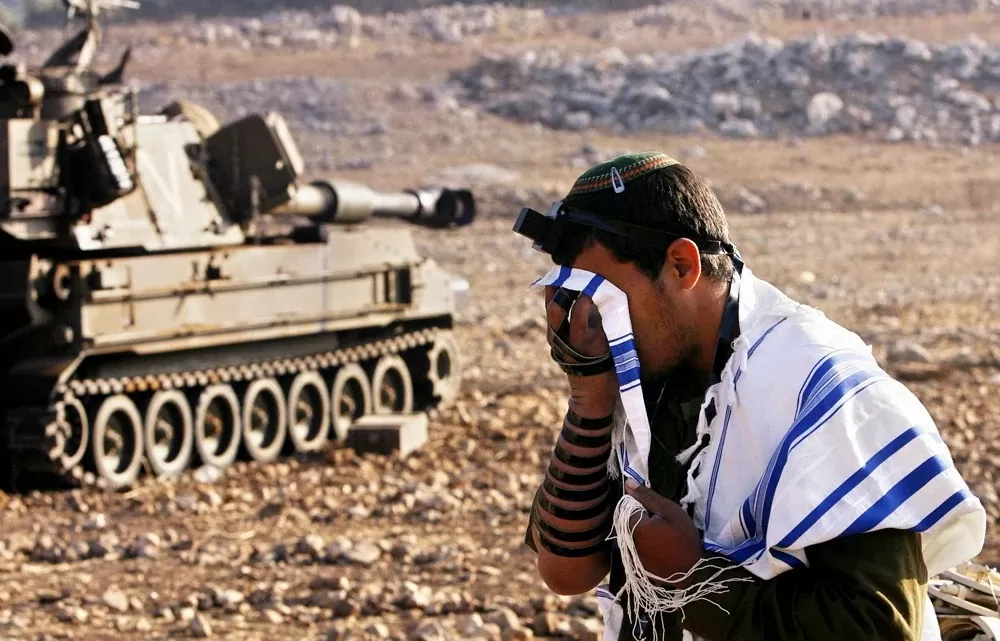 |
| An Israeli soldier prays next to a mobile artillery unit stationed near the town of Fasuta in northern Israel. Photo: Reuters |

However, all those goals failed. While it's true that Palestinian armed groups were forced to leave Lebanon under a US-brokered agreement, leading to their exile in Tunisia, Yemen, and elsewhere, the goal of suppressing Palestinian national aspirations and those of the PLO was unsuccessful. Five years later, the Palestinian insurgency erupted again in Gaza and quickly spread to the West Bank, where Palestinians remain steadfast in their resistance to Israeli occupation to this day.
Israel's main ally in Lebanon at the time was Bashir Al-Gemayel, a Maronite Christian militia leader who had been elected president by the Lebanese parliament . However, before he took office, he was assassinated in a massive explosion in eastern Beirut. His brother, Amin Al-Gemayel, succeeded him. Under Amin's leadership and with strong mediation efforts from the United States, Lebanon and Israel signed an agreement to normalize bilateral relations in May 1983. However, under pressure from the opposition, this government collapsed the following February, and the agreement was quickly abrogated.
On the American side, after deploying troops to Beirut to stabilize the situation following the Sabra-Shatila massacre in September 1982, they had to withdraw when their embassy was bombed twice, followed by bombings of US Marine and French army barracks in October 1983.
The civil war in Lebanon has broken out again and lasted for more than six years.
In 1976, Syrian forces entered Lebanon as a "deterrent force" under a mandate from the Arab League and did not leave Lebanon until 2005 after the assassination of former Prime Minister Rafiq Al-Hariri.
Perhaps the most significant outcome of the 1982 war in Lebanon was the emergence of Hezbollah. This group launched a tenacious guerrilla war, forcing Israel to unilaterally withdraw from southern Lebanon, marking the first time an Arab military force successfully pushed Israel out of Arab territory. With Iranian support, this force proved far more dangerous and effective than the Palestinian fighters Israel had previously faced.
Hezbollah not only survived the war but also thrived, becoming a powerful force backed by Iran. They fought against Israel in the 2006 war and grew even stronger with Iranian support. Currently, although Hezbollah is weakened, shows signs of disarray, and is being infiltrated by Israeli intelligence, it is premature to suggest that the group is nearing its end.


Warning about changes
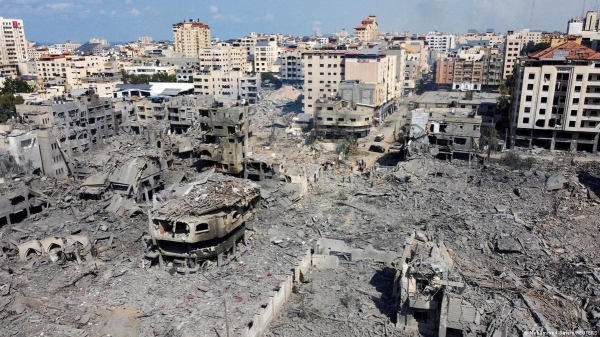
Looking at the plumes of smoke rising from Beirut now, we are reminded of the words of Condoleezza Rice, the former US Secretary of State, who said during the 2006 war between Israel and Hezbollah that all the bloodshed and destruction at that time was merely "the birth pains of a new Middle East."
Beware of those who promise a new dawn, the birth of a new Middle East, or a shift in the regional balance of power. Lebanon is a mirror reflecting everything that can go wrong. It is a land of unpredictable consequences.
Source: https://congthuong.vn/israel-va-tham-vong-o-chao-lua-trung-dong-lebanon-la-tam-guong-phan-chieu-moi-dieu-co-the-sai-lam-349304.html

![[Photo] Prime Minister Le Minh Hung presides over the thematic session on promoting science and technology development and innovation.](https://vphoto.vietnam.vn/thumb/1200x675/vietnam/resource/IMAGE/2026/06/23/1782207872934_ndo_br_dsc-1724-jpg.webp)