

During the preparation process for the film "Cám," director Trần Hữu Tấn affirmed: "We are not afraid of difficulties; as long as we achieve the desired effect for the film, no matter how challenging the location, we will readily survey and film it."
Finding novelty in familiarity
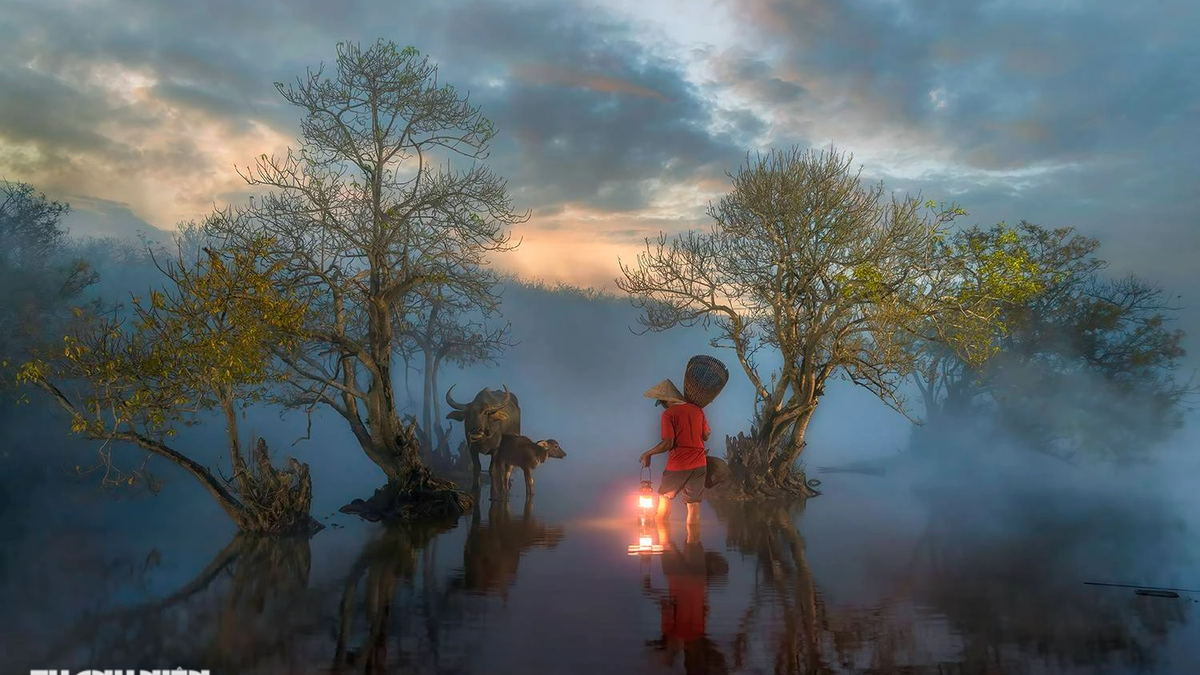
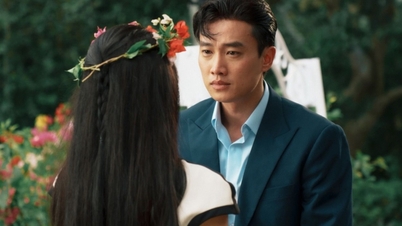
Before filming began in March and April in Thua Thien Hue and Quang Tri provinces, producer Hoang Quan shared his desire to find new and unique locations to realize his imagination of a horror adaptation of the Tam Cam story. “We especially wanted to film in Quang Tri because it seems rare for a feature film to choose this place as a setting,” producer Hoang Quan stated. That's why three-quarters of the film's main locations were filmed there: Ha Trung village communal house (Gio Linh district), Truong Phuoc lotus pond (Hai Lang district), and the mangrove forest. The remaining main location was filmed in Phuoc Tich ancient village (Thua Thien Hue).
Novelty and originality are both the goal and the biggest challenge in setting locations for Vietnamese filmmakers today. And to solve this inherent problem, many film crews have invested a great deal of effort. Before the film "Cám," when making "Tet in Hell Village" and "The Soul Eater," director Tran Huu Tan and producer Hoang Quan discovered the pristine Sao Ha village amidst the rugged mountains of Ha Giang, despite temperatures consistently below 4-5°C (sometimes dropping to 0°C) accompanied by heavy rain and strong winds. Or before that, the Ta Nang - Phan Dung setting in "Forest of Life," one of the most beautiful trekking routes in Vietnam.
In reality, not every film crew is lucky enough to find locations that have never appeared on the big screen before, while also fitting their production plans and budget. This is especially true for locations that have already made an impression on screen in previous projects, where the pressure is even greater. “We continued to explore , traveling to every corner and village to find places in Phu Yen that still retain the distinctive atmosphere of the 1990s to the early 2000s,” director Trinh Dinh Le Minh shared about the location selection process for "Once Upon a Time There Was a Love Story." Previously, Phu Yen was the main setting for "I See Yellow Flowers on Green Grass," which created a sensation after its release.
For example, with the film "Making Money with Ghosts," even though it was filmed right in Ho Chi Minh City, the crew spent 14 days meticulously building 14 houses. The chosen location was an area overlooking the Saigon River and high-rise buildings directly opposite. This was director Trung Lun's intention, related to the film's content, showing the contrast between rich and poor, and how dreams are sometimes separated by only a river but remain unattainable.
Perfectionism for the audience.
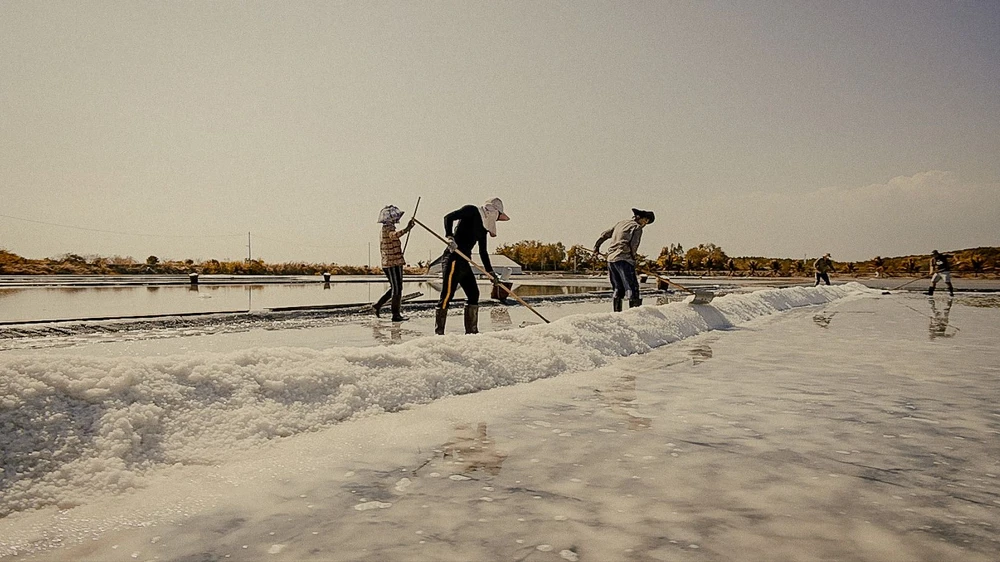
Wishing for the scenes in "Hai Muoi" to be "natural and salty," director and Meritorious Artist Vu Thanh Vinh requested the crew to design and construct many sets in both Ho Chi Minh City and Thieng Lieng hamlet (Can Gio district) two months in advance for review and editing. For the large-scale house fire scene, he didn't want to use special effects but instead built and set fire to a real house himself. Notably, many scenes in the film use a lot of salt. The film crew bought tons of salt from local people just to use in the scenes. "To make the fire scene as intended, we built a salt storage house three months in advance so that by the time we started filming, it was old and looked like a real salt storage house," director Vu Thanh Vinh shared.
It's understandable that as audience tastes become increasingly sophisticated and demanding, filmmakers are forced to be more self-aware and rigorous in their own standards. Director Trung Lùn shared about the making of "Making Money with Ghosts": "Although the setting of a working-class neighborhood isn't difficult to find, we still decided to build a completely new house. The reason is that I wanted to find a poetic quality within the poverty." The house was then meticulously crafted down to the smallest detail to give the feeling that the characters had actually lived there for decades.
The actual filming process is never easy, as the film crew is influenced by external factors, especially the weather. However, as director Tran Huu Tan shared: "Everyone knows that filming outdoors is both expensive and risky, but only by filming in such settings can we bring authentic images and emotions to the audience."
That's also why, even though filming indoors offers more favorable conditions, many film crews still choose more challenging options, such as filming "The Soul Eater" in the forest where temperatures sometimes drop below 0°C; filming "Cam" in Quang Tri, where temperatures can reach 42-44°C; and actors in the film "The Ghost" having to immerse themselves in water for nearly 13 hours, sometimes on freezing cold nights… all efforts are aimed at creating high-quality cinematic products that meet the demands of today's audience.
VAN TUAN
Source: https://www.sggp.org.vn/len-doi-cho-boi-canh-phim-viet-post759834.html

























![[Photo] Reception to welcome General Secretary and President To Lam and his wife on their State visit to the Philippines](https://vphoto.vietnam.vn/thumb/1200x675/vietnam/resource/IMAGE/2026/06/01/1780295488620_vna-potal-chieu-dai-chao-mung-tong-bi-thu-chu-tich-nuoc-to-lam-va-phu-nhan-tham-cap-nha-nuoc-toi-philippines-8798060-7855-jpg.webp)




















































Comment (0)