

Whitmore's disease has a diverse course and clinical symptoms, requiring differential diagnosis with many other diseases. When misdiagnosed and improperly treated, the disease has a high mortality rate, potentially reaching 40%.
Whitmore's disease has a diverse course and clinical symptoms, requiring differential diagnosis with many other diseases. When misdiagnosed and improperly treated, the disease has a high mortality rate, potentially reaching 40%.
 |
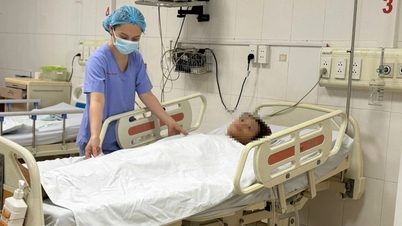
| Illustrative image |
Recently, the Center for Tropical Diseases at Bach Mai Hospital has continuously received cases with symptoms of fever, poor appetite, weight loss, swelling, and abscesses in several areas of the body. The signs and symptoms of these patients are very similar to and are often confused with tuberculosis or staphylococcal infections.
Here, doctors suspected a case of Whitmore's disease, performed blood and pus cultures from the abscess sites, and developed a treatment plan for the patient. After detecting Burkholderia pseudomallei, the bacteria that causes Whitmore's disease (Melioidosis), the patient was explained and advised on a long-term treatment regimen to prevent recurrence.
For example, patient TVL, 58 years old (Soc Son, Hanoi ), was admitted to the hospital with pneumonia, prostate abscess, rectal abscess, poor appetite, and weight loss. Abscesses are pockets of infection caused by bacteria.
The patient shared that there had been cases of Whitmore's disease resulting in death in the area where he lives. Similarly, patient PCG, 48 years old (Can Loc, Ha Tinh ), works as a farmer and construction worker, and frequently comes into contact with mud and soil.
The patient was admitted to the hospital with fever, swelling, pain, an abscess in the left arm, and bone pain. Prior to this, the patient had experienced multiple recurrent abscesses in various locations on the body, and treatment at lower-level facilities failed to identify the cause.
Patient V.D.L., 45 years old, from Truc Ninh, Nam Dinh , had a history of normal health. Mr. V.D.L. experienced high fever for several days, swelling and pain in his right buttock, cough with phlegm, and difficulty breathing, and was admitted to the hospital in a state of severe septic shock.
All three patients had underlying diabetes, with one discovering diabetes after hospitalization for fever, pneumonia, and abscesses, and in one patient, Whitmore's disease had even spread to the bone, causing inflammation.
Whitmore's disease patients were treated with antibiotic regimens; abscesses were managed, blood sugar was controlled, nutrition was provided, and general health was improved. Currently, the patients are fever-free, the abscesses have been treated, their health has improved, and they are able to eat and walk.
Recently, Bach Mai Hospital received another special case. It was a 45-year-old male patient from Thai Binh province with a history of diabetes and working as a ship captain at sea. He was found to have an abscess in his brain.
After more than 20 days of treatment, the patient's fever subsided, headaches improved, and test results stabilized. However, this case requires continued antibiotic treatment and monitoring for at least the next 6 months.
Recently, many hospitals have also received and treated cases of Whitmore's disease. For example, Hoa Binh Provincial General Hospital has treated two cases of Whitmore's disease. Prior to that, at the end of August, Dong Nai province also recorded a case of Whitmore's disease in a 14-year-old girl.
Similarly, the Central Hospital for Tropical Diseases also treated a male patient, D.VN (69 years old, from Chi Linh City, Hai Duong province), who had Whitmore's disease and a history of severe diabetes.
According to Dr. Nguyen Hong Long, Deputy Head of the Department of General Infectious Diseases at the Central Hospital for Tropical Diseases, Whitmore's disease has diverse clinical manifestations and is difficult to diagnose. Therefore, the disease is easily overlooked or misdiagnosed as other illnesses. Consequently, patients can die from pneumonia, sepsis, and septic shock.
Whitmore's disease typically presents acutely with manifestations such as pneumonia, bone and joint infections, nervous system infections, liver, spleen, and prostate infections, sepsis, or septic shock. The disease can also develop chronically with symptoms such as tuberculosis-like pneumonia or multiple organ abscesses, similar to staphylococcal infections.
Whitmore's disease is transmitted through the respiratory tract or contact with an environment containing the bacteria. The risk of infection is particularly high when there are cuts or abrasions on the skin, leading to faster disease progression.
Individuals with one or more underlying conditions such as diabetes, alcoholism, chronic lung, kidney, or liver disease, especially diabetes, are at high risk of infection and dangerous complications that can lead to death. With proper and complete treatment, patients can be cured; however, the mortality rate is high, potentially reaching 40%.
To minimize the risk of Whitmore's disease, Associate Professor Dr. Do Duy Cuong, Director of the Center for Tropical Diseases at Bach Mai Hospital, advises people to avoid direct contact with soil, dirty water, and stagnant water, especially when there are open wounds, scratches, or bleeding; or if they have multiple underlying medical conditions.
“Vietnam is an endemic area for Whitmore's disease. When patients have fever and multiple inflammatory foci or abscesses, the risk of Whitmore's disease should be immediately considered, especially in those with underlying diabetes. Early detection of Whitmore's disease through culture is crucial in the treatment process and protocol, minimizing the risk of death,” Associate Professor Dr. Do Duy Cuong noted.
According to the Department of Preventive Medicine, Ministry of Health, there is currently no vaccine for Whitmore's disease, nor are there any recommendations for the use of prophylactic antibiotics.
Therefore, although these preventive measures are very basic, we must not be complacent. In people with weakened immune systems (for example, those with chronic infections, those using corticosteroids for extended periods, people with diabetes, kidney disease, or those who are alcoholics or drug addicts): when bacteria enter the bloodstream, it will cause more severe sepsis. Therefore, these people are at higher risk and need to pay more attention to prevention.
The main preventive measures include ensuring personal hygiene, environmental hygiene, using personal protective equipment when working with contaminated soil or water, or in unsanitary environments, thoroughly cleaning contaminated skin cuts, scratches, or burns, and consuming cooked food and boiled water.
Source: https://baodautu.vn/lien-tiep-benh-nhan-mac-vi-khuan-whitmore-nhap-vien-d225144.html

![[Photo] Prime Minister Pham Minh Chinh presides over a meeting on private sector economic development.](/_next/image?url=https%3A%2F%2Fvphoto.vietnam.vn%2Fthumb%2F1200x675%2Fvietnam%2Fresource%2FIMAGE%2F2025%2F12%2F20%2F1766237501876_thiet-ke-chua-co-ten-40-png.webp&w=3840&q=75)































































































Comment (0)