

The factory has been bustling with activity since September.
Mr. Ngo Quang Canh (36 years old) is the owner of this establishment with over 15 years of experience in the field of sculpting statues and mascots. Besides his business, Mr. Canh is also teaching sculpture at the Ho Chi Minh City University of Fine Arts. He said that this year the market demands stylized snake mascots with cute and gentle features.
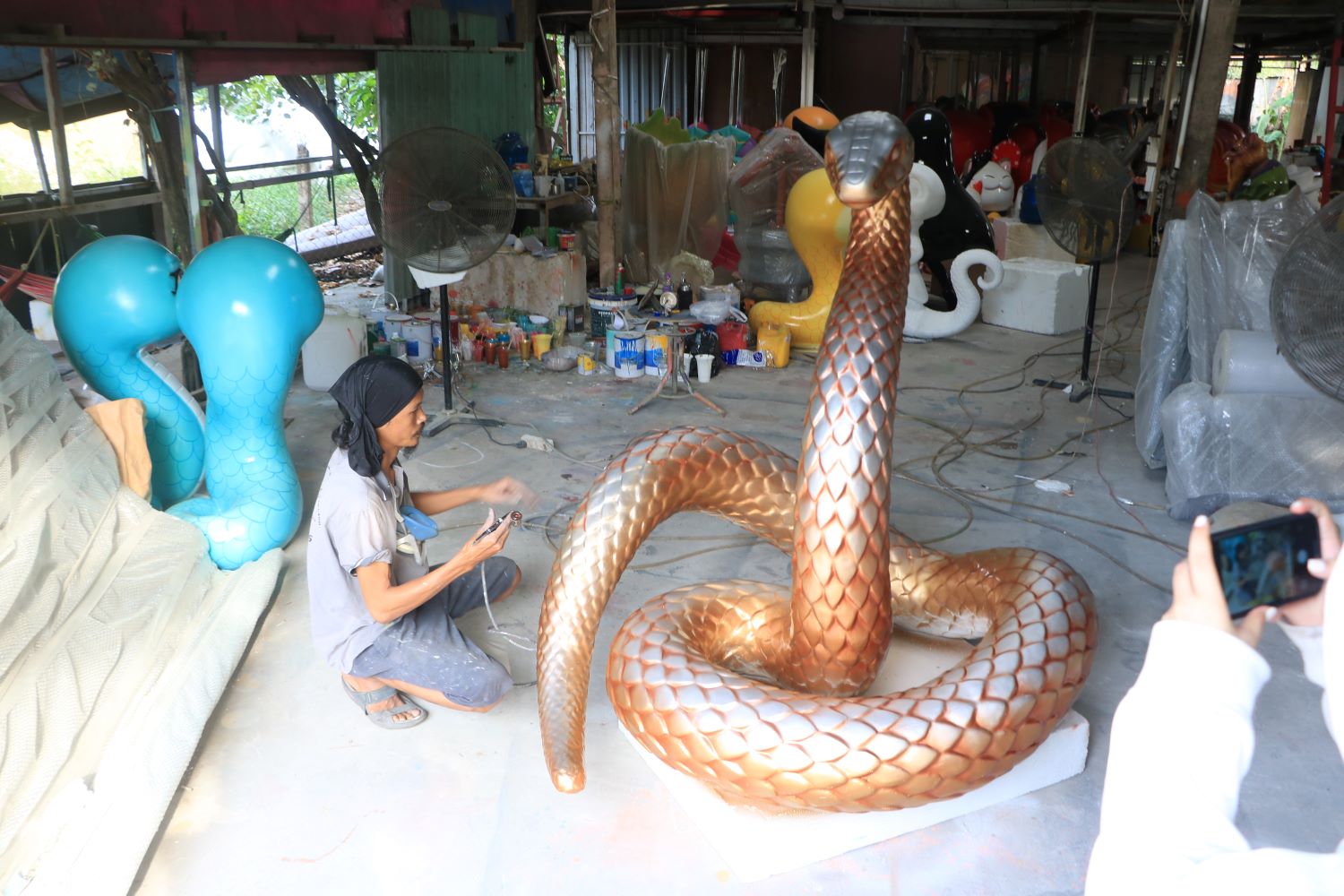
Mr. Chung meticulously painted every detail on the snake mascot.
PHOTO: NGUYEN DIEN
"People often see snakes in the wild as quite aggressive and dangerous. Mimicking the appearance of snakes in nature for a decorative mascot design wouldn't be appropriate. The designer will have the snake mascot with its mouth closed, eyes sparkling, and add some accessories like a checkered scarf, conical hat, bow, flowers… This creates a focal point while making the snake mascot look cuter and friendlier," Mr. Canh shared.
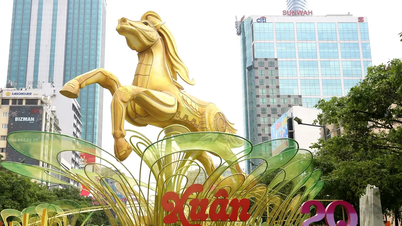
Mr. Canh's production facility regularly receives orders from eco- tourism areas and shopping malls in District 1 and District 3 (Ho Chi Minh City)... Notably, Mr. Canh said that this year they are producing mascots for display on Nguyen Hue Flower Street (District 1). The mascots produced by Mr. Canh's facility range in length from 6 to 50 meters, with prices ranging from 3 million to 300 million VND, depending on size and details.
According to Mr. Canh, the mascot products are mainly made from two types of materials: foam and composite plastic. The process of making a mascot includes: drawing a 3D file, cutting the file on a computer, then running it on a CNC machine (a material processing machine that operates with the support of digitized electronic devices). After that, the mascot is completed using foam material. For larger mascots, the 3D printer will create each part, then glue them together to form the whole.
Mr. Canh explained that for composite materials, there are additional steps such as cutting the foam pieces, then pouring them into plaster or silicone molds. From the resulting plaster pieces, the craftsman will assemble them into the complete shape of the mascot, then treat the surface by applying specialized filler and sanding; and finally, painting and adding details.
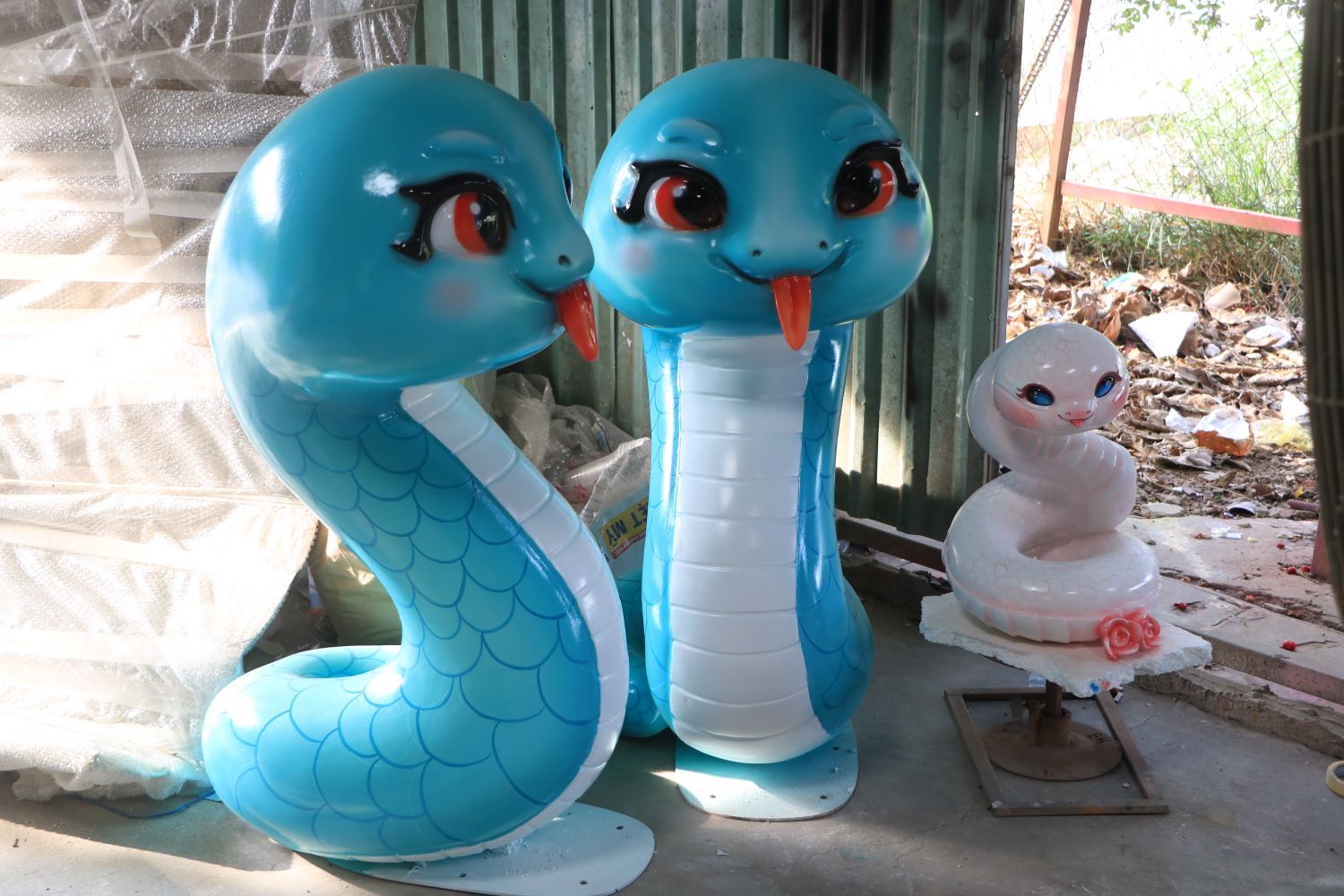
PHOTO: NGUYEN DIEN
"Depending on the size and complexity, completing a mascot can take from 2 to 7 days. This year, the workshop started getting busy from September (Gregorian calendar)," Mr. Canh said.
Young people who love art
Pham Hong Huy (25 years old) is the person directly responsible for designing the 3D models for mascots. Huy's work begins with receiving feedback and requests from clients, including the animal species and shape they desire. Based on these requirements, Huy proceeds to create detailed 3D models, and only when the client is completely satisfied do he move on to the next steps.
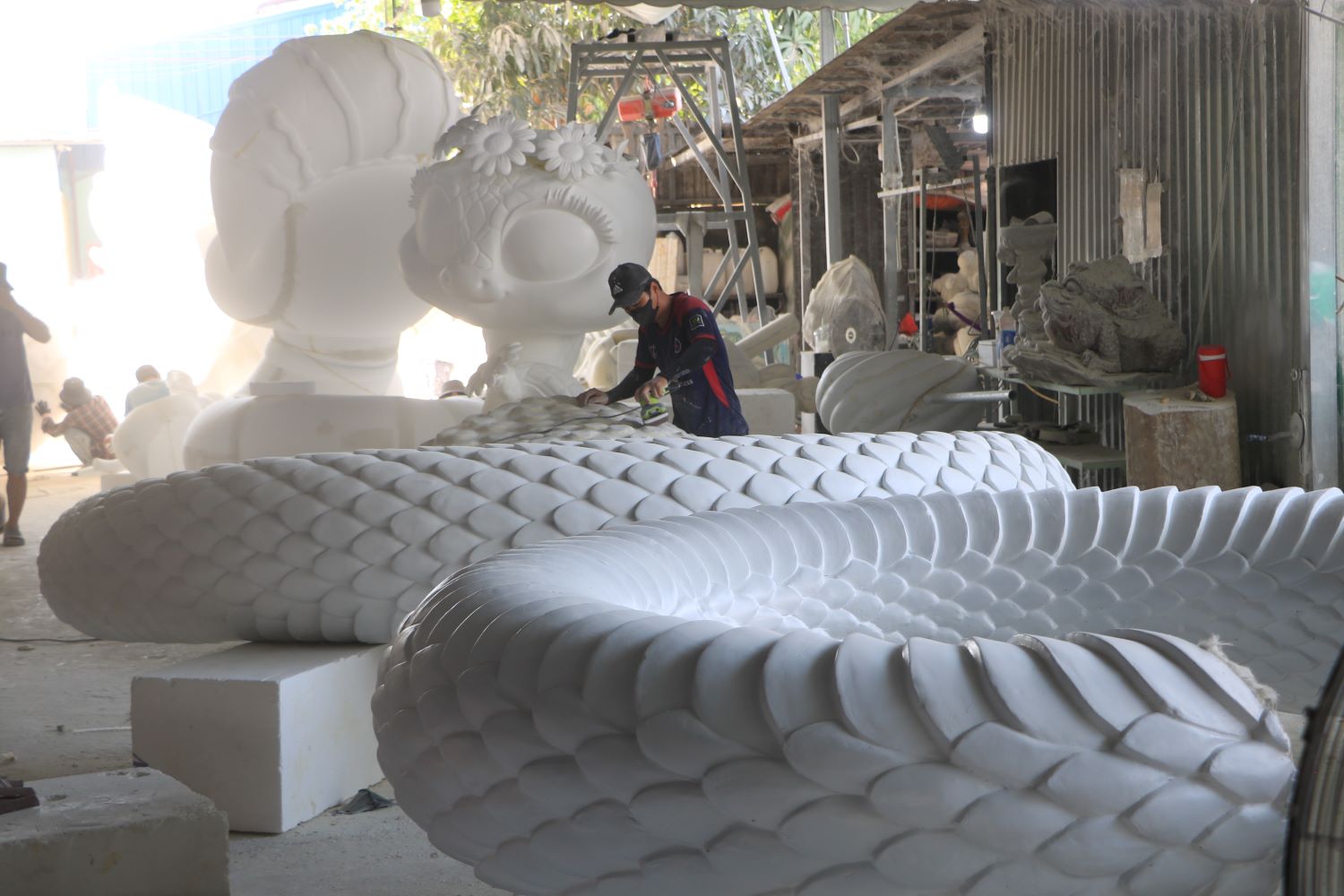
Mr. Ha used sandpaper to smooth the surface of the mascot after it had been covered with plaster.
PHOTO: NGUYEN DIEN
After the 3D design was approved, Huy began the product sculpting process. This is a crucial stage in transforming the ideas on the drawing into a real product, ensuring accuracy and perfection as expected by the customer. "This is the first step towards having the snake mascot for the Lunar New Year 2025," Huy said.
Inside the workshop, the atmosphere was bustling; some were applying plaster, others were sanding. The lively work environment was enhanced by a loudspeaker playing spring-themed music for the workers. In a closed room, a machine, or robotic arm, was trimming a block of foam to create a small mascot. In another room, Ngo Xuan Phuong (23 years old), who had worked at the workshop for four years, was observing the 3D file; if there were any errors in the printing or cutting process, Phuong would correct them promptly.
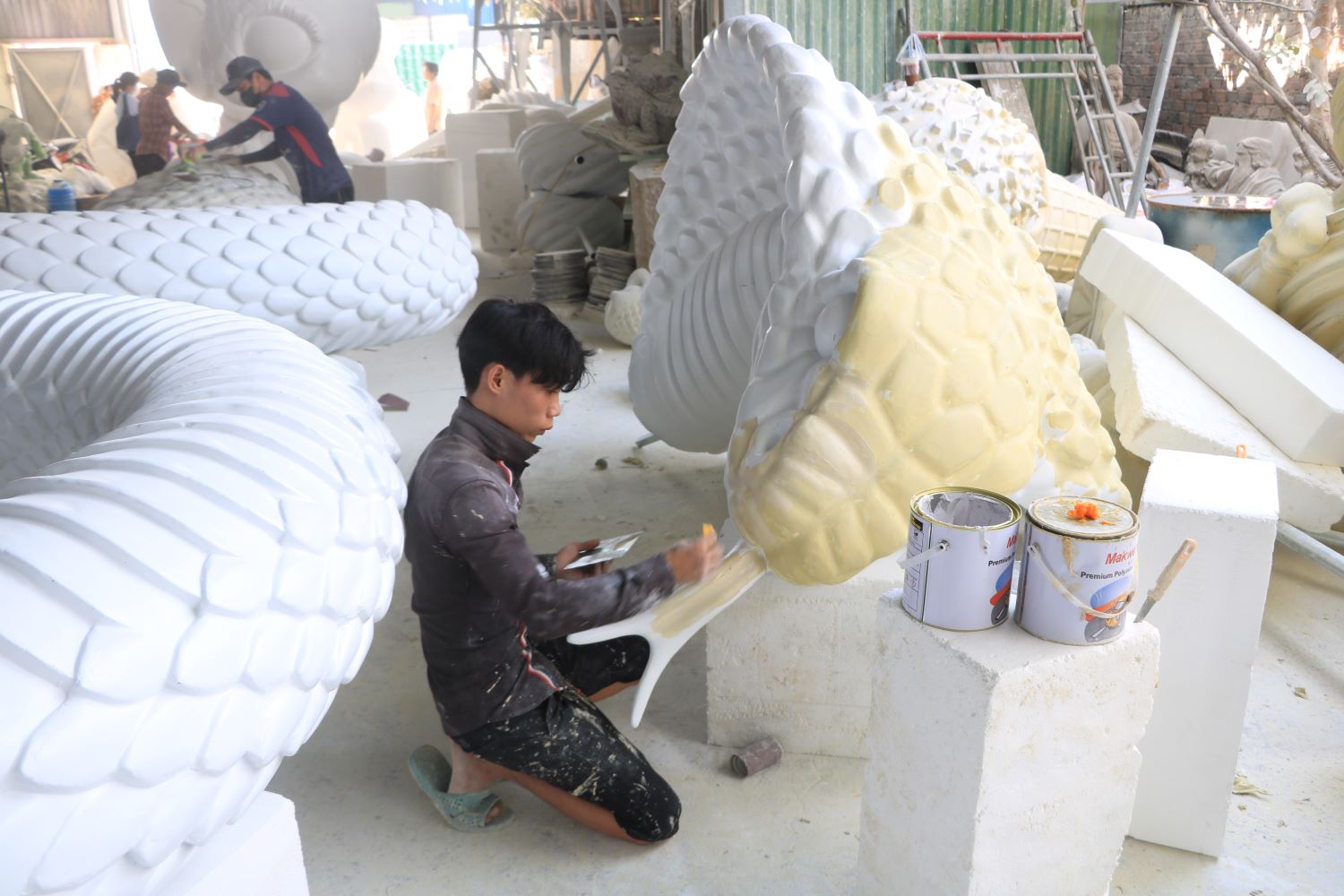
A specialized putty is applied to ensure the surface of the mascot is smooth and shiny.
PHOTO: NGUYEN DIEN
"My job is to monitor the 3D printing file on the computer, helping the cutting and printing process of the mascot to go smoothly with minimal errors," Phuong said.
Painting is the final step in completing a mascot. Nguyen Van Chung (34 years old, from Dak Lak ), a graduate of the painting department at the Ho Chi Minh City University of Fine Arts, is a painter with over 10 years of experience. Chung believes that the key to success in this profession is keen perception and the ability to coordinate colors, especially choosing the right tones and balancing light and dark.
"Large-scale works are usually painted using machines, which allows for smooth color transitions. However, smaller details still need to be perfected using hand-painting methods," Chung said.
With his skillful craftsmanship, Mr. Chung estimates that 70% of the painting process is done by machine, while 30% is completed manually. Because his work involves direct contact with paint, Mr. Chung always wears a protective mask to safeguard his health. His monthly income ranges from 12 to 15 million VND, providing him with a stable life.
The workers at Mr. Canh's workshop work from 7:30 AM to 6:00 PM every day. Previously a house painter in Binh Dinh province, Nguyen Dinh Luan (24 years old) started working at Mr. Canh's workshop making statues and mascots more than a year ago. According to Luan, after assembly, the mascots will have air bubbles and gaps on the surface. Luan's job is to apply specialized filler, then sand it down again with sandpaper to make the surface smooth and free of imperfections. Luan is paid 350,000 VND per day.
Previously, Le Dong Ha (30 years old) worked as a factory worker for a garment company. More than a year ago, the company had no orders and laid off many workers, including Ha. After struggling to find work, Ha applied to work at Canh's workshop, sanding paper.
This year's snake mascot's scale-like design features many intricate details, requiring workers like Mr. Ha to meticulously sand the entire surface. He uses a machine for easier areas, while he uses his hands to sand the crevices. This work demands precision and skill, as the powder must be applied thinly while maintaining good surface coverage.
"My daily income is 430,000 VND. With this income, I'm excited because I'll have a comfortable Tet holiday when I go back to my hometown in Khanh Hoa province," Mr. Ha shared.
Thanhnien.vn
Source: https://thanhnien.vn/linh-vat-tet-at-ty-2025-duoc-lam-ra-the-nao-185250106194219623.htm
![[Photo] General Secretary and President To Lam presides over a meeting on preparations for the review of one year of operation of the three-tiered government system.](https://vphoto.vietnam.vn/thumb/1200x675/vietnam/resource/IMAGE/2026/06/02/1780391821195_a1-bnd-4595-9717-jpg.webp)







































































Comment (0)