

However, not all plants are suitable for indoor spaces. According to the health website Healthline (USA), some plants that should be placed indoors include: spider plant, dracaena, pothos, ivy, peace lily, aloe vera, snake plant, etc.
Here are some notable benefits of growing houseplants indoors.
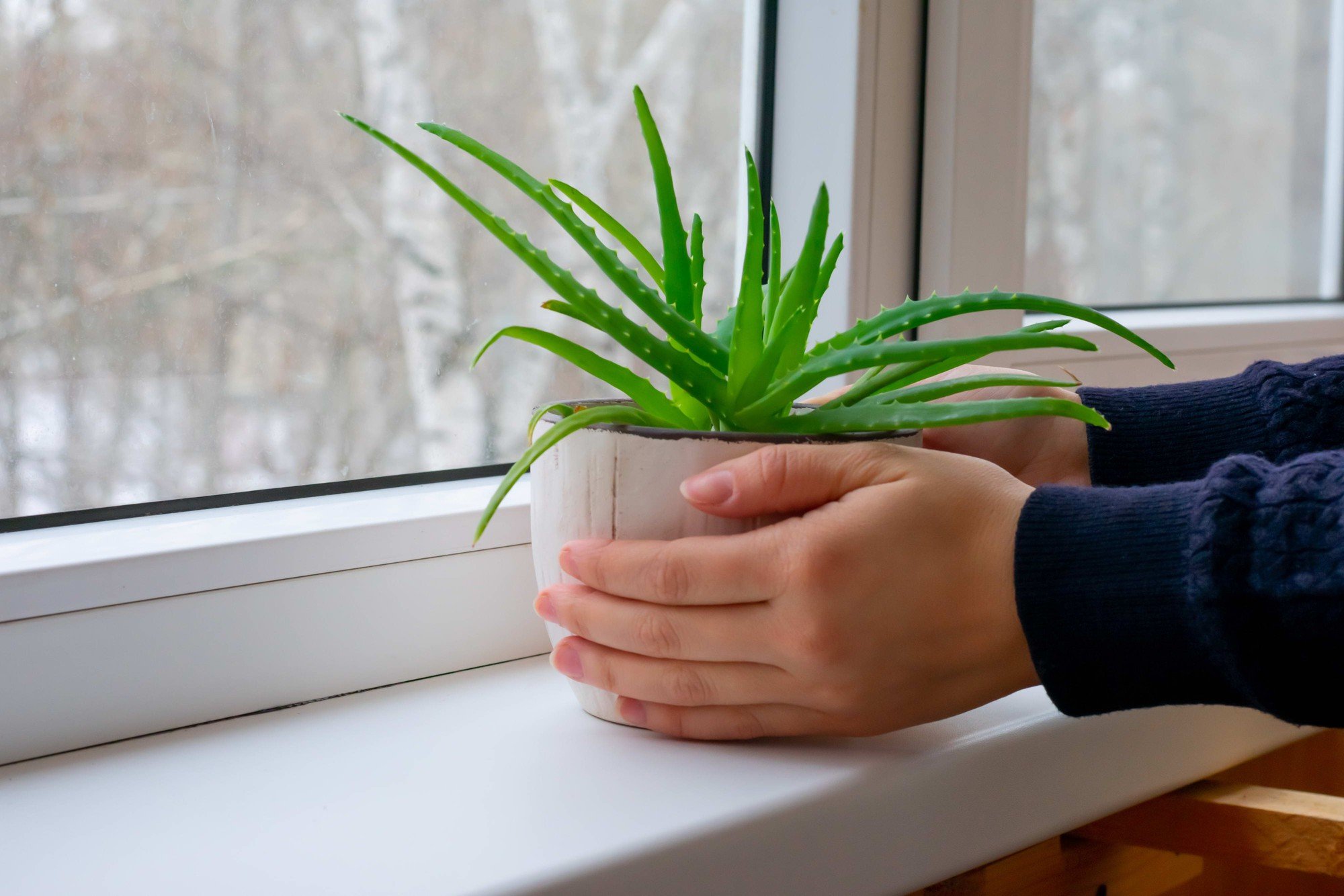
Many types of houseplants have air-purifying properties.
1. Helps reduce stress
A study published in the journal Physiological Anthropology suggests that having plants indoors or in the office can make the body feel more relaxed and comfortable.
In the study, participants were given two tasks: repotting plants in their office and completing a short computer task. After each task, researchers measured biological factors associated with stress, such as heart rate and blood pressure.
Researchers found that caring for plants helped participants reduce stress, while working on computers caused spikes in heart rate and blood pressure, even though they were accustomed to the work. The researchers concluded that caring for plants can reduce both physical and mental stress.
2. Increase concentration and work productivity.
In a small study involving 23 students, researchers found that students who studied in a space with greenery paid more attention to lectures and had higher concentration levels compared to students studying in a conventional classroom.
Numerous studies have found that placing plants in workspaces helps increase productivity and creativity. One 1996 study showed that students in a school's computer lab worked 12% faster and experienced less stress when plants were placed near their workspaces.
3. Support for mental health treatment
According to Healthline , caring for houseplants can support the treatment of mental illnesses. Researchers have used plant care therapy to increase feelings of well-being in people with depression, anxiety, dementia, and other mental health conditions.
4. Helps patients recover faster.
Looking at plants and flowers can help the body recover more quickly after illness, injury, or surgery. Accordingly, a 2002 study showed that people who regularly looked at plants after illness or surgery needed less pain medication and had shorter hospital stays compared to those who did not.
5. Air filtration
In 1989, the US National Aeronautics and Space Administration (NASA) discovered that houseplants can absorb harmful substances from the air, especially in enclosed spaces with little air circulation.
Many houseplants, such as pothos, aloe vera, peace lily, and spider plant, have the ability to produce high levels of oxygen and remove harmful substances from the air such as formaldehyde, xylene, benzene, and trichloroethylene.
Source link
![[Photo] Enchanting ancient rose garden on the mountainside in Nghe An](/_next/image?url=https%3A%2F%2Fvphoto.vietnam.vn%2Fthumb%2F1200x675%2Fvietnam%2Fresource%2FIMAGE%2F2025%2F12%2F19%2F1766109900916_vuon-hong-chin-do-thu-hut-du-khach-toi-check-in-o-ha-noi-3-20162778-1671624890024-1671624890104198100259.jpeg&w=3840&q=75)


![[Photo] General Secretary To Lam visits the exhibition space showcasing books, photo exhibitions, and achievements of digital transformation in journalism.](/_next/image?url=https%3A%2F%2Fvphoto.vietnam.vn%2Fthumb%2F1200x675%2Fvietnam%2Fresource%2FIMAGE%2F2025%2F12%2F19%2F1766110879215_1766110240024-jpg.webp&w=3840&q=75)











































![[INFOGRAPHIC] Overview of the Hoa Phat Dung Quat Rail and Special Steel Production Plant Project](https://vphoto.vietnam.vn/thumb/402x226/vietnam/resource/IMAGE/2025/12/19/1766111183203_z7339170069817-126a3e5a095f62e606a0be41015c1b80.jpeg)











































Comment (0)