

Sophisticated scam scenarios
These organized fraudsters meticulously prepare using technology and behavioral psychology to exploit people's fear of wrongdoing or their desire to receive tax refunds. Mr. Nguyen Duc Anh, owner of the Kha Thang restaurant on Dinh Tien Hoang Street, Van Phu Ward, is one of the victims targeted by these fraudsters.
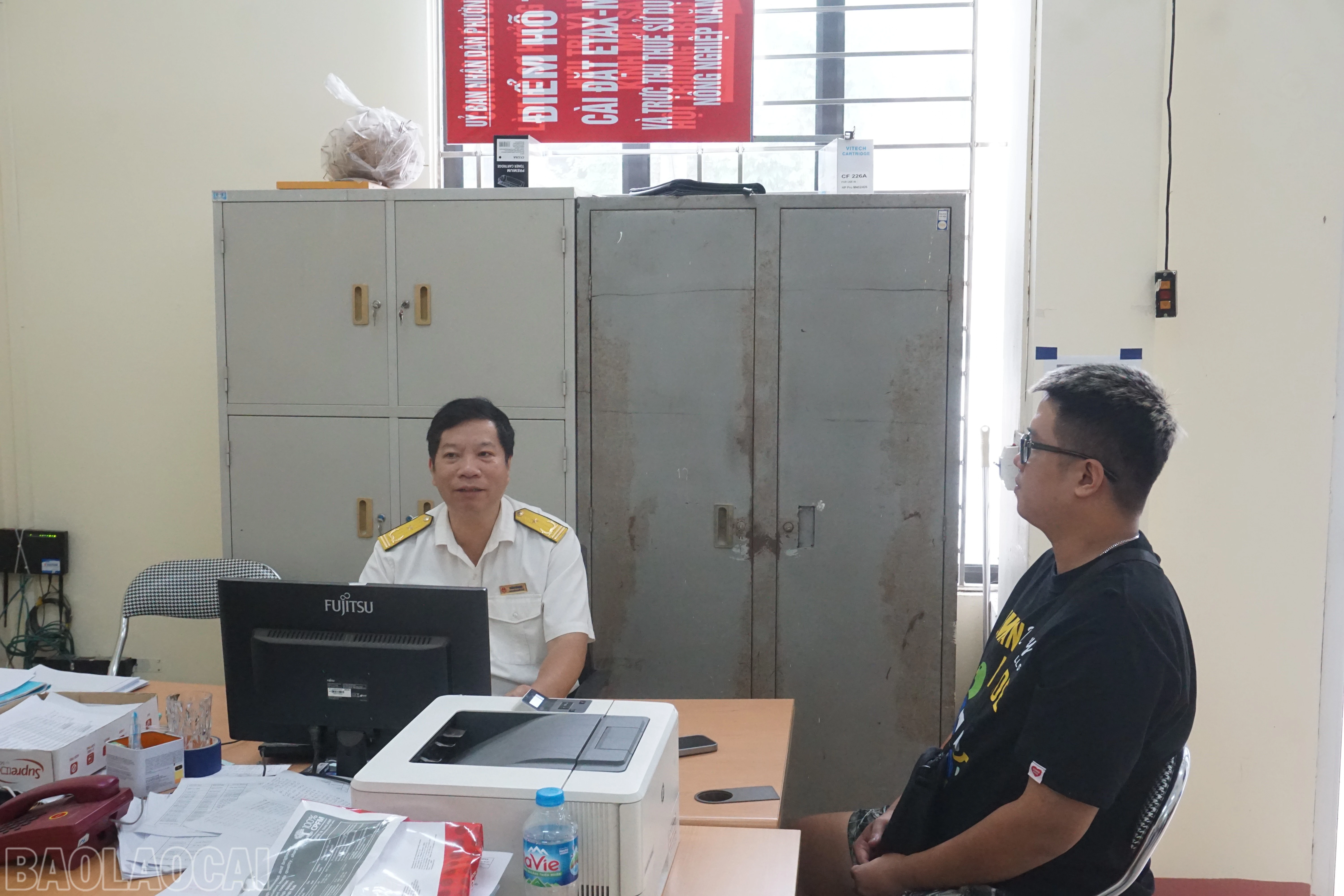
Mr. Nguyen Duc Anh recounted that on May 27th, he received a call from an unknown number. The caller, claiming to be an official from the tax authority directly responsible for his tax affairs, informed him that he was eligible for a tax refund and requested that he add them on the Zalo application for guidance on the procedure.
To gain trust, the perpetrator proactively initiated a video call. On the screen, Mr. Duc Anh saw a man dressed in a tax office uniform, sitting in a space decorated to resemble a government office. Speaking in a professional tone, the perpetrator instructed him to write a tax refund application, and also requested him to transfer 10,000 VND into his business account and perform some actions on the eTax Mobile application to link his bank account.
Noticing something unusual, Mr. Duc Anh stopped all operations and contacted tax officials at facility 6 to verify. He said: "Because I've been frequently informed about scams, I became suspicious when the person asked me to link my bank account. Therefore, I immediately reported it to the tax officials."
Besides impersonating tax officials to guide people through tax refund procedures, Tax Department No. 7 also recorded another tactic: falsifying the working procedures of state agencies. Specifically, these individuals use multiple phone numbers to call citizens and businesses, informing them that their tax identification numbers are incorrect or not yet synchronized with the system.
Subsequently, the perpetrators sent sophisticated, fake "invitation letters" via Zalo or Facebook, complete with official seals and signatures of tax officials. The invitation letters requested taxpayers to bring documents such as their citizen identification card, business registration certificate, tax registration certificate, etc., to the tax office for questioning, creating the impression that this was a legitimate administrative request.
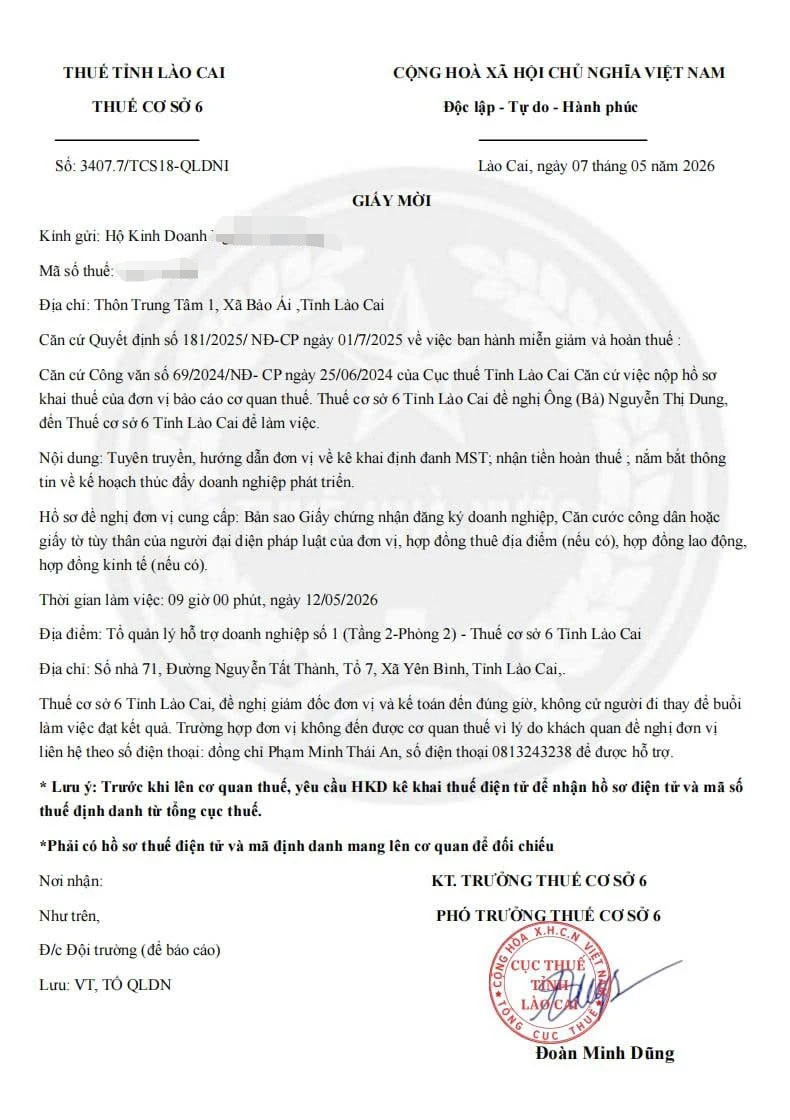
When victims express concern about not having time to travel, the perpetrators immediately suggest online instructions. They send suspicious links, asking taxpayers to access them to complete electronic identity verification procedures, integrate their tax identification number into their citizen ID card, or pay outstanding taxes. When users click on these links, their devices automatically download unofficial application installation files. These fake applications contain malware capable of deeply interfering with the mobile phone's operating system.
Due to limited IT knowledge, many people have been caught off guard and followed the instructions of scammers. As a result, the scammers gain control of the victims' devices or accounts, carrying out transactions to transfer money from the victims' bank accounts to their own accounts.
A coordinated response from the tax sector.
In response to the increasingly complex nature of high-tech fraud, the Tax Department of Lao Cai province has closely coordinated with relevant agencies and telecommunications companies to implement comprehensive countermeasures to protect the legitimate rights of taxpayers and prevent impersonators from exploiting loopholes to commit fraud.
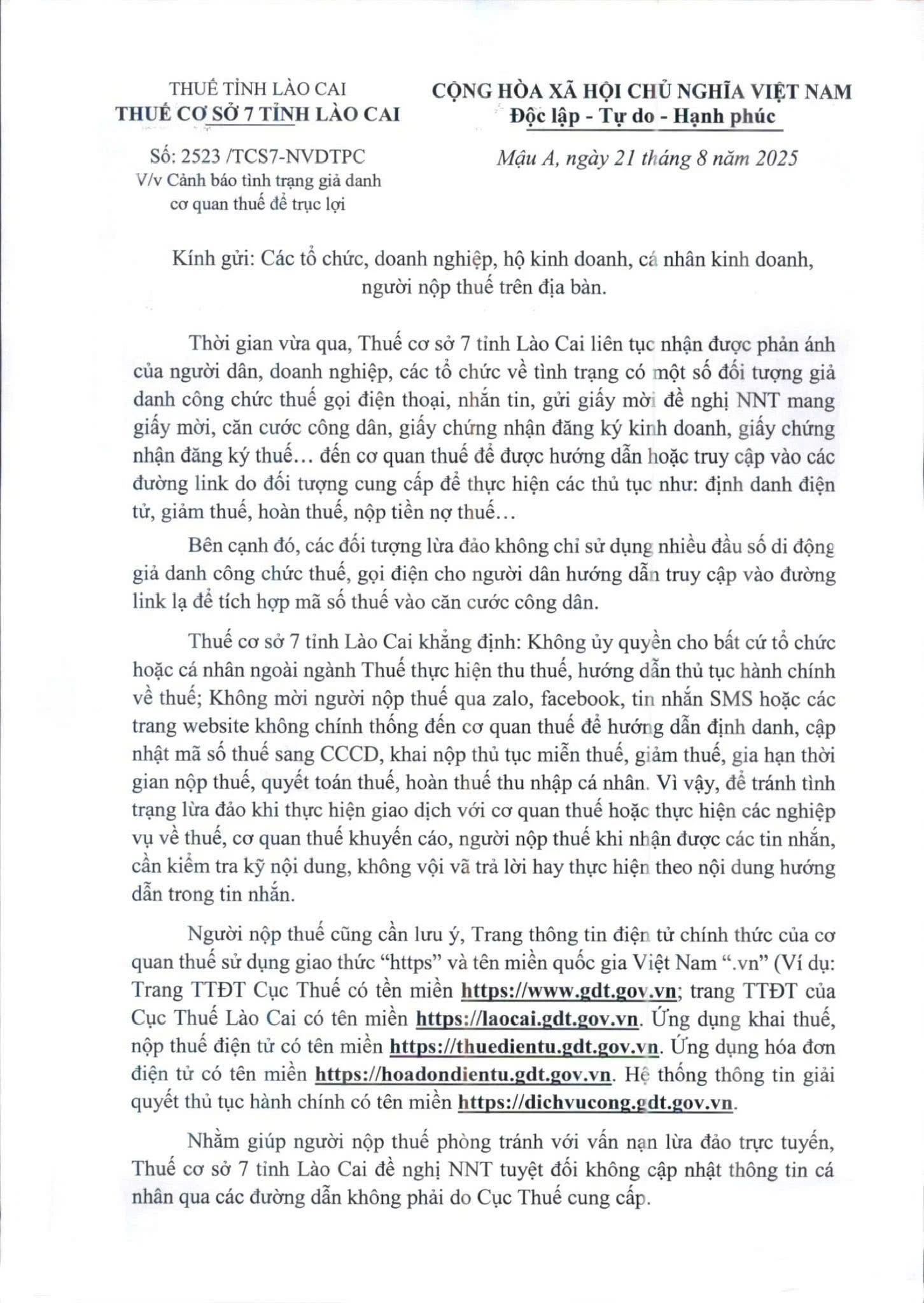
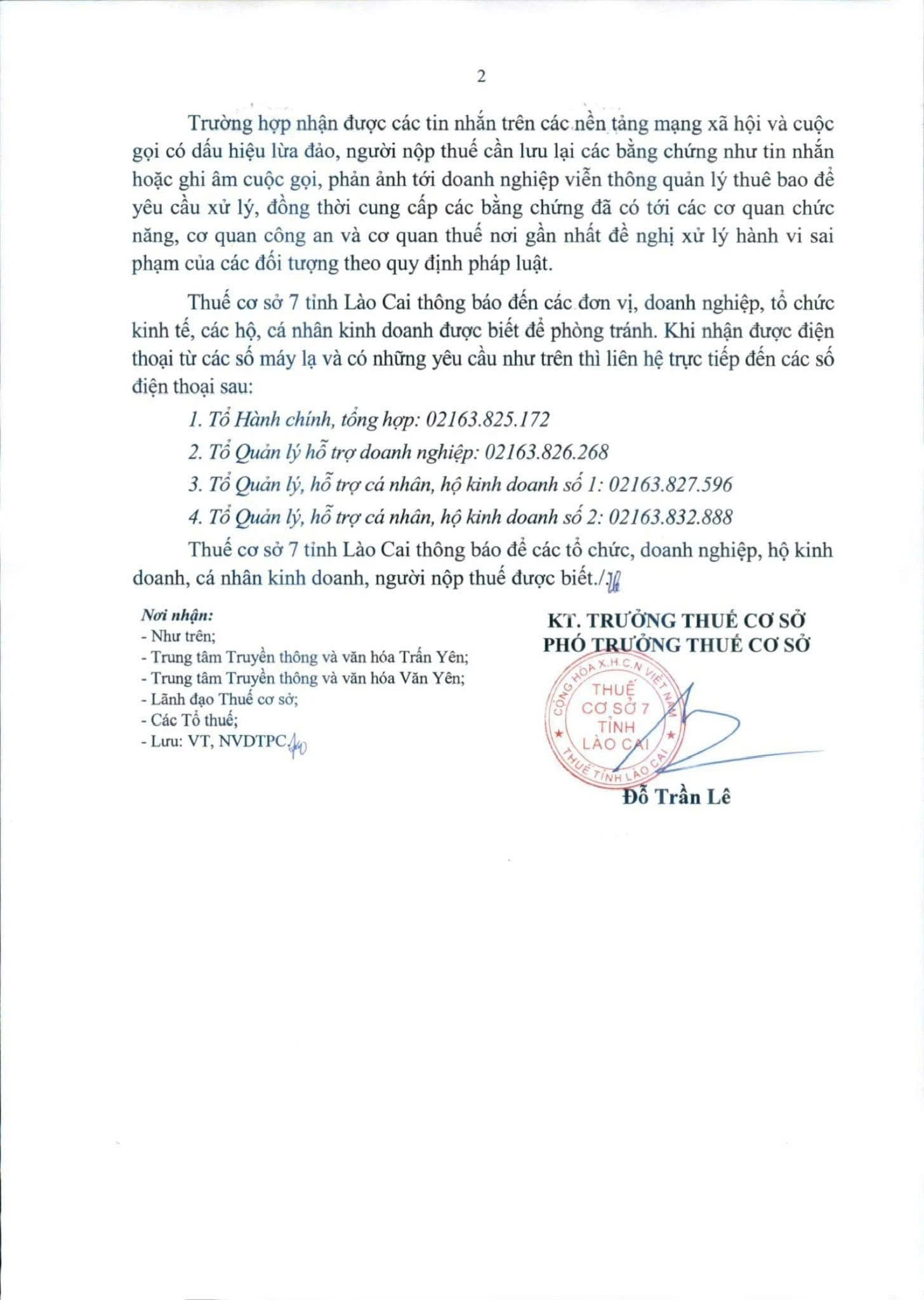
Comrade Dao Duc Thuy - Deputy Head of Tax Office 7 affirmed: “Tax Office 7 does not authorize any organization or individual outside the Tax Department to collect taxes or provide guidance on administrative tax procedures; nor does it invite taxpayers via Zalo, Facebook, SMS messages, or unofficial websites to the tax office to guide them on identification, updating tax codes to citizen identification cards, filing tax exemption or reduction procedures, extending tax payment deadlines, tax settlement, or personal income tax refunds. Therefore, the tax authority advises taxpayers to carefully check the content of any messages they receive and not rush to reply or follow the instructions in the message.”

The tax authorities advise citizens to only access public services through official websites using the secure "https" protocol and the national ".vn" domain. For mobile applications, taxpayers should only download eTax Mobile from official app stores such as CH Play (Android) and App Store (iOS), and absolutely not install it through links provided by strangers.
When receiving invitations or documents related to tax administration, citizens should carefully check the name of the issuing agency, the document format, the title of the signatory, and the official seal as required before making any requests.
Currently, the entire province has approximately 30,000 business household accounts participating in Zalo groups created by the tax authorities to disseminate information, provide guidance, and offer direct contact numbers for tax officials.
It is evident that, along with the benefits brought about by digital transformation, the risk of online fraud is also increasing. Therefore, in addition to the efforts of the authorities, each taxpayer needs to be more vigilant and comply with the recommendations of the tax authorities to protect their assets, personal data, and legitimate rights.
Source: https://baolaocai.vn/lua-dao-cong-nghe-cao-mao-danh-co-quan-thue-post900870.html
![[Photo] First session of the 14th Congress of the Vietnam Trade Union](https://vphoto.vietnam.vn/thumb/1200x675/vietnam/resource/IMAGE/2026/06/03/1780465947883_ndo_br_img-3852-jpg.webp)
![[Photo] Secretary of the National Assembly Party Committee, Chairman of the National Assembly presides over the meeting of the Standing Committee and Executive Committee of the National Assembly Party Committee.](https://vphoto.vietnam.vn/thumb/1200x675/vietnam/resource/IMAGE/2026/06/03/1780480353201_ndo_br_bnd-2585-jpg.webp)


![[Photo] General Secretary and President To Lam presides over a meeting with the Central Organizing Committee.](https://vphoto.vietnam.vn/thumb/1200x675/vietnam/resource/IMAGE/2026/06/03/1780482764658_a1-bnd-4741-3342-jpg.webp)










































![[Video] Sunset at Lap An Lagoon – Where the sun sets over the fishing nets](https://vphoto.vietnam.vn/thumb/1200x675/vietnam/resource/IMAGE/2026/05/31/1780192137701_beach-landscape-sea-water-nature-grass-745871-pxhere-com.jpeg)































Comment (0)