

A major contribution to the achievements of Vietnam's rice industry is the success in seed research.
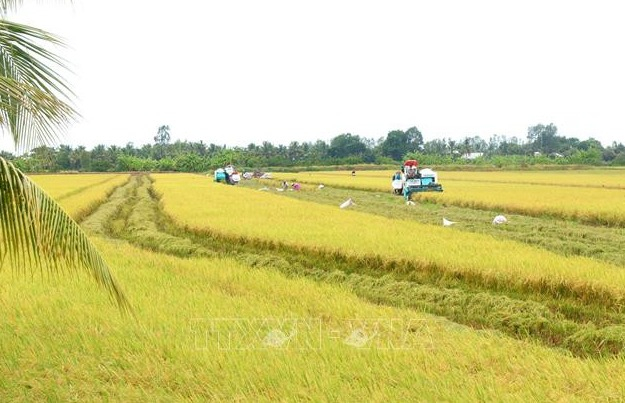
Vietnamese rice varieties have been transferred and applied at a rate of 85%, with 89% of the rice produced being of high quality. To further leverage the advantages of rice cultivation, new directions are needed in research and breeding in the current context. However, many obstacles must also be overcome to ensure these new varieties have a chance to enter the market sooner.
Speaking about the success of Vietnam's rice industry, Mr. Cao Duc Phat, former Minister of Agriculture and Rural Development and Chairman of the Board of Directors of the International Rice Research Institute (IRRI), assessed that it is the result of the efforts of an entire chain from research, production, and trade, bringing good seeds to farmers.
Based on practical needs, Mr. Cao Duc Phat believes that rice breeding research should focus on enabling farmers to sell their rice at higher prices. This means researching varieties that produce higher quality rice and are adaptable to climate change. At the same time, there should be rice varieties that thrive in all conditions, have high yields and quality, reduce emissions, and shorten the rice plant's growth period.
At IRRI, regarding rice nutrition, the unit is researching rice varieties with low glycemic index (GI), suitable for people with or at risk of developing diabetes. Currently, the selling price of anti-diabetic rice is $1,800 per ton, while the price of regular exported rice is around $500-$600 per ton. In addition, IRRI is also researching to create rice varieties with higher protein content, along with drought tolerance, salinity tolerance, flood tolerance, and many other exploitable characteristics.
Professor Nguyen Hong Son, Director of the Vietnam Academy of Agricultural Sciences, also believes that Vietnam's rice industry has developed remarkably thanks to three major achievements: the diversification of disciplines in the field of plant genetics; a research workforce that is now on par with other countries in the region; and a rapidly developing domestic seed industry.
"Businesses should commission research from research institutes because each business has a similar background, capabilities, and investment goals. When businesses invest from the research stage, new products can best meet their business objectives," said Mr. Nguyen Hong Son.
Ms. Tran Kim Lien, Chairwoman of the Board of Directors of Vietnam Seed Corporation (Vinaseed), also affirmed: Businesses are the "extended arm" of research institutions. Businesses will bring good rice varieties into practice faster and more widely.
However, public-private partnerships (PPPs) between businesses and research institutes are currently facing difficulties due to Government Decree No. 70/2018/ND-CP on the planning of the management and use of assets formed through the implementation of science and technology tasks using state capital. Accordingly, businesses do not have ownership rights over rice varieties, even if they contribute to the research process.
According to Ms. Tran Kim Lien, the regulation prohibiting the transfer of exclusive seed varieties will make it very difficult to develop public-private partnerships. Because, when a variety is recognized and all businesses wait for the transfer, it will cause delays in introducing new varieties into practice and make it very difficult to mobilize resources.
"In addition, all 'outright purchase and sale' contracts for plant varieties signed before 2018 are also facing difficulties in renewing their contracts, which could lead to the risk of losing the varieties," Ms. Lien said.
Ms. Tran Kim Lien suggested that the Ministry of Agriculture and Rural Development should soon issue a list of seed rights granted to businesses. At the same time, the technology transfer process should be made public so that businesses with the necessary conditions and needs can participate. In this way, businesses will act as an "extension" of research institutes. The Ministry also needs to soon provide guidance on public-private partnerships to mobilize social resources for rice seed research.
Ms. Nguyen Thi Thanh Thuy, Director of the Department of Science, Technology and Environment, Ministry of Agriculture and Rural Development, also acknowledged that Decree 70/2018/ND-CP made it very difficult for research institutes to transfer seeds to businesses. However, the Intellectual Property Law has resolved those bottlenecks. When registering for seed protection, the owner has the right to own that seed.
According to Deputy Minister of Agriculture and Rural Development Phung Duc Tien, in implementing the Strategy for the Development of Science and Technology and Innovation in the sector; and the Program for the Development of Research and Production of Seeds to Serve the Restructuring of the Sector, the Ministry will give the highest priority to the production of high-quality seeds; key export products; and seeds with high productivity, quality, disease resistance, and adaptability to climate change.
Source


































































Comment (0)