

Increase healthcare benefits for women.
The Vietnamese National Assembly has just passed the Law on Population and the Law on Disease Prevention, marking a significant shift in population management and public health care. This is the first time population policies have been codified into law, placing women at the center of the healthcare, medical treatment, and social security system. Against the backdrop of continuously declining birth rates and a rapidly aging population, the new regulations promise substantial changes to women's health rights and living conditions.
One of the highlights of the Law is extending maternity leave for female workers giving birth to their second child to 7 months instead of the current 6 months. The Ministry of Health stated that the increase in leave time was based on research, reference to international experience, and consideration of domestic financial capabilities and resources.
This maternity leave helps women recover their health after childbirth, care for their young children, and balance work and family life. According to Mr. Le Thanh Dung, Director of the Population Department, the seven-month period is considered average compared to other countries in the region and around the world, ensuring both maternal rights and socio- economic feasibility.
The Population Law also emphasizes the right to equality and voluntariness in childbirth, while supplementing policies on maternal and child health care, prenatal and postnatal screening, malnutrition prevention, mental health counseling, and support for returning to work after maternity leave. This is an important legal basis for protecting women and creating conditions for their comprehensive development in terms of health, family, and career.
Thus, the Population Law and the Disease Prevention Law not only shape the legal framework for population issues but also enhance the status of women and ensure their rights to healthcare and social welfare.
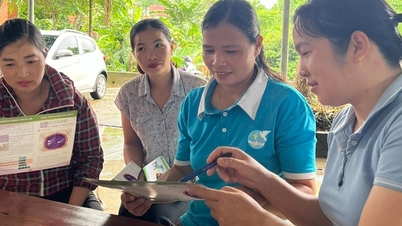
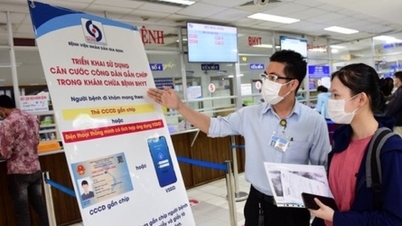
Alongside maternity leave policies, the Population Law and the Disease Prevention Law expand access to medical services through the Health Insurance Fund. Article 44 of the amended Health Insurance Law stipulates that the Fund will cover the costs of regular health check-ups and free screenings according to a schedule and the fund's financial capacity. This is a practical action to help women detect gynecological, endocrine, breast cancer, and non-communicable diseases early, thereby improving their quality of life and reducing treatment costs.
In addition, the law also stipulates support for renting or purchasing social housing for women who have given birth to two children in industrial zones, export processing zones, and localities with low birth rates. Minister of Health Dao Hong Lan emphasized that this priority helps families feel secure in having children, improves living conditions, and supports work-life balance.
A comprehensive support solution is needed.
Experts assess that the new Population Law reflects innovative thinking in population policy, shifting from a quantitative to a qualitative focus, particularly emphasizing women's rights and health. Professor Nguyen Dinh Cu, former Director of the Institute of Population and Social Issues, believes that the sharing of childcare costs by the State, businesses, and the community is essential, helping women in particular and couples in general to stabilize their lives. He noted that support policies regarding healthcare, housing, and finance need to be practical and avoid becoming "suspended policies" if there is a lack of coordination mechanisms and resources.
Longer maternity leave policies, financial support, and priority access to social housing for women who have two children, along with access to regular health check-ups through health insurance, if implemented comprehensively, will reduce economic pressure, improve health, and protect women's rights. Dr. Nguyen Mai Huong, Head of the Adolescent Health Department, stated that the National Children's Hospital will continue to develop a fair working environment, ensuring the rights of female staff, while expanding counseling, early intervention, and interdisciplinary collaboration activities to protect children and support women.
Representatives from the Population Department also emphasized that prioritizing ethnic minority women, women in localities with low birth rates, and female workers who give birth before the age of 35 reflects a policy of segmenting target groups, ensuring social and health effectiveness.
This means that women in need of healthcare and financial support will receive focused resources, maintaining replacement fertility rates while improving their living conditions and health.
However, experts also warn about the effectiveness of these policies. If policies on maternity leave, regular health check-ups, housing support, and financial assistance are not implemented synchronously, women's rights will be difficult to realize.
Source: https://baodautu.vn/luat-dan-so-moi-mo-rong-quyen-loi-y-te-cho-phu-nu-d464404.html

![[Image] Hanoi's urban life under the challenge of a "scorching hot" environment](https://vphoto.vietnam.vn/thumb/1200x675/vietnam/resource/IMAGE/2026/05/25/1779706979265_nang-nong-t5-2026-minh-duy-7-4636-jpg.webp)
![[Image] Close-up view of the interchange connecting the two expressways and Long Thanh Airport.](https://vphoto.vietnam.vn/thumb/1200x675/vietnam/resource/IMAGE/2026/05/25/1779703378210_ndo_br_z7863716673926-224453a31600126cce10622af6290afd-4549-jpg.webp)



























































































Comment (0)