

Gaza is a coastal strip of land on a trade and shipping route along the Mediterranean coast. Held by the Ottoman Empire until 1917, the strip has changed hands from Britain to Egypt to Israel over the past century, and is currently home to more than 2 million Palestinians.
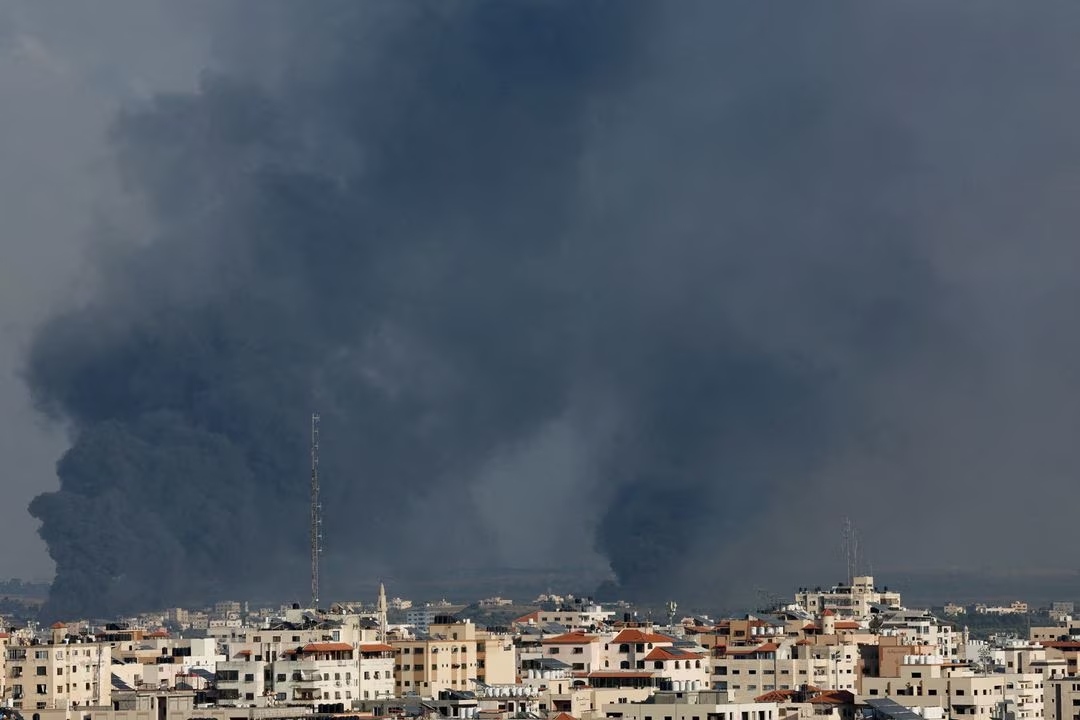
Photo: REUTERS/Mohammed Salem/Archive photo.
The following are some important milestones in the region's modern history:
1948 - The end of British rule.
When British colonial rule in Palestine ended in the 1940s, numerous acts of violence erupted between Jews and Arabs, leading to a war between the State of Israel and its Arab neighbors in May 1948.
Tens of thousands of Palestinians have sought refuge in Gaza after fleeing their homes. The invading Egyptian army seized a thin 40-kilometer strip of coastal land stretching from Sinai to southern Ashkelon. The influx of refugees has tripled Gaza's population to 200,000.
The 1950s and 1960s - Egyptian rule
Egypt controlled the Gaza Strip for two decades under a military governor, allowing Palestinians to work and study in Egypt. Palestinian armed groups, including the "fedayeen," comprised of many refugees, carried out several attacks against Israel, receiving numerous retaliations.
The United Nations established a refugee agency called UNRWA, which to this day assists approximately 1.6 million Palestinian refugees in Gaza, as well as Palestinians in Jordan, Lebanon, Syria, and the West Bank.
1967 - War and Israeli occupation
Israel gained control of the Gaza Strip during the 1967 Middle East War. An Israeli census at the time listed the population of Gaza at 394,000, of which at least 60% were refugees.
After Egypt withdrew from the area, many Gazan laborers began working in agriculture , construction, and the service industry in Israel. At that time, they could also easily travel to Israel. Israeli soldiers remained in the territory to manage and protect the settlements Israel had built in the following decades. The presence of Israeli soldiers became a source of resentment among Palestinians in Gaza.
1987 - First Palestinian Uprising, Hamas Founded
Twenty years after the 1967 war, Palestinians staged their first intifada. This uprising began in December 1987 following a traffic accident in which an Israeli truck crashed into a vehicle carrying Palestinian laborers at the Jabalya refugee camp in Gaza, killing four people. This was followed by a series of stone-throwing protests, strikes, and shutdowns.
Taking advantage of the outrage, the Muslim Brotherhood in Egypt established a Palestinian armed branch, Hamas, headquartered in Gaza. Hamas, aiming to destroy Israel and restore Islamic rule in what it considers occupied Palestine, became a rival of the Fatah party led by Yasser Arafat, the party behind the Palestine Liberation Organization.
1993 - Oslo Accords, semi-autonomous Palestinian status
Israel and Palestine signed a historic peace agreement in 1993 that led to the establishment of the Palestinian National Authority. Under this interim agreement, Palestinians were granted limited control over Gaza and Jericho in the West Bank. Arafat returned to Gaza after decades of exile.
The Oslo Accords granted the Palestinian National Authority certain autonomy and envisioned the establishment of a state within five years. However, this did not materialize. Israel accused Palestine of failing to uphold the security agreements, and Palestinians remain resentful of the Israeli continued settlement construction.
Hamas and Islamic Jihad carried out a number of bombings aimed at undermining the peace process, prompting Israel to impose further restrictions on Palestinian access to Gaza. Hamas also exploited Palestinian criticism of corruption and mismanagement within Arafat's cabinet.
2000 - Second Intifada Uprising
In 2000, Israeli-Palestinian relations reached their worst point with the second Palestinian intifada. This uprising led to a series of suicide bombings and shootings by Palestinians, as well as airstrikes, destruction, the establishment of no-go zones, and the imposition of curfews by Israel.
A major loss was Gaza National Airport, a symbol of the Palestinians' thwarted hopes for economic autonomy and the only direct international link not controlled by Israel or Egypt. Inaugurated in 1998, Israel viewed it as a security risk and destroyed its radar arrays and runway just months after the September 11, 2001 attacks in the United States.
Another loss, besides that, is Gaza's fishing industry, the source of income for tens of thousands of people. Gaza's fishing grounds have been tightened by Israel, a restriction imposed under the pretext of controlling arms smuggling vessels.
2005 - Israel evacuates settlements in Gaza
In August 2005, Israel withdrew all its soldiers and settlers from Gaza, after these groups had been completely isolated from the outside world by Israel itself.
Palestinians demolished abandoned buildings and infrastructure for scrap metal. The removal of settlements allowed for freer movement within Gaza, and a “tunnel economy” was established as armed groups, smugglers, and businessmen began digging tunnels to Egypt.
But Israel's withdrawal also took with it the factories, greenhouses, and workshops that had provided jobs for the people of Gaza.
2006 - Isolated under Hamas
In 2006, Hamas achieved a stunning victory in the Palestinian parliamentary elections and gained complete control of the Gaza Strip, overthrowing forces loyal to Arafat's successor, President Mahmoud Abbas.
Israel has banned tens of thousands of Palestinian workers from traveling to the country, cutting off a vital source of income. Israeli airstrikes destroyed Gaza's only power plant, leading to widespread power outages. Citing security concerns, Israel and Egypt have also imposed stricter restrictions on the movement of people and goods through Gaza's border crossings.
Ambitions to refocus Gaza's economy in the east, away from Israel, were sunk before they could even begin.
Viewing Hamas as a threat, Egyptian leader Abdel Fattah al-Sisi, backed by the military and in power since 2014, closed the border with Gaza and destroyed much of the tunnel system. Once again isolated, Gaza's economy gradually stagnated.
Conflict circle
The Gaza economy has been consistently and negatively impacted by the cycle of conflict, attacks, and retaliations between Israel and Palestinian militant groups.
Prior to 2023, some of the bloodiest confrontations occurred in 2014, when Hamas and other groups launched rockets at central Israeli cities. Israel responded with airstrikes and artillery fire, destroying many residential areas in Gaza.
2023 - Surprise Attack
Although Israel believed it had gained control over Hamas by offering economic incentives to Gaza workers, the organization's soldiers were secretly trained and practicing.
On October 7th, Hamas militants launched a surprise attack in Israel, devastating towns. Israel retaliated by wreaking havoc on Gaza with airstrikes and burning down many districts, making this confrontation one of the most tragic events in the 75-year conflict .
Nguyen Quang Minh (according to Reuters)
Source



























































































Comment (0)