


According to Mr. Nguyen Duy Minh, a conservation artisan in charge of managing the Hai Chau village communal house relic, the Hai Chau communal house is essentially a group of folk religious and worship structures, most notably the ancestral temple of the clans that jointly formed the ancient Hai Chau village. On the anniversary of Hung Vuong's death, the village organizes a festival to pay tribute to and remember its ancestors, in accordance with the principle of "drinking water, remembering the source," a tradition passed down through generations of Vietnamese people.
According to historical records, Hai Chau village was formed during the reign of King Le Thanh Tong. The pioneers and later settlers of Hai Chau village originally came from Hai Chau village, Tinh Gia district, Thanh Hoa province, and joined the army to clear the land and settled there in the late 15th century.
From the reigns of Gia Long to Thanh Thai, the spacious land of Hai Chau village was divided to form new villages in the region, such as Nam Duong, Phuoc Ninh, Thach Thang, Thac Gian, Vinh Trung..., leaving only a main part. In 1900, King Thanh Thai bestowed the name "Hai Chau Chanh Xa" on this remaining area, turning it into a neighborhood where the people mainly adopted a more urban lifestyle, which is the Hai Chau neighborhood to this day.
To acknowledge the merits of those who founded and defended the village, in the 5th year of Gia Long's reign (1804), the village officials of Hai Chau requested permission to build a communal house to worship the village's tutelary deity and the village's ancestors, which was approved by the imperial court. The communal house was initially built near the Han River bank, but in 1858 it was severely damaged by the French colonial invasion and had to be moved further inland.
Subsequently, the French used the communal house as a medical station to treat smallpox (in 1903), so Hai Chau Communal House had to be moved again. King Thanh Thai approved the reconstruction of the communal house along with other structures such as the village communal house, ancestral temples, and the temple of the Holy Mother Thien Yana… at the current location of the communal house.
Mr. Nguyen Duy Minh stated that the current state of the communal house reflects the spirit of reverence for the founding ancestors who pioneered the land, expressing the aspirations of the people of Hai Chau village, past and present, to remember their roots and commemorate the heroic figures who contributed to building the village.
To this day, the people of Hai Chau district continue to maintain the tradition of worshipping at the communal temple and holding festivals to remind future generations not to forget the traces of their ancestors who pioneered the land, to continue to unite in building a peaceful and happy life, and to preserve the age-old traditions and customs.
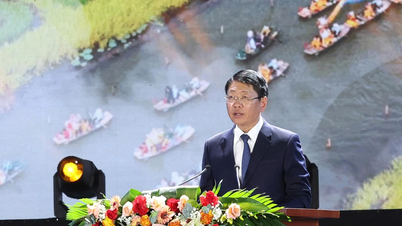
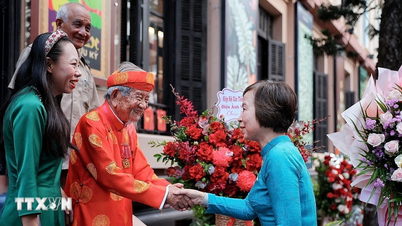
In late April 2026, the Hai Chau village communal house once again held a grand festival, with the full participation of representatives from all the various sects. The festival was clearly divided into two parts: the ceremonial part and the festive part, performing rituals to remember and honor the ancestors while also creating a community space for young people.
Mr. Nguyen Van Duy, Chairman of the Hai Chau Ward People's Committee, acknowledged that Hai Chau Temple has always been a valuable cultural and historical landmark in the area, recording the development process of the land along the Han River, and serving as a foundation and practical example for the formation of Da Nang city today.
Particularly from an urbanization perspective, Hai Chau is the first urban district of the locality, and from the past to the present, it has always demonstrated the typical economic and commercial investment strength of Da Nang. The existence of the Hai Chau village communal house is a unique feature of that development process, a testament to the harmonious blend of socio-cultural values and market economy in the mindset of the people of Da Nang: the village consciousness in the heart of the city.
"I think that the days when the Hai Chau festival drums resound are also the moments when the people of Hai Chau, Da Nang, look back at the history of their ancestors, to improve themselves, so that they can become more progressive and worthy," Mr. Duy confided.
Source: https://baodanang.vn/luu-giu-dau-tien-nhan-mo-dat-3334515.html
![[Photo] General Secretary and President To Lam presides over the meeting to approve the draft report on the results of the second inspection by the Politburo of the Standing Committee of the Hanoi City Party Committee.](https://vphoto.vietnam.vn/thumb/1200x675/vietnam/resource/IMAGE/2026/05/26/1779789811432_a2-bnd-4430-9620-jpg.webp)

























































Comment (0)