

Nvidia announced last week that it had reached a non-exclusive agreement with Groq to license its technology and hire founder and CEO Jonathan Ross, its president, and other employees. According to CNBC, the deal is worth $20 billion, marking Nvidia's largest transaction to date.
The company declined to comment on this figure.
According to analysts, this is not simply a purchase but a strategic move to consolidate its position and expand its advantage over competitors such as Alphabet (Google's parent company) and AMD.
Solving the speed problem
To understand why Nvidia is spending $20 billion on a startup, we need to look at the changing AI market. Over the past three years, the industry has focused on Training – the process of teaching AI models, which requires enormous raw computing power that Nvidia's Blackwell and Hopper series GPUs deliver perfectly.
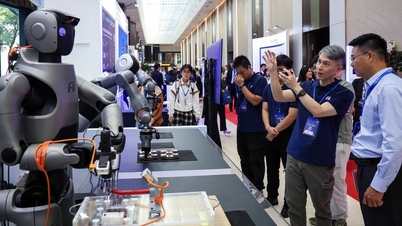
However, the market has shifted to the Inference phase – the process of running AI models to generate results 24/7. As AI moves into real-time applications such as voice assistants and humanoid robots, speed becomes crucial.
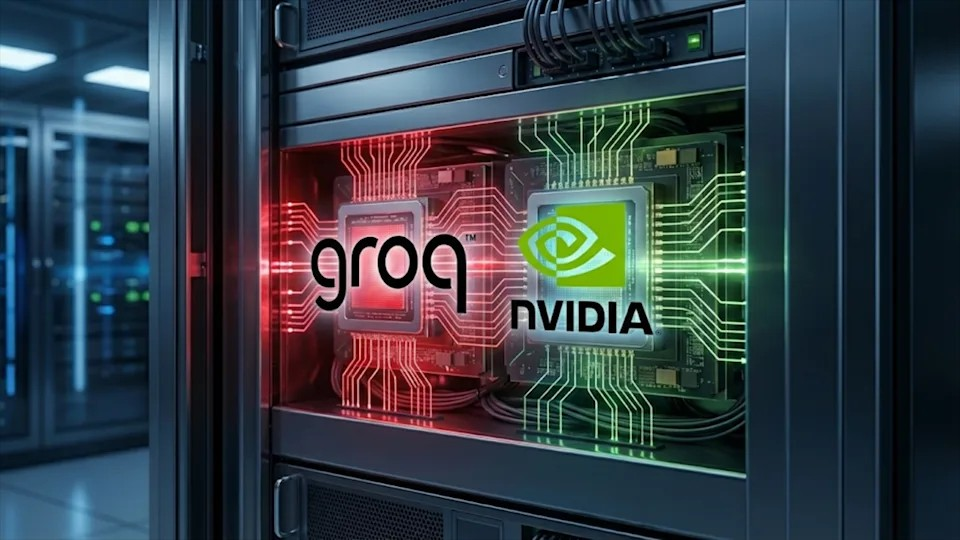
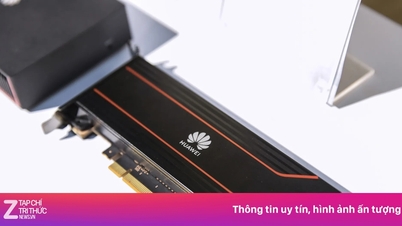
Nvidia's problem is that its GPUs are like giant "freight trains"—capable of transporting large amounts of data but take time to accelerate. They are optimized for processing load rather than instantaneous speed. Meanwhile, Groq's solution (LPU), on the other hand, acts like a "Formula 1 racing car"—lightweight and capable of instantaneous acceleration.
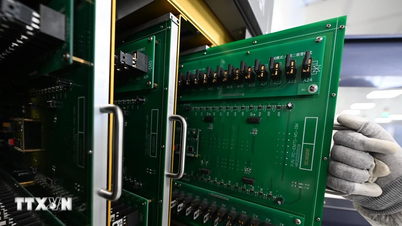
Data shows that Groq's LPUs can process between 300 and 500 tokens per second on standard models like the Llama 2, compared to around 100 tokens per second for standard GPU setups. Technically, Groq's LPUs utilize on-chip SRAM memory technology, making them faster and more energy-efficient for certain tasks, unlike Nvidia GPUs which rely on off-chip HBM memory.
The strategy of "talent acquisition" and circumventing legal hurdles.
In the context of strict antitrust regulations, a merger between a giant and a rising competitor is easily blocked by the U.S. Federal Trade Commission (FTC). Nvidia circumvented this risk by structuring the deal as an "acquire-hire" and a non-exclusive licensing agreement.
Specifically, Nvidia paid for the perpetual right to use Groq's intellectual property. As part of the deal, Nvidia hired most of Groq's engineering and leadership team, including founder Jonathan Ross. Groq technically remains an independent entity, helping to avoid lengthy antitrust proceedings.
Acquiring this technology saves Nvidia 3 to 4 years of research and development (R&D), a period considered "endless" in the rapidly changing world of AI.
A major blow to competitors.
The most valuable asset in this deal is its talent. Jonathan Ross is the inventor of the first generation Tensor Processors (TPUs) at Google. By bringing Ross on board, Nvidia not only neutralized a potential competitor but also deprived Google of its core talent, its biggest rival in the custom chip market.
This deal shows Nvidia is playing both offensive and defensive games. By integrating Groq's low-latency technology, Nvidia is securing the fastest solution for the hottest growth segment of the market. This technology is expected to be integrated into the upcoming Rubin architecture and the company's Project GR00T robotics initiative, reinforcing its ambition to become the "operating system" for the entire AI economy .
(According to Yahoo, Marketbeat)
Source: https://vietnamnet.vn/ly-do-that-su-khien-nvidia-bo-20-ty-usd-cho-mot-startup-be-nho-2476875.html






























![[Photo] Reception to welcome General Secretary and President To Lam and his wife on their State visit to the Philippines](https://vphoto.vietnam.vn/thumb/1200x675/vietnam/resource/IMAGE/2026/06/01/1780295488620_vna-potal-chieu-dai-chao-mung-tong-bi-thu-chu-tich-nuoc-to-lam-va-phu-nhan-tham-cap-nha-nuoc-toi-philippines-8798060-7855-jpg.webp)

























































Comment (0)