

The sound of gongs "calling" the homeland on the plateau.
During every festival in Tan Lap ward, Dak Lak province, the resounding sound of Muong gongs echoes. This sound not only creates a vibrant atmosphere for the festival but also evokes memories of home.
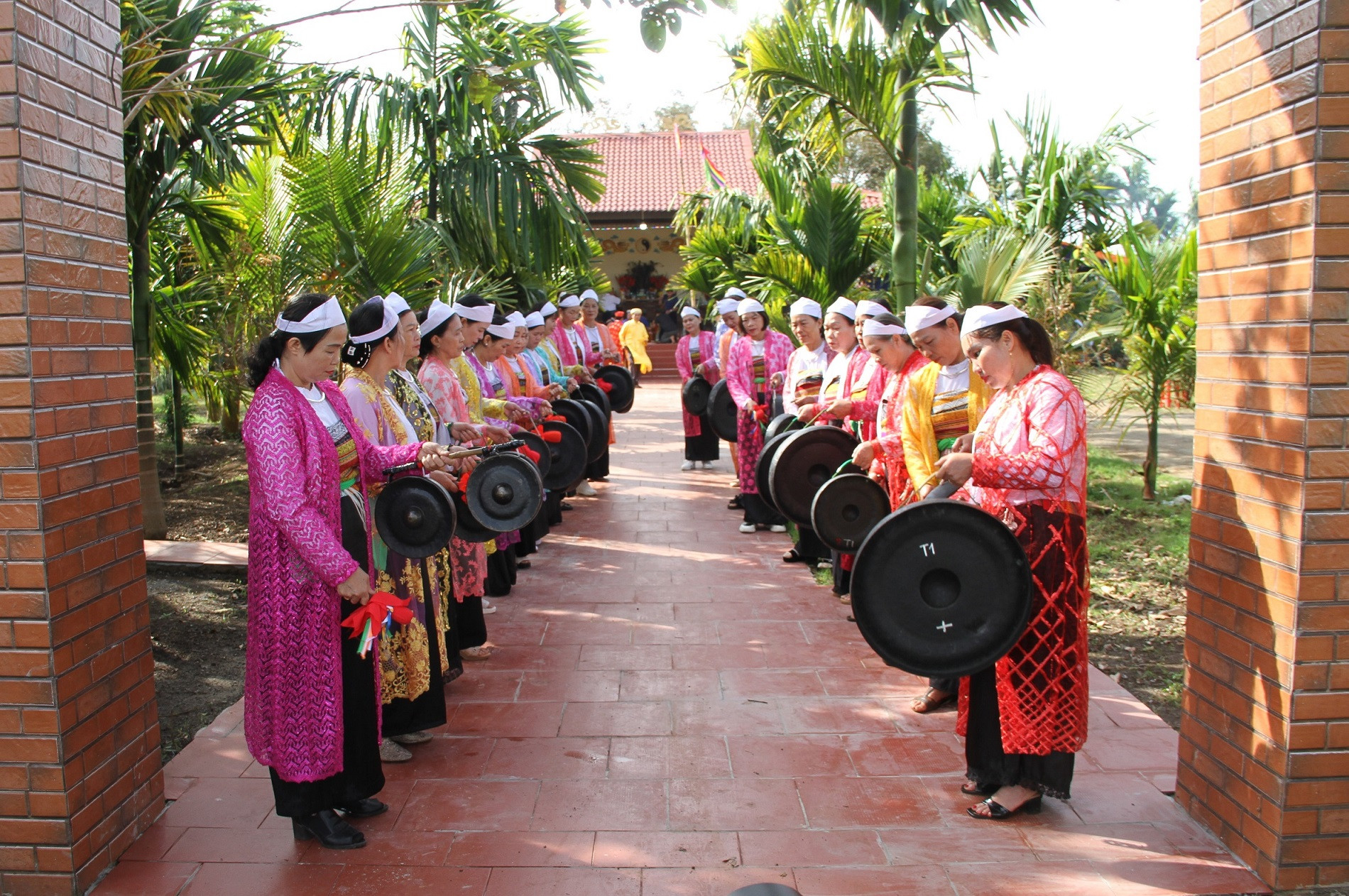
According to the elders, for the Muong people, the sound of gongs symbolizes joy, unity, and prosperity.
Sharing the joy of the younger generation in rhythmic gong playing, Mrs. Nguyen Thi Loc, from residential group 3, Tan Lap ward, Dak Lak province, said: "In the past, Muong gongs were usually played on occasions to welcome kings and officials. Nowadays, Muong gongs are played in festivals, community events, when welcoming Party and State leaders, and in local activities."
"The Muong people only play the gongs on important occasions. Every time the sound resonates, the villagers feel closer to each other, feeling as if they are in the embrace of their village like in the old days," Ms. Loc shared.
Having spent more than half her life connected to the Muong gongs in her new homeland, for Mrs. Loc, the sound of the gongs is not only for performing in festivals but also the sound, the call of her homeland.
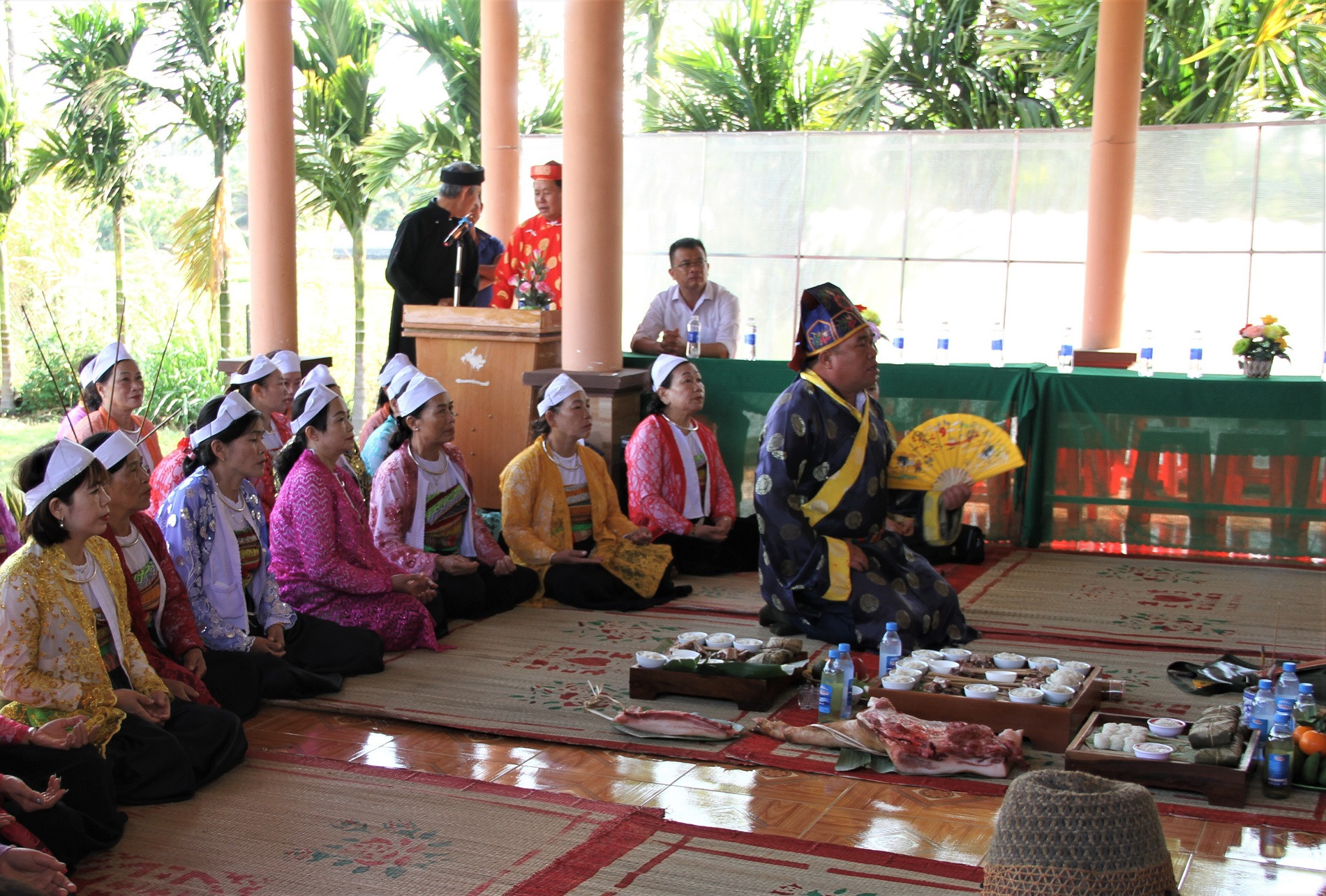
According to Ms. Loc, in the early years of settling in the Central Highlands, life was difficult, but the people still tried to preserve their gongs as a precious asset. To this day, what makes her happiest is that more and more young people are proactively learning to play the gongs to participate in community festivals.
Beyond being a cultural activity, the sound of gongs has become a connecting thread for many generations of Muong people in this new land.
According to Mr. Nguyen Van Lap, head of Thinh Lang communal house in Tan Lap ward, the biggest festival of the Muong community in Dak Lak is the "Khai Ha" ceremony at the beginning of January.
This is an occasion for the villagers to worship the village guardian deity, praying for favorable weather, bountiful harvests, and peaceful lives. The annual opening ceremony aims to preserve the cultural identity of the Muong ethnic group, maintain good customs and traditions, and strengthen community solidarity.
“ The most rewarding thing is that through each festival season, our children and grandchildren learn more about the customs and traditions of our people. If the younger generation still loves the sound of the gongs, then Muong culture will continue to resonate ,” Mr. Lap shared.
Preserving the Mo Muong power line
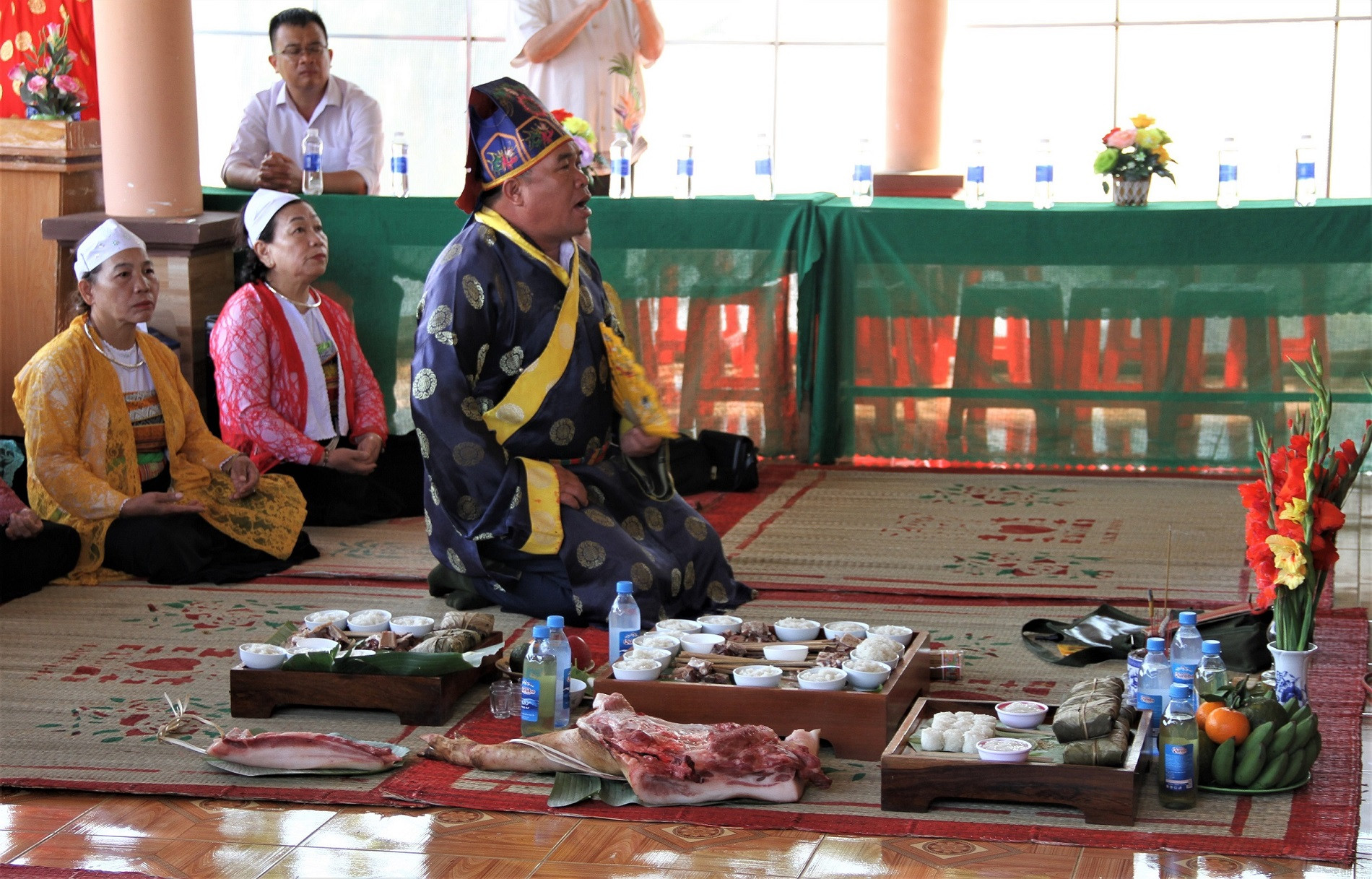
According to the elders, the Muong people began settling in Dak Lak in the 1950s. As their lives gradually stabilized, they built village communal houses to serve as community centers and places for ancestor worship. Many of these communal houses still bear the names of their old hometowns in Hoa Binh province (before the merger) as a way of preserving their ancestral memories.
For example, Lac Son Temple in residential area 2, Tan Lap ward, is a place of cultural and religious activity for the Muong community from the former Lac Son district. The temple is dedicated to King Hung and six figures who contributed to the founding of the village.
Many distinctive cultural features of the Muong people are still preserved here, including the Mo Muong ritual.
During the Hạ ceremony, amidst the swirling incense smoke, artisan Bùi Văn Thành chanted the melodious chants beside the offering tray. The sounds of gongs and drums blended with the sound of the two-stringed flute, creating an atmosphere that was both sacred and intimate.
Mr. Thanh stated: "Mo Muong is not simply a religious ritual, but also contains a wealth of folk knowledge, customs, and life philosophies of the Muong people from generations past."
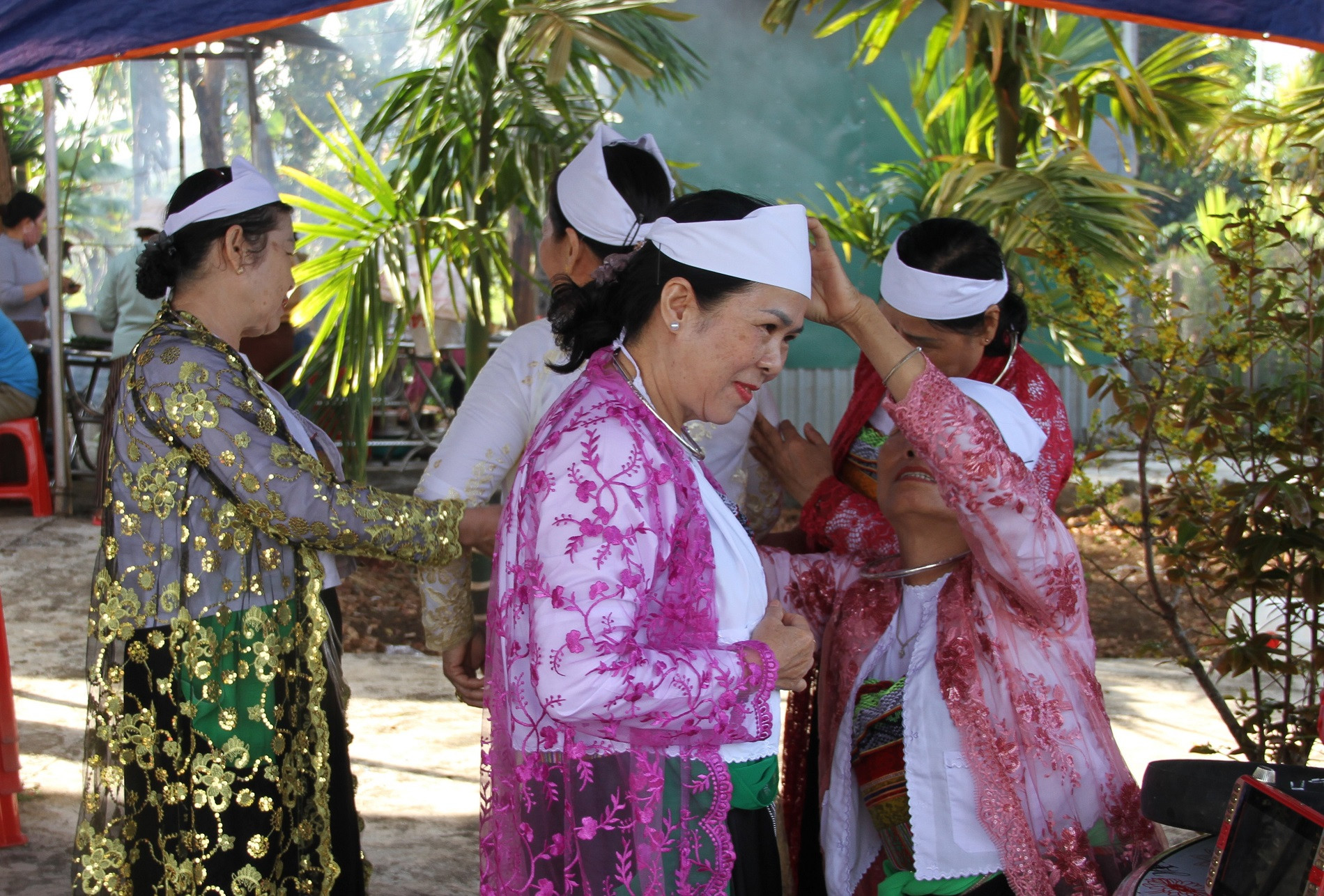
"Since I was a child, I've been learning the rituals from the elders. Now, not many people know how to fully practice the rituals, so those who can still do it try to preserve them. I also actively teach the younger generation so that they can preserve the culture of our people," Mr. Thanh shared.
The Muong community in Dak Lak province currently numbers around 16,000 people, but the number of artisans who still fully practice the Muong shamanic rituals can be counted on the fingers of one hand. Therefore, the shamans play a particularly important role in the spiritual life of the community.
In 2024, "The Social Customs and Beliefs of the Mo Muong People in Dak Lak Province" was included in the National List of Intangible Cultural Heritage. For the Muong community in this mountainous region, this is not only a source of pride but also a motivation for them to continue preserving their ancestral heritage.
Besides gongs and traditional rituals, ethnic costumes are also an important part of the cultural life of the Muong people in Dak Lak.
The image of the Muong woman in her black skirt, white headscarf, and brightly colored blouse clearly reflects her ethnic pride.
In the red soil highlands, the sound of Muong gongs still resonates, and the chants of traditional songs are still sung during the New Year's festivals. And in every Muong person far from home, the "spirit of Muong" is preserved, quietly but persistently, through many generations.
Source: https://vietnamnet.vn/mach-muong-tren-cao-nguyen-dak-lak-2517451.html
![[Image] Close-up view of the interchange connecting the two expressways and Long Thanh Airport.](https://vphoto.vietnam.vn/thumb/1200x675/vietnam/resource/IMAGE/2026/05/25/1779703378210_ndo_br_z7863716673926-224453a31600126cce10622af6290afd-4549-jpg.webp)
![[Image] Hanoi's urban life under the challenge of a "scorching hot" environment](https://vphoto.vietnam.vn/thumb/1200x675/vietnam/resource/IMAGE/2026/05/25/1779706979265_nang-nong-t5-2026-minh-duy-7-4636-jpg.webp)
















































































Comment (0)