

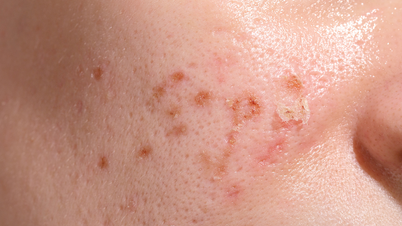
Rashes in children are quite common, especially during infancy and the first few years of life. When they see red spots, patches of rash on their child's skin, or the child constantly scratching, many parents worry whether this is a sign of a serious medical condition.
Most cases of rashes in children are benign and can improve with proper care. However, in some cases, this condition may be a warning sign of infection, allergy, or other medical conditions that require prompt treatment.
Therefore, parents need to recognize abnormal signs and know how to properly care for their child's skin to help them recover quickly and minimize complications.
Common causes of rashes in children
Allergies and skin irritation
- Common causes of rashes in children
- When should you take your child to the doctor?
- How to care for a child with a rash at home.
- How to prevent rashes in children?
Children may develop rashes due to contact with irritants such as:
- Soap has strong cleaning properties.
- Laundry detergent, fabric softener.
- Cosmetics.
- Metal from jewelry or clothing fasteners.
- Pet hair.
- Pollen, dust.
Additionally, some children who are allergic to foods such as seafood, eggs, milk, or peanuts may also develop hives or rashes after eating them.
Diaper rash
Diaper rash is a very common condition in young children, especially infants. This occurs when the diaper area is constantly wet and in prolonged contact with urine or feces, causing skin irritation.
If parents have been changing diapers regularly, cleaning properly, and using diaper rash cream but the condition does not improve or worsens, the child should be taken to a doctor to rule out fungal or bacterial infections.
Heat rash
In hot and humid weather, children are prone to heat rash due to overactive but blocked sweat glands. Heat rash usually appears on the neck, chest, back, or skin folds with tiny red bumps that cause itching and discomfort.
Atopic dermatitis and eczema
This is a common chronic dermatological condition in young children. Children typically develop red, dry, scaly patches of skin accompanied by intense itching. The condition easily recurs with changes in weather or exposure to irritants.

Rashes in children are a fairly common condition.
When should you take your child to the doctor?
Although most rashes are harmless, parents should still take their child to a medical facility if the following signs appear:
- Babies under 6 months old develop a rash.
- Rash accompanied by fever.
- The affected skin area may ooze fluid, be very red, swollen, or moist.
- The rash spread beyond the diaper area.
- They often appear in skin folds such as the neck, groin, and armpits.
- The condition did not improve after about 2 days of home care.
- The skin peels or flakes, especially on the palms and soles of the feet.
- Tiny red dots appear that don't disappear when pressed.
- The child is tired, refuses to breastfeed, or has a poor appetite.
- Generalized hives (urticaria)
- There are unusual bruises that were not caused by impact.
These could be warning signs of skin infections, severe allergies, or other conditions that require prompt treatment to avoid complications.
How to care for a child with a rash at home.
Keep your skin clean.
Proper skin hygiene is an important step in improving rashes. Parents should use mild soaps suitable for children's skin to bathe their children.
When cleaning the affected area, use gentle movements, avoiding harsh scrubbing or brushing, as this can cause further damage to the skin. After showering, gently pat dry with a soft towel instead of rubbing vigorously.
Do not cover the rash area too tightly.
Many parents, fearing dirt and dust, often cover their children's wounds or dress them in too many layers of clothing. However, this can cause the affected skin area to become stuffy, sweat more, and worsen the itching.
Children should wear loose-fitting, breathable clothing that absorbs sweat well.
Relieves itching in children.
To relieve itching, parents can use a clean cloth dampened with cool water and gently apply it to the affected area. This helps soothe the skin, reduce redness and swelling, and prevent the child from scratching excessively.
In cases of severe itching, a doctor may prescribe appropriate topical creams or antihistamines. Under no circumstances should you use topical corticosteroids on your child without guidance from a healthcare professional.
Trim your child's nails.
Young children often lack the ability to control their scratching instincts when they itch. Constant scratching can cause skin abrasions, increasing the risk of infection.
Parents should trim their children's nails neatly and keep their hands clean. For young children, soft mittens can be worn while sleeping to reduce scratching during sleep.
How to prevent rashes in children?
Many parents have a habit of buying topical medications or applying folk remedies when their children develop rashes. However, improper treatment can worsen the skin condition or delay diagnosis.
In particular, you should not use corticosteroid-containing medications for extended periods without consulting a doctor, as this can cause thinning of the skin, skin atrophy, and many other side effects.
If the rash persists, spreads, or is accompanied by other systemic symptoms, the child should be examined by a specialist to determine the cause and receive appropriate treatment.
To minimize the risk of rashes and skin irritation in children, parents should:
- Keep your baby's skin clean and dry.
- Change diapers regularly for young children.
- Use gentle skincare products that do not contain strong fragrances.
- Avoid dressing children in clothes that are too tight or hot.
- Limit children's exposure to dirt, chemicals, or pet dander.
- Make sure your child drinks enough water in hot weather.
- Ensure adequate nutrition to boost immunity.
For children with allergies or atopic dermatitis, it is necessary to carefully monitor factors that trigger flare-ups in order to proactively prevent them.
In summary: Rashes in children are mostly benign, but should not be taken lightly. Early recognition of abnormal signs, proper skin care, and taking the child to the doctor when necessary will help limit complications and better protect the child's health.
Source: https://suckhoedoisong.vn/man-ngua-o-tre-can-xu-tri-nhu-the-nao-169260525190038754.htm

![[Photo] General Secretary and President To Lam presides over a meeting with the Central Organizing Committee.](https://vphoto.vietnam.vn/thumb/1200x675/vietnam/resource/IMAGE/2026/06/03/1780482764658_a1-bnd-4741-3342-jpg.webp)
![[Photo] Secretary of the National Assembly Party Committee, Chairman of the National Assembly presides over the meeting of the Standing Committee and Executive Committee of the National Assembly Party Committee.](https://vphoto.vietnam.vn/thumb/1200x675/vietnam/resource/IMAGE/2026/06/03/1780480353201_ndo_br_bnd-2585-jpg.webp)
![[Photo] First session of the 14th Congress of the Vietnam Trade Union](https://vphoto.vietnam.vn/thumb/1200x675/vietnam/resource/IMAGE/2026/06/03/1780465947883_ndo_br_img-3852-jpg.webp)



















































![[Video] Sunset at Lap An Lagoon – Where the sun sets over the fishing nets](https://vphoto.vietnam.vn/thumb/1200x675/vietnam/resource/IMAGE/2026/05/31/1780192137701_beach-landscape-sea-water-nature-grass-745871-pxhere-com.jpeg)









































Comment (0)