

(CLO) Fake websites impersonating news organizations, employing sophisticated tactics such as copying mastheads and 'stealing' content, are becoming a direct threat to the credibility of journalism and public trust.
Counterfeiting cufflinks, copying content
The problem of fake websites impersonating news organizations is becoming an increasingly serious threat to mainstream journalism and public trust. For example, on March 19th, the newspaper Van Hoa discovered a fake website, 'vanhoadisan.com,' using almost all of its content, while also publishing unverified information, violating copyright, and potentially spreading fake news.
Previously, at the end of 2024, Nghe An Newspaper also encountered a similar situation when a website called 'baonghean.net' appeared on the internet, identical to the Nghe An Newspaper's domain name ('baonghean.vn'), causing harmful confusion. What's noteworthy is that the website "baonghean.net" not only had the same domain name (only differing in the extension - .vn versus .net) but also had the same masthead as Nghe An Newspaper.
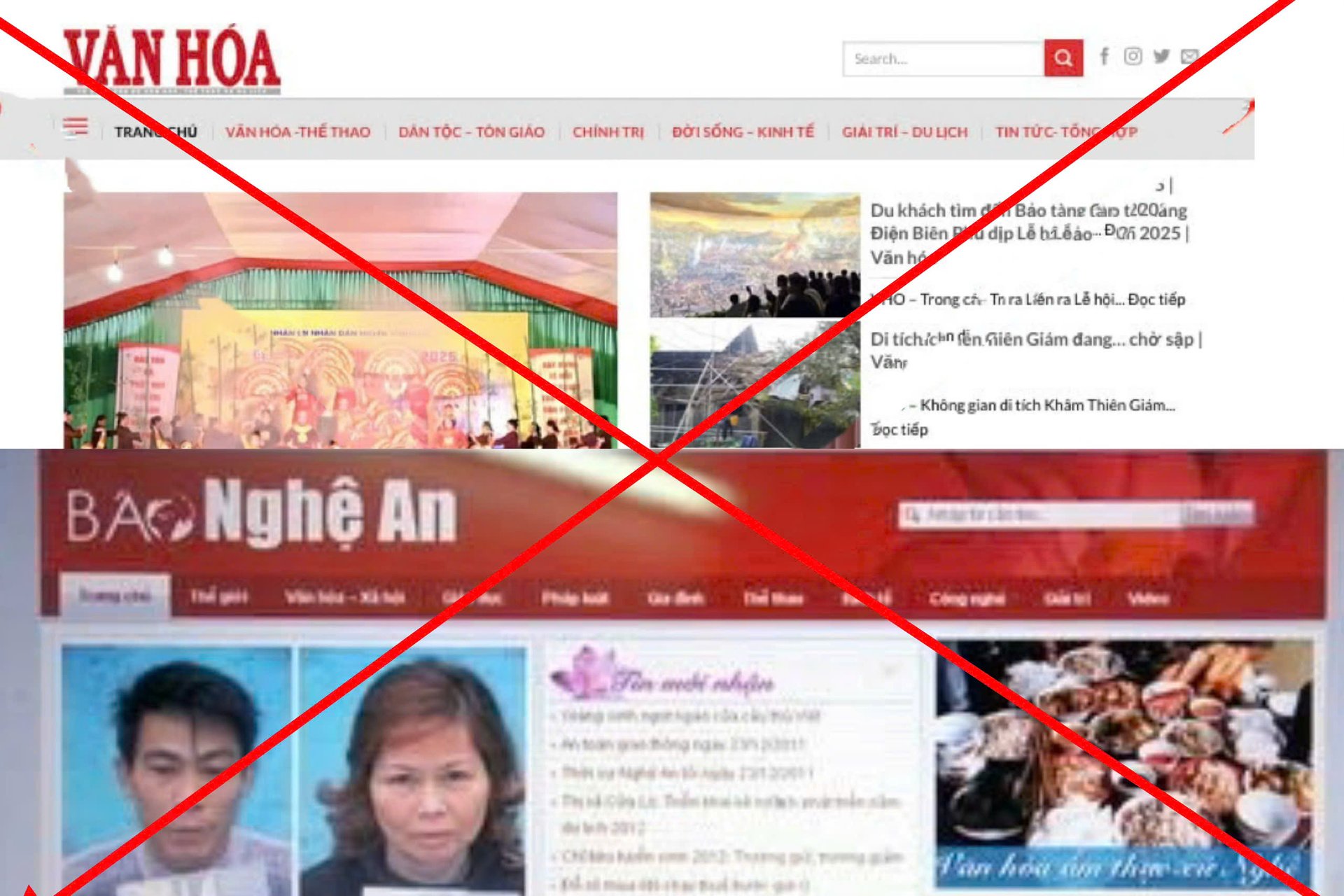
Fake websites impersonating news organizations.
Events organized by media outlets have also become targets for malicious actors. Recently, the organizing committee of the "Proud of My Homeland" Half Marathon of the Nguoi Lao Dong Newspaper had to issue a warning about fake fanpages impersonating the race and the organizing committee to scam, collect personal information, and steal money from athletes.
These fake pages also spread misinformation, such as accepting registrations for a "fictitious" number of child athletes, offering free tickets to the Kids Run, exaggerating the value of the Kids Run prize, associating the event with "fictitious" sponsors, and encouraging participation through links provided by these malicious individuals.
Mr. Nguyen Anh Vu, Editor-in-Chief of Van Hoa Newspaper, stated that after receiving feedback from readers, Van Hoa Newspaper discovered a sophisticated fake website, from its masthead and links to its content. This website not only copied the original masthead of the online version of Van Hoa Newspaper, including the phrase "Agency of the Ministry of Culture, Sports and Tourism" to deceive readers, but also copied all the information from the newspaper.
"The most dangerous thing is that these fake websites can easily spread false, misleading, or even harmful information, causing readers to confuse it with information from legitimate news agencies. This not only affects the reputation and brand of newspapers, but also causes information chaos, making it difficult for readers to distinguish between truth and falsehood," Mr. Vu said.
Furthermore, these fake websites also publish unverified and unverified information, increasing the risk of spreading misinformation and causing public confusion.
Upon discovering the incident, the Culture Newspaper immediately issued an official statement on its official website and sent a written report to the Department of Broadcasting, Television and Electronic Information under the Ministry of Culture, Sports and Tourism so that relevant authorities could take timely action.
"In fact, the motives of these individuals have not yet been determined. However, this behavior is clearly a violation of the law and may be aimed at profiting by soliciting advertising, media coverage, or other forms of illicit gain," Mr. Nguyen Anh Vu commented.
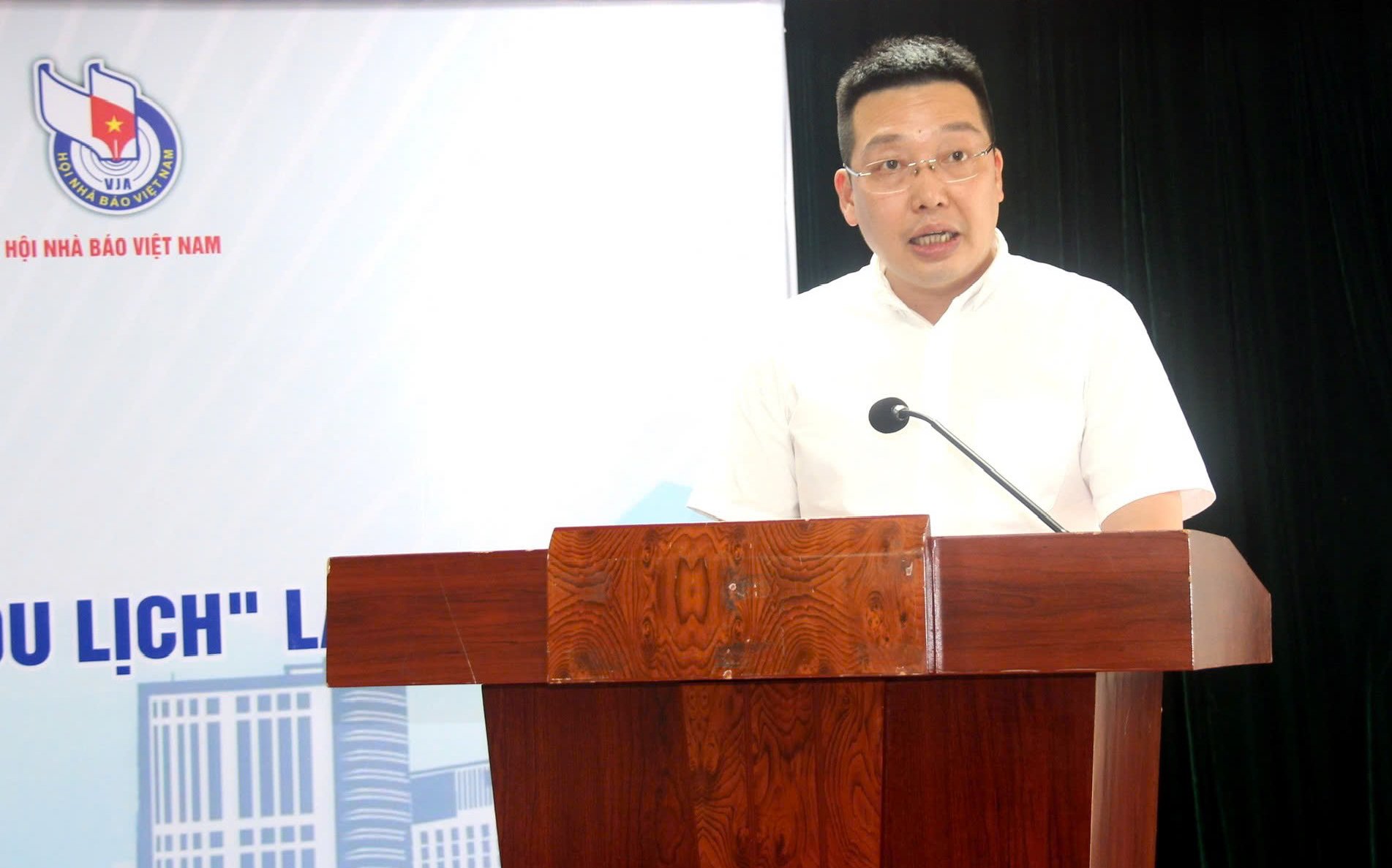
Mr. Nguyen Anh Vu, Editor-in-Chief of Van Hoa Newspaper.
To protect its brand and reputation, the Culture Newspaper proactively published official information on its website and also requested the involvement of relevant authorities. "This is a sophisticated and dangerous form of forgery. Therefore, we will intensify our scanning efforts to protect copyright and authentic information sources, and to promptly detect fake websites," Mr. Nguyen Anh Vu emphasized.
Referring to the effectiveness of current legal measures, Mr. Vu acknowledged that although authorities have taken decisive action, the persistent and ever-evolving nature of these violations demands stricter measures, including harsher penalties, to deter such activities.
Shortage of manpower, lack of critical thinking skills.
Ms. Nguyen Thi Viet Nga, Deputy Head of the Standing Delegation of the National Assembly of Hai Duong Province, frankly pointed out: "The fight against cybercrime in general, and fake websites impersonating news agencies in particular, is still extremely challenging. The rapid development of digital technology and the explosion of social media have created conditions for malicious individuals to easily commit crimes. At the same time, the ability to create websites in a short time requires us to have effective prevention and protection mechanisms."
In reality, this fight is far from easy. Objective difficulties, such as social media platforms having servers located abroad, making cross-border handling complicated, and the shortage of high-quality human resources in the cybercrime prevention force, are major obstacles. Ms. Nga emphasized: "High-quality human resources in information technology are a key factor in this fight. We need to invest heavily in training and attracting talent to effectively address the challenges in cyberspace."

Ms. Nguyen Thi Viet Nga, Deputy Head of the Standing Delegation of the National Assembly of Hai Duong Province.
However, subjective factors also contribute significantly to the prevalence of this problem. People's awareness of using and accessing social media is still limited, leading to easy deception and reliance on fake websites.
The alarming reality is that many people still carelessly share misinformation from unreliable sources, and some even face penalties for doing so. "Many people are penalized for quoting and spreading false information from unreliable sources. They think they are innocent when they simply share the information, but that's not the case. The naivety of social media users is also partly why the fight against cybercrime remains so challenging," Ms. Nga pointed out.
According to the Member of Parliament, to thoroughly resolve this issue, the cooperation of many agencies and departments is needed, from the police and state management agencies for information and communication to the Ministry of Science and Technology. If this is considered the responsibility of only one agency, it will be very difficult, as this issue involves many parties and requires many different solutions.
On behalf of the National Assembly, Ms. Nga affirmed its important role in perfecting the legal framework for cybersecurity management. However, the current legal system still has many loopholes, especially in the field of artificial intelligence.
"The National Assembly plays a crucial role in building and perfecting the legal framework, as the legislative body... However, our legal system is still not truly complete. For example, the legal system related to artificial intelligence lacks specific regulations," Ms. Nga analyzed.
In reality, the online environment, which was expected to be a space for transparent information sharing, has become chaotic, making it difficult to distinguish between genuine and counterfeit information. More dangerously, fake websites serve as a springboard for more sophisticated crimes, ranging from online fraud to cyberattacks and data theft, seriously impacting national security.
Ms. Nguyen Thi Viet Nga believes that to address these challenges, a decisive effort from the entire political system and society is needed. Improving the legal framework, enhancing the capacity of law enforcement agencies, and especially equipping citizens with a "shield" of critical thinking are urgent solutions. Only then can we build a safe and healthy online environment where official information is protected and disseminated.
Hoang Anh
Source: https://www.congluan.vn/mang-xa-hoi-nhai-bao-chi-hiem-hoa-kho-luong-post339330.html


![[Photo] General Secretary and President To Lam presides over a meeting on preparations for the review of one year of operation of the three-tiered government system.](https://vphoto.vietnam.vn/thumb/1200x675/vietnam/resource/IMAGE/2026/06/02/1780391821195_a1-bnd-4595-9717-jpg.webp)
































































































Comment (0)