

Oddly enough, both sides deliberately tried to give the outside world the impression that negotiations were progressing, not stalling; that they were achieving certain results, not nothing; and that there were prospects for success, not a deadlock. Yet, in reality, both sides continued military action despite the ceasefire agreement.
The situation is sensitive because both sides are under internal pressure and are unwilling to abandon the preconditions they have set for each other. The side that makes concessions first will be perceived as defeated and at a disadvantage, while both sides have an urgent need to end the war. The peace talks between the US and Iran are essentially mired in uncertainty, caught between progress and stagnation, even regression; between the prospect of a successful conclusion and the risk of collapse; between sustained peace talks and continued military conflict; between achieving only a few provisional agreements and reaching a comprehensive peace treaty.
This ambiguity is a deliberate strategic move by both sides, as it benefits both within the current context and overall balance of power. It allows both sides to easily maneuver and always blame each other for any delays or potential breakdowns in the current peace talks. It enables both sides to maintain a defensive stance while simultaneously being ready to unexpectedly create a breakthrough in the peace process. It not only justifies but also rationalizes military actions by both sides against each other.
From another perspective, this ambiguity seems to be an inevitable development, as both sides advocate maintaining the peace talks and want to quickly achieve a peace agreement, but have yet to reach a compromise on the core contents of the peace treaty. This situation will persist as long as both the US and Iran are not pushed into a corner militarily and in terms of security, foreign policy, and domestic affairs. The reality is also likely to remain unchanged because the US prioritizes forcing the most concessions from Iran, while Iran, completely distrusting the US, places paramount importance on pressuring the US into specific and firm commitments that prevent the US from unilaterally reversing the situation.
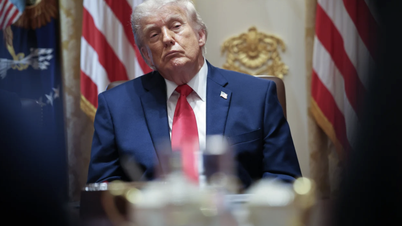
This ambiguity benefits both Iran and the United States. It allows Iran to save face and gain time to recover economically and strengthen its military capabilities, while retaining its strategic assets: its missile and nuclear programs and its enriched uranium stockpile exceeding 60%. It enables US President Donald Trump to maintain a policy of intimidation and blockade against Iran, testing market reactions, oil prices, and the responses of allies and strategic partners to maximize the effect of a peace agreement ending the war with Iran.
Based on the current state of the peace talks between the US and Iran, three scenarios can be predicted for the future. The first, and least likely, scenario is that the two sides reach a comprehensive peace agreement that includes solutions to all current outstanding issues. The second, less likely but not ruled out, scenario is that the negotiations break down and the two sides return to war. The third, and most likely, scenario is the continuation of the current situation, meaning a ceasefire and negotiations along with occasional military clashes.
Source: https://hanoimoi.vn/map-mo-de-de-be-tien-thoai-1015631.html



























































































Comment (0)