

 |
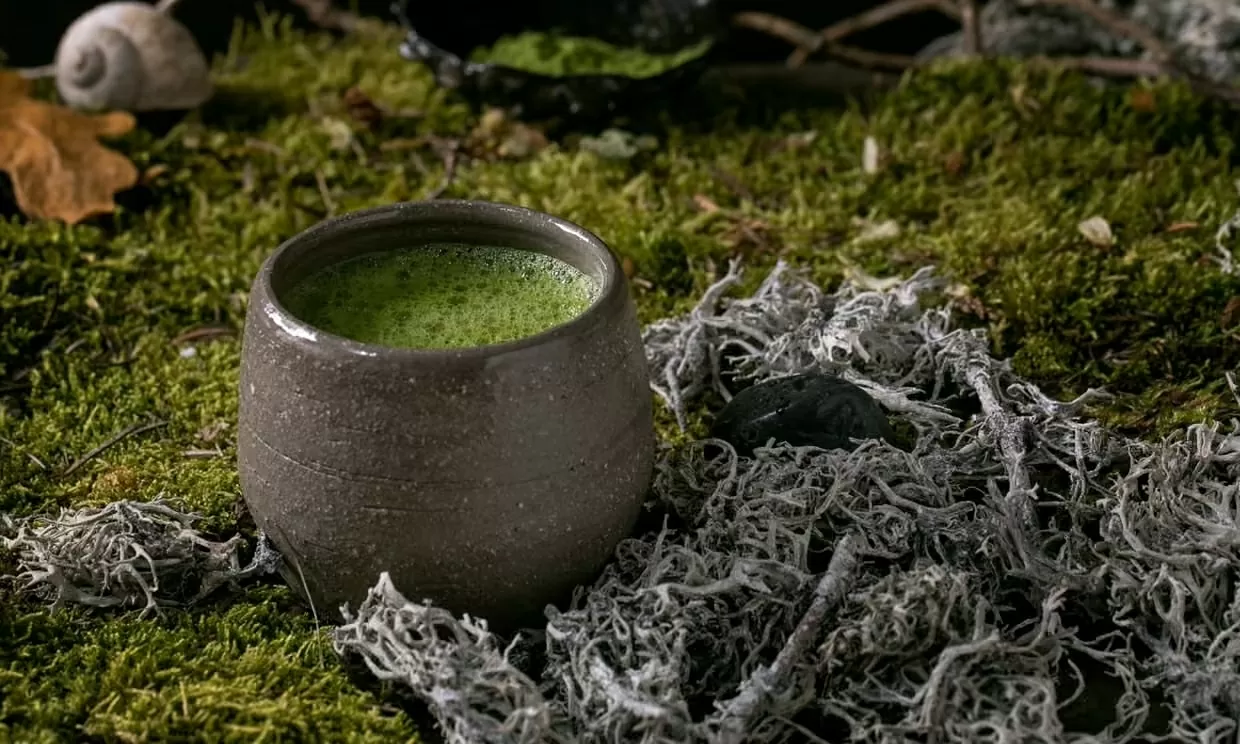
| Matcha, associated with the elaborate rituals of the tea ceremony, has now become a globally popular beverage. (Source: Getty Images) |
The global "craze"
Matcha, a powdered green tea with a centuries-old history, is becoming a global phenomenon. In Uji, western Japan, the birthplace of matcha, foreign tourists are flocking in unprecedented numbers, turning traditional tea-making workshops into highly sought-after events.
According to The Guardian , at Chazuna, the town's tea park and museum, classes were fully booked for two weeks straight, with 90% of the attendees being international visitors. Director Naoto Sakayori said, "Now everything revolves around matcha… Everyone who comes to Kyoto wants to try it."
Capitalizing on the trend, local businesses have incorporated matcha into a variety of dishes: takoyaki, matcha-sauce gyoza, green ramen, pastries, and even souvenirs. Small cafes are always crowded, rain or shine, helping the local area boost revenue after a long period of disruption due to the pandemic.
On social media, matcha continues to explode in popularity. TikTok and Instagram are flooded with content about the tea's flavor, health benefits, and vibrant green color. Many people choose matcha over coffee because of its mild caffeine content, which helps them stay alert without feeling restless; some tourists even change their beverage habits after experiencing Japanese matcha in Uji.
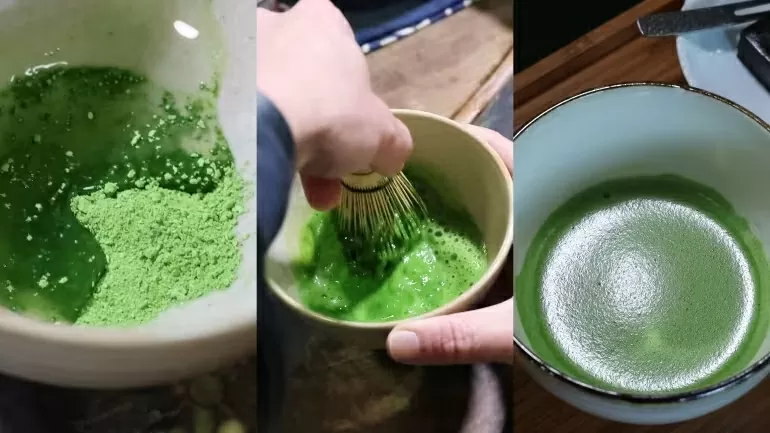 |
| Matcha is promoted as a beverage beneficial for the liver and brain, helping to reduce the risk of cancer and heart disease, and supporting weight loss. (Source: Nikkei Asia) |
Not everyone loves matcha from the start. One German tourist admitted to initially disliking it, but an experience in Uji, especially when paired with a dessert, "completely changed his mind." Stories like these show that matcha is expanding its appeal and winning over even those who were once skeptical.
Supply does not meet demand.
According to Nikkei Asia and the Japan Tea Export Promotion Council, the surge in global matcha demand is causing an unprecedented shortage of raw materials for the Japanese tea industry. Domestic tea leaf consumption has decreased, while the US, Europe, and Australia are continuously scavenging supplies.
In 2024, green tea exports reached 8,798 tons, ten times more than two decades earlier, with powdered tea, mainly matcha, accounting for 58%. In 2025, in just the first eight months, powdered tea exports totaled 5,162 tons, valued at 27.1 billion Yen, a 170% increase compared to four years prior.
Supply has yet to keep pace. Many farmers are switching from sencha, a type of tea leaf that is steamed, rolled, and dried for direct brewing, to tencha, a type of tea leaf that is grown and processed through multiple stages before being ground into matcha. However, the transition takes two years and requires advanced techniques. Although tencha production reached a record 4,176 tons in 2023, this figure is still far too small compared to booming international demand.
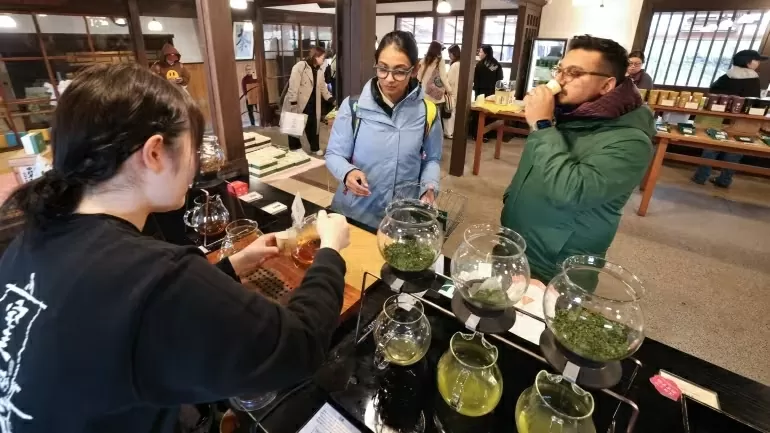 |
| American tourists enjoy tea at Nakamura Tokichi Honten in Uji. Matcha at the shop often sells out within 15 minutes of opening. (Source: Nikkei Asia) |
In Kyoto, "selling out" has become commonplace. One store in Uji sold out of matcha products in just 15 minutes, the Ippodo Tea brand nearly ran out of stock online, while Marukyu Koyamaen stores had to limit each customer to one product.
Nikkei Asia notes that pressure remains high at processing facilities. Machinery has become a bottleneck in the supply chain as demand exceeds production capacity. In Shizuoka, producer SOMA has warehouses full of tencha, but grinding capacity cannot keep up, forcing its 300-ton-per-year plant to expand by an additional 100 tons. Beverage company Ito En also increased its capacity to 630 tons per year and hired additional partners outside the industry, but still could not meet orders.
In addition, unfavorable weather in Aichi Prefecture caused Aiya Corporation to reduce its tencha production by 20 percent. Tencha prices continue to rise and are currently at their highest level in years, reflecting significant pressure on the supply chain and smaller producers.
Strategic choices
Despite record-breaking matcha exports, many farmers remain cautious about expanding production. Growing the raw tea leaves is time-consuming, costly, and heavily reliant on manual labor. In Uji, many farmers maintain traditional methods such as mulching with straw and hand-picking, requiring around 20 people each season. Farm owner Jintaro Yamamoto stated, "The biggest challenge is the shortage of tea pickers," and he has no plans to expand despite increased demand.
Furthermore, the challenge of an aging workforce exacerbates the problem. Many tea farmers are over 65 years old, lacking successors, while the younger generation shows little interest in the profession. Some experts call the matcha craze a "bubble" because of its rapid but unsustainable growth.
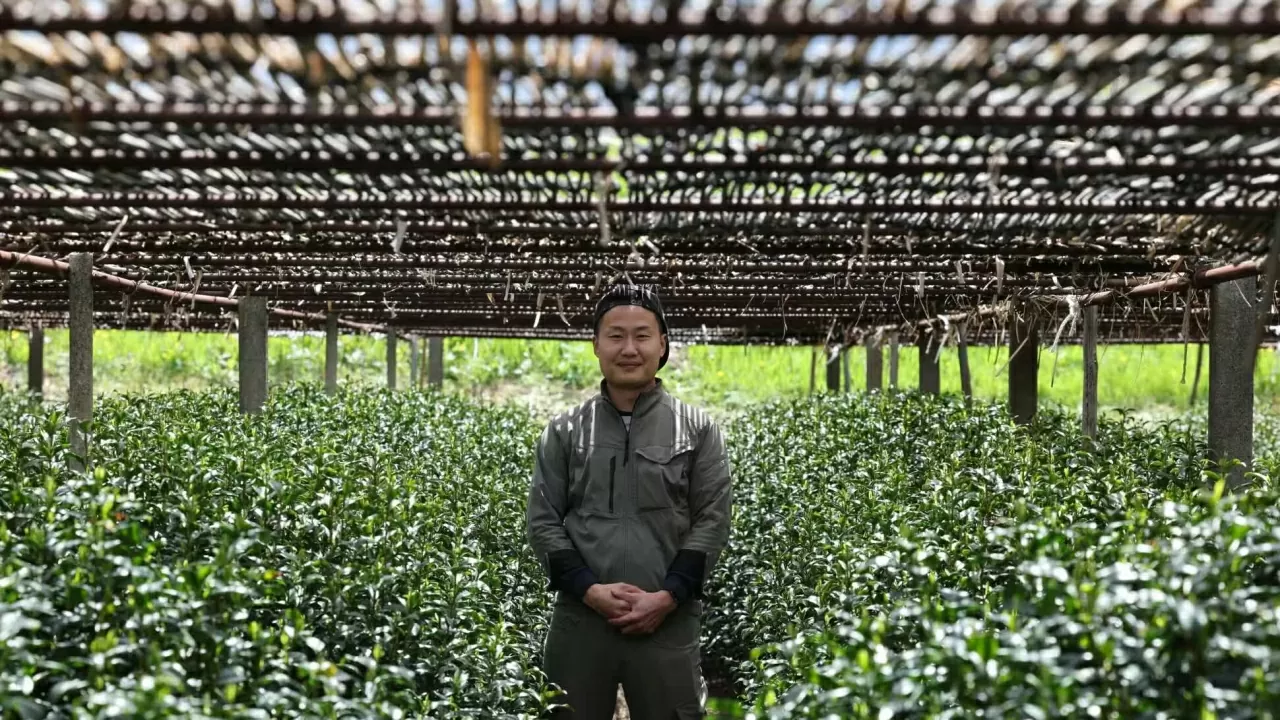 |
| Jintaro Yamamoto, a tea farmer, traditionally covers his tea plants with straw in Uji. (Source: Nikkei Asia) |
Despite record-breaking production of raw tea leaves, it's still difficult to keep up with global demand. Furthermore, Japanese matcha faces competition from China and South Korea.
The influx of international tourists, the spread of social media, and the trend of using matcha as a coffee substitute are driving global consumption. Some experts believe that matcha has become a “stable category,” not in the tea or coffee group but a distinct choice.
Currently, the US market accounts for 44% of exports and continues to expand. Importers appreciate the high quality of matcha due to farms that focus on hand-picking, traditional processes, and brand building.
Meanwhile, Japan faces a major question: Expand production or preserve traditional craftsmanship? Uji remains the center of refined, "ceremonial" matcha, while Kagoshima is better suited for mass-market consumer products such as bottled drinks, ice cream, and chocolate.
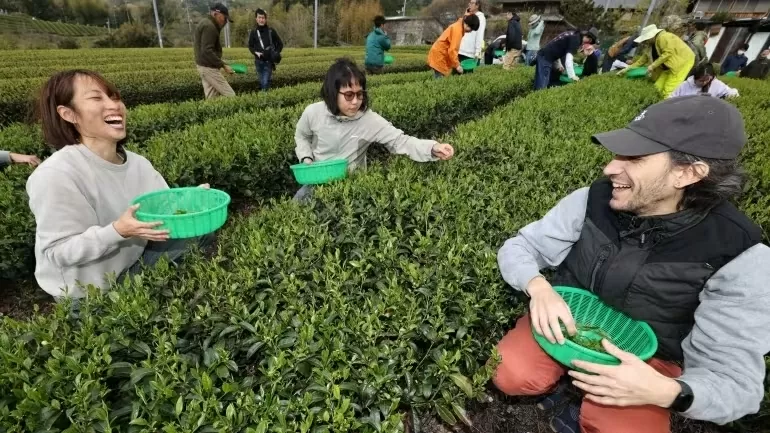 |
| Volunteers pick tea at a farm in Wazuka. (Source: Nikkei Asia) |
Matcha is not just an agricultural product; it's also a cultural symbol and a source of livelihood for many communities. Young people like Katrina Wild, who traveled from Latvia to Japan to learn how to make matcha after attending an online workshop, demonstrate that matcha continues to conquer the world with its own unique cultural story.
The global matcha craze presents significant opportunities but also places unprecedented pressure on the Japanese tea industry, including supply shortages, labor scarcity, international competition, and the need for production expansion. Maintaining quality or accelerating scale will be the strategic choices for the industry. Regardless of the chosen path, matcha has become a new symbol of Japanese culture in the 21st century, continuing its powerful influence with its distinctive green color.
Source: https://baoquocte.vn/matcha-nhat-ban-sac-xanh-chinh-phuc-toan-cau-336258.html
![[Photo] First session of the 14th Congress of the Vietnam Trade Union](https://vphoto.vietnam.vn/thumb/1200x675/vietnam/resource/IMAGE/2026/06/03/1780465947883_ndo_br_img-3852-jpg.webp)
![[Photo] General Secretary and President To Lam presides over a meeting with the Central Organizing Committee.](https://vphoto.vietnam.vn/thumb/1200x675/vietnam/resource/IMAGE/2026/06/03/1780482764658_a1-bnd-4741-3342-jpg.webp)

![[Photo] Secretary of the National Assembly Party Committee, Chairman of the National Assembly presides over the meeting of the Standing Committee and Executive Committee of the National Assembly Party Committee.](https://vphoto.vietnam.vn/thumb/1200x675/vietnam/resource/IMAGE/2026/06/03/1780480353201_ndo_br_bnd-2585-jpg.webp)















































![[Video] Sunset at Lap An Lagoon – Where the sun sets over the fishing nets](https://vphoto.vietnam.vn/thumb/1200x675/vietnam/resource/IMAGE/2026/05/31/1780192137701_beach-landscape-sea-water-nature-grass-745871-pxhere-com.jpeg)







































Comment (0)