


These issues raise a pressing question: Who protects the safety of every daily meal, especially for children – the most vulnerable group – when risks can begin with even the seemingly safest meals?
Given this reality, the message from General Secretary and President To Lam at the recent first quarter 2026 meeting of the Central Steering Committee on perfecting institutions and laws has become even more urgent: The highest priority must be given to ensuring the health of the people, strictly managing the entire food chain, and severely punishing all violations. This is not just a guideline, but a requirement stemming from practical realities.
The recall of HiPP baby food in Austria is a clear example of how modern management responds to ever-present risks. Based solely on signs of "unauthorized tampering" in one batch, the company proactively initiated a large-scale recall across approximately 1,500 stores. This decision, while causing significant economic losses, reflects a core principle: in all situations, consumer safety must come first. However, this very decisive action makes the situation in Vietnam even more thought-provoking.
In Vietnam, many recent incidents are not just isolated violations but also show signs of lax management, and even organized complicity. The case of pigs infected with African swine fever being sold for consumption, even directly into school cafeterias, is a prime example.
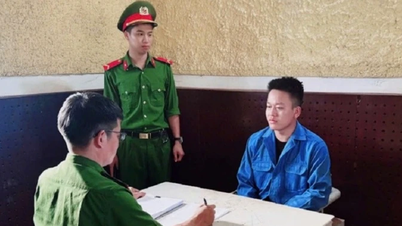
In March, Hanoi police discovered a slaughterhouse owner who was slaughtering pigs infected with African swine fever and colluding with some quarantine officials to bypass inspection procedures. From the beginning of the year until the discovery, the slaughterhouse had sold approximately 3,600 infected pigs, equivalent to nearly 300 tons of meat, through wholesale markets, local markets, and supplied to a food company that provided food to schools. Prior to that, Hai Phong police discovered about 130 tons of infected frozen pork at the warehouse of Ha Long Canned Food Joint Stock Company. From this raw material, the company processed more than 1.7 tons of finished pate, equivalent to about 14,000 cans…

When contaminated food can infiltrate what should be the safest places, the issue is no longer economic, but has reached the boundaries of social safety. Although regulatory agencies such as the Food Safety Department (Ministry of Health) and the Ministry of Public Security have intervened, the figures of hundreds of tons of contaminated meat and tens of thousands of processed products made from substandard ingredients are not just ordinary warnings. These are direct warnings about the risks to public health. Even more worrying, many cases reveal collusion between violators and those responsible for control, eroding public trust.
Economists argue that one of the root causes is the fragmented and overlapping management mechanism. When multiple ministries and agencies are involved in managing each stage – from production and processing to distribution – responsibility is easily "fragmented." Meanwhile, food is an interconnected chain; even a weak link can have repercussions for the entire system. Under current regulations, management is assigned to many agencies: from livestock farming, slaughtering, quarantine to processing, circulation, and distribution. While this model is specialized, in practice it easily creates gaps in responsibility, especially when quick action is needed to address unforeseen situations.
Therefore, the message from General Secretary and President To Lam is of crucial importance: Shifting from a management mindset focused on individual stages to managing the entire food value chain. This is not just a change in technique, but a change in approach.
Thus, with supply chain management, control is no longer concentrated at the "final stage" but extends from raw materials, production, processing, transportation to consumption. This helps detect risks early, limit the possibility of "slipping through the net," and enhance the responsibility of each entity. Simultaneously, it requires the improvement of the institutional framework.
After years of implementation, the Food Safety Law has revealed numerous shortcomings: overlapping responsibilities, unclear accountability, and insufficient penalties. Therefore, amending the law cannot be limited to technical issues; it requires a new, modern, and comprehensive approach that aligns with international best practices. In particular, General Secretary and President To Lam emphasized the need for a comprehensive approach to issues related to standards, regulations, and product quality. This demonstrates that food safety cannot be separated from the overall national quality management system.
However, experts argue that even the most perfect laws will struggle to be effective if enforcement is lax. Cases involving complicity by officials serve as a clear warning: if discipline and order are not tightened, all regulations can be rendered ineffective. Therefore, the requirement of "no forbidden zones, no exceptions" in handling violations needs to be implemented genuinely.
Along with that, there's a strong shift from a "response-oriented" mindset to a "risk prevention" mindset. This requires investment in testing and monitoring systems, as well as the application of technology in traceability. When each product can be traced back to its place of production, responsibility will be clearer and opportunities for fraud will be reduced.

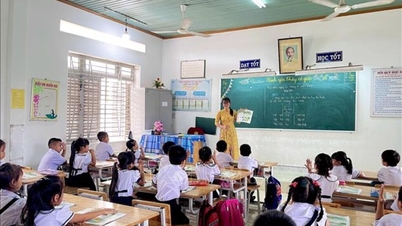
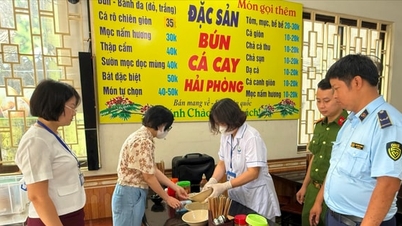
At the same time, we cannot ignore "hot spots" such as communal kitchens, schools, and industrial zones – places that serve a large number of people every day but are not adequately controlled to the level of risk. Increased unannounced inspections and stricter standards for supplier selection are urgent requirements.
Based on this reality, at a recent meeting of the National Assembly Standing Committee on the socio-economic situation, the Standing Vice Chair of the National Assembly's Committee on Citizen Petitions and Supervision, Le Thi Nga, proposed that the Government conduct a nationwide inspection of food safety. This is not only a response to specific incidents, but also a request for a comprehensive review of the entire system in the context of growing public concern.
Clearly, food safety is no longer just a matter for one industry, but a societal issue. In this context, children – who should be the most protected – are facing the greatest risks and require decisive action to prevent similar incidents from recurring.
Source: https://baotintuc.vn/kinh-te/menh-lenh-cap-thiet-cham-dut-quan-ly-chia-khucan-toan-thuc-pham-20260421173724079.htm
![[Image] Close-up view of the interchange connecting the two expressways and Long Thanh Airport.](https://vphoto.vietnam.vn/thumb/1200x675/vietnam/resource/IMAGE/2026/05/25/1779703378210_ndo_br_z7863716673926-224453a31600126cce10622af6290afd-4549-jpg.webp)
![[Image] Hanoi's urban life under the challenge of a "scorching hot" environment](https://vphoto.vietnam.vn/thumb/1200x675/vietnam/resource/IMAGE/2026/05/25/1779706979265_nang-nong-t5-2026-minh-duy-7-4636-jpg.webp)



































































Comment (0)