

Water levels on many rivers in northern Vietnam are decreasing but remain at dangerously high levels. The Cau River and the Ca Lo River sections passing through Hanoi are still exceeding alarm level 3.

According to the Department of Dike Management and Disaster Prevention ( Ministry of Agriculture and Environment ), as of noon on October 12, Hanoi and Bac Ninh still had more than 5,360 flooded houses, a decrease of more than 2,300 compared to the morning of the same day.
However, by the afternoon of October 12th, many areas along the Cau River, such as Da Phuc and Trung Gia (Hanoi), were still deeply flooded, putting immense pressure on dikes and drainage systems.
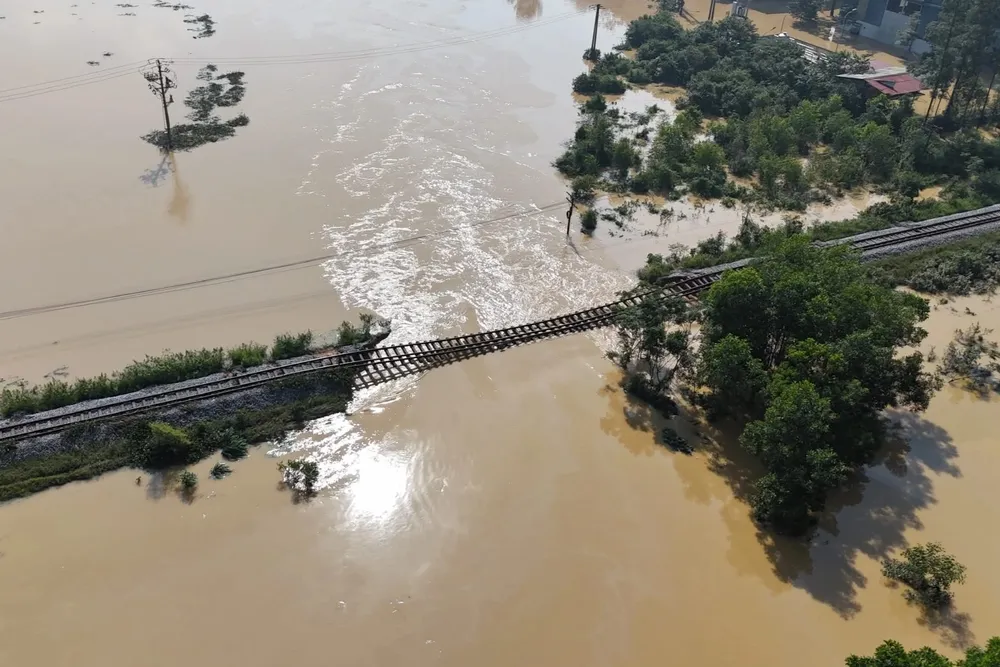
In Bac Ninh, the floodwaters have receded, but local authorities are still monitoring the dikes and addressing minor issues. In Thai Nguyen, the floodwaters have largely receded, with only a few low-lying communes such as Phu Binh, Diem Thuy, and Van Xuan remaining flooded to a depth of about 0.5 meters. Damage in this locality is estimated at around 4,000 billion VND. Cao Bang suffered damage estimated at around 2,000 billion VND, but the exact figures are still being reviewed.
The National Center for Meteorological and Hydrological Forecasting stated that in the next 1-2 days, floodwaters in the North will continue to recede, but low-lying areas and riverbanks will still be flooded from 0.2 to 1 meter, with some places even deeper. The flooding may last for another 1-3 days. The meteorological agency warned of the risk of dike erosion, damage to bridges, roads, and riverside structures as the floodwaters recede.
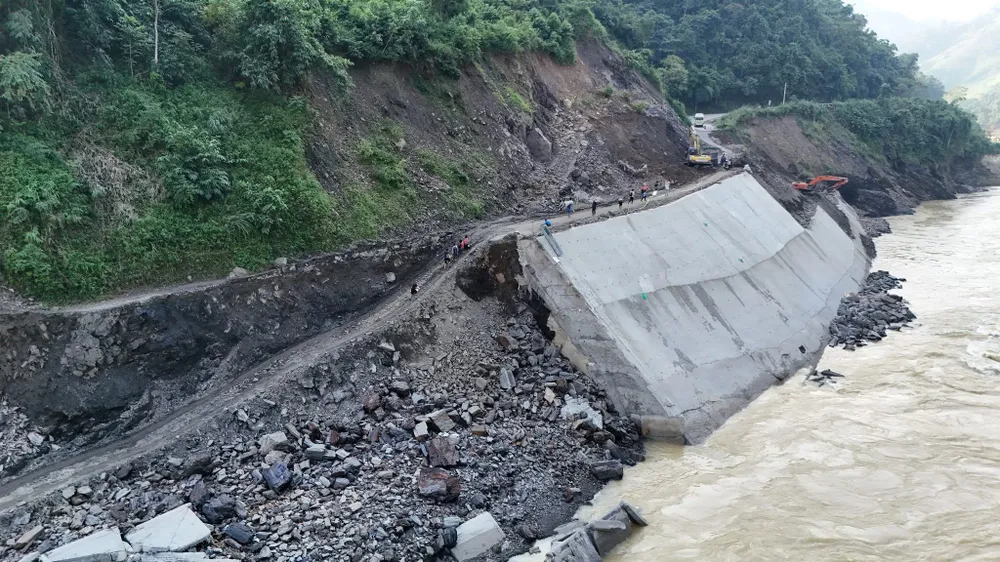
According to the National Center for Meteorological and Hydrological Forecasting, a worrying development is that from the night of October 13th to 16th, the North may experience a new wave of rain. The rain will be concentrated in the Northeast region (which recently experienced a historic flood), potentially causing river levels to rise again and inflicting further damage on areas recovering from the disaster.
The Ministry of Agriculture and Environment has requested localities such as Hanoi, Bac Ninh, and Lang Son to strengthen monitoring of vulnerable dike sections, promptly address seepage, leakage, and landslides, and prepare response plans should heavy rain return.
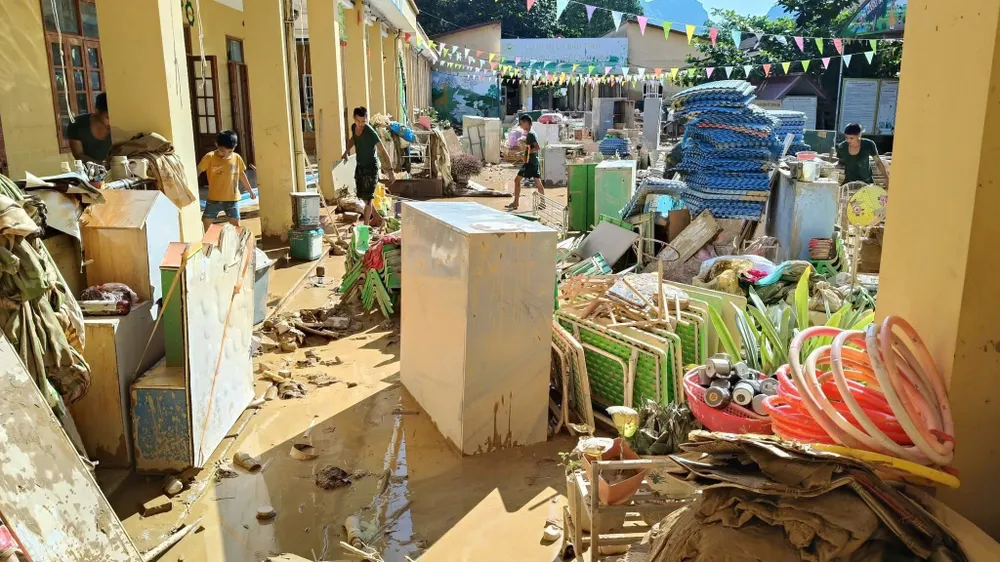
At the same time, localities need to urgently mobilize forces and organize charitable activities to support the restoration of production, repair of houses and schools, and stabilize the lives of the people.
To reduce water pressure downstream on the Lo and Hong rivers, on October 12th, Deputy Minister of Agriculture and Environment Nguyen Hoang Hiep signed a directive requesting the Tuyen Quang Hydropower Company to close one bottom discharge gate from 4 PM that day. According to updates on the Vietnam Electricity Group's system at 5 PM, the plant was only maintaining one deep discharge gate.
Source: https://www.sggp.org.vn/mien-bac-sap-co-dot-mua-moi-post817693.html





![[Image] Hanoi's urban life under the challenge of a "scorching hot" environment](https://vphoto.vietnam.vn/thumb/1200x675/vietnam/resource/IMAGE/2026/05/25/1779706979265_nang-nong-t5-2026-minh-duy-7-4636-jpg.webp)







































































































Comment (0)