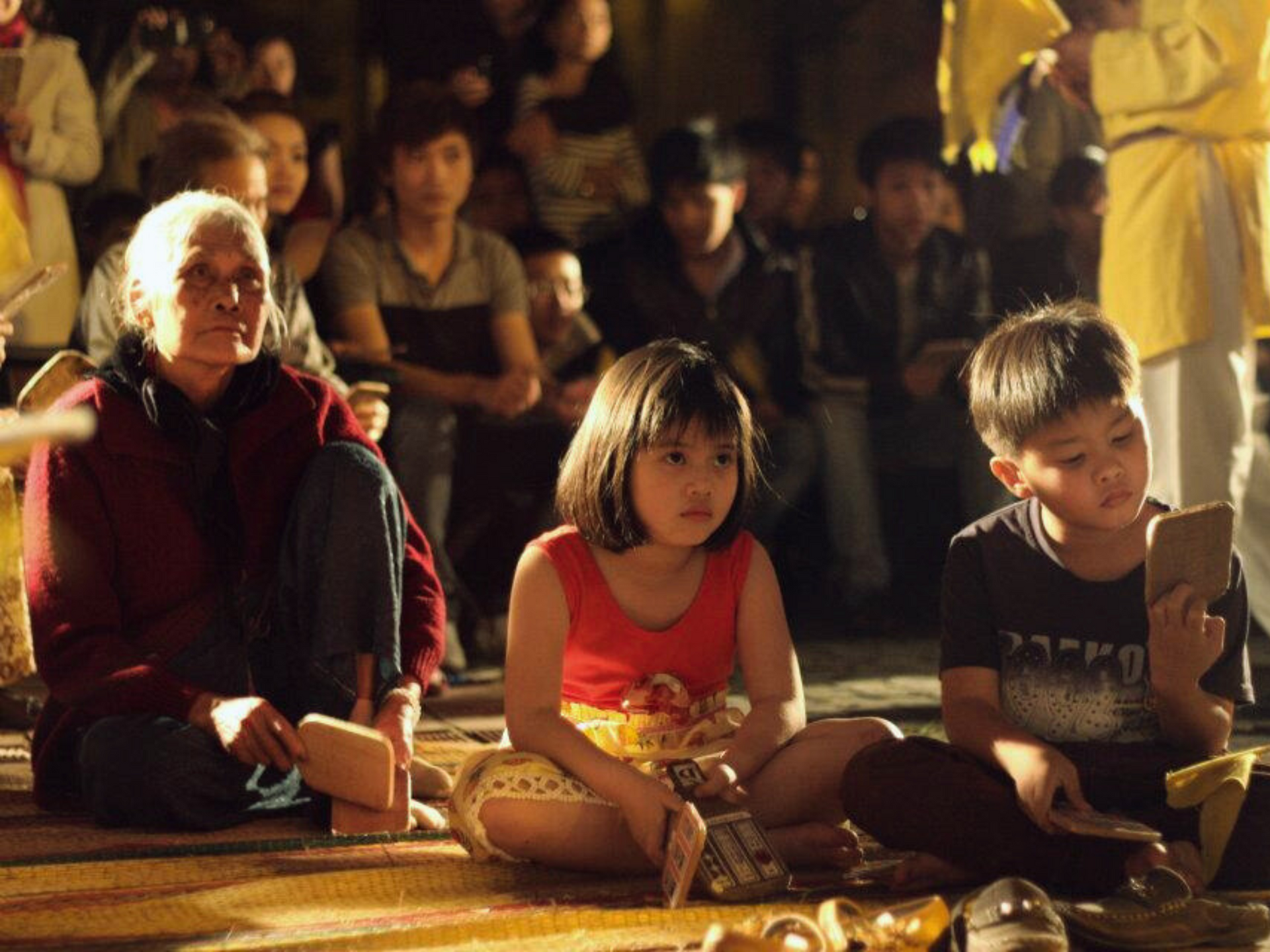
Street performers singing Bài Chòi (a traditional Vietnamese folk game) on stage. Photo: Minh Đức.
This activity is to realize Resolution 08/2024/NQ-HĐND of the Quang Nam Provincial People's Council (formerly) on the Regulations on the content and level of support for the preservation and promotion of the intangible cultural heritage of Bai Choi art in this province in 2025.
Following the merger, Da Nang city continued to agree to implement the specific objectives of the resolution, including supporting the collection of artifacts, props, musical instruments, costumes, investing in digital equipment, and maintaining the operation of Bài Chòi clubs.
Bài Chòi Data Repository
In 2018, when UNESCO recognized Bài Chòi as a world intangible cultural heritage, serious conservation efforts began from the government. However, to receive heritage status for this folk art form combining singing, call-and-response, and folk performance, Bài Chòi must originate from its close connection with village life, festivals, and community activities.
Music researcher Dang Hoanh Loan, who had many memories and experiences in compiling the heritage dossier for the Bai Choi art form (and passed away this June), had many concerns about the future of this traditional art form.
He argued that, along with researchers who have dedicated their efforts to preserving and developing the traditional heritage of Bài Chòi, it is also necessary for today's youth to use advanced techniques, technology, and platforms to bring the value of traditional music closer to younger audiences.
However, the pressure to diminish the value of the Bài Chòi heritage remains present. The audience for Bài Chòi musical performances is dwindling, while the number of performers is decreasing, and documentation is being lost. Furthermore, competition with "digital culture" and other modern performing arts poses numerous challenges to the preservation of Bài Chòi.
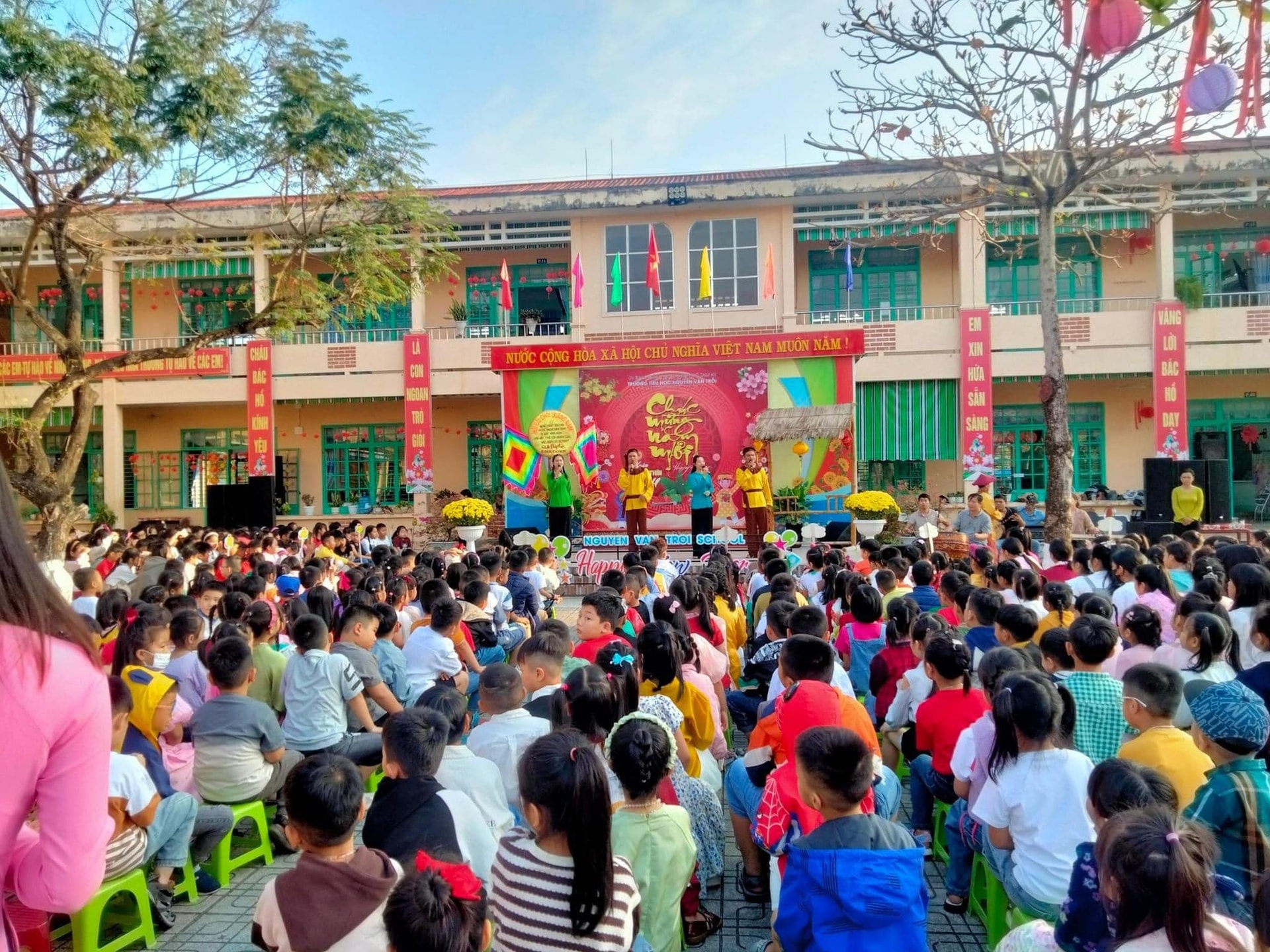
Actors from the former Quang Nam Opera and Drama Troupe teach and perform Bài Chòi (a traditional Vietnamese folk singing style) at Nguyen Van Troi Primary School, Ban Thach Ward, Da Nang City. Photo: Quang Nam Opera and Drama Troupe.
And transferring Bài Chòi data into the digital environment is an inevitable choice. From storing images, sounds, and lyrics, the digital Bài Chòi data repository also paves the way for dissemination through websites, applications, digital libraries, virtual museums, etc., helping the public everywhere access this art form conveniently.
In 2024, Khanh Hoa province became the first locality in the Central Central region to apply software for managing and exploiting data on Bai Choi art. This software is considered by cultural researchers to be a specialized software for the cultural heritage data bank.
According to the Khanh Hoa Department of Culture, Sports and Tourism, the Bài Chòi database is the most important element of the software, aiming to serve the state management of preserving the folk Bài Chòi art form effectively, promptly, and accurately.
Initially, the software digitized and integrated interview records of artisans and created scientific profiles of collected documents and materials on Bài Chòi art in localities of Khánh Hòa province, as well as uploading plays, research articles, and musical instrument sets to the database management page.
Start collecting data.
In late September, the Quang Nam Museum began implementing a plan to research, inventory, collect, and digitize the cultural and artistic heritage of Bài Chòi.
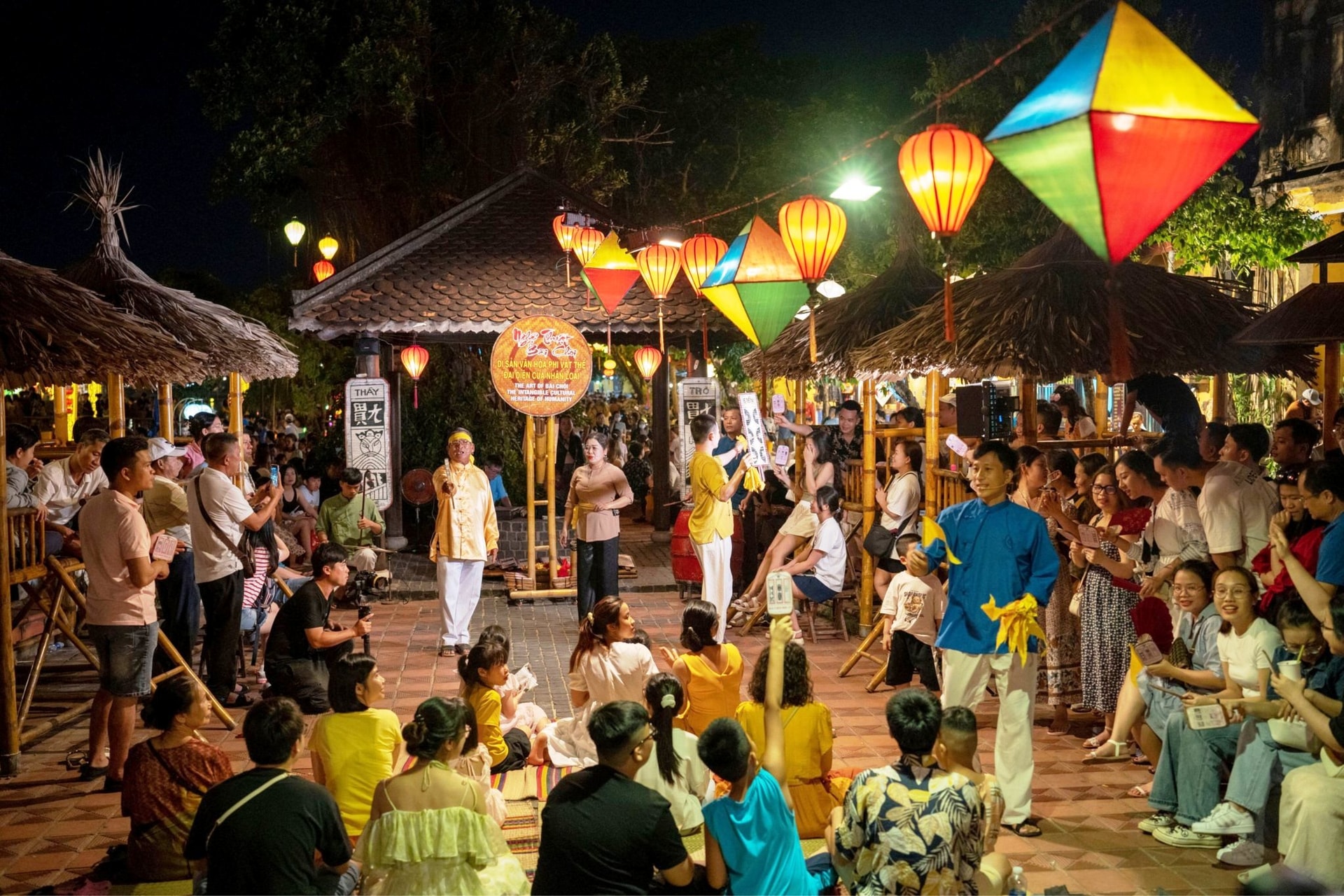
Bài Chòi folk singing is a unique tourism product of Hoi An. Photo: DO HUAN
Mr. Tran Van Duc, Deputy Director of the Quang Nam Museum (now the Da Nang Museum), said that this activity contributes to preserving and promoting the cultural values of the locality, while also meeting the requirements for building a scientific database to serve research and teaching in the community; and for long-term preservation and dissemination on a digital platform.
The core objective of the project is to build a comprehensive database on Bài Chòi art, including both tangible and intangible documents, thereby creating a solid foundation for the preservation and promotion of this heritage in the digital age.
From September 24th to December 2025, a research team from the Da Nang Museum, in collaboration with other units, will collect information on the history and development of Bài Chòi (a traditional Vietnamese folk game). They will also compile a list of artisans, clubs, and groups still practicing the craft, conduct community surveys, and interview practitioners to document the techniques, routines, performance styles, and cultural context of Bài Chòi.
Dr. Ha Thi Suong, who directly participated in the survey and inventory team, said that these activities aim to assess the current state, identify risks of decline, and propose solutions for preservation, transmission, and public introduction. In the future, the focus will be on developing software for managing and exploiting data on the Bài Chòi folk art; and creating a repository of documents on the Bài Chòi heritage of Quang Nam province for archiving, research, and display.
The heritage community, encompassing both elderly artisans and young practitioners of the heritage, including students, are all key stakeholders in this inventory effort.
Folk artist Duong Quy (Hoi An) shared that his biggest concern right now is training and passing on this art form to the next generation, so they understand and deeply appreciate it.
Bài Chòi in Hoi An is a world heritage site and also a part of Hoi An's heritage; therefore, conservation efforts should not stop at the present.
Mr. Quy said that if the digitization of the Bài Chòi heritage is done systematically, it will help "connect" Bài Chòi so that it can appear in tourism models, cultural experiences, mobile applications, and educational programs.
For many years, Hoi An has had numerous ways to preserve and promote Bai Choi (a traditional Vietnamese folk game), from bringing it to the stage and having Bai Choi performances in the streets to introducing it into schools.
The focus on "expanding the digital stage," connecting regions, and creating networks for exchange and performance—virtual, physical, and online—will be essential in the future digital world.
Source: https://baodanang.vn/ban-do-di-san-so-bai-choi-3306119.html


![[Photo] Solemn bathing ceremony and Buddha procession in Hue](https://vphoto.vietnam.vn/thumb/1200x675/vietnam/resource/IMAGE/2026/05/31/1780228263543_1-jpg.webp)
![[Image] Hanoi Police officially crowned champions of V-League 2025/2026](https://vphoto.vietnam.vn/thumb/1200x675/vietnam/resource/IMAGE/2026/05/31/1780244769054_ndo_br_039d561b692be875b13a-jpg.webp)
![[Photo] The General Secretary, President and his wife begin their state visit to the Philippines.](https://vphoto.vietnam.vn/thumb/1200x675/vietnam/resource/IMAGE/2026/05/31/1780230559452_anh-man-hinh-2026-05-31-luc-19-28-11.png)


![[Photo] Admire the coral "masterpiece" amidst the million-year-old heritage of Dak Lak province.](https://vphoto.vietnam.vn/thumb/1200x675/vietnam/resource/IMAGE/2026/05/31/1780221235105_anh-man-hinh-2026-05-31-luc-16-53-27.png)























![[Video] Sunset at Lap An Lagoon – Where the sun sets over the fishing nets](https://vphoto.vietnam.vn/thumb/340x192/vietnam/resource/IMAGE/2026/05/31/1780192137701_beach-landscape-sea-water-nature-grass-745871-pxhere-com.jpeg)



























![[Photo] Admire the coral "masterpiece" amidst the million-year-old heritage of Dak Lak province.](https://vphoto.vietnam.vn/thumb/402x226/vietnam/resource/IMAGE/2026/05/31/1780221235105_anh-man-hinh-2026-05-31-luc-16-53-27.png)































Comment (0)