

That is Phong Nha – Ke Bang National Park, which has been named twice by UNESCO – not only as a heritage of Vietnam, but also as a heritage of humanity in Quang Binh .
The numbers cannot tell the whole mystery
“We have only surveyed about 30% of the National Park area,” said Mr. Pham Hong Thai, Director of Phong Nha – Ke Bang National Park Management Board, as someone who has lived among rocks and old forests for a long time.
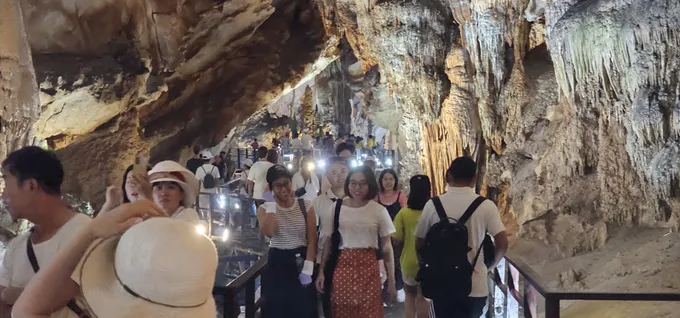
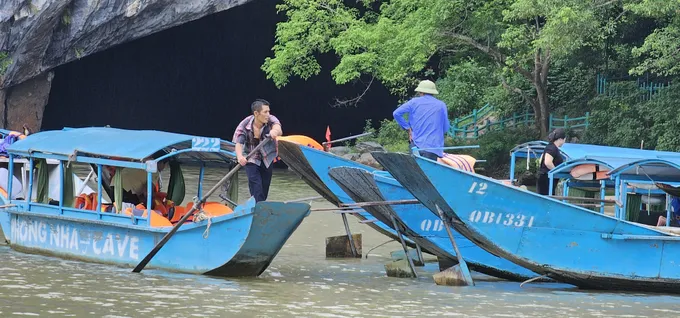
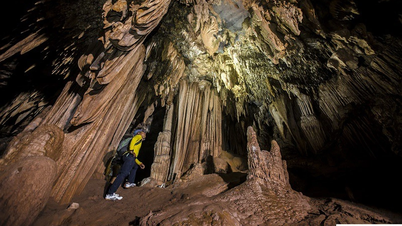
Tourists are amazed inside the caves of Quang Binh
30% means 70% is still untouched. That means hundreds of caves where no human footstep has ever set foot, underground rivers that can only be heard through the sound of water flowing underground. That means there is a parallel world , quiet, pristine, where the laws of nature operate without the need for light.
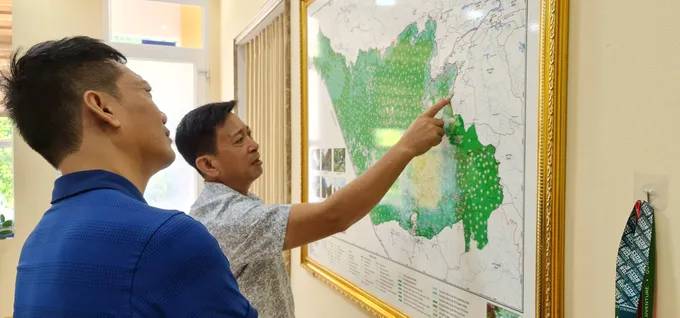
Mr. Pham Hong Thai talks about the 70% of Phong Nha - Ke Bang area that has not been explored yet.
In the world’s largest Karst core, where geology was formed more than 400 million years ago, 447 caves have been mapped, with a total length of 246km. Among them, Son Doong - the world’s largest cave continues to reveal things that even science is amazed by.
Phong Nha – Ke Bang is a land of paradoxes, old but new, ancient but never outdated.
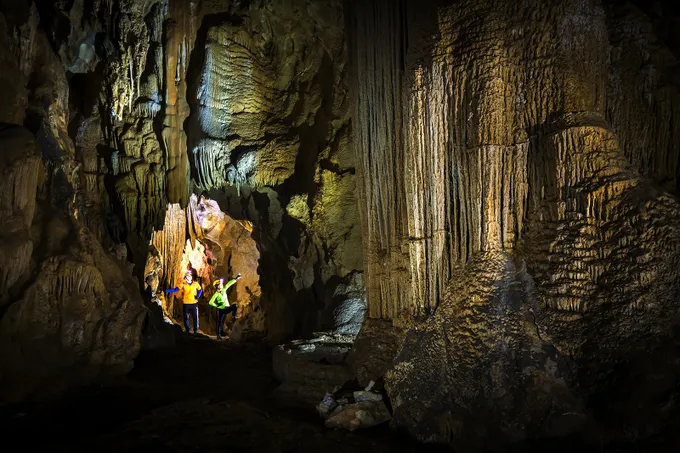
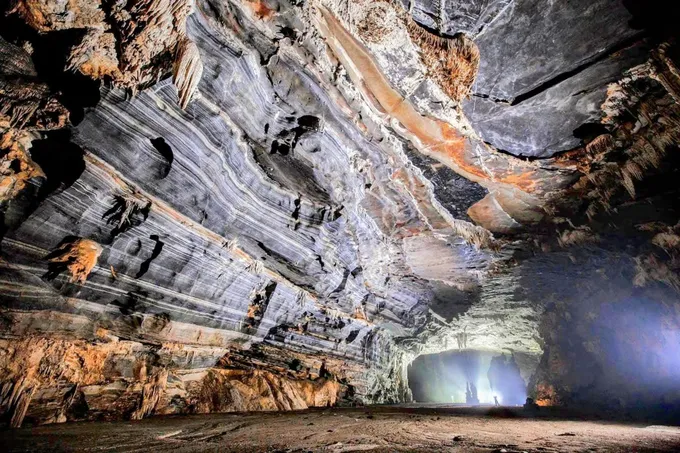
Inside the system of more than 400 caves in Phong Nha - Ke Bang are sediments more than 400 million years old.
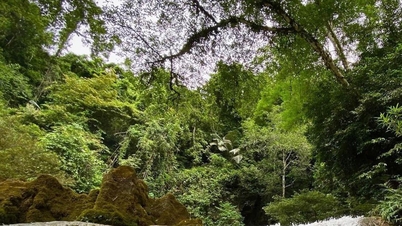
Under the forest canopy, the ecosystem is still thriving steadily. Nearly 3,000 species of higher plants and 1,394 species of animals have been recorded. Of these, 43 species are new to science, a number that not only speaks to diversity, but also reveals the possibility that there are many things we do not know about the world we live in.
Names like Limestone Warbler, Paradise Scorpion, Phong Nha Gecko... sound both surprising and mysterious, as if nature never wanted to reveal everything. And anyone who has ever set foot in Sinh Ton Valley or Dark Cave will understand that life here is not noisy, but permeates very deeply over more than 400 million years.
Travel like discovering the will of stone
Phong Nha – Ke Bang used to have only two tourism products, Phong Nha cave and Tien Son cave. Now that number has increased to 17. From Son Doong to Thien Duong cave, from Nuoc Mooc stream to Chay river – Dark cave, then Sinh Ton valley, Va cave, En cave… The flow of tourists is increasing day by day, especially after international travel magazines continuously named Quang Binh as one of the most attractive destinations on the planet.
Booking.com once ranked Phong Nha as the second friendliest destination in Vietnam, and Travel+Leisure called it a “paradise of caves and streams.”
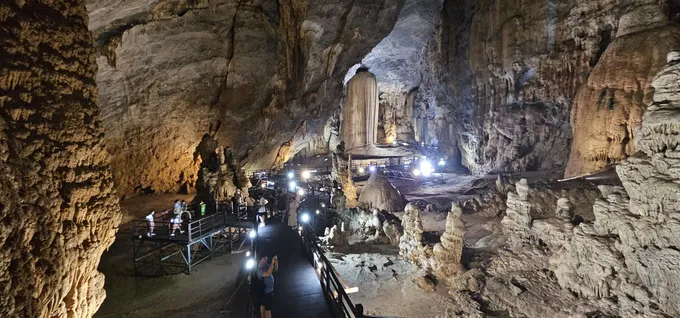
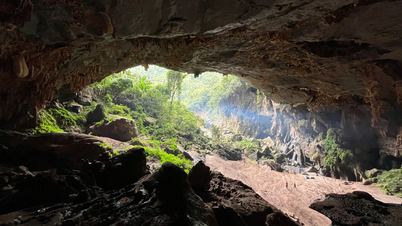
A maze in Phong Nha - Ke Bang
However, there is still concern: “The quality of some tourism products is not commensurate with the resources of the heritage,” Mr. Pham Hong Thai admitted. This poses a problem: how to exploit the value without destroying it, how to open the door to tourists without slamming the ecological door shut.
And when the titles of “Vietnam's Leading Natural Destination 2025” and “Asia's Leading National Park 2025” are being nominated, that question needs an answer more than ever.
From that sediment, the will of the rock has left behind a premium cave tourism.
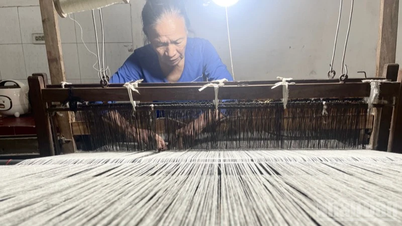
Phong Nha – Ke Bang is not just a place to check-in, not a place to “cross out” from a travel notebook. It is a geological testament, written in limestone, in primeval forests, in streams running through the mountains. It is a place where nature lives with its memories, and humans, if respectful enough, will be listened to. In the center of that center are humans. Those humans are the A Rem people who have kept that listening for thousands of years. They protect the forests, protect the caves, protect each stream to this day. “We protect the forests, streams, and caves not for personal reasons but because it is the natural motherland that has protected our ancestors and future generations,” said old man Dinh Rau beside the Ruc Ca Roong stream.
"In Phong Nha - Ke Bang, life is not only in the number of discoveries, but in the wonders hidden deep underground and in every rock, stream, and forest canopy that continues to echo from ancient times," said old man Dinh Rau.
When a Spanish tourist named Sophia exclaimed: “We felt like we were lost in another world. A world of wild but extremely impressive nature”, what she felt was not only beauty, but also humility before a nature too vast to embrace, too deep to fully understand.
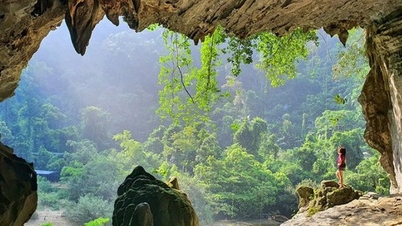
Part of Phong Nha - Ke Bang heritage
Phong Nha – Ke Bang is waiting for us not only to come, but also to listen, to empathize. Not to conquer, but to slow down, look up at the hundreds of millions of years old stone arch, and bow before something greater than ourselves.
The world is voting for Phong Nha - Ke Bang. And we can do the same at www.worldtravelawards.com/vote
www.phongnhakebang.vn
The voting period for the 2025 World Travel Awards for Phong Nha – Ke Bang is taking place from April 1 to August 31, 2025.
Vote not just for a title, but for values that need to be preserved for hundreds of millions of years as a testament of stone.
Source: https://www.sggp.org.vn/phong-nha-ke-bang-chung-nhan-cua-hon-400-trieu-nam-post798737.html


![[Photo] 60th Anniversary of the Founding of the Vietnam Association of Photographic Artists](/_next/image?url=https%3A%2F%2Fvphoto.vietnam.vn%2Fthumb%2F1200x675%2Fvietnam%2Fresource%2FIMAGE%2F2025%2F12%2F05%2F1764935864512_a1-bnd-0841-9740-jpg.webp&w=3840&q=75)


![[Photo] Cat Ba - Green island paradise](/_next/image?url=https%3A%2F%2Fvphoto.vietnam.vn%2Fthumb%2F1200x675%2Fvietnam%2Fresource%2FIMAGE%2F2025%2F12%2F04%2F1764821844074_ndo_br_1-dcbthienduongxanh638-jpg.webp&w=3840&q=75)






































































Comment (0)