

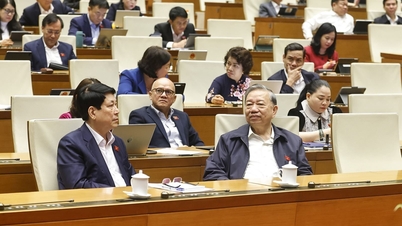
According to experts, the Draft Law amending and supplementing a number of articles of the Law on Intellectual Property, which is being discussed at the 10th Session of the 15th National Assembly, is built on the spirit of being a framework law to ensure full institutionalization of the Party and State's major policies and orientations on science and technology (S&T), innovation (I&T) and digital transformation (DCT), especially the spirit of Resolution No. 57-NQ/TW dated December 22, 2024 of the Politburo on breakthroughs in the development of S&T, I&T and national DCT.
The draft puts humans at the center, requiring AI to serve with human supervision in important decisions; promotes transparency, responsibility, and safety; clearly defines legal responsibilities; focuses on developing infrastructure, Vietnamese models, using AI for domestic public services, promoting green AI, startup sandboxes, tax incentives, investment funds, and AI commercialization, demonstrating a comprehensive vision of AI.

Ms. Nguyen Minh Huong, Permanent Vice President of the Intellectual Property Association of Ho Chi Minh City, expressed concern when the draft considered including the “text and data mining exception” - commonly known as the “TDM exception” - in the law, allowing technology companies to use copyrighted objects to develop AI systems without having to ask for permission or pay the copyright owner. This is a problem that needs to be clarified.
Similarly, Lawyer Phan Vu Tuan, Vice President of the Intellectual Property Association of Ho Chi Minh City, said that considering adding an exception to TDM to the Vietnamese Intellectual Property Law is a requirement in the current context. However, the exception needs to be built on the basis of the principle of balancing interests - the core principle of the intellectual property protection system. Because any exception mechanism must ensure harmony between the legitimate rights and interests of the right holder, the community's interests in accessing knowledge and the need to create a favorable legal environment for the development of new technology. Only when this balance is maintained can the TDM exception be effective, supporting the development of AI without undermining the stability and goals of intellectual property protection.

Agreeing on the need to enact the law, Lawyer Pham Vu Khanh Toan, Head of Pham and Lien Danh Law Office, noted that Article 7.5 of the Draft allowing AI companies to use “published data sources” to train models without paying the owners needs to be carefully studied by the National Assembly before being passed.
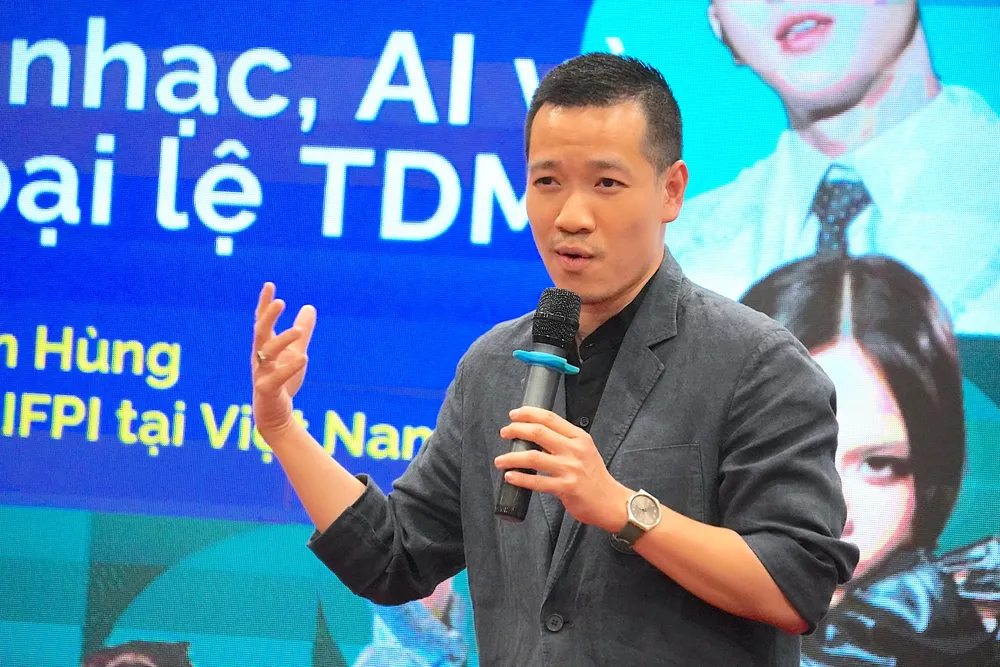
Sharing the same view, musician Tao Minh Hung, representative of IFPI (International Federation of the Phonographic Industry) in Vietnam, affirmed that the music industry welcomes AI but faces major copyright challenges when AI uses copyrighted data for training without permission, competing with the original work. Therefore, the development of AI poses a major challenge to the Intellectual Property Law, especially regarding copyright for works created by AI and the use of data to train AI, requiring a balance between promoting innovation and protecting the rights of creators, including the Vietnamese music industry. Amending the Intellectual Property Law and considering copyright exceptions for AI is a global issue, Vietnam needs to have a cautious approach, harmonizing economic , cultural and legal interests, avoiding weakening the motivation for traditional music creation and ensuring fairness, transparency... Many countries do not apply this.
From another perspective, Mr. Nguyen Trinh Hoan, Vice President of the Vietnam Cinema Promotion and Development Association, expressed concerns about the balance of interests between AI development and copyright protection in the creative industry, especially cinema. He suggested that competent authorities carefully consider TDM in the Intellectual Property Law when applying AI, request a comprehensive assessment of the impact on the rights of rights holders, and hope for a transparent dialogue mechanism to build a harmonious policy that supports both the content and technology industries.

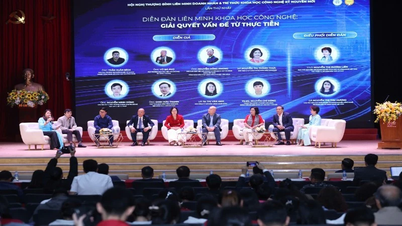
At the end of the discussion, delegates proposed that the National Assembly, when amending the regulations on TMD, should not consider it as a general principle in Article 7.5, but as an exception in Article 25b, to ensure the principle of balancing interests.
Source: https://www.sggp.org.vn/ban-khoan-voi-quy-dinh-ve-ngoai-le-ban-quyen-cho-ai-post827141.html
![[Photo] National Assembly Chairman Tran Thanh Man attends the VinFuture 2025 Award Ceremony](/_next/image?url=https%3A%2F%2Fvphoto.vietnam.vn%2Fthumb%2F1200x675%2Fvietnam%2Fresource%2FIMAGE%2F2025%2F12%2F05%2F1764951162416_2628509768338816493-6995-jpg.webp&w=3840&q=75)
![[Photo] 60th Anniversary of the Founding of the Vietnam Association of Photographic Artists](/_next/image?url=https%3A%2F%2Fvphoto.vietnam.vn%2Fthumb%2F1200x675%2Fvietnam%2Fresource%2FIMAGE%2F2025%2F12%2F05%2F1764935864512_a1-bnd-0841-9740-jpg.webp&w=3840&q=75)








































































Comment (0)