

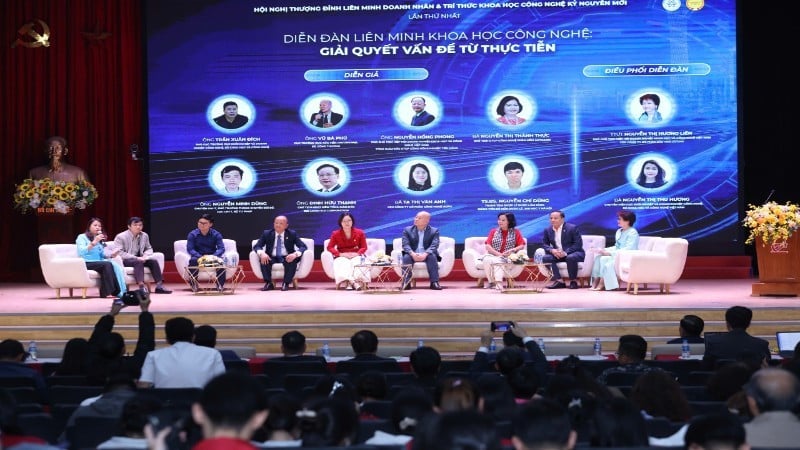
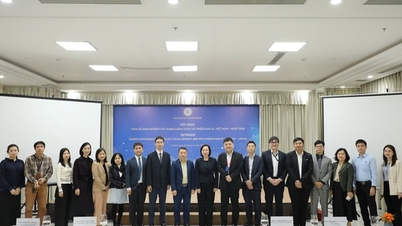
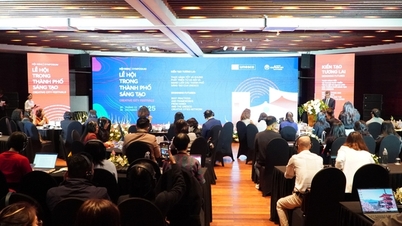
The conference was organized by the Vietnam Association of Science and Technology Enterprises in collaboration with the Department of Startups and Technology Enterprises ( Ministry of Science and Technology ), with the theme "Connecting Vietnamese intelligence - Joining hands to master Vietnamese technology, developing a knowledge-based economy". The event aims to bring together entrepreneurs, scientists and intellectuals to promote the introduction of research results and scientific and technological products to the market, creating practical value for society.
At the event, Labor Hero Hoang Duc Thao, Chairman of the Vietnam Association of Science and Technology Enterprises, said that the fourth industrial revolution is spreading strongly, with new technologies such as artificial intelligence, big data, intelligent automation, etc., profoundly changing the way the economy operates. Along with the trend of digitalization and increasing demands for online public services and e-commerce, science and technology enterprises are forced to strongly innovate to improve their competitiveness and effectively participate in the global value chain.
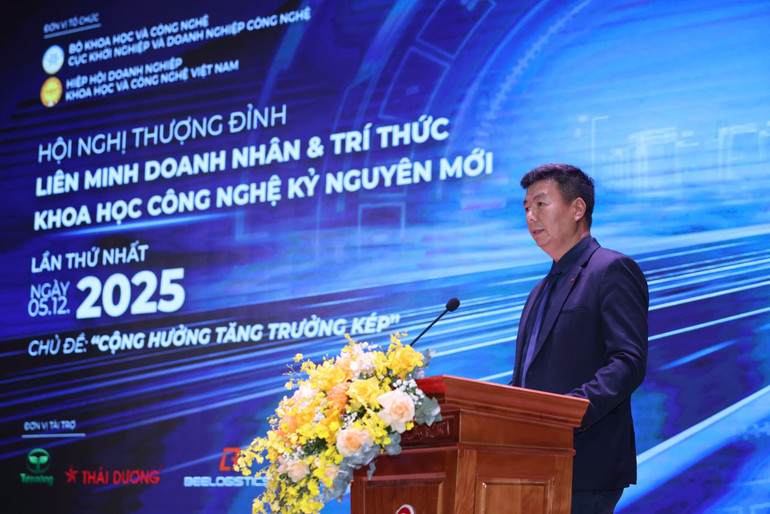
Deputy Director of the Agency for Startups and Technology Enterprises Tran Xuan Dich emphasized that the State, scientists and enterprises have different roles but share the goal of developing the country based on science, technology and innovation.
The State creates a development environment through important policies and documents such as Resolution No. 57 of the Politburo, Government resolutions, the Law on Science, Technology and Innovation 2025, the Decree on science and technology enterprises, and a system of funds and support programs.
Scientists create knowledge through research, inventions and technical solutions in many fields such as medicine, agriculture, logistics, digital transformation, energy and new materials.
Enterprises, especially science and technology enterprises, create value through investment, testing, certification, commercialization and bringing products to domestic and international markets.
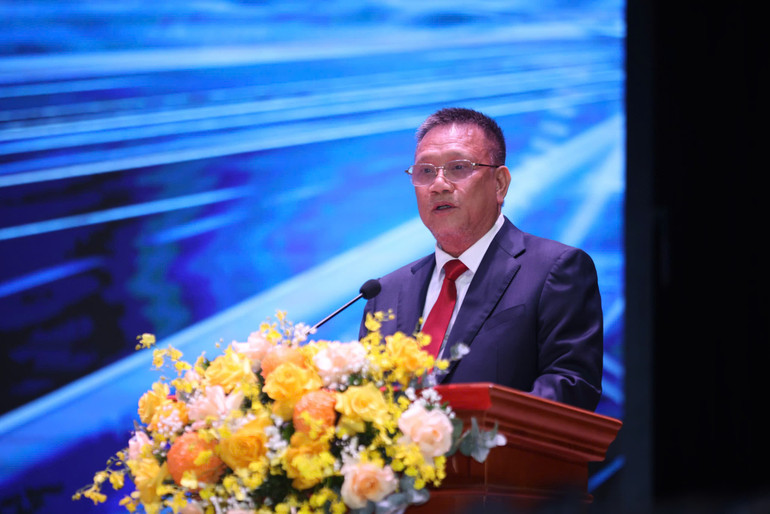
According to Mr. Tran Xuan Dich, if each force operates separately, it will be very difficult to create a breakthrough. But when connected, these three forces create a "development triangle" of the Vietnamese innovation ecosystem: businesses pose practical problems; research institutes and universities provide technological solutions; the State improves institutions and support tools to help solutions enter the market faster.
The conference also presented many cooperation models to demonstrate the effectiveness of the “three-way” alliance. In agriculture, Tien Nong Company and Thai Binh Seed Company cooperate with research institutes and universities to develop smart plant varieties and fertilizers, helping to increase productivity and adapt to climate change.
In the pharmaceutical and medicinal materials sector, enterprises such as Savipharm and Sao Thai Duong have invested heavily in research and development, mastering formulation technology to provide high-quality products. In the infrastructure sector, the Drainage and Urban Development Company of Ba Ria-Vung Tau province has successfully commercialized many research results on drainage and flood prevention. Medical enterprises have promoted digital transformation of hospitals, applying data and digital technology to improve the quality of medical examination and treatment services.
Mr. Tran Xuan Dich said that the management agency wants each enterprise to identify at least one problem or technological need and send it to the Association, the Department of Startups and Technology Enterprises or connection platforms; each scientist chooses a research result ready for transfer and presents it "in business language", clearly stating the application, market, cost and efficiency.
The Ministry of Science and Technology and the Departments of Science and Technology are committed to continuing to improve the controlled testing mechanism for new technology models; simplifying procedures for accessing funds and support programs; and proactively listening to specific proposals from the business community and scientists.
These steps are expected to contribute to shortening the distance from laboratory to factory, from idea to product, from policy to market, creating an important foundation for the development of Vietnam's innovation ecosystem.
Source: https://nhandan.vn/ket-noi-ba-nha-de-thuc-day-doi-moi-sang-tao-post928337.html


![[Photo] 60th Anniversary of the Founding of the Vietnam Association of Photographic Artists](/_next/image?url=https%3A%2F%2Fvphoto.vietnam.vn%2Fthumb%2F1200x675%2Fvietnam%2Fresource%2FIMAGE%2F2025%2F12%2F05%2F1764935864512_a1-bnd-0841-9740-jpg.webp&w=3840&q=75)


![[Photo] National Assembly Chairman Tran Thanh Man attends the VinFuture 2025 Award Ceremony](/_next/image?url=https%3A%2F%2Fvphoto.vietnam.vn%2Fthumb%2F1200x675%2Fvietnam%2Fresource%2FIMAGE%2F2025%2F12%2F05%2F1764951162416_2628509768338816493-6995-jpg.webp&w=3840&q=75)










![[Infographic] Air pollution and recommendations from the Ministry of Health](https://vphoto.vietnam.vn/thumb/402x226/vietnam/resource/IMAGE/2025/12/05/1764950568593_screen-shot-2025-12-05-at-222015-png.webp)

























































Comment (0)