

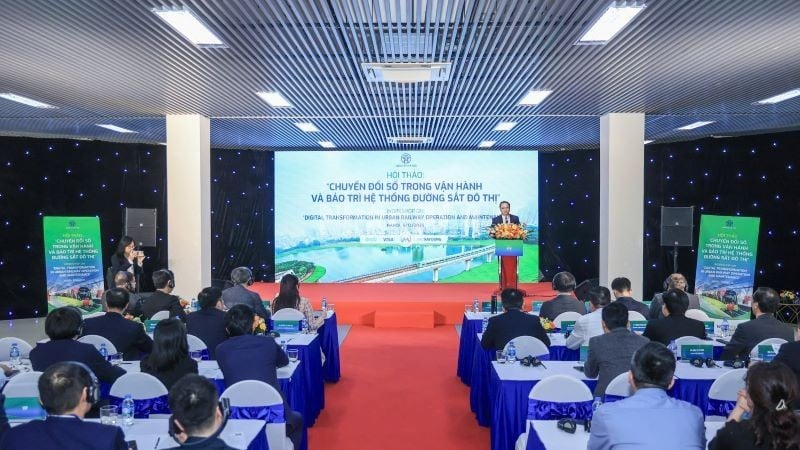
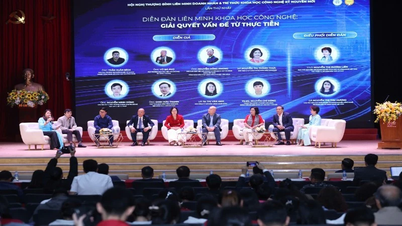
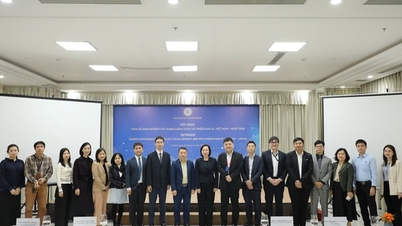
At the workshop, international experts and speakers shared lessons learned on digital transformation in the management, operation and maintenance of urban railway systems; proposed practical solutions and a suitable roadmap for digital transformation in the management, operation and maintenance of existing and future urban railway systems, contributing to the development of a domestic railway industry capable of technological autonomy, and the development of a synchronous, modern and sustainable urban railway system in the capital.
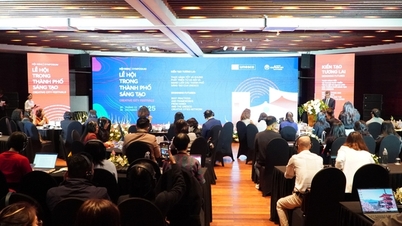
Speaking at the opening of the workshop, Dr. Khuat Viet Hung, Chairman of the Board of Members of Hanoi Railway Company (Hanoi Metro), stated that digital transformation is not only a trend but also an important foundation and driving force to promote socio -economic development of countries around the world.
In Vietnam, Resolution 57-NQ/TW dated December 22, 2024 of the Politburo clearly identified national digital transformation as an important breakthrough, not simply the application of technology, but a comprehensive revolution in institutions, human resources and national governance and the driving force to build and develop a domestic industry, capable of self-reliance in technology, especially strategic technology; promoting extensive, effective and substantive cooperation.
“However, opportunities always come with challenges, especially in human resources, technology transfer cooperation, technology mastery and autonomy, and development of domestic industry to meet digital transformation needs. From there, challenging questions arise: How can the digital transformation process both meet urgent immediate requirements and ensure long-term vision?
Which areas should we focus on for priority development in the context of limited resources? What can we do to develop high-quality human resources to meet the requirements of the digital transformation process? Can we take a shortcut in mastering technology through digital transformation when looking at practical lessons from developed countries?”, Dr. Khuat Viet Hung wondered.
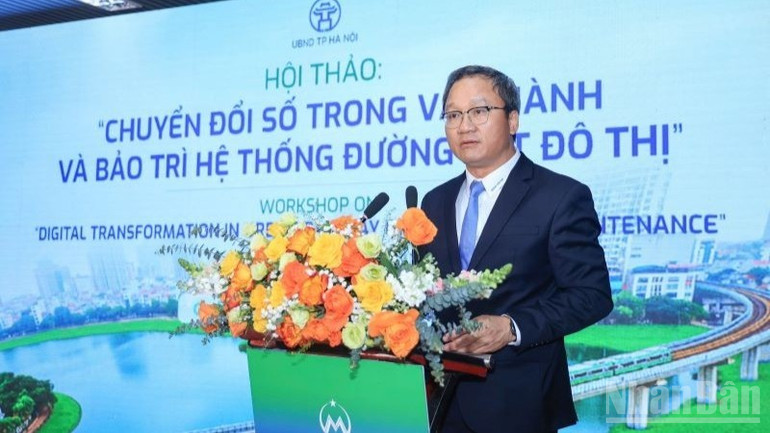
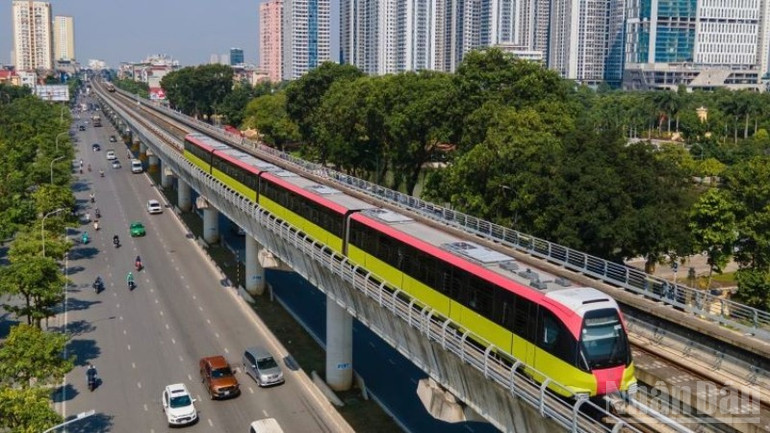
Hanoi is in the process of strongly developing the urban railway system to solve the challenges of traffic congestion, environmental pollution and sustainable urbanization. The workshop is a forum to share and discuss some of the achieved results, challenges and practical solutions on digital transformation in the management, operation and maintenance of the existing and future urban railway system.
Hanoi Metro sets major goals in its digital transformation strategy, including: Building an operation-exploitation management system based on comprehensive digital data; Forming a smart maintenance platform, applying infrastructure maintenance management software; optimizing internal processes through the enterprise management system (ERP); creating a large database for operations and policy making. These goals aim towards a modern, transparent and scalable public transport business model in the future.
Regarding the implementation roadmap to 2045, Hanoi Metro has proposed a 3-phase roadmap. By 2027, it will begin developing key software for management and operation; by 2030, it will complete a unified management and operation software system, effectively operate ERP software and infrastructure maintenance software.
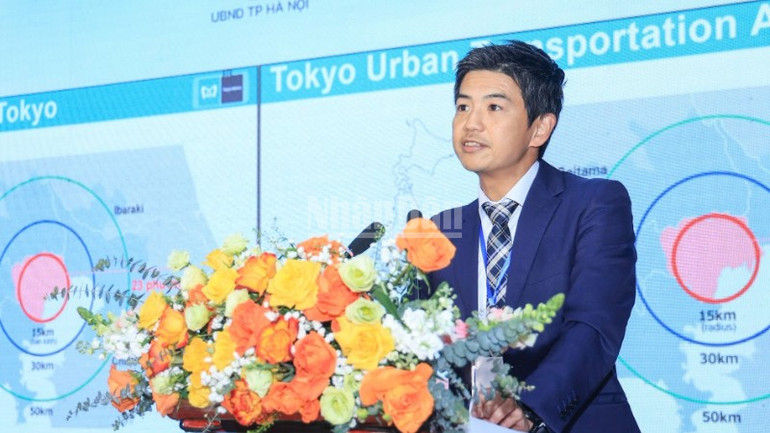
At the workshop, Mr. Atsushi Sato, Manager of the International Business Department, Tokyo Metro Corporation (Tokyo Metro) said that Tokyo Metro was established in 1920. In 1927, Asia's first subway line (Ginza) connecting Asakusa and Ueno was opened. By 1990, the subway network was almost completed. As of March 2024, Tokyo Metro has 9 subway lines with 180 stations in and around central Tokyo, 195km long, operating in conjunction with other railway transport companies with a length of up to 556.6km. In 2023, Tokyo Metro transported 6.84 million passengers per day; the punctuality rate calculated by the rate of trains arriving within 5 minutes on all lines is 99.2%.
Tokyo Metro is promoting digital transformation in operations and maintenance to increase management efficiency and reduce costs. The application also monitors train operations and crowding information with 4 levels of real-time display thanks to the depth-sensing camera system installed on train cars. Tokyo Metro also deployed the virtual assistant Tokyo Chatbox to support 24/7, and each department is exploring suitable digital transformation solutions to maintain their respective facilities.
Dr. Jitaek Oh, Chief Researcher at the Korea Railway Research Institute (KRRI), said that since 1995, through 10 years of research and development, Korea has mastered imported technology and created new technology. Since 2010, many high-speed railway lines have been put into operation, helping Korea achieve almost complete autonomy by 2025. “When transferring, we conduct it in many places, from design, production to construction of infrastructure from abroad, the part related to locomotives. The required technology depends on the process, design, and construction because the Korean environment is different from that of foreign countries,” Dr. Jitaek Oh commented.
Technological autonomy cannot be achieved through technical documentation or training alone, but through comprehensive participation in design-production-operation in real-world environments. In particular, the most valuable know-how is often not contained in documents but is communicated through human relationships based on mutual trust.”Korea’s first high-speed rail project was implemented entirely with foreign technology and technical guidance, but subsequent projects have been developed by Korea itself, perfecting all technology, products and technical know-how. By 2025, this model is considered successful.
South Korea has now developed its own high-speed trains, the KTX-Sancheon, KTX-Eum, and CheongRyong, and continues to operate imported first-generation KTX trains. South Korea's high-speed technology is the result of more than 20 years of domestic R&D, aiming for complete self-sufficiency. South Korea has now commercialized locomotives. South Korea has developed 16 sets of national standards in four areas to support digital transformation and digital twins across the entire national territory. The standards in the four areas can also support the digitalization of Vietnam's entire national territory.
“Korea can support the improvement of Vietnam’s railway engineering system by sharing Korean typical products developed under the Railway Safety Law, such as Technical Regulations, Standards and Guidelines, inspection and certification systems, and competency requirements for railway personnel, and cooperating to develop “tailor-made” solutions that suit Vietnam’s specific needs. We hope that Korea’s experiences and cooperation initiatives will contribute to the sustainable development of Vietnam’s railway system,” Dr. Jitaek Oh analyzed.
Source: https://nhandan.vn/chuyen-doi-so-trong-van-hanh-va-bao-tri-duong-sat-do-thi-post928333.html


![[Photo] National Assembly Chairman Tran Thanh Man attends the VinFuture 2025 Award Ceremony](/_next/image?url=https%3A%2F%2Fvphoto.vietnam.vn%2Fthumb%2F1200x675%2Fvietnam%2Fresource%2FIMAGE%2F2025%2F12%2F05%2F1764951162416_2628509768338816493-6995-jpg.webp&w=3840&q=75)
![[Photo] 60th Anniversary of the Founding of the Vietnam Association of Photographic Artists](/_next/image?url=https%3A%2F%2Fvphoto.vietnam.vn%2Fthumb%2F1200x675%2Fvietnam%2Fresource%2FIMAGE%2F2025%2F12%2F05%2F1764935864512_a1-bnd-0841-9740-jpg.webp&w=3840&q=75)














![[Video] Dong Do Hospital celebrates 15 years of operation](https://vphoto.vietnam.vn/thumb/402x226/vietnam/resource/IMAGE/2025/12/06/1764980267666_img-2287-5359-png.webp)


























































Comment (0)