


>>
>>
The fear of "fire menace"
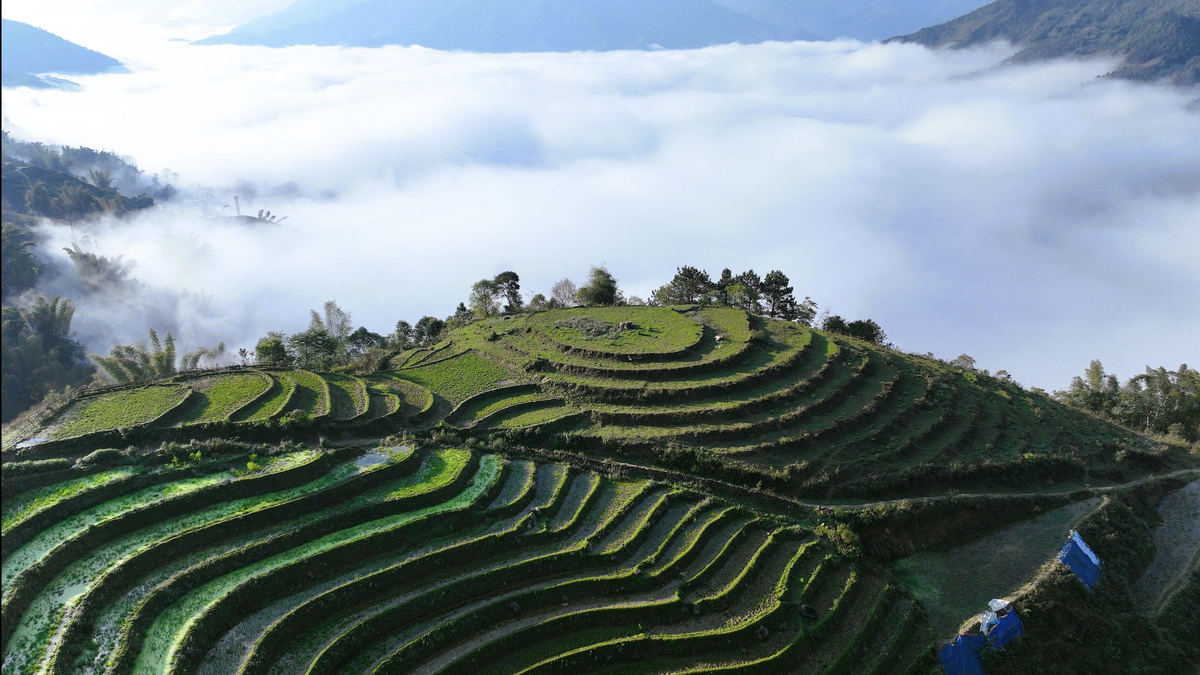
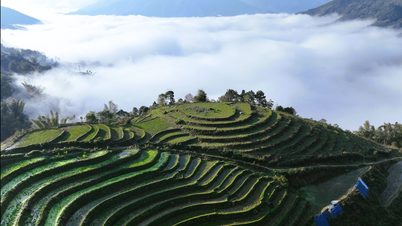
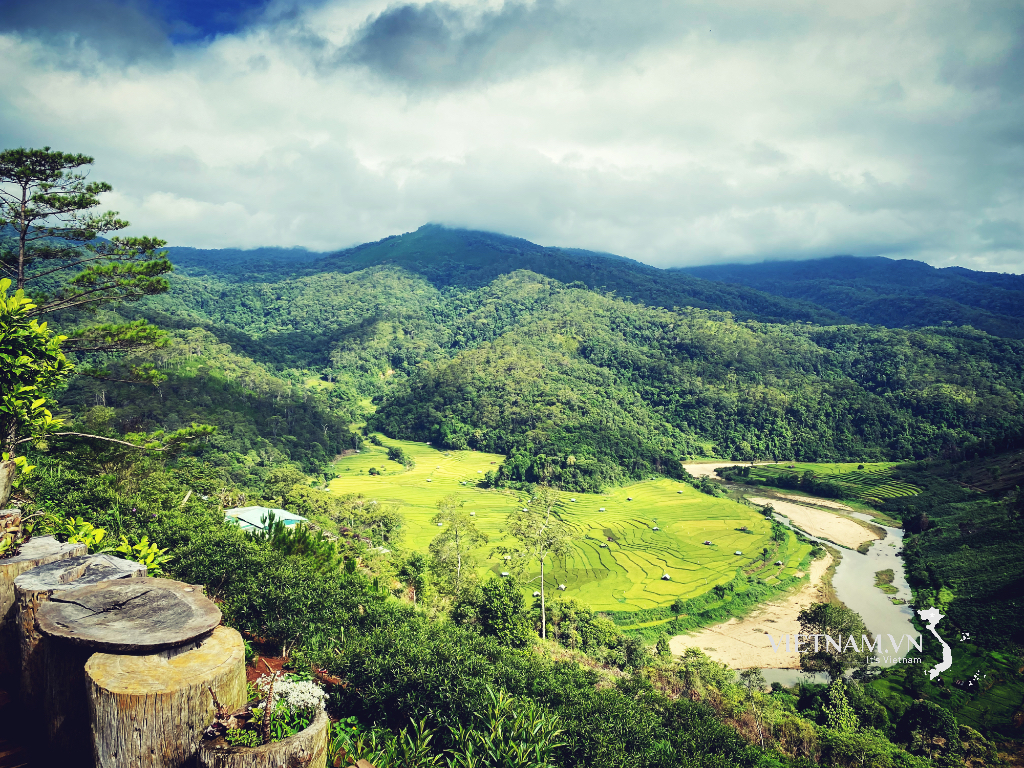
Western Yen Bai , characterized by its high mountains, steep slopes, and harsh climate, is always a hotspot for forest fires, especially during the prolonged dry season. In Mu Cang Chai, the freezing winter with frost and ice on the high mountain peaks causes vegetation to dry up and easily catch fire; when the dry season arrives, strong Lao winds combined with the slash-and-burn farming practices of the Mong people create a constant "red alert" risk of forest fires.
In 2024, Mu Cang Chai recorded 5 forest fires, causing damage to more than 4 hectares of forest. Similarly, in Tram Tau district, the 2024-2025 crop season is predicted to pose many risks due to complex weather patterns.
Mr. Lai Van Quang, Deputy Director of the Forest Protection Management Board of Tram Tau district, shared his concerns: "This year's weather is very complex and unpredictable. Frost has appeared on high mountain peaks since the beginning of the year, and the forecast predicts a prolonged dry season and a very high risk of forest fires. Therefore, we have proactively implemented preventive measures early on."
Although Tram Tau only recorded 3 forest fires in the 2023-2024 season, causing damage to 6.53 hectares thanks to proactive measures, this does not mean that forest fire prevention and control (FFPC) work is being neglected.
Proactively implement the "4 on-site" plan.
Given the complex weather patterns and the ever-present risk of forest fires, localities in the western part of the province have proactively taken decisive action, avoiding any passive or unexpected situations. In Mu Cang Chai, the prevention system has been tightened. The district has reorganized 14 commune-level forest fire prevention and control steering committees with over 400 members, and simultaneously strengthened and established 108 new rapid response teams for patrolling and protecting forests, with nearly 650 local people participating.
Mr. Nguyen Hung Son, Deputy Director of the Mu Cang Chai District Forest Management Board, said: "The unit has closely coordinated with the Forest Ranger Station and the local authorities to regularly organize community meetings. We focus on disseminating legal knowledge, clearly stating the devastating consequences of forest fires and the strict regulations on slash-and-burn farming. In particular, we have organized nearly 12,000 households, accounting for 92% of the total number of households, to sign commitments to protect the forest and prevent forest fires.”
In addition, clearly demarcating boundaries between villages and forest plots, and repairing nearly 280km of firebreaks, are creating effective "rings" to prevent the spread of fires. Hundreds of fire watchtowers and temporary shelters at high points are also maintained on a 24/7 duty schedule to detect forest fires early.
In Tram Tau district, forest fire prevention and control work has also been implemented systematically. The district has reorganized 12 commune-level steering committees, established 12 mobile teams (244 people) and 55 village-level forest fire prevention and control teams (294 people), mobilizing the participation of more than 6,100 households contracted to protect the forest. The district's Forest Protection Management Board, in coordination with the forest rangers, police, and local authorities, has intensified propaganda, invested in equipment, built boundary lines, watchtowers, and signs.
Forest rangers also directly assist people in safely clearing vegetation and adhering to proper burning procedures. The district has also strengthened its staff in key communes and border areas, maintaining on-duty personnel, inspecting, controlling, and gathering information on forest fire forecasts and warnings to provide timely advice and guidance.
Linking people's responsibility to the forest.
A highlight in forest management and protection in the western districts is the effective implementation of the forest environmental service payment policy. In De Xu Phinh commune (Mu Cang Chai district), people are very happy to receive this money annually.
Mr. Chang A Song, Vice Chairman of the Commune People's Committee, shared: "Forests play an extremely important role, providing irrigation water for agricultural production and creating livelihoods and income through the Payment for Ecosystem Services (PES) policy. This money not only improves living standards but also increases people's responsibility in protecting the forest. The commune government always coordinates with forest rangers and the Forest Management Board to organize patrols, disseminate information, and encourage people not to burn fields during the dry season, and establish rapid response teams in villages to be ready to respond when fires occur."
The DVMTR funds not only raise awareness of forest protection but are also effectively used by people for reinvestment in production, such as purchasing plant and animal breeds, contributing to stable livelihoods and reducing pressure on forest resources. This is a sustainable approach that harmonizes conservation and development.
The dry season is still at its peak, and the risk of forest fires remains. However, with the decisive involvement of the entire political system, the coordinated efforts of various forces, and especially the increasing awareness and responsibility of the people, who are connected by the benefits derived from the forest, the western districts of Yen Bai are building a solid defense posture.
From Mu Cang Chai to Tram Tau, the "green shields" are being strengthened day by day. Patrols and guard duties are being intensified, firebreaks are being cleared, and rapid response teams are ready to undertake their missions.
Hung Cuong
Source: https://baoyenbai.com.vn/12/349247/Mien-Tay-cang-suc-ngan-lua-giu-rung.aspx

![[Photo] Rich in color and flavor, Spring Fair - Nhan Dan Newspaper Trade Union](https://vphoto.vietnam.vn/thumb/1200x675/vietnam/resource/IMAGE/2026/03/05/1772699709633_img-2781-2340-jpg.webp)
![[Photo] Prime Minister Pham Minh Chinh receives the Minister of Emergency Situations of the Russian Federation.](https://vphoto.vietnam.vn/thumb/1200x675/vietnam/resource/IMAGE/2026/03/05/1772712011395_ndo_br_thiet-ke-chua-co-ten-76-png.webp)



























































































Comment (0)