

Legend has it that in the 16th century, Princess Ban Tranh fell in love with a young man of the same Cham ethnicity but a different religion named Posanim Pan, and their love affair was met with opposition. Princess Ban Tranh's love caused a great uproar within the royal family and outrage among the people of Champa at that time.
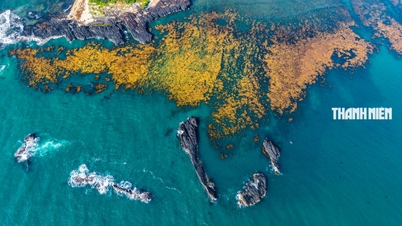
Because of her disrespect towards her father, the princess was accused of treason and exiled to a deserted island. After many days of sailing southeast, the fleet escorted Princess Ban Tranh to a small island shaped like a giant mackerel – this is Cu Lao Thu (present-day Phu Quy Island). Princess Ban Tranh and her entourage set up camp at the foot of Cao Cat Mountain (in Dong Hai village, Long Hai commune), clearing weeds, cutting down trees, preparing the land, finding fresh water, planting crops, fishing, exploring the deserted island… and building an independent life. Later, the successor king issued a decree allowing Princess Ban Tranh to return to the mainland, but with love and the pain of her past, she refused, accepting a normal, joyful life on the beautiful Cu Lao Thu, shimmering in the East Sea. When the princess died, the people of Phu Quy Island erected a tombstone, buried her, and built a shrine to the island princess beside Cao Cat Mountain, which is windy all year round. In recognition of Princess Ban Tranh's great contributions, the emperors from the Nguyen Dynasty, from Minh Mang to Khai Dinh, bestowed upon her eight royal decrees, entrusting the fishermen of Phu Quy Island with the responsibility of offering incense and worshiping her. Today, visitors to Phu Quy Island can see a rather grand ancient temple at the foot of Cao Cat Mountain. The entrance gate is exquisitely and artistically carved. Almost every day, after climbing Cao Cat Mountain to light incense and pray for blessings and admire the beautiful scenery of Phu Quy from the mountaintop, visitors do not forget to stop by and admire the ancient temple dedicated to Princess Ban Tranh (Posah ina) - which the islanders often call the temple of the Lady. In 2015, this temple was classified as a National Historical and Cultural Monument by the Ministry of Culture, Sports and Tourism.
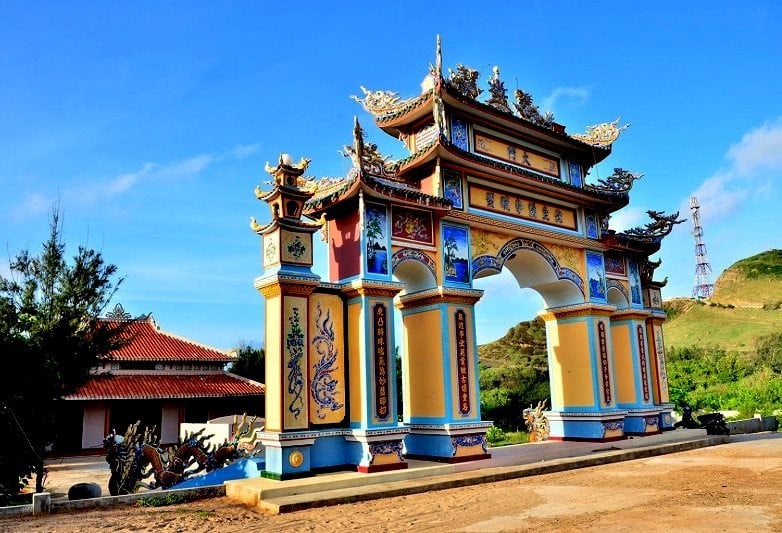
Through the ups and downs of history, the temple dedicated to the Goddess Ban Tranh has remained on Phu Quy Island, affirming the sovereignty of the first Vietnamese people who pioneered and cultivated this beautiful, shimmering land in the East Sea. Today, every year on the 3rd day of the first lunar month, the temple opens its doors, and the people of Phu Quy Island solemnly organize a procession to bring the Goddess's sacred image from its place of preservation to the temple, performing dignified rituals and offerings. During the festival, many unique folk cultural performances of the islanders also take place, such as traditional boat rowing, classical opera, and the Four Sacred Animals dance. This is an occasion for numerous tourists from the mainland and local people to come to the island to commemorate and express gratitude for the contributions of Princess Ban Tranh in building Cu Lao Thu Island. The worship of Princess Ban Tranh has long become the most sacred and shared belief of the islanders. In the minds and thoughts of the people, Princess Ban Tranh is considered a very powerful deity, always present to protect and assist everyone in their work and lives.
The Lady of the Temple is a national-level historical and cultural relic. Over the years, Phu Quy Island has preserved, exploited, and combined it with tourism development. In fact, the combination of tourism and historical relics is gradually yielding positive results. This is because most relics possess outstanding architectural, artistic, historical, and cultural value. Exploiting historical and cultural relics for tourism development, such as the Lady of the Temple, not only brings socio -economic benefits and promotes the development of the tourism industry but also contributes to preserving and promoting the inherent value of the relic.
Source


![[Photo] General Secretary and President To Lam receives Amazon's Senior Vice President David Zapolsky](https://vphoto.vietnam.vn/thumb/1200x675/vietnam/resource/IMAGE/2026/05/22/1779466547770_a1-bnd-3513-6601-jpg.webp)










































































Comment (0)