

Every journey, a unique experience.
In an era where travelers can easily travel by plane or highway, trains still maintain their position thanks to their unique values. No longer simply a means of transporting passengers from one place to another, railways are gradually becoming an integral part of the travel experience.
Instead of simply focusing on speed, more and more travelers are seeking unique journeys where the trip itself becomes a memorable part of their vacation. This is why cruise lines are thriving in many countries, and it is also driving innovation in Vietnam's railway industry.
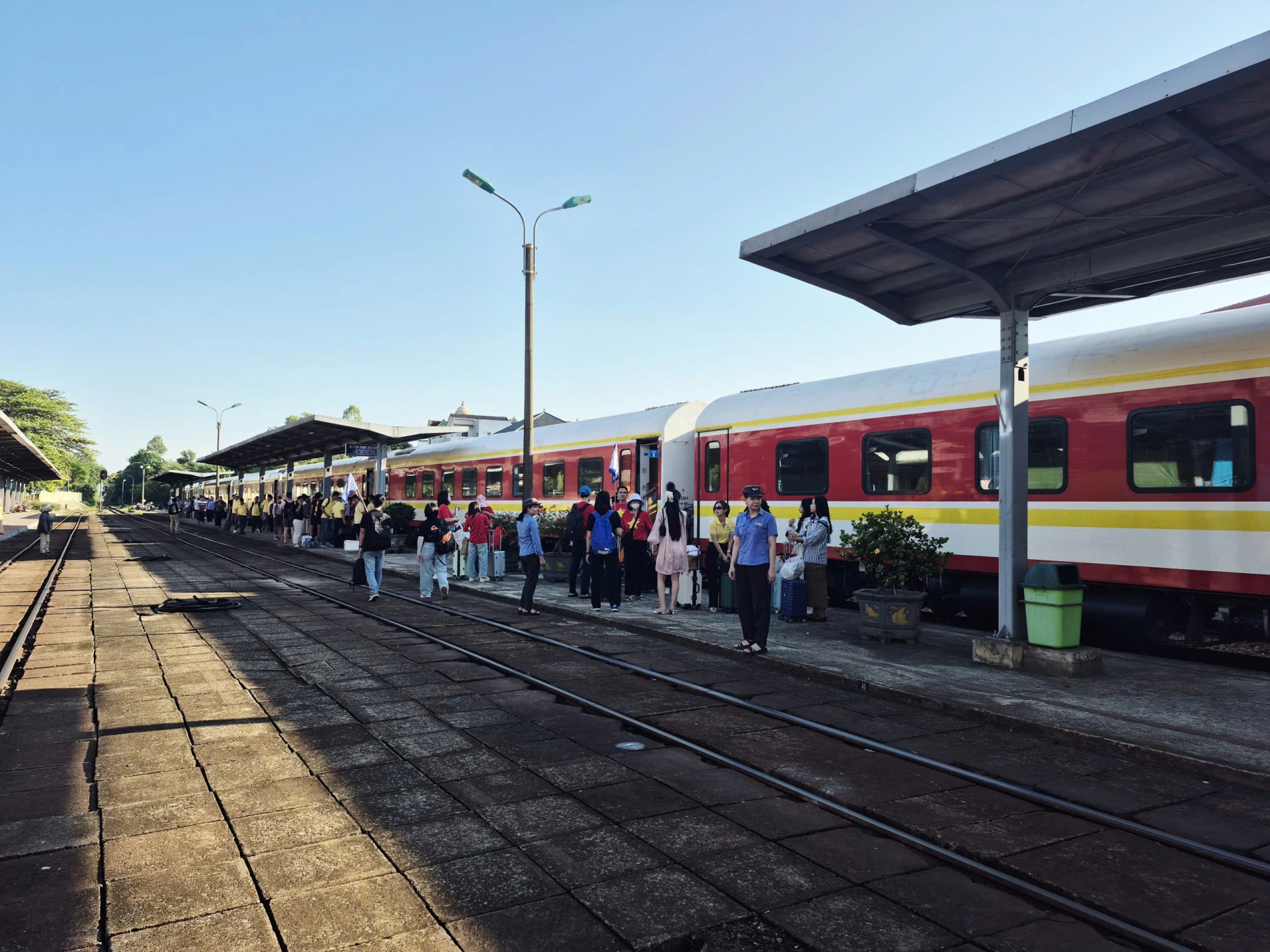 |
| Tourists travel to Quang Tri by train - Photo: DH |
In March 2024, the Hue-Da Nang Heritage Train officially launched. After only a short period of operation, this product has become a new highlight on the Central Vietnam tourism map. According to railway data, in 2025, the number of passengers on the Hue-Da Nang Heritage Train is expected to reach over 221,000, an increase of more than 26% compared to the previous year. These trains not only connect the two localities but also offer unique perspectives of Hai Van Pass and Lang Co Bay, combined with cultural activities and distinctive cuisine right on board.
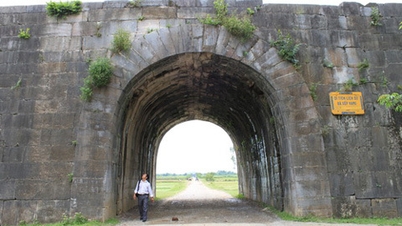
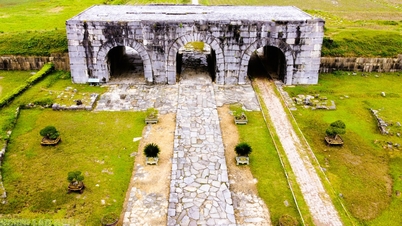
The success of this model demonstrates that, with proper investment, railways can become independent tourism products rather than just a means of transportation. For Quang Tri, this opportunity is even more evident, given its vast tourism potential stretching from Phong Nha-Ke Bang National Park, Nhat Le Beach, Bang hot springs, to famous historical sites such as Hien Luong Bridge, Vinh Moc Tunnels, and Quang Tri Ancient Citadel, along with convenient connections to Hue and Da Nang.
Connecting heritage regions with railways.
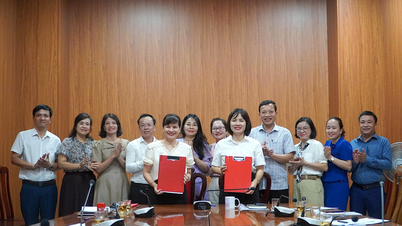
Based on this potential, the People's Committee of Quang Tri province and the Vietnam Railways Corporation recently signed a memorandum of understanding on cooperation in developing railway tourism for the period 2026-2030. According to the agreement, the two sides will cooperate in developing railway tourism products, effectively utilizing Hanoi-Dong Hoi charter trains, and simultaneously researching the expansion of the heritage train model on the Dong Hoi-Hue-Da Nang corridor.
This is considered a special route as it seamlessly connects the most outstanding natural, cultural, and historical heritage sites in Central Vietnam.
The Phong Nha-Ke Bang National Park, a World Natural Heritage site, the Quang Tri revolutionary historical relic system, the Hue Imperial Citadel complex, and famous destinations such as Da Nang, Hoi An, and My Son are all located along the same North-South railway line.
The distance from Dong Hoi to Hue is approximately 167km, with a travel time of about 3 hours and 30 minutes. Although comparable to road travel, the railway journey offers significant advantages in terms of safety, a relaxing atmosphere, and the ability to organize flexible experiential activities right on board.
 |
| Tourists experience the Hue-Da Nang heritage train journey - Photo: DH |
Over the years, the UNESCO Hanoi Travel Club has regularly brought tourists to Quang Tri by train, especially charter trains from Hanoi to Dong Hoi during peak tourist season. Many tour groups choose this option not only for its convenience but also because they want to experience a cross-Vietnam journey in a different way.
Mr. Doan Ngoc Tung, Vice President of the UNESCO Hanoi Travel Club, said: “We have brought tourists to Quang Tri by train many times and have received very positive feedback. For many tourists, especially families, senior citizens, and international visitors, the train offers a much more relaxing experience compared to long road journeys. On the train, tourists have time to admire the scenery, rest, and enjoy the journey. Quang Tri's potential lies in its incredibly rich heritage resources. If we optimize the connection between the train station and destinations, and create unique experiences along the way, rail tourism can absolutely become a distinctive local product.”
An opportunity to make a difference.
A notable aspect of Quang Tri's development plan is that it goes beyond simply adding more train services. The larger goal is to build a complete tourism ecosystem centered around the railway. According to the proposal, Dong Hoi and Dong Ha stations will gradually become tourist reception and experience points, featuring local cultural spaces, OCOP product display areas, regional specialties, destination promotion areas, and transfer services to tourist areas and attractions. Visitors disembarking at the stations can continue their journey to Phong Nha-Ke Bang, Nhat Le Beach, Bang Stream, Quang Tri Ancient Citadel, Hien Luong Bridge, or Vinh Moc Tunnels via a comprehensive network of connecting buses.
In addition, there are stimulus programs such as discounted entrance fees, package tours combining train tickets, accommodation, and destination experiences. This model has been successfully implemented in many countries to increase value for both the tourism and transportation industries. Of course, turning this potential into reality still faces many challenges.
Railway infrastructure needs continued investment, experiential tourism products must be professionally designed, and the participation of travel businesses and tourism service investors is essential. However, in the context of green tourism, sustainable tourism, and experiential tourism becoming the dominant trend, these challenges also serve as motivation for Quang Tri to create its own unique identity.
At the cooperation signing ceremony with Vietnam Railways Corporation held in mid-May, the Deputy Secretary of the Provincial Party Committee and Chairman of the Provincial People's Committee, Le Hong Vinh, affirmed that the province not only aims to open a new transport route but also wishes to transform rail travel into a unique local tourism experience.
The Dong Hoi-Hue-Da Nang route is expected to contribute to completing the "Central Vietnam Heritage Route" tourism axis, creating a chain of "one journey - multiple destinations - multiple experiences" products, and enhancing the competitiveness of tourism in Central Vietnam and Quang Tri in the new phase.
Market signals indicate that rail tourism is no longer a futuristic concept. With proper investment and effective connectivity to destinations, trains bearing the Quang Tri brand could become a unique new tourism product in Central Vietnam, taking visitors through heritage sites on a slow but emotionally rich journey. After all, what leaves the deepest impression on a traveler's memory is sometimes not the destination, but the journey itself.
Dieu Huong
Source: https://baoquangtri.vn/du-lich/202606/mo-loi-cho-con-duong-di-san-d366d46/


![[Photo] First session of the 14th Congress of the Vietnam Trade Union](https://vphoto.vietnam.vn/thumb/1200x675/vietnam/resource/IMAGE/2026/06/03/1780465947883_ndo_br_img-3852-jpg.webp)
![[Photo] Secretary of the National Assembly Party Committee, Chairman of the National Assembly presides over the meeting of the Standing Committee and Executive Committee of the National Assembly Party Committee.](https://vphoto.vietnam.vn/thumb/1200x675/vietnam/resource/IMAGE/2026/06/03/1780480353201_ndo_br_bnd-2585-jpg.webp)



























![[Video] Sunset at Lap An Lagoon – Where the sun sets over the fishing nets](https://vphoto.vietnam.vn/thumb/1200x675/vietnam/resource/IMAGE/2026/05/31/1780192137701_beach-landscape-sea-water-nature-grass-745871-pxhere-com.jpeg)





















Comment (0)