

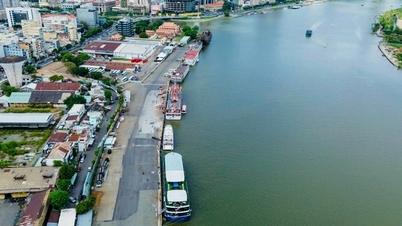
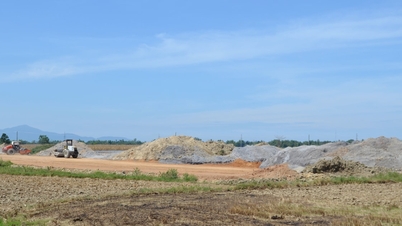
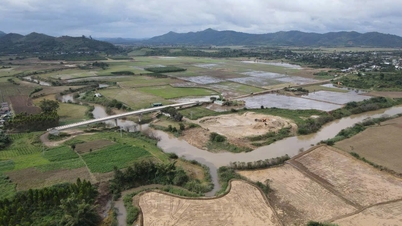
According to the Ministry of Finance , the capital needs for infrastructure development in the period 2025-2040 could reach 30-40 billion USD per year. Large-scale projects such as high-speed railways, expressways, seaports, and digital infrastructure clearly cannot rely solely on the state budget or bank credit. In this context, the Ministry of Finance's consultation on the draft decree regulating the public offering of bonds by enterprises involved in public-private partnership (PPP) investment projects demonstrates a significant shift in the thinking behind mobilizing resources for development: opening the door for social capital to participate more deeply in strategic infrastructure projects.
A notable aspect of the draft lies in establishing a separate legal framework tailored to businesses investing in long-term infrastructure projects – a type of business with characteristics very different from typical manufacturing and trading enterprises. The majority of PPP businesses are established solely to implement a specific project. In the initial stages, these businesses generate almost no revenue and have no profit history, while regulations for issuing bonds under the general Securities Law require criteria regarding financial capacity and business performance. This makes it difficult for PPP businesses to access capital markets, forcing them to rely heavily on bank credit.
Meanwhile, infrastructure is a sector requiring massive capital and a payback period of decades, while banks' mobilized capital is primarily short-term. The mismatch between deposits and loans always poses risks to the financial system. If the burden of capital continues to be placed solely on banks or relying only on public investment, the goals of modernizing infrastructure and maintaining high long-term growth rates will be very difficult to achieve. Therefore, developing a capital market for infrastructure is no longer a supplementary option, but is gradually becoming an essential requirement.
However, lessons from the corporate bond market in recent times also show a reality: expanding capital raising channels must be accompanied by sufficiently stringent risk control mechanisms. A positive aspect of the draft is that it has established several "safety barriers" for PPP corporate bonds issued to the public. Accordingly, bonds must have a mechanism guaranteeing full payment of principal and interest. For businesses that have not yet put projects into operation, bonds must be unconditionally and irrevocably guaranteed by a qualified credit institution or financial institution.
Another positive development is the requirement for credit ratings. In the context of the Vietnamese bond market still lacking independent and transparent risk assessment standards, the mandatory credit rating regulation will create an important additional "filter" for issuing companies. Even if a company is exempt from credit rating due to having a full payment guarantee, the guaranteeing organization itself must still be credit rated. This provides investors with a stronger basis for assessing the company's debt repayment capacity and the safety of the bonds.
Furthermore, the draft also tightens the management of cash flow and the use of capital. Regulations on opening escrow accounts, periodic information disclosure, separate monitoring of cash flow for bond debt repayment, and the requirement that businesses not distribute profits until they have fulfilled their debt repayment obligations demonstrate a focus on prioritizing investor interests. This is a particularly important factor in restoring market confidence after a period of significant volatility in corporate bonds.
Nevertheless, PPP corporate bonds are essentially products associated with long-term, complex infrastructure projects, heavily influenced by construction progress, traffic volume, cost fluctuations, and policy factors. Therefore, for the decree to truly be implemented, the key lies not only in the issuance conditions but also in post-issuance monitoring capacity and transparency throughout the entire project lifecycle. Simultaneously, market principles must be ensured: investors must be provided with sufficient information to assess risks themselves, rather than assuming "safety by default" due to the state's involvement in the project.
If designed and operated correctly, bonds issued by PPP project companies can become a new "capital rail" for infrastructure development, contributing to the improvement of the financial market structure, reducing dependence on credit, and creating a sustainable foundation for long-term economic growth.
Source: https://www.sggp.org.vn/mo-loi-nguon-von-dai-han-cho-ha-tang-post854230.html








































































































Comment (0)