

Proactively positioning oneself to play a leadership role.
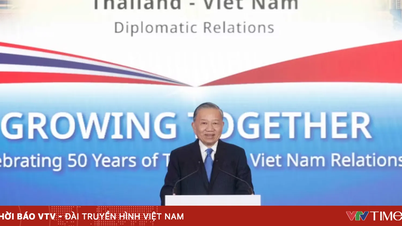
Strategic security analyst Collins Chong Yew Keat from the University of Malaya (Malaysia) commented that the trip shows Vietnam is proactively positioning itself to play a more leading and coordinating role within the Association of Southeast Asian Nations (ASEAN).
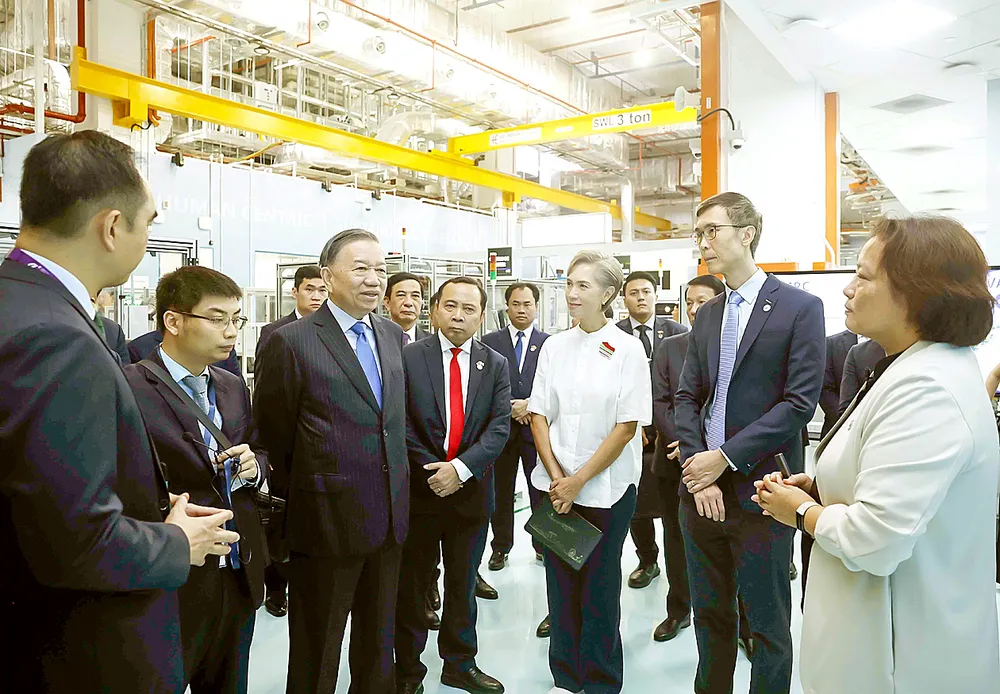
According to Collins Chong Yew Keat, high-level diplomatic activities continue to affirm Vietnam's support for the principles of international law, respect for sovereignty , peaceful resolution of disagreements, and maintaining a stable and favorable environment for development.
The visit to the three ASEAN countries also opened up many new opportunities for economic cooperation in the fields of green growth, agriculture, energy, tourism, technology, innovation, finance, and supply chain connectivity, with the expectation of creating a more diversified ASEAN growth structure.
Furthermore, enhanced cooperation among countries bordering the South China Sea, including Vietnam and the Philippines, is considered to contribute to promoting dialogue, building trust, and expanding substantive cooperation activities at sea. According to analyst Collins Chong Yew Keat, this will support efforts to maintain peace, stability, and cooperation in the region, in line with ASEAN's common interests.
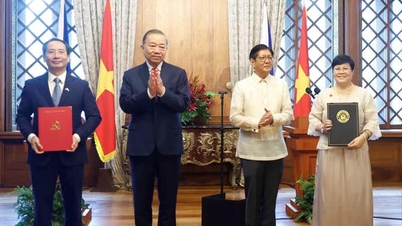
According to expert Collins Chong Yew Keat, in the context of ASEAN facing numerous geopolitical, security, and economic challenges, the visit of General Secretary and President To Lam to Thailand, Singapore, and the Philippines is of significant importance for strengthening cooperation and connectivity in the region.
In line with Vietnam's interests
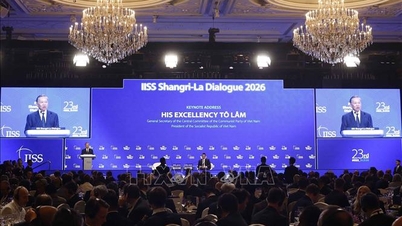
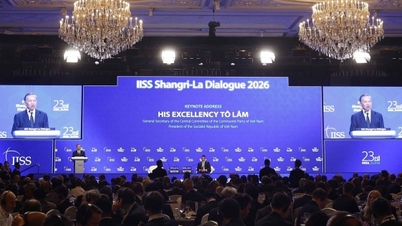
Regarding the keynote speech by General Secretary and President To Lam at the 2026 Shangri-La Dialogue, Professor Mi Liang, Director of the Center for Southeast Asian Studies at Beijing Foreign Studies University (China), believes it was one of the most influential speeches at the conference, generating a strong response.
The speech by General Secretary and President To Lam was positive, constructive, independent, consistent with international law and reality, in line with Vietnam's interests, and reflected the aspirations of most Southeast Asian countries.
Professor Me Luong affirmed Vietnam's non-aligned, independent, and responsible stance, along with its diplomatic practices, which both avoid the formation of blocs and still bring about expectations of stability through institutional dialogue and multilateral platforms, while opening a practical path for the regional security structure to shift from "balanced power" to rules-based common governance.
From a research perspective, Dr. Mohamed Effendy B Abdul Hamid of the National University of Singapore highly appreciates the steadfastness and consistency in Vietnam's foreign policy. Dr. Mohamed Effendy B Abdul Hamid noted that at the 2026 Shangri-La Dialogue, General Secretary and President To Lam further clarified Vietnam's vision for international and regional issues.
The current period is particularly noteworthy as the international community places high expectations on Vietnam amidst complex global geopolitical developments, and views Vietnam's approach as a significant reference point in addressing and resolving new challenges today.
Sharing the same view, Professor Xu Liping, Director of the Center for Southeast Asian Studies at the Chinese Academy of Social Sciences, affirmed that the speech by General Secretary and President To Lam highlighted the principles of dialogue, cooperation, and respect for international law, which have great practical significance in effectively managing current geopolitical issues and strategic competition.
Source: https://www.sggp.org.vn/mo-rong-cac-hoat-dong-hop-tac-thuc-chat-post855680.html



![[Photo] First session of the 14th Congress of the Vietnam Trade Union](https://vphoto.vietnam.vn/thumb/1200x675/vietnam/resource/IMAGE/2026/06/03/1780465947883_ndo_br_img-3852-jpg.webp)
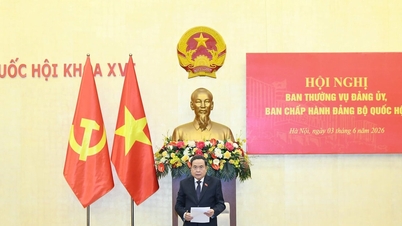
![[Photo] Secretary of the National Assembly Party Committee, Chairman of the National Assembly presides over the meeting of the Standing Committee and Executive Committee of the National Assembly Party Committee.](https://vphoto.vietnam.vn/thumb/1200x675/vietnam/resource/IMAGE/2026/06/03/1780480353201_ndo_br_bnd-2585-jpg.webp)







































![[Video] Sunset at Lap An Lagoon – Where the sun sets over the fishing nets](https://vphoto.vietnam.vn/thumb/1200x675/vietnam/resource/IMAGE/2026/05/31/1780192137701_beach-landscape-sea-water-nature-grass-745871-pxhere-com.jpeg)





























Comment (0)