

However, users quickly discovered that this feature could be abused to falsify restaurant bills.
Investor Deedy Das posted an image of a fake receipt from a San Francisco steakhouse on X, claiming the photo was created using GPT-4o.
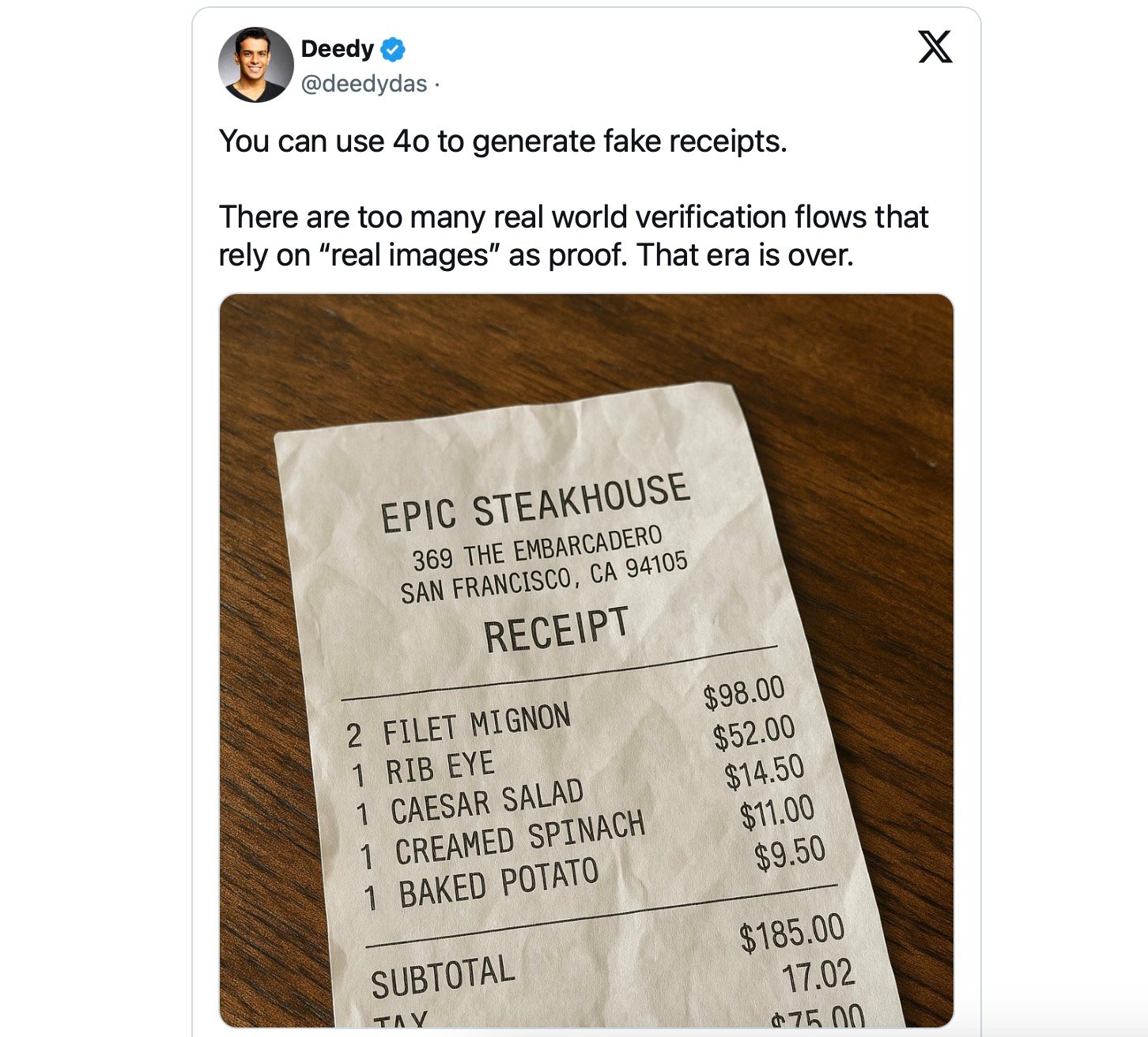
Investor Deedy shared the image on social media platform X.
Many other users have also successfully recreated the effect, even adding food and drink stains to enhance the realism.
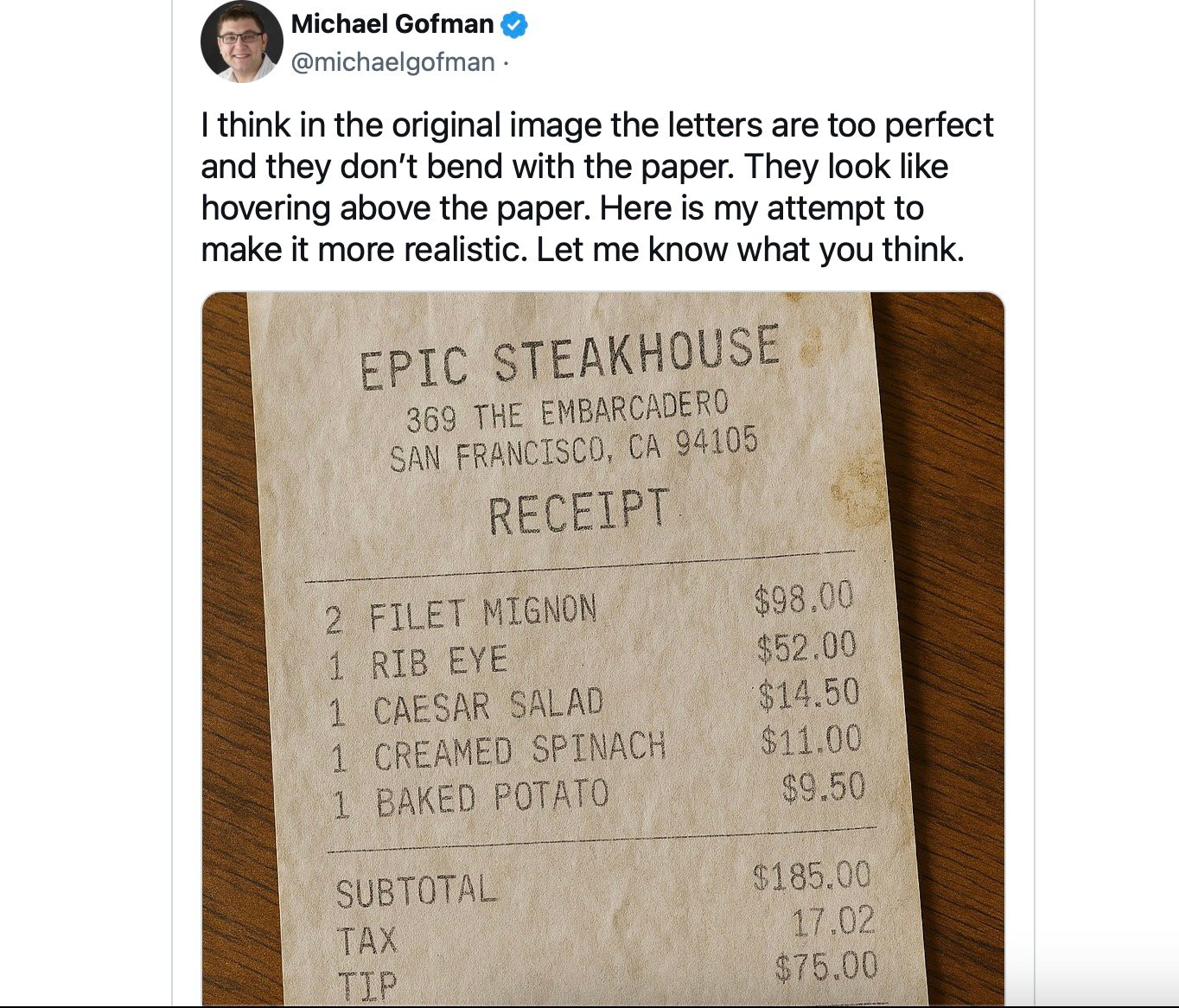
Another user shared an image of a receipt with food stains that looked very realistic, but was also created by ChatGPT.
Or, for example, a user in France posted a fake, crumpled receipt from a local restaurant chain.
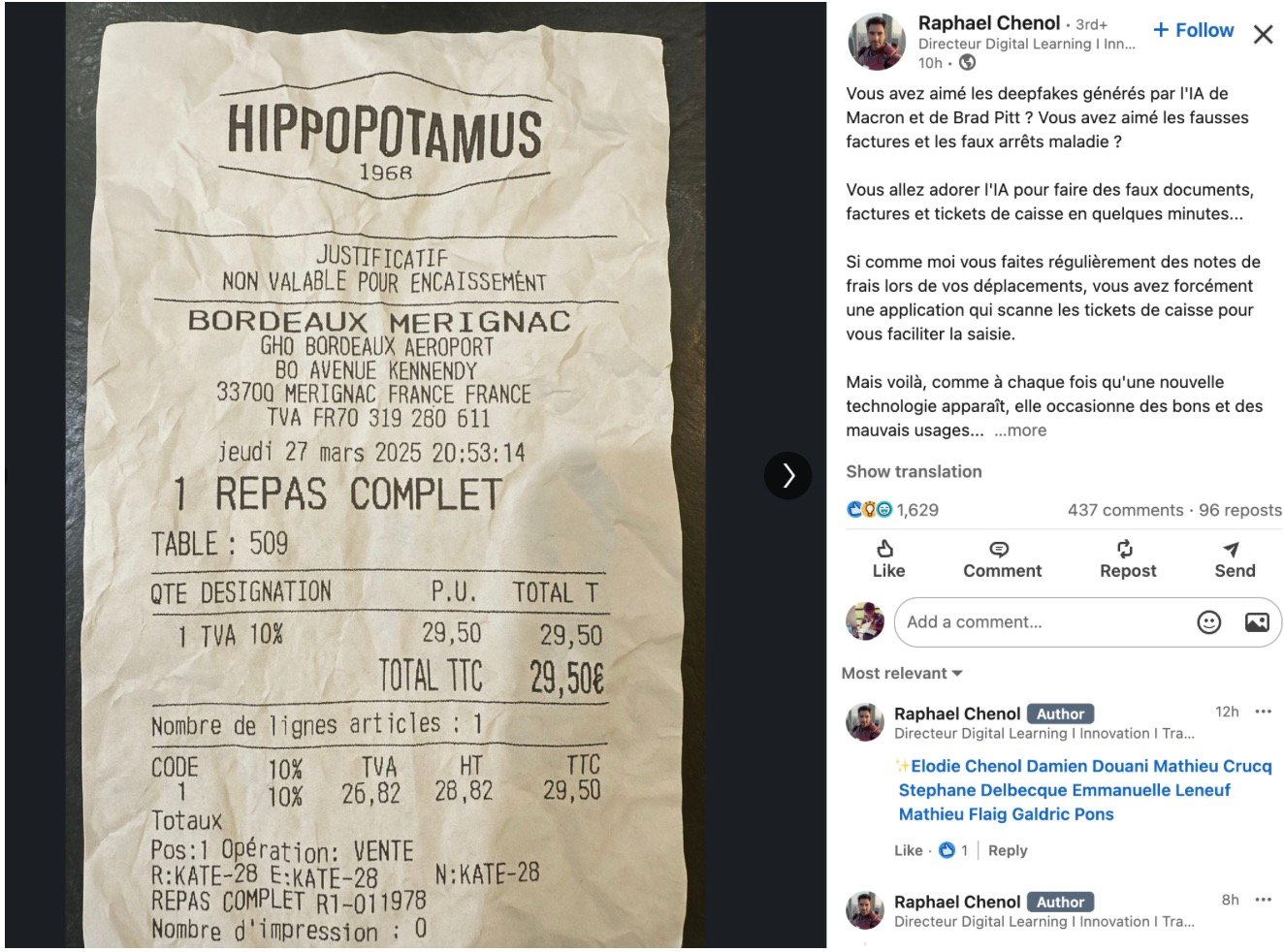
The photo was shared by a user in France.
Many others have tested the new feature and also created fake receipts for stores, but the images still have inconsistencies such as: Commas instead of periods in the total amount; incorrect calculations (a weakness of AI in basic calculations).
However, malicious actors can easily fix this by making simple edits using software or modifying commands (prompts).
The ease with which fake invoices can be created opens up significant risks, such as fraudulent refunds for non-existent expenses.
In response to this issue, OpenAI stated that all AI-generated images contain metadata acknowledging their origin from ChatGPT. The company also "takes action" when users violate its policies and "continuously learns" from real-world feedback.
When asked about allowing the creation of fake invoices, OpenAI spokesperson Taya Christianson explained that the goal is "maximizing creative freedom," and suggested that fake invoices could be used for financial education , art, or advertising purposes.
This isn't the first time AI has been exploited. Previously, MidJourney and DALL-E were used to create fake images of documents, identity cards, and even currency.
Cao Phong (according to TC, MSB)
Source: https://www.congluan.vn/moi-nguy-trinh-tao-hinh-anh-moi-cua-chatgpt-trong-viec-lam-gia-bien-lai-post340969.html


![[Photo] Prime Minister Pham Minh Chinh attends the Conference on the Implementation of Tasks for 2026 of the Industry and Trade Sector](/_next/image?url=https%3A%2F%2Fvphoto.vietnam.vn%2Fthumb%2F1200x675%2Fvietnam%2Fresource%2FIMAGE%2F2025%2F12%2F19%2F1766159500458_ndo_br_shared31-jpg.webp&w=3840&q=75)


























































Comment (0)