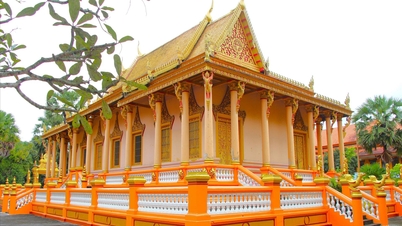
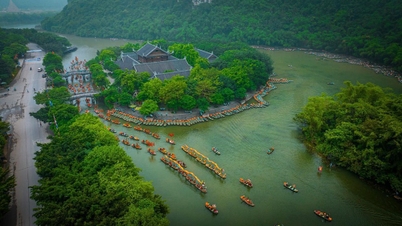
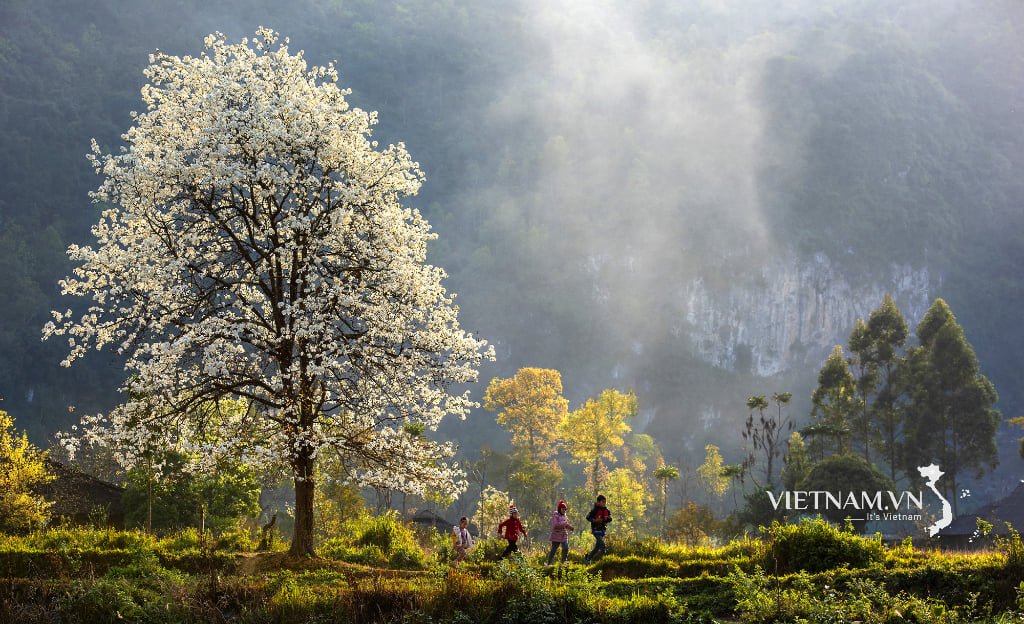
According to the village elders, An Thai has a history dating back several centuries. From the very beginning, the name An Thai embodied the aspiration for a peaceful and prosperous life for its inhabitants. Through generations, the villagers have always preserved and nurtured their homeland's traditions, remembering their ancestors who pioneered and built the village. These values have been passed down through generations, becoming a beautiful aspect of the community's spiritual life, linked to the tradition of "drinking water, remembering the source."
 |
| An Thai village gate - Photo: PXD |
An Thai is a village with a long-standing tradition, with many stories passed down through generations. Therefore, whenever they have the opportunity to chat, the elderly in the village recount old stories as a way to reminisce and preserve values from fading away over time.
Mr. Le Quang Cuong, former head of An Thai village and a retired teacher, said the village was formed in the late 18th century. The area next to the village communal house used to have an ancient temple called An Thai Temple. According to Mr. Cuong and some local residents, before the August Revolution of 1945, the temple was a secret operational base for several revolutionary cadres such as comrades Le Duan, Tran Huu Duc, Bui San, etc. Here, these comrades and local party members discussed plans to mobilize the masses and fight against foreign invaders.
Mr. Cuong expressed: "I hope that all levels and sectors will pay attention to researching and restoring the temple that was destroyed by war, because this is not only a cultural relic of the locality but also a historical site that needs to be preserved and its value promoted."

 |
| Villagers in An Thai share stories about their homeland - Photo: PXD |
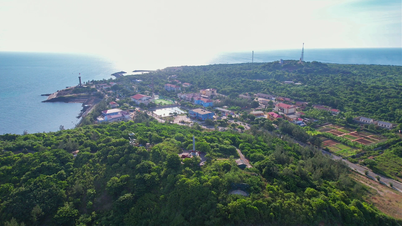
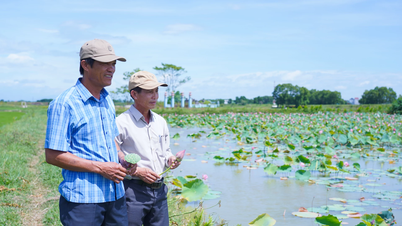
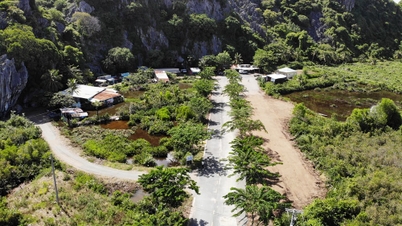
An Thai village currently has 100 households with over 400 inhabitants and approximately 80 hectares of agricultural land. Historically, this area has been a semi-mountainous region with rice paddies interspersed with residential areas, connected to the Hieu River and traditional agricultural practices. It was once the main source of food for the local people. Besides rice, An Thai also develops other crops, especially peanuts, along with forestry and livestock farming. These production models contribute to the diverse economic landscape of the locality. Mr. Tran Duc Huan, Party Secretary and Head of An Thai village, said that from 28 poor households previously, the village now has only a few poor households, mainly elderly people living alone and unable to work.
The days of poverty and backwardness in An Thai village are now gradually becoming a memory. To achieve its current prosperous appearance, this rural area has endured many hardships, from the harshness of nature to the years of war and scarcity. But with a strong will to succeed, a diligent and hardworking spirit, and unity and mutual support, the people of An Thai have gradually overcome challenges, stabilized their lives, and built a homeland that is increasingly developing.
The development story of An Thai, as well as many other rural areas in Hieu Giang district, is a testament to the aspirations of the people, along with the support of the Party committee and government in building new rural areas. It is the result of the Party's will and the people's aspirations, as everyone shares the determination to build a more prosperous and happy homeland. Mr. Nguyen Ba Mau, from An Thai village, Hieu Giang commune, said: "The lives of the people have changed significantly, and essential needs such as electricity, roads, schools, and health stations are basically met. People are very happy."
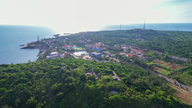
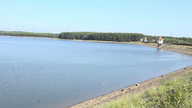
Visiting An Thai these days, one can feel even more strongly the changes in this riverside village along the Hieu River. The roads, houses, and scenery here evoke many emotions, both familiar and yet offering new hopes for the future.


Pham Xuan Dung
Source: https://baoquangtri.vn/dat-va-nguoi-quang-tri/202606/mot-lan-den-an-thai-4332f8c/
![[Image] Paris's oldest bridge goes viral after transforming into a giant cave.](https://vphoto.vietnam.vn/thumb/1200x675/vietnam/resource/IMAGE/2026/06/24/1782283441197_ndo_br_dsc05314-jpg.webp)


![[Photo] Prime Minister Le Minh Hung presides over the thematic session on promoting science and technology development and innovation.](https://vphoto.vietnam.vn/thumb/1200x675/vietnam/resource/IMAGE/2026/06/23/1782207872934_ndo_br_dsc-1724-jpg.webp)