

Heat rash is usually a benign condition and can improve on its own when the weather cools down. However, if not properly cared for, children may develop skin infections, pustules, or boils.
Factors that contribute to heat rash
Heat rash, also known as prickly heat, occurs when sweat ducts become blocked. Instead of being released and evaporating on the skin's surface, sweat traps beneath the skin, causing inflammation and the formation of rashes.
- Factors that contribute to heat rash
- Signs of prickly heat rash
- Proper treatment for heat rash
- Preventing heat rash in summer
The exact cause of sweat gland blockage isn't always clear, but hot, humid weather is a major contributing factor.
In infants and young children, the sweat gland system is not yet fully developed, so the risk of heat rash is higher than in adults. Dressing them in too many clothes, swaddling them too tightly, or exposing them to hot environments for extended periods also increases the risk of developing the condition.
In addition, several other factors can also cause heat rash, such as:
- Intense physical activity causes the body to sweat profusely.
- Wearing tight, constricting clothing that doesn't absorb sweat.
- Living in an environment with high temperatures and high humidity.
- A persistent fever or having to stay in bed for extended periods.
Signs of prickly heat rash
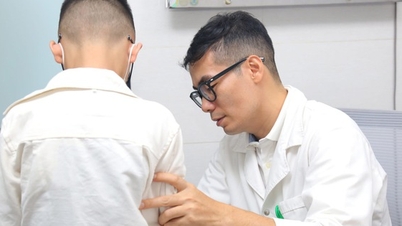
Heat rash can appear in many areas of the body. In young children, it commonly occurs on the neck, shoulders, chest, back, armpits, or groin. Meanwhile, in adults, the rash usually appears in areas with many folds, such as the armpits, under the breasts, or areas where clothing rubs against the skin.
Heat rash is divided into several different types:
- Crystalline heat rash
This is the mildest form, manifested by tiny, clear, easily ruptured blisters. This type usually does not cause much pain or itching.
- Red rash
This is the most common form, causing small red bumps accompanied by itching, stinging, or burning sensations. Children often become fussy and irritable due to the itching.
- Heat rash with pustules
If the rash becomes inflamed, white or yellow pus will appear inside. This is a sign to watch out for as it indicates a risk of skin infection.
- Severe heat rash
This is a rare but more severe form, often appearing after multiple recurrences of red prickly heat. The skin may develop pale, hard nodules resembling chicken skin.
Heat rash will improve on its own when the body is cooled and the skin is kept dry. However, if the child scratches excessively, causing skin abrasions, bacteria can enter and cause infection.
Some possible complications include:
- Dermatitis.
- Skin infections.
- Boils.
- It is festering.
- Children experience insomnia and prolonged crying due to itching.
In particular, if a child shows signs of high fever, significant skin swelling and redness, widespread pustules, or refuses to feed, parents should take the child to a medical facility for examination.
Proper treatment for heat rash
The most important principle when treating heat rash is to help the body reduce heat and keep the skin well-ventilated.
- Keep your body cool.
Parents should keep children in a cool, well-ventilated environment, possibly using a fan or air conditioner at a suitable temperature. Children should not be left outdoors in the hot sun for too long, especially between 10 am and 4 pm.
- Wear light, breathable clothing.
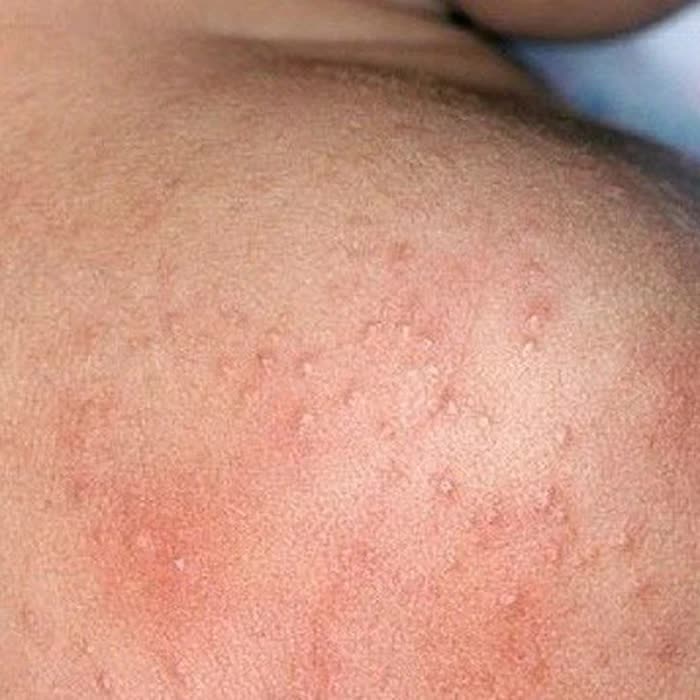
Summer, with its hot and humid weather, is the time when heat rash is common, especially in young children.
Choose loose-fitting clothing made of soft, breathable cotton that absorbs sweat well. Avoid wearing too many layers of clothing or tight-fitting clothes.
- How to bathe properly
You can bathe your child with cool water and mild baby wash. After bathing, gently pat dry, avoiding harsh rubbing on the areas affected by heat rash.
Some families have a habit of using herbal water to bathe their children. However, doctors advise ensuring that the ingredients are clean, thoroughly washed, and boiled to avoid the risk of skin infections.
- Avoid scratching.
When children feel itchy, they often scratch, which can easily cause skin abrasions. Parents should trim their children's fingernails short and can gently apply a cool compress to relieve itching.
- Use the medication as directed.
In cases where the rash causes severe itching or dermatitis, the doctor may prescribe:
- Calamine cream helps soothe the skin.
- Lanolin helps to reduce sweat gland blockage.
- Topical corticosteroids are used in some severe cases.
People should not use topical creams containing corticosteroids for extended periods without consulting a doctor, as this can cause adverse skin reactions, especially in young children.
Many parents have a habit of applying thick layers of talcum powder or using oil-based creams on their children's skin in the hope of soothing it. However, this can actually lead to more severe clogging of pores.
Additionally, dressing children too warmly to "avoid the wind" is a common mistake that causes them to sweat even more and develop more severe heat rash.
Preventing heat rash in summer
Heat rash is completely preventable with proper care:
- Keep your living environment well-ventilated.
- Make sure your child drinks enough water.
- Wash yourself thoroughly every day.
- Limit children's physical activity in hot weather.
- Avoid taking children to crowded, stuffy places.
- Keep your skin dry and clean.
For adults, change clothes immediately after exercise or excessive sweating, avoiding prolonged exposure to damp clothing. Seek medical attention if: the heat rash persists for several days without improvement; the affected skin area becomes inflamed, swollen, red, or very painful; the child has a fever, refuses to feed, or cries incessantly; or there are signs of skin infection.
Although heat rash is a common summer ailment, it should not be taken lightly. Proper care and keeping the body cool will significantly reduce the risk of heat rash and its associated complications, especially in young children.
Source: https://suckhoedoisong.vn/mua-he-nhieu-rom-say-can-xu-tri-ra-sao-169260519160043507.htm




![[Image] Close-up view of the interchange connecting the two expressways and Long Thanh Airport.](https://vphoto.vietnam.vn/thumb/1200x675/vietnam/resource/IMAGE/2026/05/25/1779703378210_ndo_br_z7863716673926-224453a31600126cce10622af6290afd-4549-jpg.webp)





























































































Comment (0)