

 |
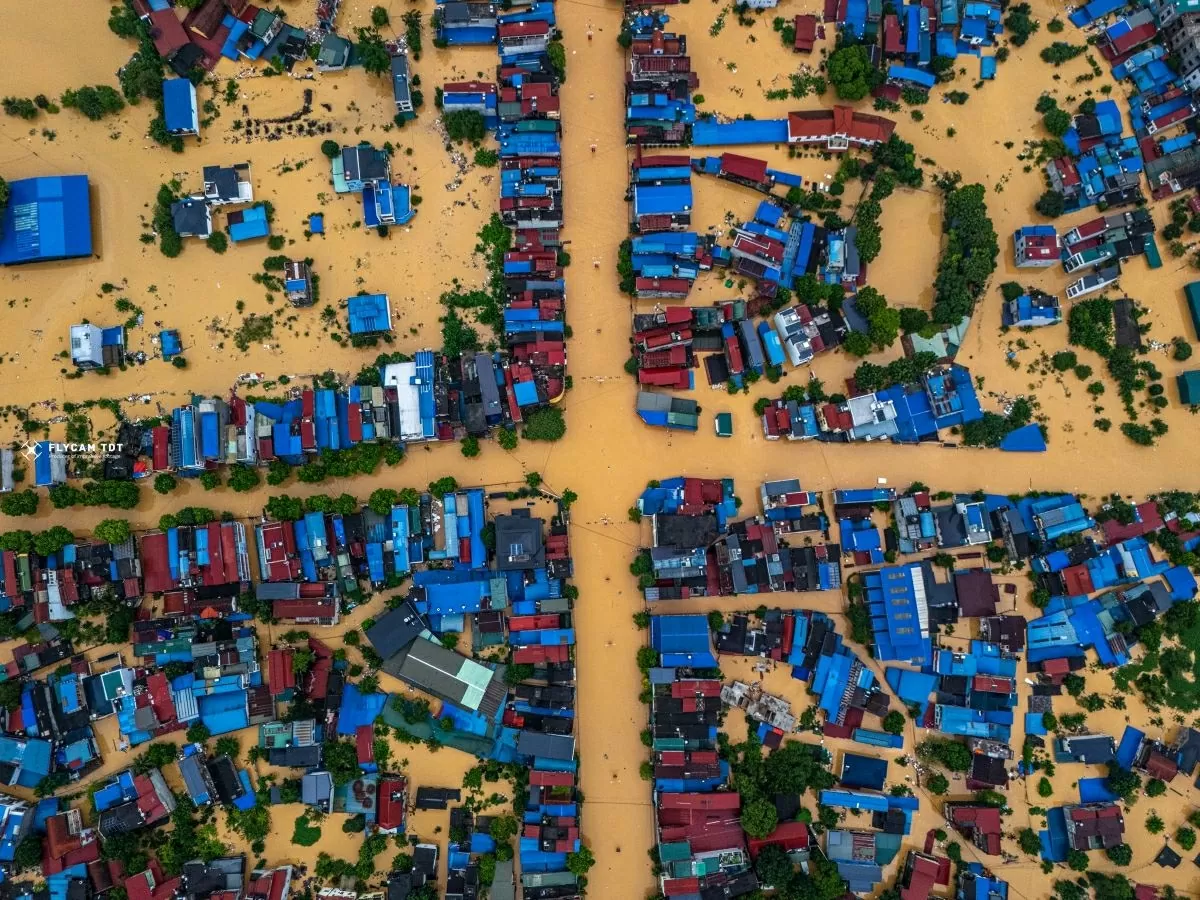
| Flooding in Thai Nguyen city on the morning of October 8th. (Photo: Tran Duy Tiep) |
In just the last few years, Vietnam has repeatedly suffered from fierce storms, devastating floods, flash floods, and landslides. The rainy season, once familiar to Vietnamese people, has become unusual, unpredictable, and full of uncertainties.
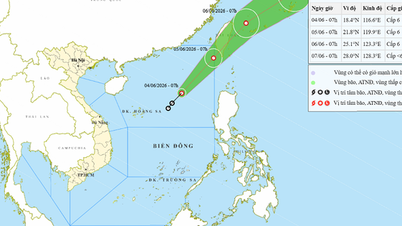
From central Vietnam reeling from storms and floods, to the mountainous northern regions suffering from devastating flash floods, and then the sudden tornadoes in previously peaceful areas... All of this shows that natural disasters are becoming increasingly extreme, erratic, and unpredictable. Storms no longer "follow the right path and arrive in the right season" as before. In just a few hours, their direction can change, their intensity can skyrocket, and their destructive power far exceeds all predictions.
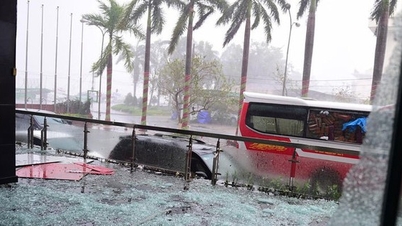
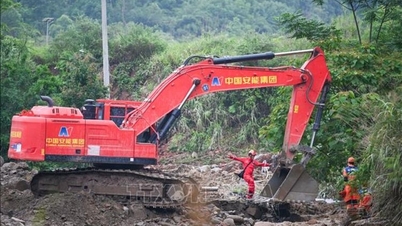
In Hanoi , just one heavy rainstorm can turn streets into rivers. In mountainous areas, a single flood can sweep away entire villages. Right now, news of houses being flooded up to the rooftops in Thai Nguyen or the collapse of a hydroelectric dam in Lang Son... is causing many people to feel heartbroken. Climate change is no longer a distant issue; it is creeping into every street corner, every breath of life.

The damage figures are not just statistics; they represent real suffering. Homes swept away, families losing loved ones, farmers heartbroken watching their fields buried in mud... For a long time, humanity has exploited nature to the point of forgetting that forests, land, and rivers are also living organisms.
In this context, disaster forecasting and prevention become especially important. Every accurate weather report, every early warning, can save hundreds of lives. But climate change is making forecasting increasingly difficult; old patterns are no longer valid, and meteorological models must constantly adapt. A discrepancy of just a few hours or a few kilometers is enough to cause severe damage to an entire region.
Investing in forecasting technology, early warning systems, and on-site response networks is not only the responsibility of the meteorological sector, but a shared responsibility of the entire society. The more people have access to quick and accurate information, the better prepared the infrastructure, and the less damage will be done. For example, in Hanoi, the authorities were more flexible in dealing with Typhoon No. 11: They promptly suspended classes, encouraged online work, operated the drainage system more efficiently, quickly resolved power outages, and involved police, military, and youth in assisting with evacuation and relief efforts.
These actions demonstrate that lessons learned from previous storm and flood seasons have been heeded and transformed into practical experience – a manifestation of a more proactive attitude towards nature, one that listens, prepares, and acts for the common good.
However, prevention is only a temporary solution. To address the root cause, humans need to change their attitude towards nature – living in greater harmony and respecting it more. A tree cut down today could cause a roof to be swept away tomorrow; a polluted river today could be the cause of drought in the future. Nature doesn't speak, but it always remembers.

Each natural disaster serves as a wake-up call. Nature is demanding the restoration of the balance that humanity has disrupted for far too long. Let's learn to slow down, to love the land we live on more, so that in the future, when the rain comes, we will no longer tremble with fear, but calmly know that we have lived in accordance with the laws of this Earth.
Source: https://baoquocte.vn/mua-lu-canh-tinh-con-nguoi-330408.html















































![[Video] Sunset at Lap An Lagoon – Where the sun sets over the fishing nets](https://vphoto.vietnam.vn/thumb/1200x675/vietnam/resource/IMAGE/2026/05/31/1780192137701_beach-landscape-sea-water-nature-grass-745871-pxhere-com.jpeg)


























Comment (0)