


Notable new signals
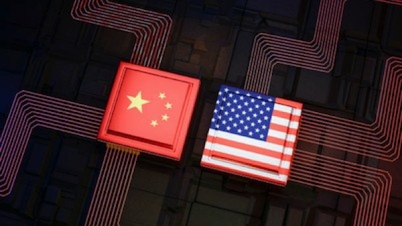
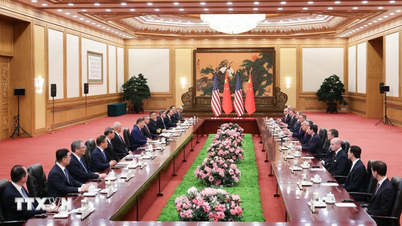
Following the meeting between US President Donald Trump and Chinese President Xi Jinping in Beijing, several new developments from both sides indicate a trend towards more pragmatic dialogue in bilateral economic relations.
One of the most notable signals is energy cooperation. Reuters reported on May 19th that four US liquefied natural gas (LNG) tankers were en route to China. This marks the first direct LNG shipment between the two countries during President Donald Trump's second term. According to US Energy Secretary Chris Wright, China will increase its oil imports from the US and considers the two countries "natural trading partners" in the energy sector.
Analysts believe this move aligns with the interests of both sides, as China is currently the world's largest oil importer, while the US is the leading global oil producer. According to the US, Beijing is not only interested in crude oil from the Gulf Coast but may also increase its purchases of oil from Alaska in the future. This move comes amid Middle Eastern tensions that pose greater risks to supplies from the Persian Gulf region, particularly concerning the Strait of Hormuz.
Beyond energy, the aviation sector is also seeing positive signs. President Donald Trump announced that China has agreed to purchase 200 Boeing aircraft, potentially raising the total order to around 750. If fully implemented, this would be one of the world's largest aviation trade deals in recent years, and would also hold significant symbolic importance for US-China economic relations.
Notably, there has been a shift in the agricultural sector – once the biggest battleground in the trade war between the two countries. The Chinese Ministry of Commerce confirmed that both sides have agreed to boost agricultural trade through tariff reductions, removal of non-tariff barriers, and addressing market access issues.
According to the latest information, Beijing will resume importing some US agricultural products such as soybeans, wheat, and sorghum. China has also committed to purchasing approximately 12 million tons of US soybeans. This is a significant development because in 2025, agricultural trade between the two countries is projected to decrease by 65.7%, to about $8.4 billion, due to retaliatory tariff increases. Many US agricultural products are still subject to an additional 10% tariff in the Chinese market. However, analysts believe that if tariffs continue to be lowered, the flow of agricultural products between the world's two largest economies could gradually recover.
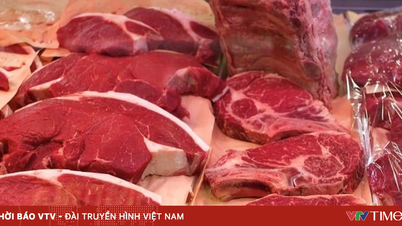
Beijing has also begun addressing some of the technical issues that Washington has repeatedly complained about. China has extended the registration of 425 US beef processing facilities for another five years and granted new approvals for 77 others, while also resuming beef imports from 17 US states. US Trade Representative Jamieson Greer said Washington expects China to purchase “tens of billions of dollars” worth of US agricultural products over the next three years.
Beyond trade in goods, the two sides are also planning dialogues on artificial intelligence (AI), bilateral investment, strategic minerals, technology control, and supply chains. Beijing also confirmed that General Secretary and President Xi Jinping will visit the United States this fall. If the visit proceeds as planned, it could become one of the most influential diplomatic events impacting the global economy in 2026.
Expectations of reduced pressure on the global economy.
Recent moves from Washington and Beijing are creating expectations of a more stable international trade environment after years of volatility. International Monetary Fund (IMF) spokesperson Julie Kozack stated: “Anything that helps ease trade tensions and reduce uncertainty is good for both major economies and the global economy.”
In reality, competition between the world's two largest economies has led to less efficient international trade. Increased tariffs have driven up the cost of goods, while technological controls and supply chain shifts have forced global businesses to invest further in restructuring production. This has reduced economic efficiency and contributed to higher inflation in many countries in the post-pandemic period.
Therefore, the signals from the US and China about resuming dialogue and easing trade in certain areas are seen as factors that will help international markets breathe easier. If these commitments are implemented, trade in agricultural products, aviation, and energy between the two countries could recover significantly, thereby contributing to reducing pressure on raw material prices, transportation, and global supply chains.
Furthermore, a relative "softening" of trade relations could also help reduce the risk of disruptions to global technology and manufacturing supply chains. In recent years, many industries such as electronics, automobiles, batteries, and semiconductors have been continuously impacted by geopolitical tensions.
Positive impacts could also appear in international financial markets. Recent US-China tensions have been one of the factors making global investors more cautious, especially in the manufacturing and technology sectors. As both sides signal a return to dialogue and cooperation, market sentiment could stabilize, thereby supporting international investment flows.
Amidst ongoing Middle Eastern conflicts that continue to cause volatility in energy markets, China's increased purchases of oil, gas, and agricultural products from the US could also contribute to stabilizing global commodity markets, particularly in terms of prices and supply.
However, analysts also believe it is too early to talk about a complete "thaw" between the US and China because strategic competition between the two countries remains very deep. According to data and analytics firm S&P Global on May 15, China currently still imposes a 25% tariff on US LNG – a major obstacle to the full recovery of LNG trade between the two countries.
Furthermore, competition in high-tech fields such as semiconductors, AI, batteries, electric vehicles, and telecommunications remains fierce. The US continues to maintain numerous restrictions on the export of chips and advanced technologies to China, while Beijing is pushing for technological self-reliance. Geopolitical factors and security competition also show no signs of easing in the short term.
This shows that the current "cooling down" does not mean that global trade will return to the era of deep globalization as before. Trends of technological self-reliance, strategic protectionism, and supply chain competition will continue to exist. Experts from the World Trade Organization (WTO) believe that the world is entering a phase of "controlled trade fragmentation," in which the US and China will continue to compete fiercely but will try to avoid full-blown trade confrontation to limit negative impacts on global economic growth.
Nevertheless, even a relatively "cooling down" period is a positive sign for the global economy after years of being impacted by the pandemic, geopolitical conflicts, and supply chain crises. The resumption of more pragmatic dialogue between the world's two largest economies could help ease pressure on global trade and offer hope for a period of relative stability in the coming years.
Source: https://hanoimoi.vn/my-trung-quoc-ha-nhiet-cang-thang-thuong-mai-giam-ap-luc-cho-kinh-te-toan-cau-870699.html


























![[Image] Hanoi's urban life under the challenge of a "scorching hot" environment](https://vphoto.vietnam.vn/thumb/1200x675/vietnam/resource/IMAGE/2026/05/25/1779706979265_nang-nong-t5-2026-minh-duy-7-4636-jpg.webp)





























































Comment (0)