

 |
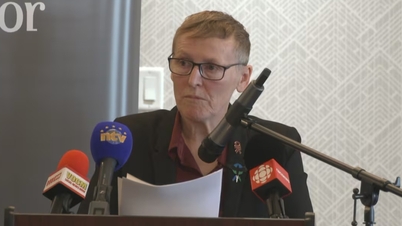
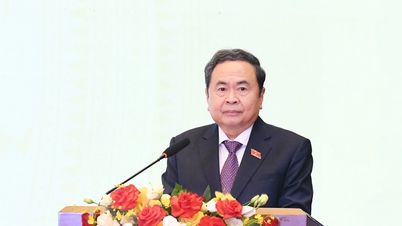
| National Assembly representative Khang Thi Mao, a Hmong ethnic minority, at a National Assembly questioning session. (Source: VWU) |
The achievements of Project 8 under the National Target Program for socio-economic development in ethnic minority and mountainous areas, focusing on capacity building and creating a pool of ethnic minority women cadres to participate in the political system, have contributed to increasing the number of ethnic minority women cadres participating in Party committees and government at all levels. However, many challenges remain, requiring comprehensive and long-term policy efforts.
Initial results
According to the 2023 report of the Ministry of Interior , approximately 35% of cadres, civil servants, and public employees nationwide are women, including more than 22,000 female cadres from ethnic minority groups working in the political system at all levels. However, the proportion of ethnic minority women holding leadership and management positions remains very low, accounting for only about 2.84% of the total number of female leaders nationwide (Ministry of Interior, 2023).
For example, in Dien Bien province, out of more than 15,000 commune-level officials and civil servants, only 4.3% are female ethnic minority officials holding leadership positions such as Party Secretary or Chairman of the People's Committee of the commune. Meanwhile, in Kon Tum province, the 2023 report of the Department of Internal Affairs shows that there are more than 360 female ethnic minority officials working, but only about 12% of them have postgraduate qualifications.
Furthermore, the professional qualifications, political theory knowledge, and leadership skills of female ethnic minority cadres are still limited. Some cadres who were selected through special programs have not been assigned suitable jobs or have lacked opportunities for advancement after graduation due to a lack of training environments.
With the goal of promoting gender equality and addressing pressing social issues, the Prime Minister approved Project 8 “Implementing Gender Equality and Addressing Urgent Issues for Women and Children” under Decision No. 1719/QD-TTg, dated October 14, 2021, assigning the Vietnam Women's Union to lead it, focusing on raising awareness, changing gender stereotypes, and addressing urgent issues for women and children in ethnic minority and mountainous areas. One of the key objectives is to enhance the capacity of female ethnic minority officials, creating conditions for them to participate in leadership, management, and candidacy for elected bodies, thereby strengthening the voice and role of women in socio-economic development activities.
Over the past five years of implementation, Project 8 has achieved remarkable results in enhancing the capacity and creating a pool of ethnic minority women to participate in leadership within the political system, as well as promoting the substantive participation of ethnic minority women in elected bodies through many practical activities in training and capacity building for ethnic minority women, creating a high-quality workforce to meet the requirements of socio-economic development in ethnic minority and mountainous regions.
One of the notable achievements of Project 8 is exceeding the target in capacity building for ethnic minority women participating in leadership within the political system. The project's target was to train 2,000 ethnic minority women; by March 2025, 4,164 had been trained, achieving 208% of the plan. Of these, 30 out of 40 provinces (under the old model) within the project area had met or exceeded this target. The training programs focused on leadership skills, management, and the application of information technology, helping ethnic minority women improve their capacity in administration and participation in local political activities.
Furthermore, in 10 provinces with autonomous budgets, Project 8 has supported capacity-building training for 1,058 female ethnic minority officials participating in leadership within the political system. These activities not only focus on providing knowledge but also aim to build a high-quality female workforce, qualified for planning and appointment to leadership positions or for candidacy in elected bodies.
The Central Committee of the Vietnam Women's Union has developed two online lectures and two sets of training materials on leadership and management skills specifically for female ethnic minority officials. These materials served as a framework for organizing 14 training courses with the participation of nearly 900 trainees, along with four workshops and two seminars aimed at promoting the role of women in politics. In particular, three regional workshops held in three regions provided a forum for discussion and proposed solutions to enhance the participation of ethnic minority women in elected bodies.
Project 8 not only focuses on capacity building but also facilitates the meaningful participation of ethnic minority women in political and social activities. Policy dialogues at the commune and village cluster levels have attracted 199,685 participants, giving ethnic minority women the opportunity to share their opinions and propose issues related to socio-economic development. As of March 2025, 3,142 out of 4,400 dialogues have been held, achieving 71% of the phase target.
These activities have helped ethnic minority women strengthen their voices and contribute to the development of local policies. At the same time, the review and listing of ethnic minority women in leadership planning at the local level has created a basis for identifying, nurturing, and recommending potential candidates for leadership positions and elected bodies. Training courses not only equip them with skills but also instill confidence, encouraging ethnic minority women to boldly participate in elections and campaigning for elected bodies at all levels.
After 5 years of implementing Project 8, the project's models and activities have had a positive impact, creating a shift in awareness and changing the "mindset and practices" of people in particularly difficult communes and villages, contributing to helping localities effectively address some urgent social issues for women and children and promoting gender equality in ethnic minority and mountainous areas.
| Project 8, “Implementing Gender Equality and Addressing Urgent Issues for Women and Children,” under Decision No. 1719/QD-TTg dated October 14, 2021, is chaired by the Vietnam Women's Union and focuses on raising awareness, changing gender stereotypes, and addressing urgent issues for women and children in ethnic minority and mountainous areas. One of the key objectives is to enhance the capacity of female ethnic minority officials, creating conditions for them to participate in leadership, management, and candidacy for elected bodies, thereby strengthening the voice and role of women in socio-economic development activities. |
Lessons learned and solutions
Project 8 yielded many valuable lessons, including the proactive development of guidance documents and training materials from the outset, ensuring consistency and flexibility in implementation. Close coordination with ministries, sectors, and localities, along with regular inspections and monitoring, helped to promptly resolve obstacles and ensure the efficient use of resources.
However, the implementation of the National Target Program for socio-economic development in ethnic minority and mountainous areas (2021-2025) in general, and Project 8 in particular, as well as the training, fostering, and capacity building for ethnic minority women cadres in the political system, still faces many difficulties and challenges, such as: the proportion of ethnic minority women cadres holding key leadership positions remains very modest compared to the general average; many young ethnic minority women cadres are not appointed or given opportunities to develop their abilities after training; differences in language, culture, and customs remain major barriers to accessing standardized training programs; some localities have not been truly proactive in integrating policies for training ethnic minority women cadres into their long-term human resource development strategies; and the evaluation of training effectiveness is still superficial and lacks tools to monitor capacity after intervention.
 |
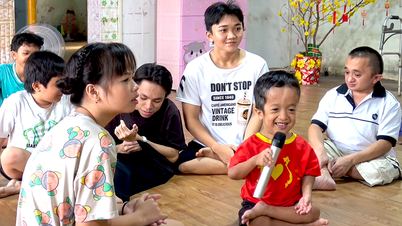
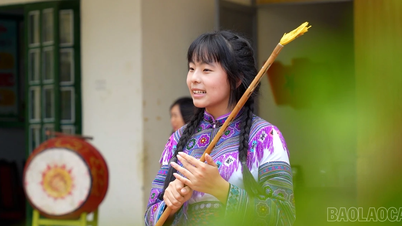
| The "Leaders of Change" club effectively promotes progressive gender values. (Source: VWU) |
In the 2026-2030 period, Project 8 proposes continued focus on enhancing the capacity of ethnic minority women officials, with particular emphasis on digital transformation skills and capacity building to meet the standards for planning, appointment, and candidacy for elected positions. Policies should be designed to address emerging social issues while maintaining and improving the quality of models that have been effectively implemented in Phase I. Decentralization and delegation of power to local authorities are also emphasized to promote initiative and responsibility in project implementation.
Furthermore, to ensure the effectiveness of training and development for female ethnic minority cadres, it is necessary to focus on: perfecting the mechanism for monitoring and evaluating the quality of training, linking it with placement and utilization after training; supplementing the mandatory criterion of the percentage of female ethnic minority cadres in planning and appointing leadership positions; developing models of "incubators for young female ethnic minority cadres" in key provinces to mentor, advise, and support them; and encouraging collaboration between the Women's Union, the Department of Home Affairs, and training institutions to organize specialized, on-site training courses for female ethnic minority cadres.
It can be said that Project 8 has brought about positive changes in enhancing the capacity and creating a pool of ethnic minority women to participate in leadership and run for elected positions. The project not only contributes to improving the quality of female human resources but also promotes gender equality, creating conditions for ethnic minority women to participate extensively in socio-economic development activities. These results are an important foundation for the continued implementation of Project 8 in the 2026-2030 period, aiming towards sustainable development and gender equality in ethnic minority and mountainous regions.
| Enhancing the capacity of ethnic minority women is a strategic task, demonstrating Vietnam's commitment to promoting gender equality and serving as a key factor in ensuring sustainable development in ethnic minority and mountainous regions. Maintaining and expanding training support policies requires a systematic, long-term approach with multi-sectoral coordination to enable ethnic minority women to rise to leadership and management positions, contributing to community and national development. |
Source: https://baoquocte.vn/nang-cao-nang-luc-lanh-dao-can-bo-nu-dan-toc-thieu-so-356381.html
![[Photo] Solemn bathing ceremony and Buddha procession in Hue](https://vphoto.vietnam.vn/thumb/1200x675/vietnam/resource/IMAGE/2026/05/31/1780228263543_1-jpg.webp)


![[Photo] The General Secretary, President and his wife begin their state visit to the Philippines.](https://vphoto.vietnam.vn/thumb/1200x675/vietnam/resource/IMAGE/2026/05/31/1780230559452_anh-man-hinh-2026-05-31-luc-19-28-11.png)
![[Photo] Admire the coral "masterpiece" amidst the million-year-old heritage of Dak Lak province.](https://vphoto.vietnam.vn/thumb/1200x675/vietnam/resource/IMAGE/2026/05/31/1780221235105_anh-man-hinh-2026-05-31-luc-16-53-27.png)














![[Video] Sunset at Lap An Lagoon – Where the sun sets over the fishing nets](https://vphoto.vietnam.vn/thumb/340x192/vietnam/resource/IMAGE/2026/05/31/1780192137701_beach-landscape-sea-water-nature-grass-745871-pxhere-com.jpeg)































![[Photo] Admire the coral "masterpiece" amidst the million-year-old heritage of Dak Lak province.](https://vphoto.vietnam.vn/thumb/402x226/vietnam/resource/IMAGE/2026/05/31/1780221235105_anh-man-hinh-2026-05-31-luc-16-53-27.png)
























Comment (0)