

When the classroom becomes a creative digital space.
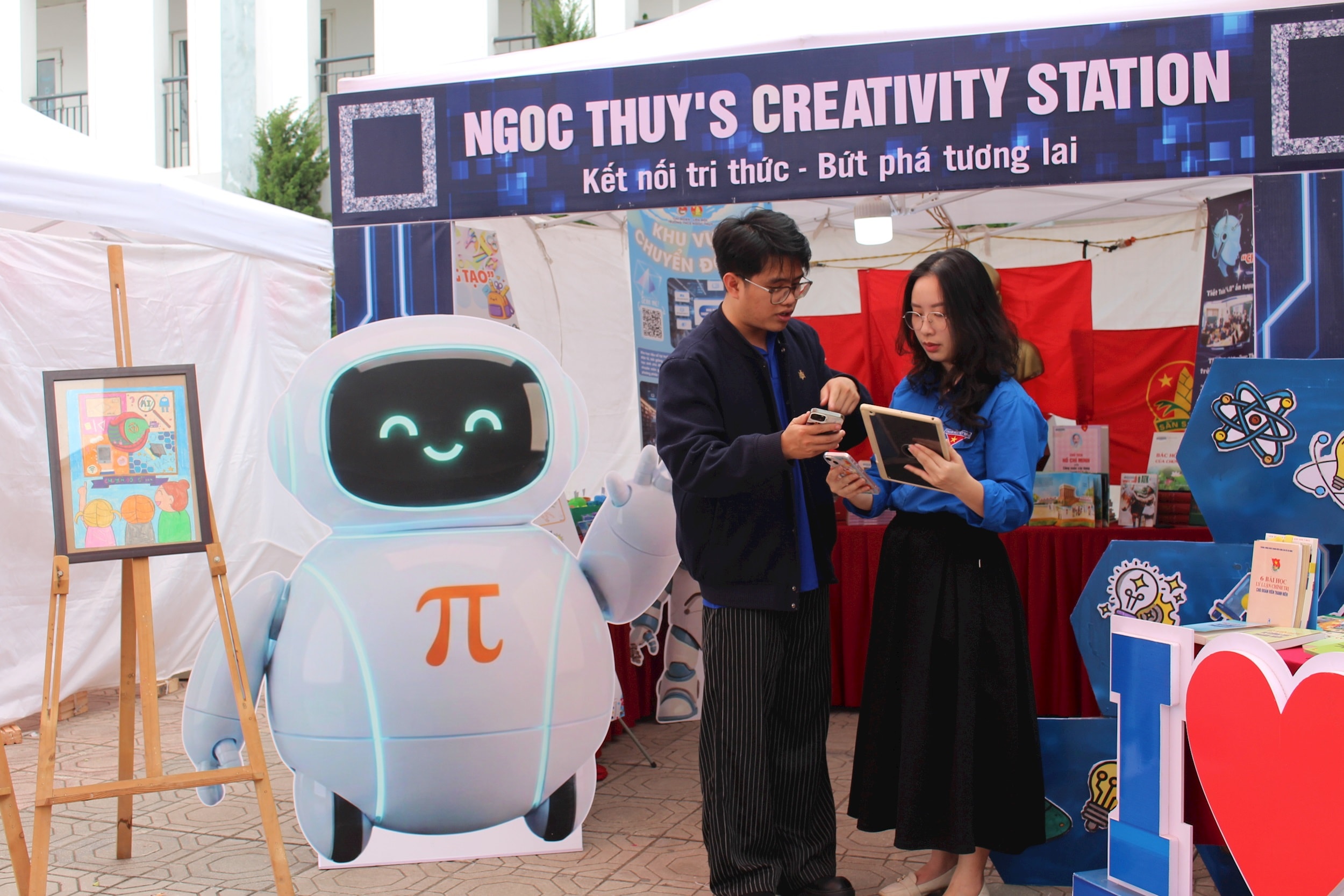
During the past school year, Mr. Nguyen Dinh Vinh, a Level I Central Trainer in Youth Union work and the Head Teacher in charge of the Youth Union at Ngoc Thuy Secondary School (Bo De Ward, Hanoi ), actively integrated technology into the school. Besides traditional activities at historical sites, Mr. Nguyen Dinh Vinh and his students incorporated virtual reality into experiential history lessons, transforming dry historical texts into vibrant interactive spaces.

The initiative "Online Documentation Repository for Youth Union Activities," developed by teacher Nguyen Dinh Vinh, has digitized hundreds of documents, posters, and infographics categorized into three themes: "Following in the Footsteps of Heroes," "Proud of Vietnam," and "Confidently Moving Forward." Beyond being a rich source of learning materials, this system also contributes to promoting digital transformation in Youth Union and Young Pioneer activities, creating a vibrant and engaging educational environment for Gen Z students.
"We are not only teaching the students knowledge, but also equipping them with the mindset of digital citizens – those who will master the future through creativity and national pride," shared teacher Nguyen Dinh Vinh.
This approach is also spreading to many schools in Hanoi. At Nguyen Du Secondary School (Hoan Kiem Ward, Hanoi), students have begun to approach artificial intelligence (AI) through hands-on lessons. Under the guidance of teacher Pham Thi Bao Duc, students use the online platform Teachable Machine to build image recognition models.
During a lesson, students collect data using familiar images such as cups, pens, textbooks, or their own faces. After completing the data training phase, they proceed with basic programming to finalize the product. Through these practical experiences, students begin to envision the practical applications of artificial intelligence in daily life, such as automated attendance tracking and assistance in managing school supplies.
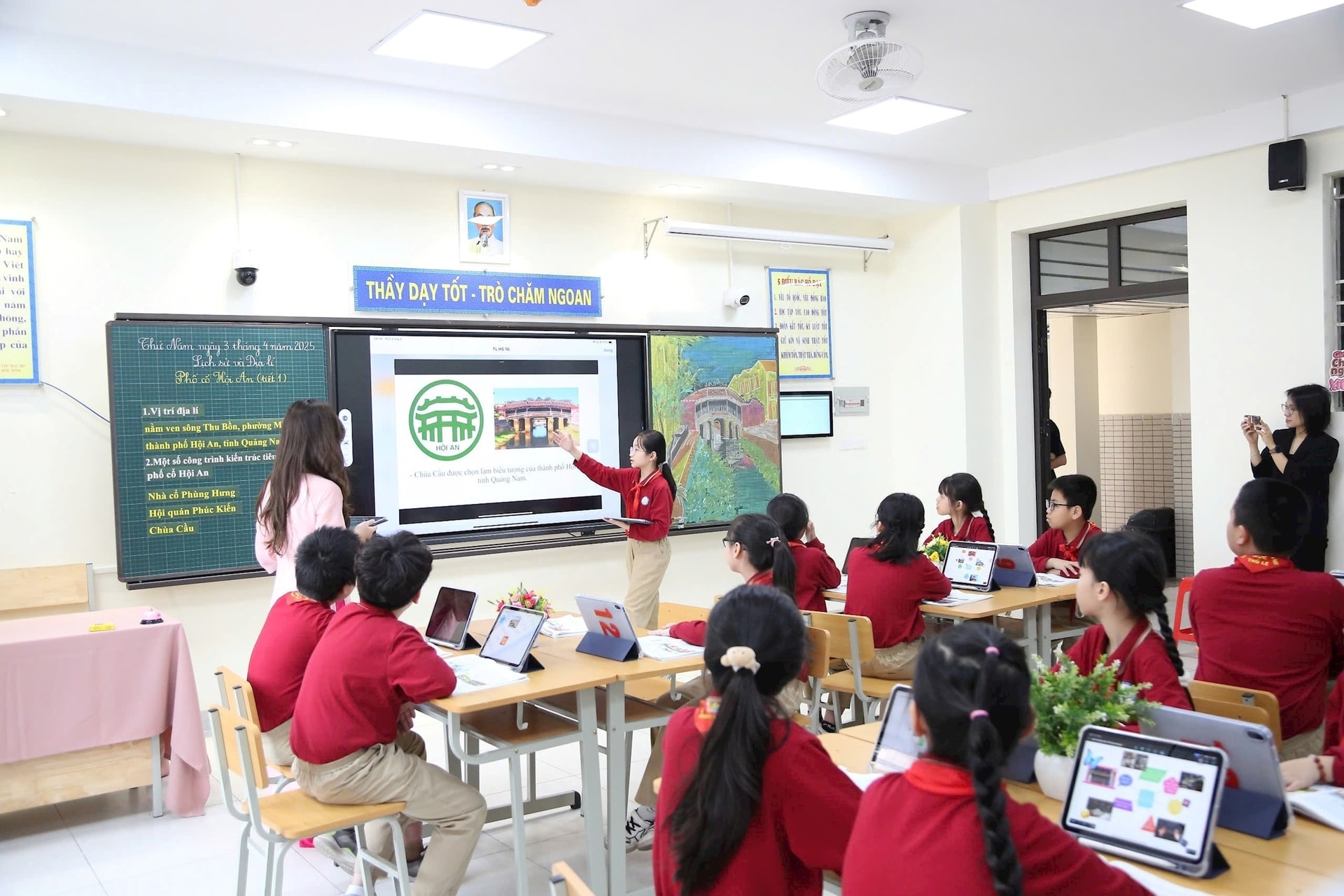
At the school level, the "Digital Transformation School" model at Chu Van An High-Quality Secondary School (Viet Hung Ward, Hanoi) demonstrates a systematic and strategic approach. According to Mr. Nguyen Anh Tuan, Principal of Chu Van An High-Quality Secondary School, the school focuses on three pillars: digital infrastructure, digital learning materials, and digital competencies.
Accordingly, smart classrooms and digital libraries are being invested in comprehensively; AI-powered educational content is being piloted into teaching; and school data is being built in a way that is "complete, clean, and active," moving towards data-driven governance.
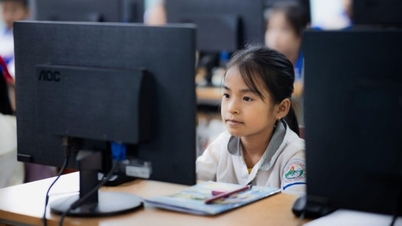
During her teaching, Ms. Nguyen Thi Hong Bon, a computer science teacher at Giang Bien Primary School (Viet Hung Ward, Hanoi), often designs electronic lesson plans using PowerPoint and Canva, combined with videos , illustrative images, and interactive games to make the lessons more engaging. In practical sessions, students directly experience learning activities on the computer and participate in discovery-based lessons.
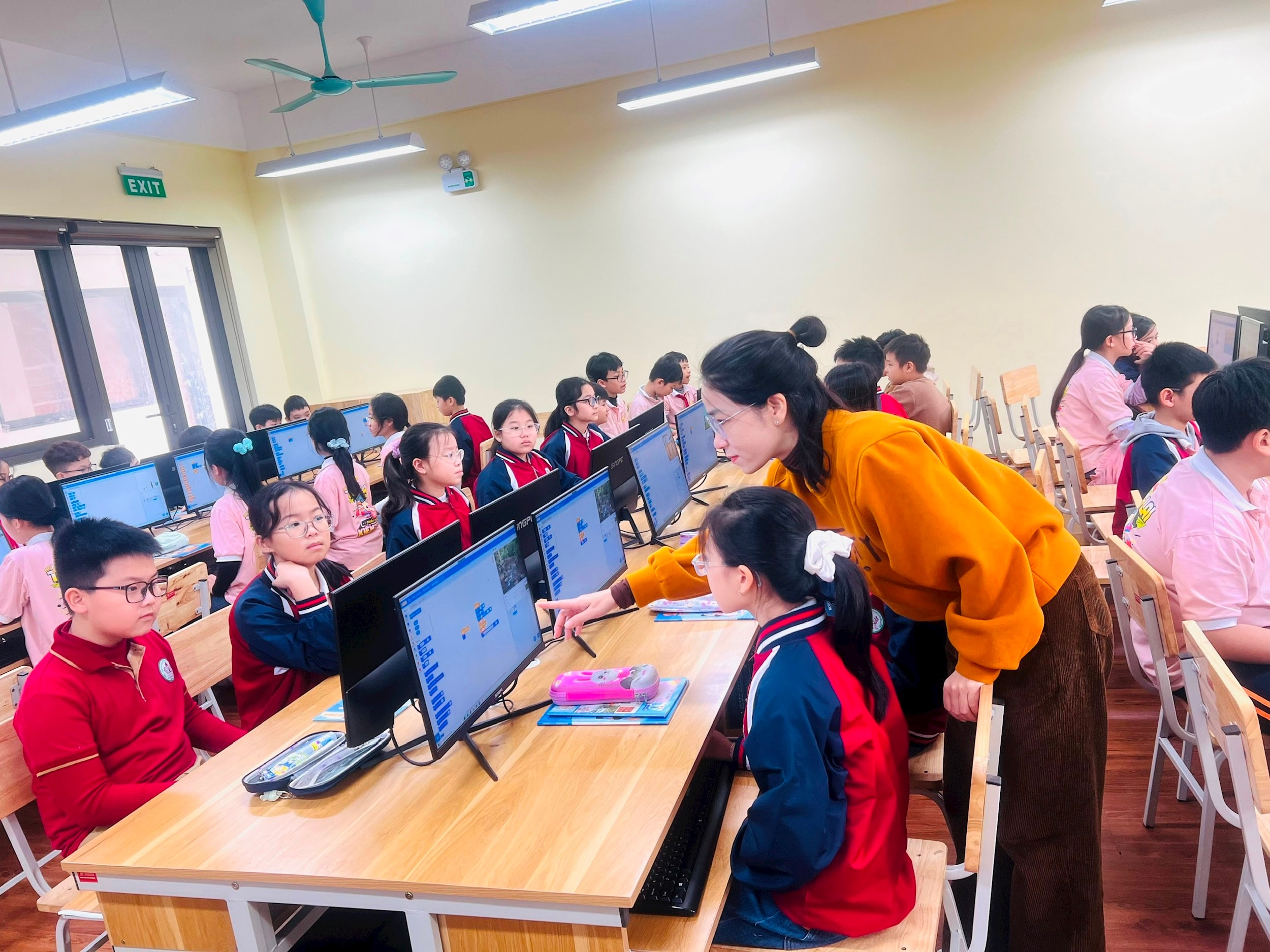
“We also apply several artificial intelligence tools such as ChatGPT, Gemini, and NotebookLM to support the development of lesson content and the search for additional materials. This makes the lessons richer and helps students become more enthusiastic, enjoy practicing, focus, feel confident, and proactively share their opinions during class,” shared teacher Nguyen Thi Hong Bon.
Creating leverage for the breakthrough of education in the capital city.
The increased application of information technology and digital transformation across all educational activities and services has contributed to improving the quality of management and service, moving towards a modern and equitable educational ecosystem. Alongside these groundbreaking benefits, the constant need to keep pace with the rapid development of technology and artificial intelligence (AI) also presents teachers with numerous practical challenges.
According to teacher Nguyen Dinh Vinh, to create a high-quality digital lesson, teachers must spend more time designing and editing videos and learning how to use new software. Having to both maintain classroom teaching schedules and continuously train themselves in technology creates significant pressure on their health and mental well-being.
In addition, there is The barrier lies in technical skills and mindset. Not all teachers have a strong IT background from the start. Getting acquainted with technical terminology, how to command AI, or how to handle technical issues that arise in a virtual classroom can sometimes cause apprehension and confusion.
Furthermore , the infrastructure and equipment are not standardized; in many places, network connections are unstable, or computer equipment at schools and at students' homes is limited. This makes the deployment of graphically intensive platforms such as 3D modeling or VR difficult, causing an imbalance in access to education among different student groups.
When using AI, teachers also face the challenge of assessing the accuracy of computer-generated content. Furthermore, securing student data and preventing the misuse of AI for cheating in exams is also a difficult problem that needs a solution.
To build a truly effective and sustainable smart education ecosystem in the capital city, many teachers believe that it is necessary to focus on synchronizing technological infrastructure and human capabilities.
Specifically, Synchronizing technical infrastructure and shared digital learning resource repositories is crucial. The education sector needs to prioritize ensuring high-speed internet access and comprehensive Wi-Fi coverage in all schools. More importantly, Hanoi needs to build a centralized "digital learning resource bank" to store 3D lectures, virtual experiments, and validated teaching scenarios. This will enable teachers to share and leverage resources from each other, avoiding the need for each individual to build everything from scratch, thus saving time and resources.
In addition, Providing skills training and psychological support for the teaching staff is crucial. Instead of formal theoretical training sessions, schools should organize practical skills training programs such as: how to interact with AI (Prompt Engineering), designing user experiences in virtual classrooms, and information security.
Another important issue is A new legal framework and educational assessment standards need to be established. For digital transformation to be truly effective, specific guidelines are needed on the ethical use of AI and the security of student data in the online environment. The education sector should also gradually change its assessment methods, shifting from purely paper-based knowledge tests to evaluating students' digital competencies and problem-solving skills.
When these conditions are prepared in a coordinated manner, digital transformation will no longer be a burden but a crucial leverage, contributing to improving the quality of education in the capital city in the new era.
Source: https://hanoimoi.vn/nang-cao-nang-luc-tu-duy-so-cho-hoc-sinh-thu-do-976535.html





















![[Photo] Reception to welcome General Secretary and President To Lam and his wife on their State visit to the Philippines](https://vphoto.vietnam.vn/thumb/1200x675/vietnam/resource/IMAGE/2026/06/01/1780295488620_vna-potal-chieu-dai-chao-mung-tong-bi-thu-chu-tich-nuoc-to-lam-va-phu-nhan-tham-cap-nha-nuoc-toi-philippines-8798060-7855-jpg.webp)




























































Comment (0)