

 |
| Ms. Vanne Khut, economist at the ASEAN+3 Macroeconomic Research Office (AMRO) |
Vietnam's economy grew by 7.83% in the first quarter of 2026. How do you assess this result for Vietnam compared to other economies in Southeast Asia?
Vietnam remains one of the fastest-growing economies in ASEAN. Although the 7.83% growth rate in the first quarter of 2026 was lower than the target, it is still a fairly strong growth rate, especially given the more challenging global environment this year.
Growth momentum continues to be supported by export-oriented manufacturing and stable foreign direct investment (FDI) inflows. At the same time, external downside factors, including uncertainty related to the Middle East conflict and weakening global demand, are putting pressure on trade and financial conditions, thereby impacting highly open economies like Vietnam.
According to AMRO's latest forecast, Vietnam's economic growth could reach around 7.2% in 2026-2027, following exceptionally strong growth in 2025 (8.02%). What factors led AMRO to make this forecast?
AMRO forecasts that Vietnam's growth will slow to around 7.2% in the 2026-2027 period, mainly due to increasingly unfavorable external conditions.
Weak external demand, lower-than-expected US growth, the return of supply chain disruptions, and rising energy prices due to the Middle East conflict are all expected to impact economic activity. Previous supportive factors from the early export surge are also gradually diminishing.
However, continued demand for electronics exports – supported by investments in artificial intelligence (AI) and data centers – along with robust domestic demand and accelerating public investment, will help mitigate the impact of the slowdown trend.
 |
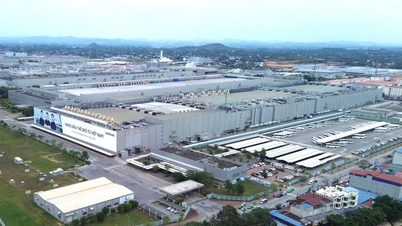
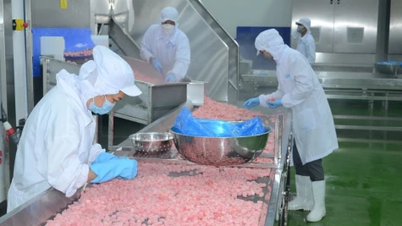
| Industrial production remained strong in the first months of 2026, contributing to economic growth. Photo: Duc Thanh |
AMRO remains optimistic about Vietnam's prospects, believing that growth is supported by a strong export-oriented manufacturing sector, sustained FDI inflows, and robust domestic demand. Could you elaborate on this?
Vietnam's growth continues to be supported by three main factors.
Firstly, export-oriented manufacturing remains strong, particularly in the electronics and machinery sectors. Vietnam continues to benefit from deeper integration into global supply chains, as well as stable demand, including from the US market.
Secondly, FDI inflows continue to remain strong. Vietnam continues to attract investment thanks to competitive labor costs, increasingly improved infrastructure, and the ongoing trend of supply chain diversification in the region.
Third, domestic demand remains relatively strong. The reduction in value-added tax (VAT), continued investment in public infrastructure, and the recovery of tourism and service sectors have supported household and business activity. Temporary fiscal measures have also helped mitigate the impact of rising global energy prices.
How will global adverse factors such as US tariffs, fuel supply disruptions, and trade tensions between major countries, among others, impact Vietnam's economic growth this year and in the years to come, given Vietnam's highly open economy ?
Given the high degree of openness of the economy, adverse global factors are likely to impact growth through various channels.
First, weakening external demand and rising costs could impact exports and domestic demand. Slower growth in major trading partners could reduce demand for key export items such as electronics, machinery, and textiles. Additionally, fuel supply disruptions and rising energy prices could increase production costs, narrow business profit margins, and add inflationary pressure.
Secondly, increased uncertainty can affect business sentiment. Uncertainty in trade policy, including tariffs and fluctuations in US-China trade relations, could slow investment decisions and reduce the pace of FDI growth and export expansion.
However, some compensating factors may also emerge. Vietnam could continue to benefit from the global trend of supply chain diversification as businesses seek more stable production locations, thereby mitigating the impact of adverse external factors in the medium term.
According to her, how should Vietnam manage its monetary and fiscal policies to achieve a 10% growth target this year and in the 2026-2030 period?
Achieving such ambitious growth targets will require a carefully curated set of policies to support growth while ensuring macroeconomic and financial stability.
In the short term, policy support measures can help maintain growth momentum. However, sustaining double-digit growth in the long term will become increasingly challenging in the current global context and should not come at the expense of macroeconomic and financial stability.
Monetary and fiscal policies need to remain supportive but prudent. Support measures should be adjusted appropriately to sustain growth without creating fiscal imbalances. Over-reliance on rapid credit expansion should be avoided, while continued focus on credit quality – particularly in the real estate sector – to ensure financial stability.
Fiscal policy can play a more proactive and supportive role. Accelerating public infrastructure projects will be crucial in easing supply constraints and supporting sustainable growth. At the same time, spending needs to be carefully managed to avoid creating unnecessary inflationary pressures. Temporary and targeted measures – such as VAT reductions and support to mitigate the impact of rising energy costs – can help sustain domestic demand in the short term.
Structural reforms will play a key role in sustaining growth in the medium term. Strengthening linkages between domestic and foreign-invested enterprises, while promoting innovation and improving productivity, will help shift the drivers of growth towards more sustainable growth sources and create higher added value. Promoting the diffusion of technology and knowledge, coupled with deeper integration into domestic supply chains, will be crucial in expanding productivity benefits and supporting more resilient growth.
Source: https://baodautu.vn/nen-kinh-te-viet-nam-dang-di-dung-huong-d606228.html





















![[Photo] Reception to welcome General Secretary and President To Lam and his wife on their State visit to the Philippines](https://vphoto.vietnam.vn/thumb/1200x675/vietnam/resource/IMAGE/2026/06/01/1780295488620_vna-potal-chieu-dai-chao-mung-tong-bi-thu-chu-tich-nuoc-to-lam-va-phu-nhan-tham-cap-nha-nuoc-toi-philippines-8798060-7855-jpg.webp)



















































Comment (0)