

Although the risk of the disease entering Vietnam is assessed as low, experts believe that complacency is unacceptable and that early and proactive response plans are necessary to prevent its spread.
The Ebola outbreak in Africa continues to be complex, with a rapid increase in the number of cases and deaths. According to the World Health Organization (WHO), this is one of the most worrying outbreaks caused by the Bundibugyo ebolavirus strain, for which there is currently no vaccine or specific treatment.
Dr. Angela Pratt, Head of the World Health Organization (WHO) Representative Office in Vietnam, said that WHO has just declared a public health emergency of international concern regarding the outbreak of the Bundibugyo strain of Ebola virus in the Democratic Republic of Congo and Uganda.
According to the WHO, the risk of Ebola spread is currently very high in countries experiencing outbreaks, and high in Africa due to the emergence of urban cases, large-scale population movement, social instability, and limitations in healthcare systems. However, the global risk, including in Vietnam, is currently assessed as low.
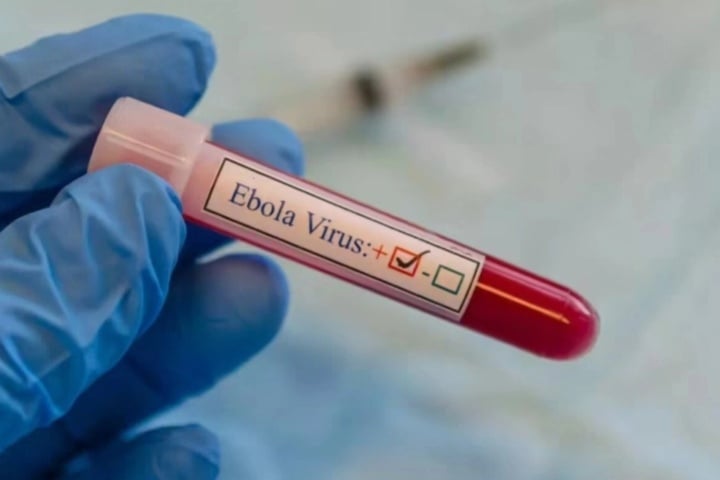 |
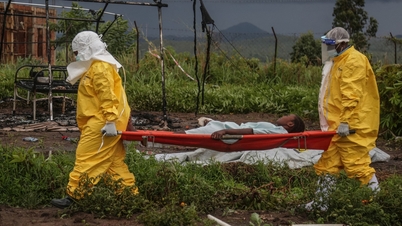
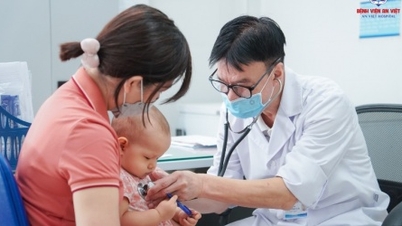
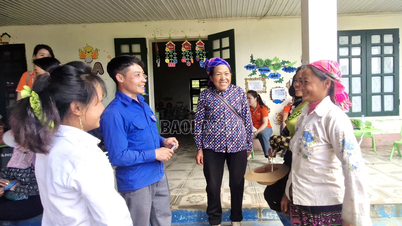
| Illustrative image. |
Speaking to reporters, Associate Professor Dr. Tran Dac Phu, former Director of the Department of Disease Prevention ( Ministry of Health ), said that Ebola is a particularly dangerous Group A infectious disease, capable of rapid spread and with a mortality rate that can reach up to 90%.
According to Mr. Phu, the Ebola virus is transmitted from wild animals such as fruit bats, hedgehogs, or primates to humans, and then spreads from person to person through direct contact with blood, secretions, bodily fluids, or contaminated objects. This is a disease transmitted through close contact, so the risk of infection mainly occurs among those who care for, treat, or have direct contact with infected individuals.
There are currently six strains of Ebola virus, with Zaire, Sudan, and Bundibugyo being the three most common causes of outbreaks. The current outbreaks in Congo and Uganda have been identified as being caused by the Bundibugyo ebolavirus strain. This is a cause for concern because, to date, there is no vaccine or specific treatment for this virus strain.
According to the WHO's assessment, the risk of an Ebola outbreak in Congo is very high, and the regional risk is also high due to continued community transmission, the emergence of undetected infection chains, and an increase in cases linked to cross-border movement. However, the global risk is currently assessed as low.
Associate Professor Tran Dac Phu believes the risk of Ebola entering Vietnam is currently low because the country has never recorded a case before. However, in the context of increasing international exchange, the possibility of imported cases cannot be ruled out.
One of the biggest challenges is that the incubation period of Ebola can last up to 24 days. Infected individuals can travel through multiple countries before entering Vietnam without showing symptoms, making detection at border crossings difficult. Only when patients develop symptoms and are traced can their travel history from affected areas be determined.
According to experts, the decisive factor in preventing an epidemic is not absolutely preventing the entry of cases, but rather early detection, early isolation, and timely treatment of the first cases.
Associate Professor Tran Dac Phu assessed that the response measures being implemented by the Ministry of Health are timely and appropriate to the current developments of the epidemic.
Accordingly, the health sector is strengthening quarantine at border gates, monitoring people entering from epidemic areas, and at the same time requiring medical facilities to increase vigilance, especially in localities with international airports, border gates or a large number of international visitors.
The Ministry of Health has also directed hospitals and local disease control centers to strengthen surveillance, detect suspected cases early, and focus on gathering epidemiological information and travel history from patients.
In the event of a suspected case, units must immediately isolate the individual and implement strict infection control measures to prevent the risk of spread within the community and healthcare facilities.
Leading institutions such as the National Institute of Hygiene and Epidemiology and the Pasteur Institute of Ho Chi Minh City have also been instructed to be ready to meet testing needs and ensure rapid diagnosis should suspected cases appear.
In Ho Chi Minh City, Dr. Nguyen Hong Tam, Director of the Ho Chi Minh City Center for Disease Control (HCDC), said that the city has intensified medical quarantine work at Tan Son Nhat International Airport and seaports.
Surveillance is being implemented 24/7 for all individuals entering the country via air and sea. In particular, those arriving from, traveling through, or having stayed in countries or regions currently reporting Ebola outbreaks within the past 21 days will be closely monitored. Suspected cases will be quarantined, tested, and processed according to regulations.
Simultaneously, the city's health sector is also strengthening inspections of vehicles entering the country from affected areas, especially flights and ships that originate from, transit through, or pass through African countries that are reporting Ebola cases.
Specifically, Tan Son Nhat Airport has just issued a warning to passengers entering from areas with outbreaks, and at the same time requested relevant units to strengthen monitoring and early detection of suspected cases to prevent the risk of disease entering Vietnam.
Tan Son Nhat International Airport (Ho Chi Minh City) has just issued guidelines for airline staff and passengers to strengthen measures to prevent the Ebola virus from entering the country via air travel.
Accordingly, the airport requested airlines to strictly adhere to the guidelines of the Ministry of Health, the Ho Chi Minh City Department of Health, and the Ho Chi Minh City Center for Disease Control (HCDC) in the health screening of incoming passengers.
In particular, people returning from areas experiencing an Ebola outbreak are advised to proactively monitor their health for 21 days from the date of entry. This is the period during which symptoms may appear if they have been exposed to the virus.
For cases showing suspected symptoms, authorities will direct individuals to a temporary medical isolation area to gather information, investigate epidemiological factors, and conduct screening examinations as per regulations.
In cases where passengers exhibit suspected symptoms as guided by the Ministry of Health, HCDC will conduct medical isolation, collect samples for testing, and implement handling measures in accordance with regulations for Group A infectious diseases.
Tan Son Nhat Airport also urged airline staff and passengers to be vigilant and proactively notify the international health quarantine department or the nearest medical facility if they detect anyone showing suspected symptoms of Ebola after returning from an affected area.
In Hanoi, the Department of Health has instructed its affiliated units to strengthen epidemiological surveillance at international entry points, while also preparing sufficient personnel, medicines, chemicals, medical supplies, and isolation areas to be ready to respond should suspected cases appear.
The Hanoi CDC, along with the medical quarantine forces at Noi Bai International Airport, have reviewed and developed plans for receiving, transporting, isolating, and handling situations in accordance with professional procedures.
Monitoring of incoming and transit passengers, especially those arriving from Congo and Uganda, has also been tightened. Epidemiological data collection, contact tracing, health monitoring, and training for disease control personnel continue to be carried out regularly.
Meanwhile, in Quang Ninh, health quarantine teams at the Bac Luan 1 and Bac Luan 2 bridges of the Mong Cai International Border Gate have also activated a high-level surveillance system to promptly detect suspected cases and prevent the risk of disease entering through the border.
According to Associate Professor Dr. Tran Dac Phu, although Ebola has a very high mortality rate, it is not as worrying as Covid-19 because the transmission mechanisms are completely different.
COVID-19 is transmitted through the respiratory tract, has the potential to spread widely in the community, and has previously caused global pandemics. Ebola, on the other hand, is primarily transmitted through direct contact with the blood and bodily fluids of infected individuals. If proper personal protective measures and infection control are implemented, the risk of transmission can be significantly reduced.
"People should not panic, but they should not be complacent either. The important thing is to understand the transmission routes of the disease correctly and to implement preventive measures effectively," Mr. Phu emphasized.
According to experts, Ebola is a particularly dangerous infectious disease with a very high mortality rate. However, since the disease is primarily transmitted through direct contact with the blood, secretions, or waste of infected individuals, the risk of community spread can be controlled if detected early and isolation measures are strictly implemented.
Source: https://baodautu.vn/tong-luc-phong-chong-dich-ebola-d608017.html

![[Photo] Admire the coral "masterpiece" amidst the million-year-old heritage of Dak Lak province.](https://vphoto.vietnam.vn/thumb/1200x675/vietnam/resource/IMAGE/2026/05/31/1780221235105_anh-man-hinh-2026-05-31-luc-16-53-27.png)

![[Image] Hanoi Police officially crowned champions of V-League 2025/2026](https://vphoto.vietnam.vn/thumb/1200x675/vietnam/resource/IMAGE/2026/05/31/1780244769054_ndo_br_039d561b692be875b13a-jpg.webp)
![[Photo] The General Secretary, President and his wife begin their state visit to the Philippines.](https://vphoto.vietnam.vn/thumb/1200x675/vietnam/resource/IMAGE/2026/05/31/1780230559452_anh-man-hinh-2026-05-31-luc-19-28-11.png)
![[Photo] Solemn bathing ceremony and Buddha procession in Hue](https://vphoto.vietnam.vn/thumb/1200x675/vietnam/resource/IMAGE/2026/05/31/1780228263543_1-jpg.webp)



















![[Video] Sunset at Lap An Lagoon – Where the sun sets over the fishing nets](https://vphoto.vietnam.vn/thumb/340x192/vietnam/resource/IMAGE/2026/05/31/1780192137701_beach-landscape-sea-water-nature-grass-745871-pxhere-com.jpeg)































![[Photo] Admire the coral "masterpiece" amidst the million-year-old heritage of Dak Lak province.](https://vphoto.vietnam.vn/thumb/402x226/vietnam/resource/IMAGE/2026/05/31/1780221235105_anh-man-hinh-2026-05-31-luc-16-53-27.png)






























Comment (0)