

Fertilizer production is one of the industries that actively applies science and technology to its production and has achieved certain results.
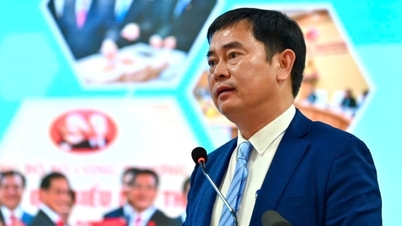
Speaking with a reporter from the Industry and Trade Newspaper, Mr. Phung Ha – Chairman of the Vietnam Fertilizer Association – affirmed: Responding positively to the policy of applying science and technology to production and business activities, especially Decision No. 2795/QD-BCT dated October 30, 2023, on the Strategy for Science, Technology and Innovation to serve the development of the Industry and Trade sector until 2030, in recent years, enterprises in the fertilizer industry have actively applied science and technology to production to increase productivity and product quality.
Could you please tell us about the current development trends of the fertilizer industry?
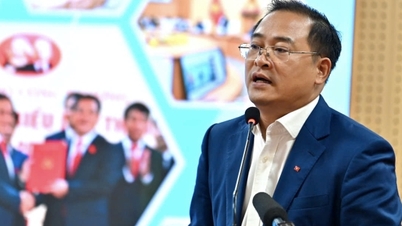
 |
| Mr. Phung Ha - Chairman of the Vietnam Fertilizer Association. Photo: ST |
The increase in greenhouse gases such as CO2, CH4, N2O, and CFCs, due to industrial production, deforestation, water use, and other toxic gases, is a major cause of climate change. Agriculture is affected by climate change, but it is the second largest producer of greenhouse gases after the energy sector, negatively impacting climate change, mainly in areas such as rice cultivation, livestock farming, land management, and the use of fertilizers and pesticides.
Global agricultural output would decrease by 50% without fertilizers, while approximately 2.5% - 5% (depending on the country) of total greenhouse gas emissions are linked to fertilizers. Fertilizers affect greenhouse gases from both production and use; in this section, we will focus primarily on fertilizer production.
To minimize greenhouse gas emissions in fertilizer production, the first step is to improve energy efficiency, followed by focusing on finding methods for synthesizing ammonia that are produced using renewable energy sources instead of conventional energy.
Following the general trend of the economy and industrial production, the current development trend of the fertilizer industry is towards reducing environmental pollution, minimizing the impact of climate change, and reducing greenhouse gas emissions in both production and use, aiming to achieve net-zero emissions by 2050 as committed by the Prime Minister at COP26.
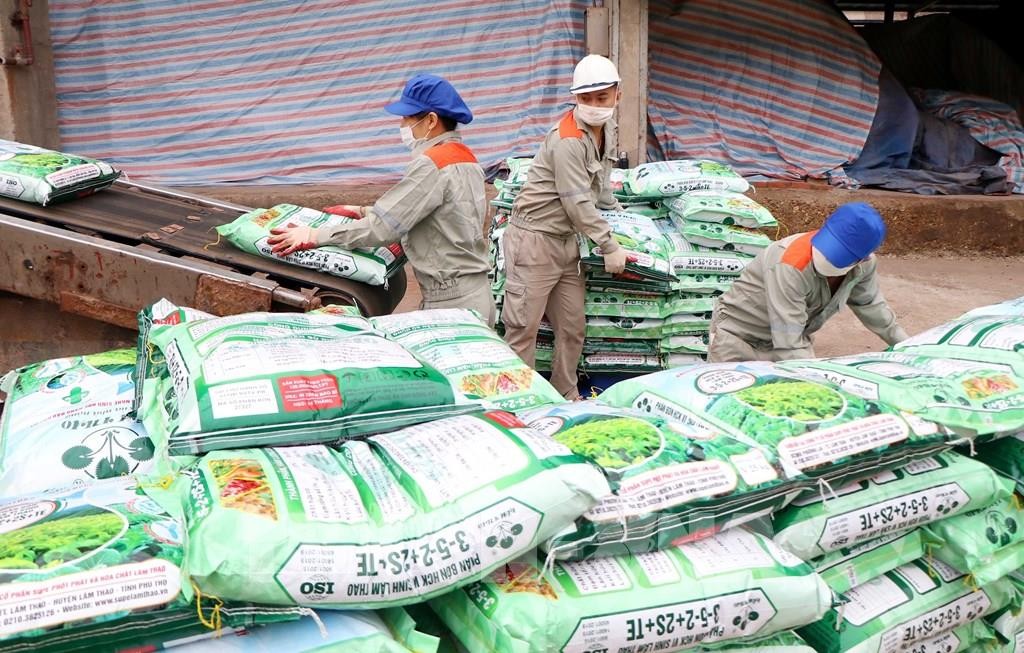 |
| Fertilizer businesses have actively applied science and technology to production in order to increase productivity and product quality. Photo: ND |
It is known that, in order to achieve net-zero emissions by 2050, the fertilizer industry has been applying science and technology to produce green fertilizers and reduce environmental impact. Could you share more about this?
To achieve the goal of net-zero emissions by 2050, the fertilizer industry has actively embraced the greening trend in production, focusing on research and application of science in production, with the aim of:
Firstly , develop organic fertilizers and biofertilizers that can reduce greenhouse gas emissions by 10-20% or more.
Secondly , use high-efficiency fertilizers (EEFs) such as slow-release fertilizers and controlled-release fertilizers.
Thirdly , using additives in fertilizers to address climate change such as nitrogen stabilizers, urease inhibitors, nitrification inhibitors, and urease enzyme inhibitors (UI).
Fourth , the production of fully water-soluble fertilizers aims to provide essential nutrients immediately, promote rapid growth and development, improve fertilizer efficiency, and minimize greenhouse gas emissions and environmental impact.
Fifth , the classification of substances with bioactive properties such as humic acid, lvic acid, and inorganic compounds such as beneficial elements and beneficial bacteria helps plants develop roots, enhance nutrient absorption, and increase their resistance to environmental stress.
Sixth , producing multifunctional fertilizers such as environmentally friendly fertilizer-pesticide combinations.
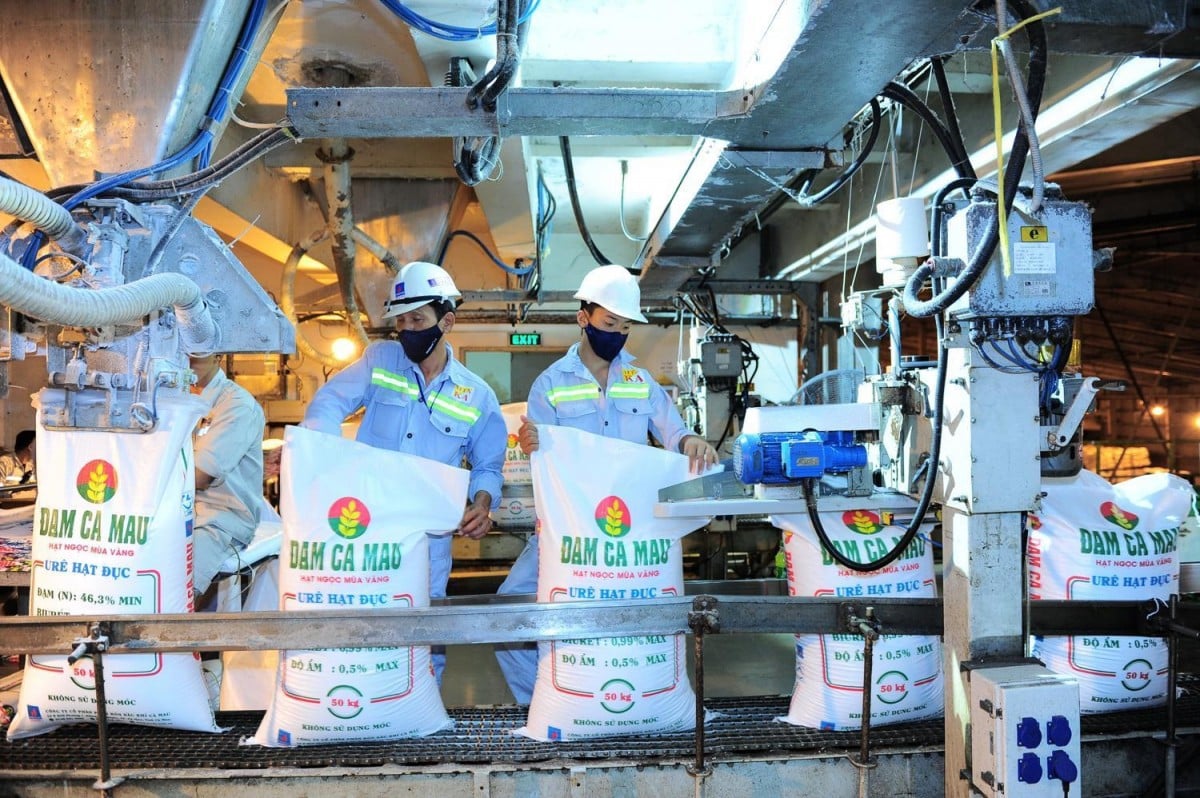 |
| Businesses in the Industry and Trade sector are actively researching and successfully applying science and technology to production. Photo: ST |
Specifically, which businesses have applied science and technology to the production and development of the fertilizers mentioned above, sir?
Many fertilizer businesses, especially those in the Industry and Trade sector, are actively researching and successfully applying science and technology to fertilizer production and use. Here are some specific examples: Ca Mau Petroleum Fertilizer Joint Stock Company (PVCFC) has developed a comprehensive nutrient solution with Bio-coating technology, Humate complex technology, biotechnology and high technology, slow-release fertilizer technology (CRF and SRF), BioMix technology, etc., to develop fertilizer lines that bring high efficiency to agricultural production, increase crop yields and pest and disease resistance, and help reduce greenhouse gas emissions. In particular, the application of Bio-coating technology has helped PVCFC create lines of nitrogen fertilizers that are economical (N.46 Plus), resistance-enhancing (N46. True), bio-fertilizer (N.46 Rich), and microbial fertilizer (Urea BiO), reducing the amount of urea fertilizer applied by 15-20%, in line with greenhouse gas emission reduction programs in general and increasing economic efficiency for farmers.
Lam Thao Superphosphate and Chemical Joint Stock Company (LAFCHEMCO) has researched, produced, and marketed many new high-quality fertilizer products that meet consumer preferences and are developed according to clean, environmentally friendly technology trends, such as organic mineral fertilizers, organic mineral microbial fertilizers, and inorganic fertilizers supplemented with microorganisms, some of which are in cooperation with Biowish Vietnam Company.
Japan-Vietnam Fertilizer Company (JVF) is intensifying its development of fertilizers using chitosan as a slow-release fertilizer. Chitosan is a cationic polymer that is both biodegradable and bioabsorbable, capable of killing harmful bacteria.
Binh Dien Fertilizer Joint Stock Company: The company has successfully developed the Dau Trau + Agrotain product line, which helps save 25-30% on fertilizer, and the Dau Trau 46 P+ fertilizer product, which reduces fertilizer use by 40-50% compared to DAP fertilizer. Currently, the company produces over 100 types of fertilizers. Most recently, the company has successfully researched and launched the Dau Trau Bio product line to address some of the challenges of rice soil in the Mekong Delta, such as acidity, salinity intrusion, and organic toxicity.
Thank you, sir!
Source: https://congthuong.vn/nganh-phan-bon-tich-cuc-ung-dung-khoa-hoc-cong-nghe-vao-san-xuat-363755.html


![[Photo] Prime Minister Pham Minh Chinh attends the Conference on the Implementation of Tasks for 2026 of the Industry and Trade Sector](/_next/image?url=https%3A%2F%2Fvphoto.vietnam.vn%2Fthumb%2F1200x675%2Fvietnam%2Fresource%2FIMAGE%2F2025%2F12%2F19%2F1766159500458_ndo_br_shared31-jpg.webp&w=3840&q=75)








































































Comment (0)