

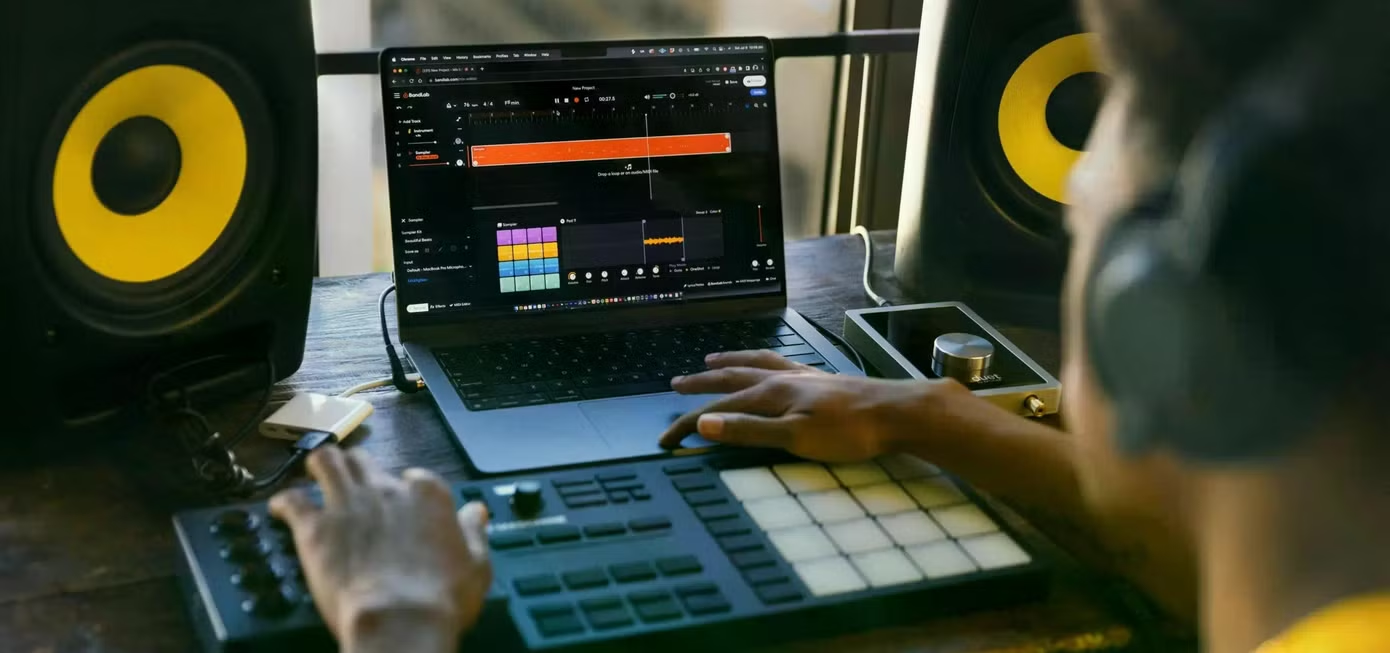
In accordance with the Prime Minister 's directive, the Copyright Office requests that organizations, businesses, and individuals review and ensure strict compliance with legal regulations on copyright and related rights in their professional activities, refrain from using unlicensed computer programs, and avoid illegally exploiting or using copyright and related rights related to works, performances, sound recordings, video recordings, and broadcast programs.
One detail in the document that caught the attention of music producers was: "Do not use unlicensed computer programs." A number of artists were alarmed because, from this point on, the use of pirated software for music production would cease. Conversely, individuals and music production companies already operating in the market supported the document, arguing that it was time to standardize everything to ensure quality.
What happened?
The use of "unlicensed computer programs" is quite common in the Vietnamese music production industry. First, regarding digital-aided production (DAW) software, producers have two options: purchase a licensed version with an annual fee or use pirated or cracked versions that are widely available online. Many artists choose the second option to save costs.
Next are plugins (supplementary software) that artists use to produce music within the software, from instrument emulation to audio post-production tools. There are also samples from artists and platforms worldwide , which can be used for free. The licensing costs for each of these elements combined can cost a producer several million to tens of millions of dong per year.
For example, FL Studio, a popular music production software used by many Vietnamese producers today, has a top-of-the-line version costing over 10 million VND, with users paying an additional fee for monthly/annual updates. Other popular software like Ableton, Magic, and One Studio have similar costs. This is just the initial investment, like building the basic structure of a house.
Producers continue to refine the "interior" of that house with a series of plugins, each one adding up to a significant cost. This is especially true for producers who want to mix and master using digital (emulation) methods; each legitimate, licensed plugin will be expensive, and the deeper they delve into the specialization, the more they will have to spend.
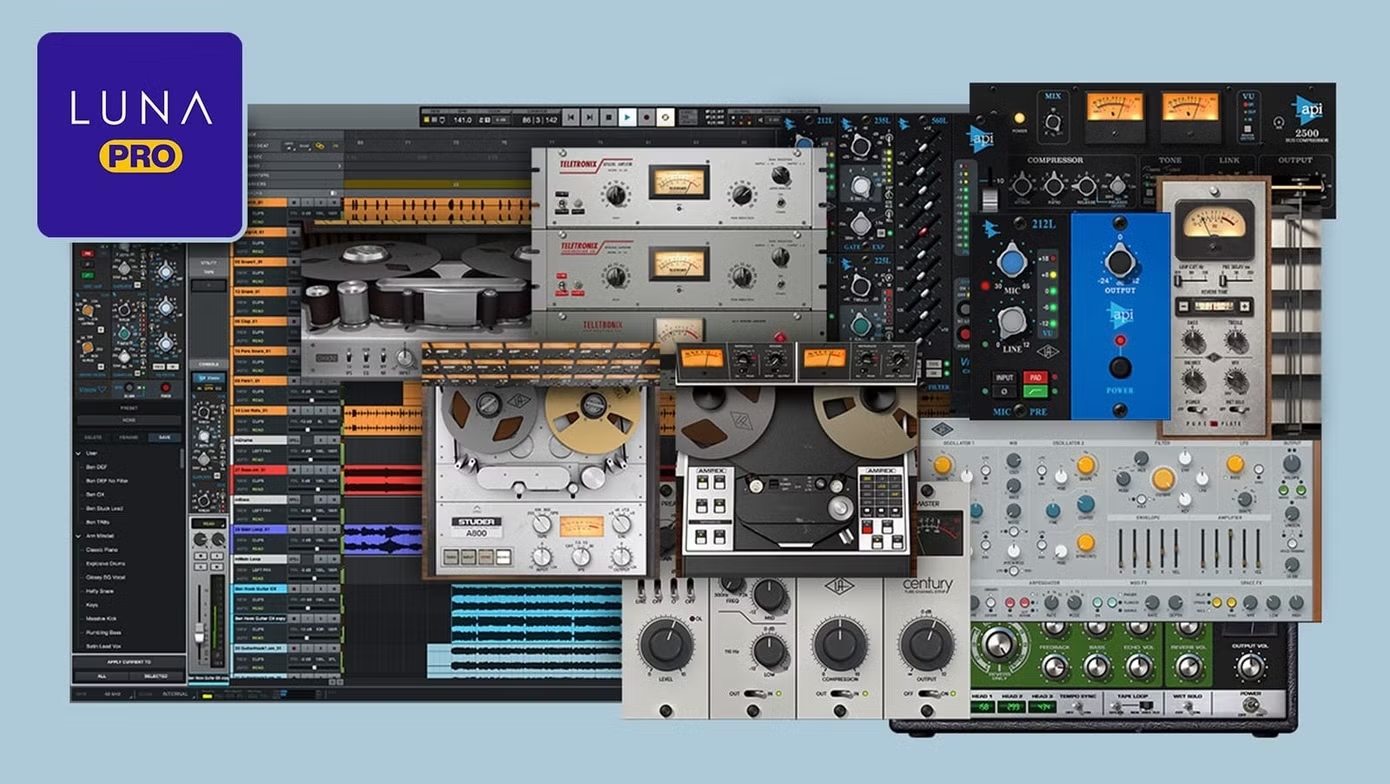
For established and professional music producers/organizations, investing in computer software isn't a problem. They only need a small project to recoup their investment within a year. However, for young, inexperienced producers who haven't had many opportunities to earn money from music, investing in fully licensed software is a difficult challenge.
Producers are using "cracked" software, but the quality is no different from the licensed software. They can get anything they need simply by accessing software aggregation websites. Therefore, following the Copyright Office's directive, producers who haven't yet purchased licenses are worried about the disruption to their entire production process. Other producers are asking questions like, "How can we control whether or not licensed software is being used?"
An overview of the Vietnamese music production industry.
Producers and sound engineers make up the overwhelming majority of the workforce in the music industry. Following the trends of the modern market, young singers and rappers tend to compose their own music. Meanwhile, the roles of producer and sound engineer are largely separate, outside the scope that singers and rappers can fully handle.
In the European and American markets, a single song can involve dozens of producers creating the arrangement, followed by nearly a dozen people working on post-production sound. They delve into the minute details of each arrangement, from individual instruments like piano, guitar, and drums, each handled by a dedicated producer. While the scale isn't quite that large in the Vietnamese market, a single arrangement for a song now typically requires more than two people.
The number of Vietnamese music producers/sound engineers has boomed in the last 10 years. Before 2010, the concept of a music producer was vague; audiences mostly focused on singers and songwriters. Returning to the question of why many artists use unlicensed computer software, it originated in the 2010s, when social media developed and communities for learning music production and sharing knowledge emerged.
Many young people turned to music production using software. There, producers could create music even without knowing how to play an instrument. They might not have a solid understanding of music theory, but the software's specific formulas and rules could give them a shortcut to becoming producers. At that time, FL Studio was the most popular software, with many producers downloading and using cracked versions.
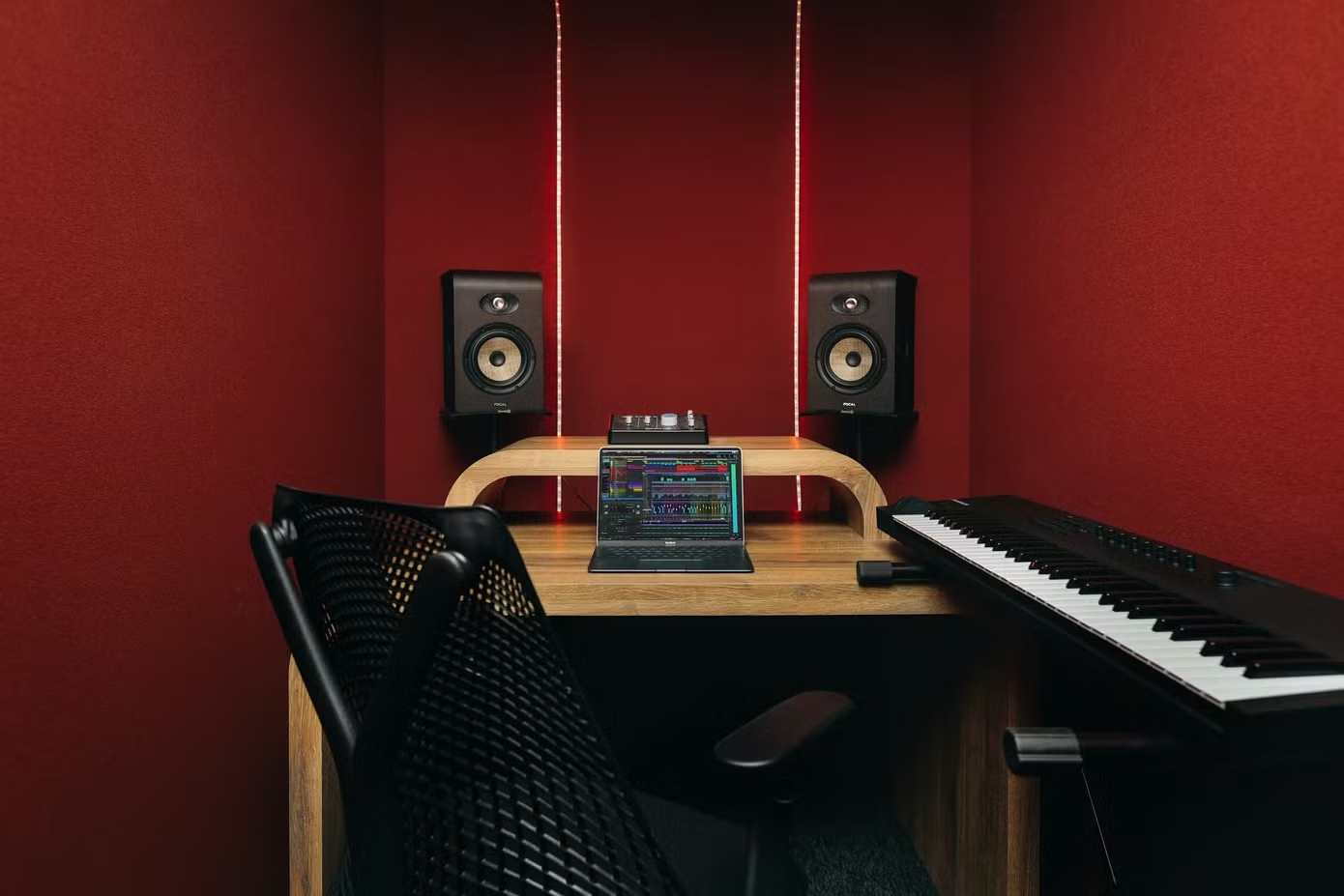
Going back 15 years, for many producers, paying for the rights to music-making tools was a huge problem.
Up until now, some producers have used pirated software, not because they lacked the financial means, but sometimes due to habits they've maintained for years. From that music production software, they've developed a complete ecosystem with hundreds of components, from plugins to individual sounds (instrumental sounds), leading to a reluctance to change. But now, following the official letter from the Copyright Office, everyone has to change.
As one producer posted: "Using pirated software sometimes stems from years of experience in music production. Consider this an opportunity to standardize all music production software and tools."
Balancing the costs of investing in music production (buying software, plugins, etc.) and the revenue generated from music production/audio post-production is no longer a difficult problem for artists. For renowned producers/audio engineers, the cost of a single mix (beat making) now ranges from millions to tens of millions of Vietnamese dong, depending on the producer's reputation. The cost of audio post-production (mixing, mastering, or both) is also measured in at least several million dong per song.
To achieve that top-tier position, besides skill, renowned producers must invest heavily in their studios to strive for the highest musical standards. The cost of a top-tier studio in the Vietnamese market can reach billions of dong, with half of that invested in music production equipment.
Of course, only a small group of producers/sound engineers are "making a good living" or "doing well" in the profession, from orders from singers/rappers and brands. The rest of the producers, mostly young artists on their way to proving their talent, must continue to strive and follow the natural order of things – those who are skilled enough, unique enough, and willing to invest will have the opportunity to break through.
The strong intervention of AI has gradually filtered the capabilities of producers. The ban on the use of unlicensed computer programs, requiring producers to invest seriously in their work, will further differentiate the status of artists behind music production. Ultimately, the Vietnamese music market will standardize in all aspects, not only singers and songwriters but also producers quietly working in studios.
Source: https://tienphong.vn/nghe-si-viet-roi-loan-post1842331.tpo
































































































Comment (0)