

For over 40 years, the crab noodle soup of Mrs. Pham Thi Lan's (62 years old) family, located in the nearly 100-year-old Binh Tay market, has been a familiar address for many diners.
Passed down from mother to daughter.
Around midday, it was drizzling in Ho Chi Minh City. Having eaten nothing yet, I parked my motorbike near Binh Tay Market and went inside to find my usual spot. Of course, it was the crab noodle soup stall where all members of Mrs. Lan's family, from her and her husband to their two children, run the business.
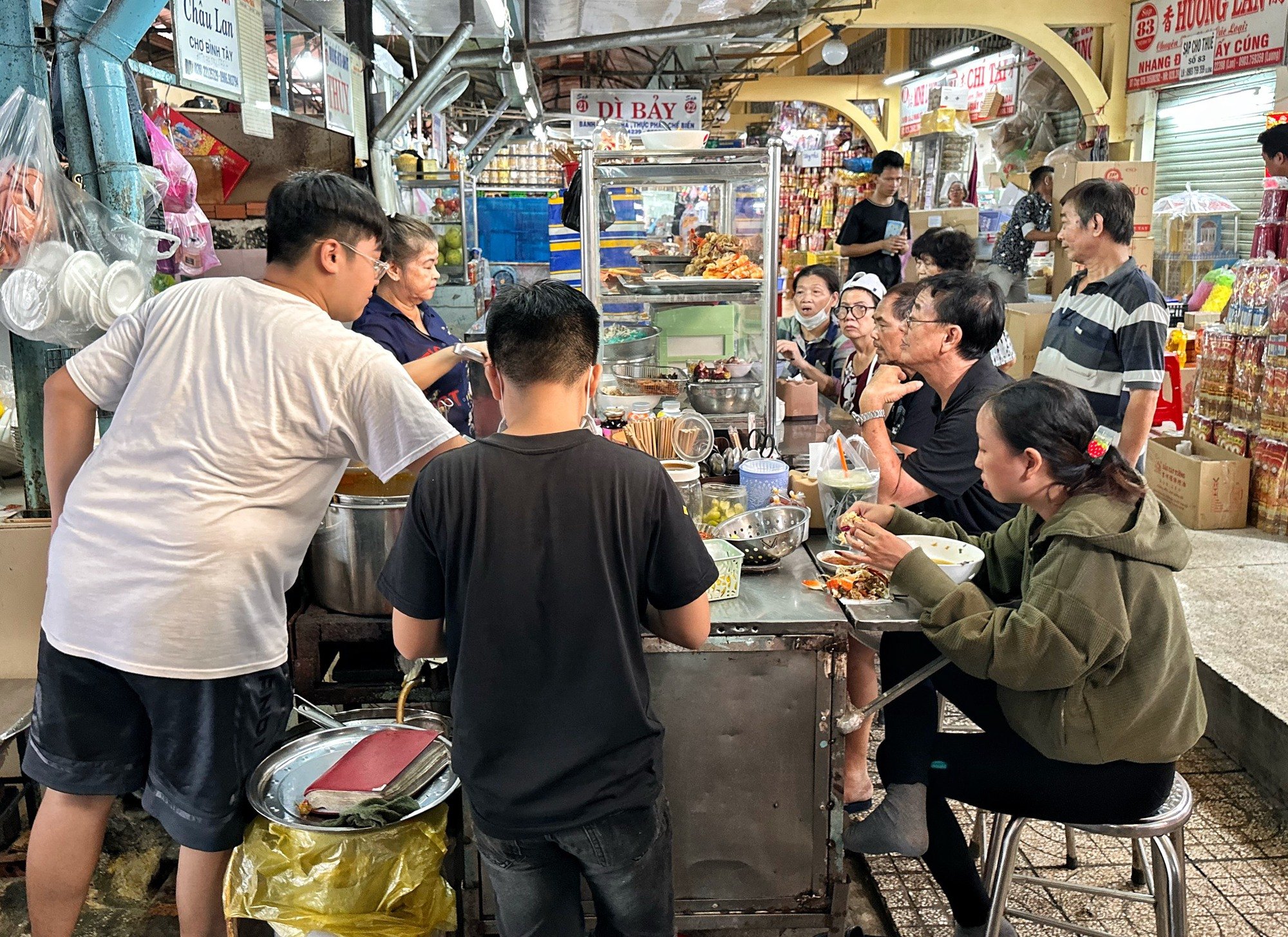
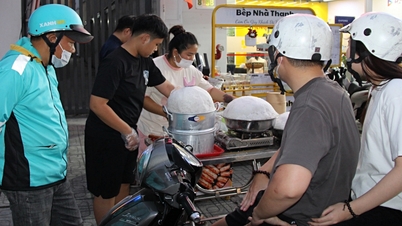
Around lunchtime, the place is packed with customers waiting to enjoy a bowl of Mrs. Lan's crab noodle soup.
The stall is located at the end of the market, next to other food and drink stalls packed together to form a food court. Even though it wasn't "peak" hours, the seats in front of the food counter were packed with customers eating, drinking, and chatting happily.
The entire family of the owner, each with their own job, worked tirelessly preparing meals for both dine-in and takeout. This surprised me somewhat, because even during the difficult times for many restaurants in Ho Chi Minh City, her noodle soup stall was still doing brisk business.
However, everything has a reason. Because in Binh Tay Market, it seems that everyone knows about the noodle soup stall run by the owner, which is over 40 years old.
Sharing her story with me, Mrs. Lan said that before 1975, her mother ran a noodle soup stall in the Cai Market area (now dissolved, also located in this Cholon area) to raise their seven children (five daughters and two sons) together with her husband.
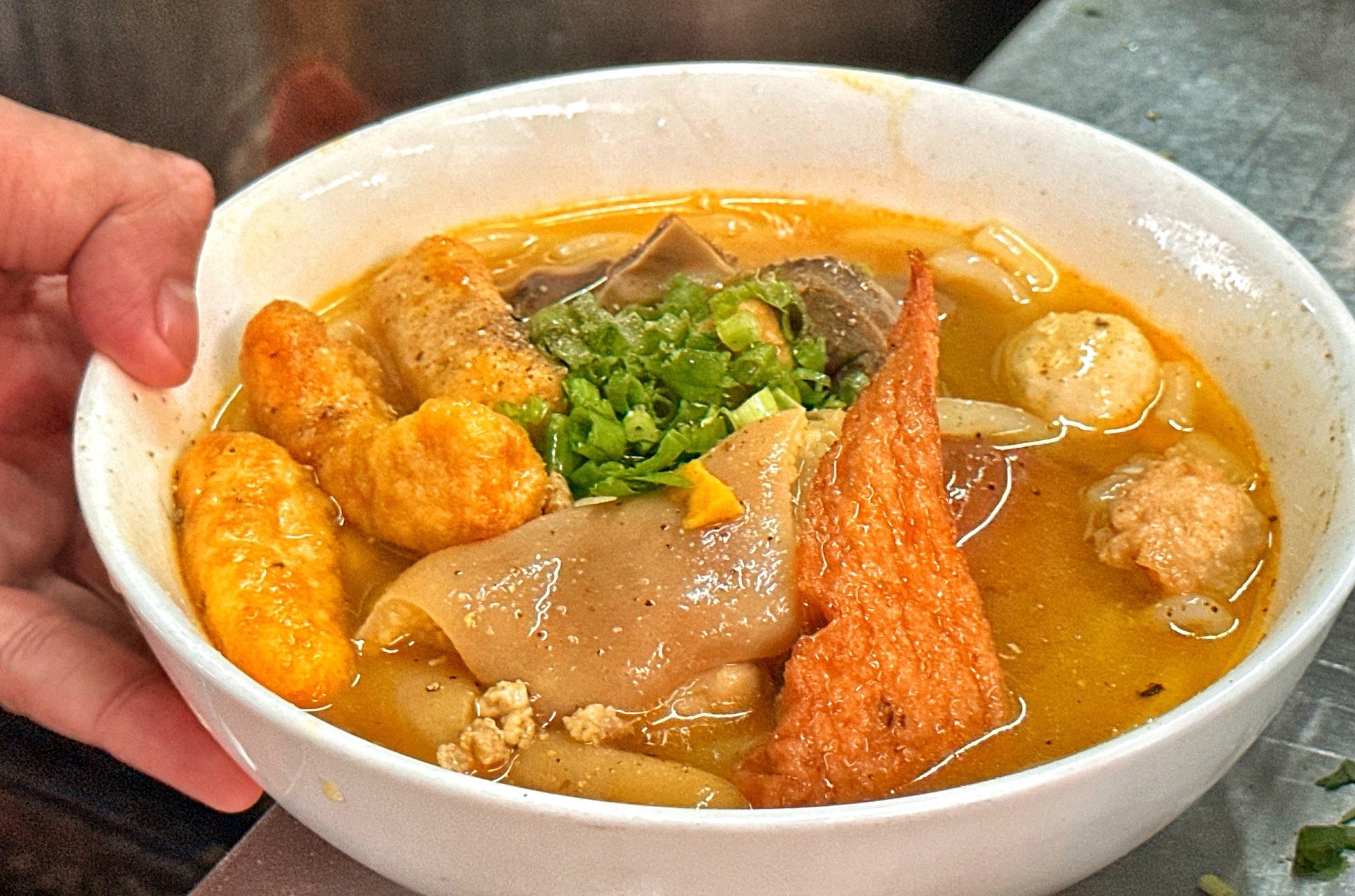
The price of a bowl of banh canh (Vietnamese noodle soup) ranges from 40,000 to 60,000 VND.
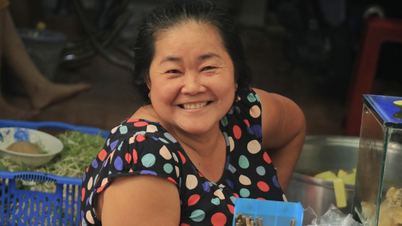
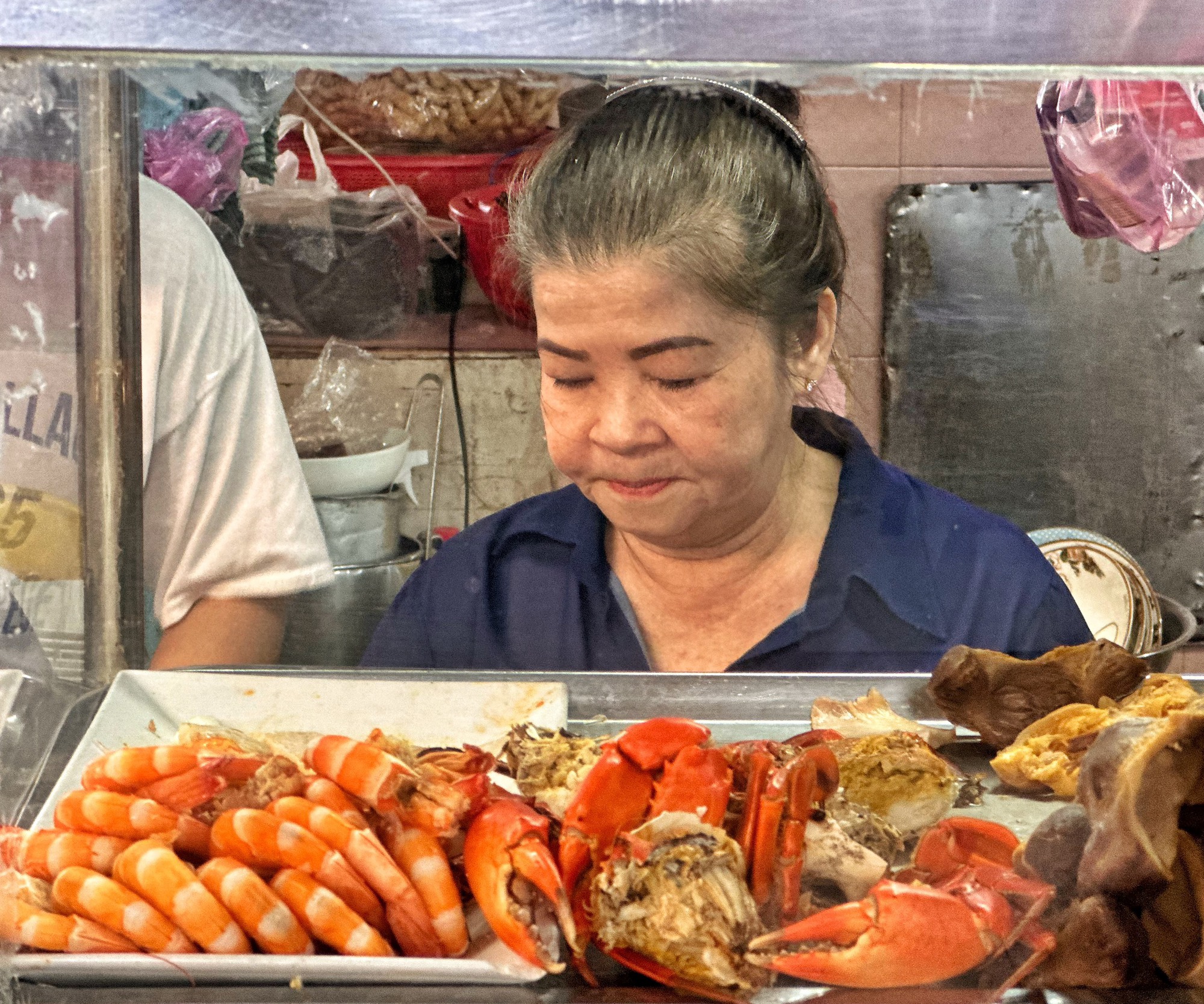 Ms. Lan, the owner of the shop.
Hearing this, I laughed and asked, "Oh! So, are you competing with your mother?" After hearing this, the shop owner smiled brightly and said, "Of course not! My mother sells in the morning, and I sell in the afternoon! Later, my grandmother will also go to the market for my mother and help her sell."
Having sold bánh gánh (a type of Vietnamese cake) for several decades, Mrs. Lan said she recently moved to her current location and has been selling there for almost 28 years. Speaking about her mother, Mrs. Định, Mrs. Lan said that her mother is 88 years old this year. After an accident in 2005, her mother stopped selling and left the business to her children. Fortunately, Mrs. Định is still mentally alert and is well cared for by her children and grandchildren.
[CLIP]: Customers keep seeking out this 40-year-old crab noodle soup stall in Binh Tay Market.
"Back then, many of my siblings inherited my mother's noodle soup stall to sell. Later, everyone got married and changed professions. Now, only I still cook and sell noodle soup. Currently, my husband and two children help me sell it, and I feel happy and fulfilled knowing it's the livelihood of our whole family," the owner said emotionally.
"Eat to the last drop!"
The owner explained that currently, her noodle soup stall sells portions for 40,000 - 60,000 VND, depending on the type. If customers want a whole crab in their bowl, each portion can cost 120,000 VND or more, depending on the quality of the crab and current prices.
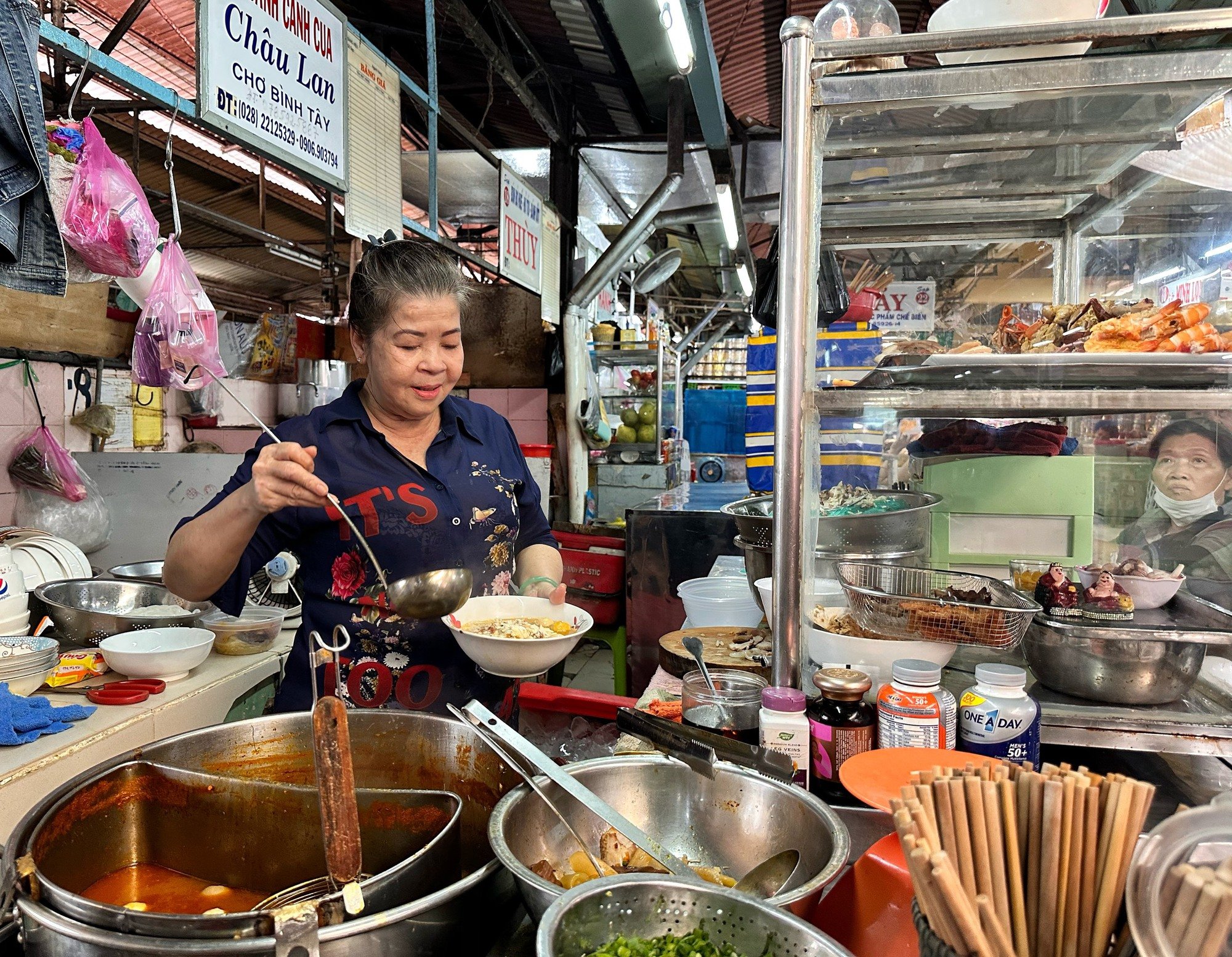
The restaurant is located at stall 17, Binh Tay Market.
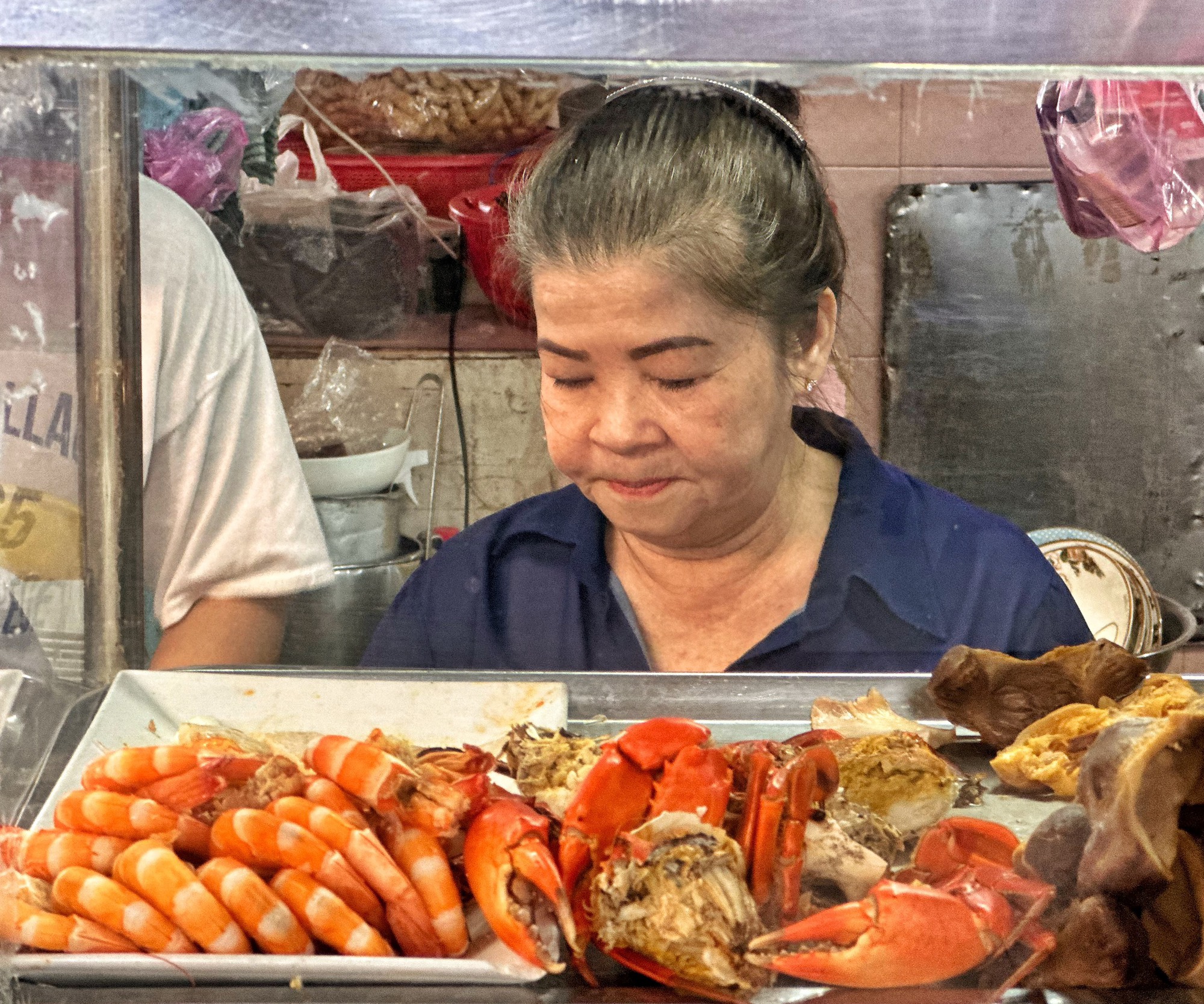
At the age of 14, the shop owner started helping her mother sell goods.
In my personal opinion, the banh canh here has a more unique flavor than other places I've eaten, with a combination of rice flour noodles, crab, fish cake, chicken gizzard, duck blood, pork trotters, etc. Add a little thick broth and sprinkle some scallions, cilantro, and pepper on top, and it's absolutely delicious.
Mr. Diep Duc (36 years old, residing in District 5) said that he has been a regular customer at this restaurant for over 10 years, thanks to a time when he went shopping at Binh Tay Market with relatives and happened to eat at Ms. Lan's restaurant.
"The ingredients are fresh and delicious, especially the rich broth, which tastes different from other places. The bowl of noodles is big, but I ate every last drop because it was so good," he said, chuckling.
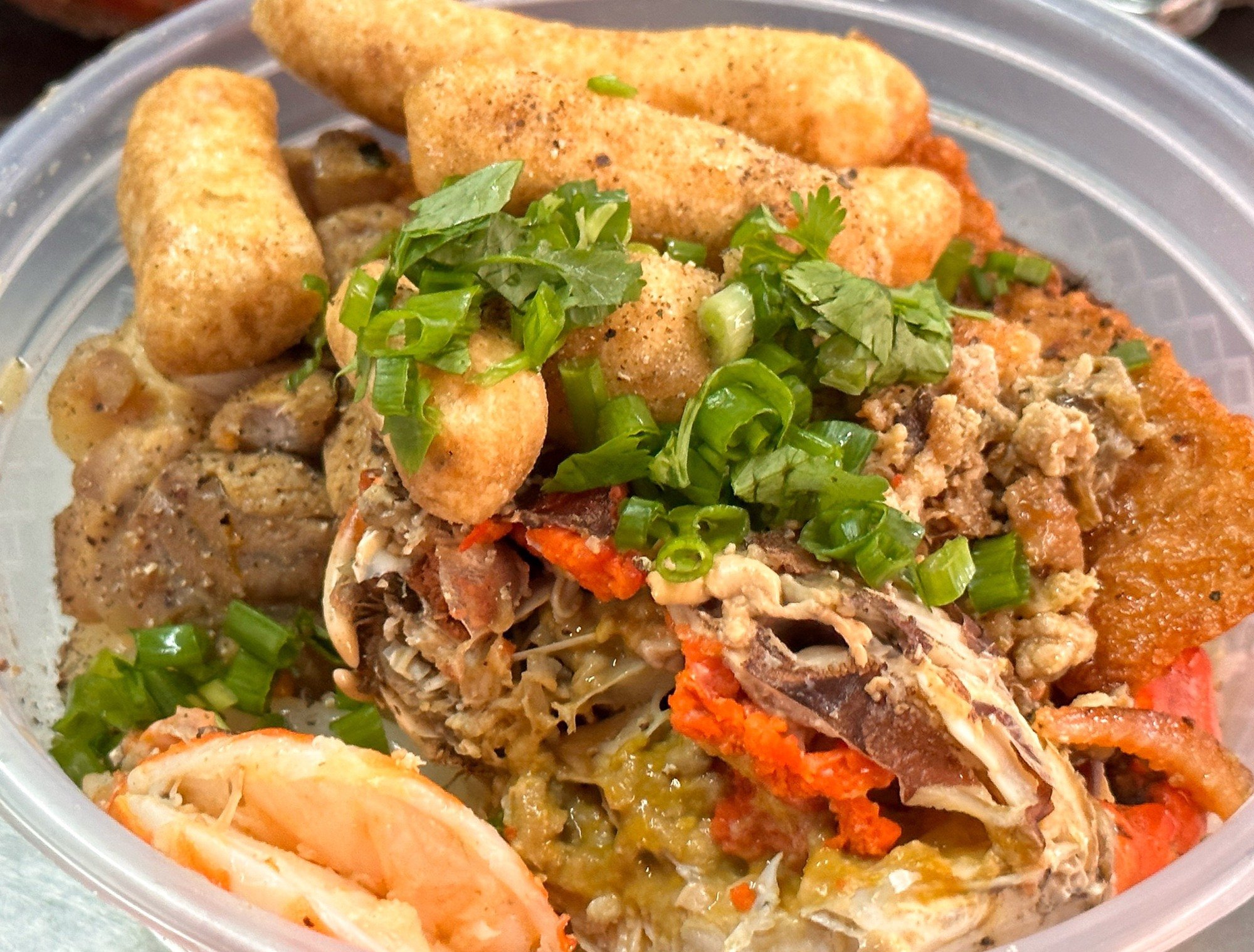
The takeaway portion for customers includes half a crab, priced at 100,000 VND.
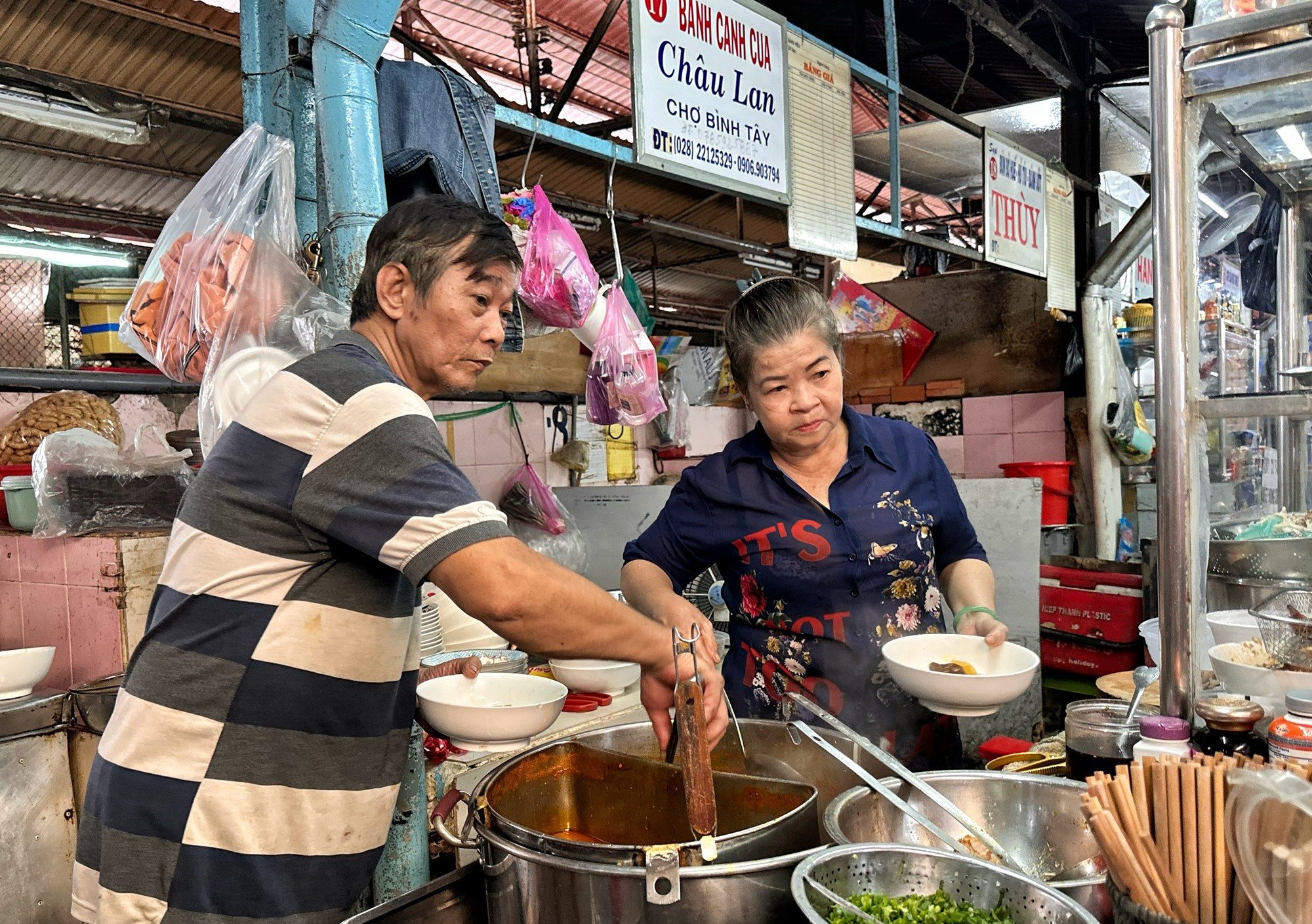
Mrs. Lan and her husband have been selling goods alongside their children for decades.
Similarly, Ms. Hanh (45 years old, residing in District 6) said that whenever she craves crab noodle soup, she goes to the market to eat it, often without needing to buy anything else. According to her, the rich flavor of the noodle soup, with many "unusual" ingredients such as chicken gizzards and fish cakes combined in the dish, makes her feel satisfied.
For Ms. Lan, this noodle soup stall represents the culmination of her mother's and her own lifelong efforts. If she didn't sell crab noodle soup, she doesn't know what else she would do with her life. The eatery is also where she meets her beloved customers and serves them heartfelt meals every day…
Crab noodle soup with stir-fried crab, a 40-year-old family recipe, attracts customers in District 3.
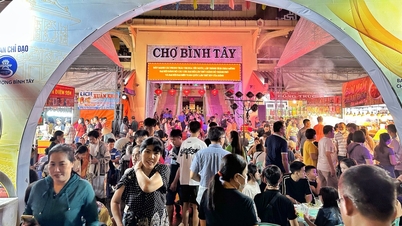
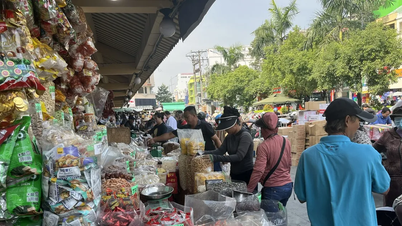
Binh Tay Market, situated within a 25,000 m² area between four streets – Thap Muoi, Le Tan Ke, Pham Van Khoi, and Tran Binh (District 6), has 12 gates and an octagonal architectural design. It was built in 1928 by a Chinese merchant. In 2015, the market was recognized as an architectural and artistic heritage site in Ho Chi Minh City. The market has undergone several renovations and transformations.
According to documents from the Binh Tay Market Management Board: "Compared to the Tan Kieng market of the Vietnamese, the Saigon market (the area of the Cho Lon Post Office today) was larger, hence its name Cho Lon (Big Market). However, due to increasingly prosperous living standards, people from all over came to make a living and establish businesses, so the market gradually became cramped. The Cho Lon provincial government at that time planned to build a new market but had not yet found suitable land."
Upon hearing this news, businessman Quách Đàm spent money to buy a swampy plot of land over 25,000 m² in Bình Tây village, leveled it, and completed a new market using reinforced concrete, which he then donated to the state. It can be said that this was the most massive and modern market in Southern Vietnam at that time. To commemorate Quách Đàm's contributions, after his death, a statue of him was erected in 1930 on a high pedestal, with a unicorn and a water-spouting dragon at its base, right in the center of Bình Tây market.
Source link



















![[Photo] Prime Minister Pham Minh Chinh receives the Chinese Ambassador to Vietnam](https://vphoto.vietnam.vn/thumb/1200x675/vietnam/resource/IMAGE/2026/04/05/1775397481797_ndo_br_dsc-5512-jpg.webp)

































































Comment (0)