

- Cashless payments at traditional markets, why not?
- Bac Lieu City Youth Union: Promoting the development of the 4.0 road network - "Cashless payments"
- Hiep Thanh Commune: Launching the "Cashless Payment Route" model.
Digital spending - an inevitable trend
In recent years, the Government , ministries, and localities have issued many policies and guidelines to promote cashless payments , identifying it as one of the important pillars of the national digital transformation process. Programs such as the development of digital banking, e-wallets, and QR code payments have been implemented synchronously, creating a favorable foundation for people to access and use modern payment methods.
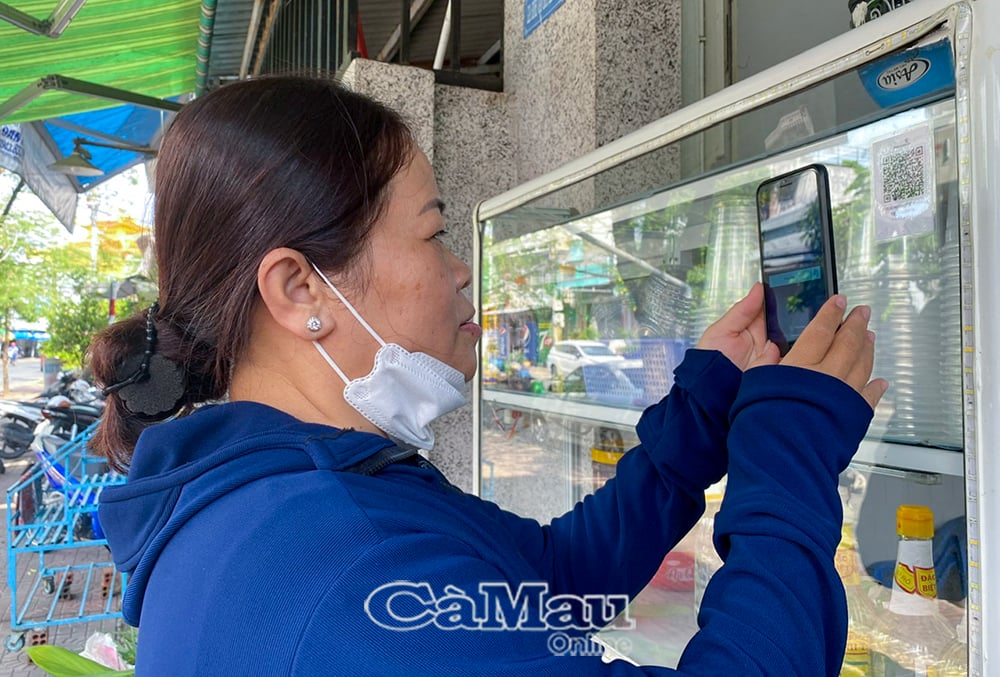 Cashless payments are gradually becoming a new consumer habit for people.
What's noteworthy is not only the policy, but also the significant change in people's habits. While previously cash was almost indispensable for shopping and payments, now, with just a smartphone connected to the internet, many transactions are carried out quickly, conveniently, and securely. In reality, cashless payments are gradually becoming an inevitable trend in socio -economic life. Not only are they popular in cities and commercial centers, but this form of payment is also spreading widely to residential areas, traditional markets, small shops, and even rural areas, where farmers have begun to get used to scanning QR codes instead of carrying cash during transactions.
Observations at the local market in An Xuyen ward reveal that it's easy to spot QR code signs neatly displayed in front of stalls. From noodle shops and sidewalk cafes to small grocery stores, bank transfer payments have become commonplace.
“ Previously, I only accepted cash because I thought bank transfers were cumbersome and I was afraid I wasn't tech-savvy. But after local officials and bank staff came to guide me on how to use it, I found it very convenient,” shared Ms. Nguyen Thi Hong, owner of a food stall at the market.
It's not just Ms. Hong; many other small business owners are gradually changing their habits. Mr. Tran Van Linh, owner of a grocery store in An Xuyen ward, said: "At first, I just made QR codes for the sake of it, but unexpectedly, customers used them a lot, especially young people. With QR codes, selling is easier, and I don't have to worry about giving change to customers anymore."
For consumers, the habit of cashless payments is also gradually forming. At a small roadside cafe in Ho Thi Ky Commune, Ms. Le Thi Mai, a local resident, said: "Now I hardly ever carry much cash when I go out. I can transfer money for shopping, coffee, and breakfast; it's both fast and safe."
A notable positive development is the spread of cashless payments in rural areas. Mr. Le Minh Duong from Da Bac commune shared: “Previously, selling vegetables mainly involved cash payments, but now traders transfer money for convenience. I also use my bank account to buy fertilizers and supplies, saving me from having to carry a lot of cash and giving me more peace of mind.”
Linking digital payments with digital transformation at the grassroots level.
According to representatives of the Thoi Binh Commune People's Committee, promoting cashless payments has been identified by the locality as an important task linked to digital transformation at the grassroots level. In recent times, the commune has coordinated with banks and credit institutions to implement many activities to support residents and small business owners.
| Mr. Nguyen Thanh Nhan, Vice Chairman of the Thoi Binh Commune People's Committee, said: “The locality is stepping up propaganda and mobilization efforts to encourage small traders and small businesses to participate in cashless payments. Commune officials are coordinating with credit institutions to support the creation of QR codes, provide guidance on usage, and answer questions so that people can confidently adopt them.” According to him, cashless payments contribute to the transparency of transactions, promote the digital economy, and improve the efficiency of state management. |
In reality, local authorities play a crucial "bridging" role through Party branch meetings and mass organization gatherings, integrating specific propaganda and guidance to help people gradually change their digital spending habits. Cashless payments offer many clear benefits, such as saving time, reducing the risk of theft, limiting counterfeit money, ensuring transparency in revenue and expenditure, and creating a foundation for the development of digital financial services.
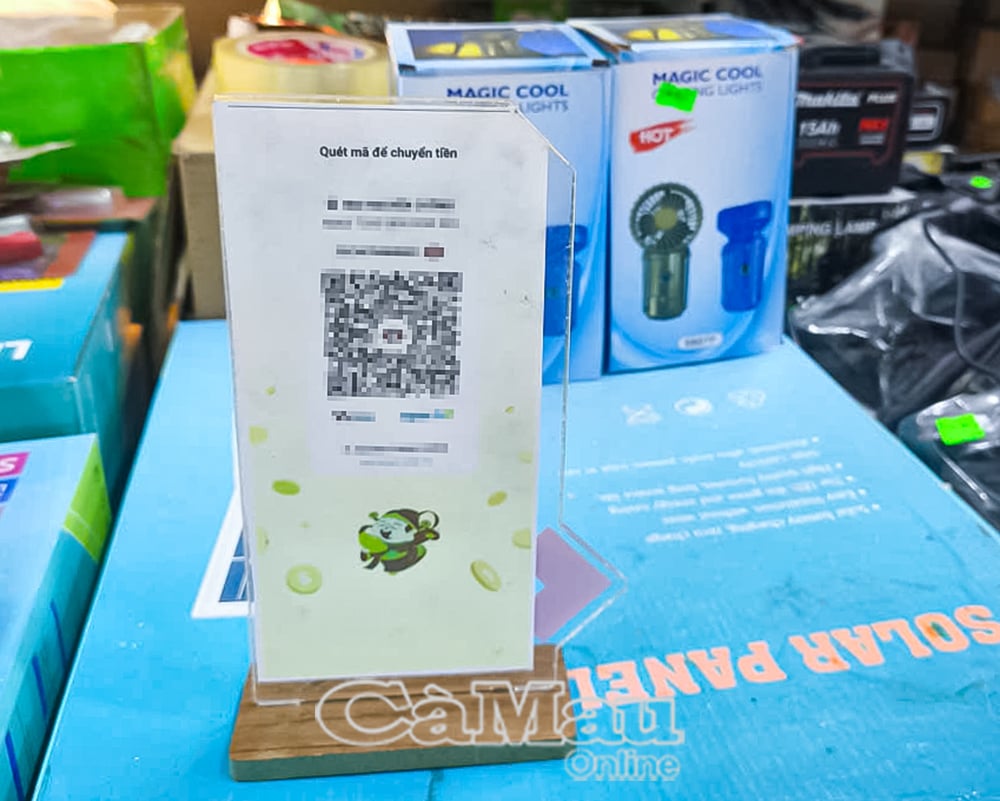 Pre-installed QR codes are a common sight at many businesses.
However, changing consumer habits cannot happen overnight. In some places, especially in remote areas, people still have limited access to technology, smart devices, or internet connectivity.
Despite remaining challenges, it can be affirmed that cashless payments are becoming an inevitable trend. From small stalls in market corners and roadside cafes to farmers' fields and vegetable gardens, "digital spending" has permeated daily life. This change not only reflects technological progress but also demonstrates the proactive adaptation of the people. As people gradually become familiar with, trust, and proficient in using cashless payments, the digital economy will gain further impetus for sustainable development.
Van Dum
Source: https://baocamau.vn/nguoi-dan-dan-quen-voi-chi-tieu-so-a125991.html


























































































Comment (0)