

According to many experts, implementing a two-tiered electricity pricing system will contribute to fairness and transparency between sellers and buyers; ensuring that electricity users pay only for the system's costs, avoiding the current situation of equal pricing.
Electricity prices should be more transparent and fair.
Vietnam Electricity Group (EVN) has just proposed to the Ministry of Industry and Trade to implement a pilot program. Two-component electricity pricing. This is a matter of great concern to the public, especially in the context of electricity prices being adjusted upwards every three months.
Speaking with reporters According to Tien Phong newspaper , Dr. Doan Van Binh - former Director of the Institute of Energy Science - believes that implementing a two-component electricity pricing system (including electricity prices based on capacity and consumption) is reasonable and should have been implemented long ago, because it has a significant impact on the cost and price of electricity production.
According to Mr. Binh, Vietnam currently applies a single-component electricity pricing system (paying based on electricity consumption). This method is considered to not accurately reflect the costs incurred by the electricity sector (asset depreciation, power lines, substations, etc.) for each customer.
In particular, pricing electricity based on only one component (consumption) can easily lead to people using a lot of electricity in a short period; requiring large investments in power lines and substations for operation, causing waste, affecting the costs of the entire system, and driving up electricity prices.
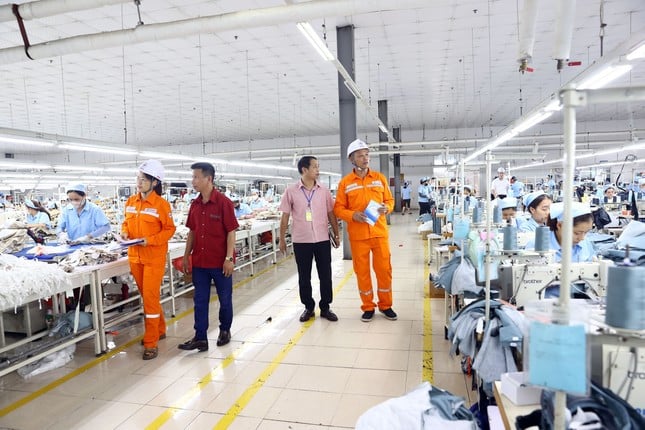
Mr. Binh cited the example of people using 500kWh/month but concentrating it over just a few days; the investment cost to ensure the safe operation of the entire system would be different compared to using 500kWh evenly over 30 days, even though the electricity bill would be the same for both methods.
For power providers, instead of investing in a 100MW power plant with high investment and operating costs, investing in a 10MW plant would be sufficient to meet demand.
"The application of a two-tiered electricity pricing system will create a fairer price for sellers, buyers, and electricity users. If load regulation becomes more efficient, it can even help reduce electricity purchase prices," Mr. Binh said.
The former Director of the Institute of Energy Science believes that when applying a two-component electricity pricing system, users will have to focus on how to use electricity most efficiently. For example, the higher electricity price based on capacity will force power plants to reduce capacity and adjust production accordingly; thereby changing electricity usage behavior.
Which customer groups will be affected?
According to energy expert Nguyen Huy Hoach, with a two-component electricity pricing system, customers will pay separately for each kWh of power they register for monthly with the supplier. Even when not in use, users will still have to pay this cost, instead of the electricity sector bearing the burden and recovering it through price adjustments as is currently the case.
Therefore, the application of a two-tiered electricity pricing system is almost exclusively limited to the group of customers using electricity for production (three-phase electricity) and the group of residential customers with consumption greater than or equal to 2,000 kWh/month. Electricity prices will be classified according to four voltage levels: ultra-high voltage, high voltage, medium voltage, and low voltage.
The two-component electricity pricing system has been implemented in many countries, mostly for customers using electricity for production and business purposes, and some countries also apply it to household electricity.

Mr. Hoach stated that, in reality, electricity corporations have already implemented electronic meters capable of measuring power and energy consumption for most customers using electricity for production and business purposes. Therefore, implementing a two-component electricity pricing system will not be difficult. Customers using the same monthly electricity consumption (calculated in kWh) but with a lower load factor will pay more than customers with a higher load factor.
"Applying a two-component electricity pricing system in conjunction with the current retail electricity pricing regulations will contribute to balancing the system's load profile and reducing the need for investment in power sources and grids to meet peak electricity demand. However, before implementation, it is necessary to widely consult with scientists and users, and conduct extensive public awareness campaigns so that people understand the changes," Mr. Hoach shared.
Mr. Nguyen Tien Thoa, Chairman of the Vietnam Valuation Association, said that in countries applying a two-component electricity pricing system, customers rarely complain when electricity prices are adjusted because fixed costs remain constant and are transparent.
Currently, conducting pilot studies is appropriate to assess its impact and demonstrate the differences between the two options. In particular, consumers will have the opportunity to evaluate and compare the two options in terms of price differences when using electricity. We need such a pilot period to evaluate, summarize, and expand the system if we find the two-component electricity pricing system truly effective.
Regarding the implementation roadmap, EVN proposes initially applying a pilot program to certain customer groups. The results of electricity bill calculations under the two-component electricity pricing mechanism during the pilot phase will continue to be used for comparison, evaluation, summarization, and adjustment before moving to the official transition phase.
Regarding the roadmap for implementing the two-tiered electricity pricing system, the consulting firm proposed a trial phase, a transition phase, and then official implementation.
The ideal scenario is that the service will be rolled out to all customers starting January 1, 2025, provided the proposed trial phase is implemented and completed as planned.
Source



![[Photo] General Secretary and President To Lam presides over a meeting on preparations for the review of one year of operation of the three-tiered government system.](https://vphoto.vietnam.vn/thumb/1200x675/vietnam/resource/IMAGE/2026/06/02/1780391821195_a1-bnd-4595-9717-jpg.webp)





























































































Comment (0)