

From breeding squid larvae…
Returning to Phuoc The fishing village in late May, the recent early-season rains did not alleviate the dry, hot weather of the coastal region. It was the southern monsoon season, so the sea here was calm, and boats from all over came to buy and sell seafood in the bustling fishing village. The fishermen of Phuoc The are famous for their diving, scooping anchovies, and especially for squid fishing.
During this season, traders sit waiting in the fishing village, and occasionally fishing boats pull in, bringing with them fresh, glistening, and shiny squid. All the squid caught are bought by the traders at a stable price. However, according to experienced fishermen here, the supply of squid caught each year is decreasing while demand continues to grow. Seeing this, a native of Tuy Phong district, after researching through books and newspapers and watching ocean exploration programs, discovered that squid are very easy to raise and pioneered the experiment of breeding squid larvae and raising them for commercial purposes. He is Mach Van Quang (born in 1973) from Ward 5, Lien Huong town.
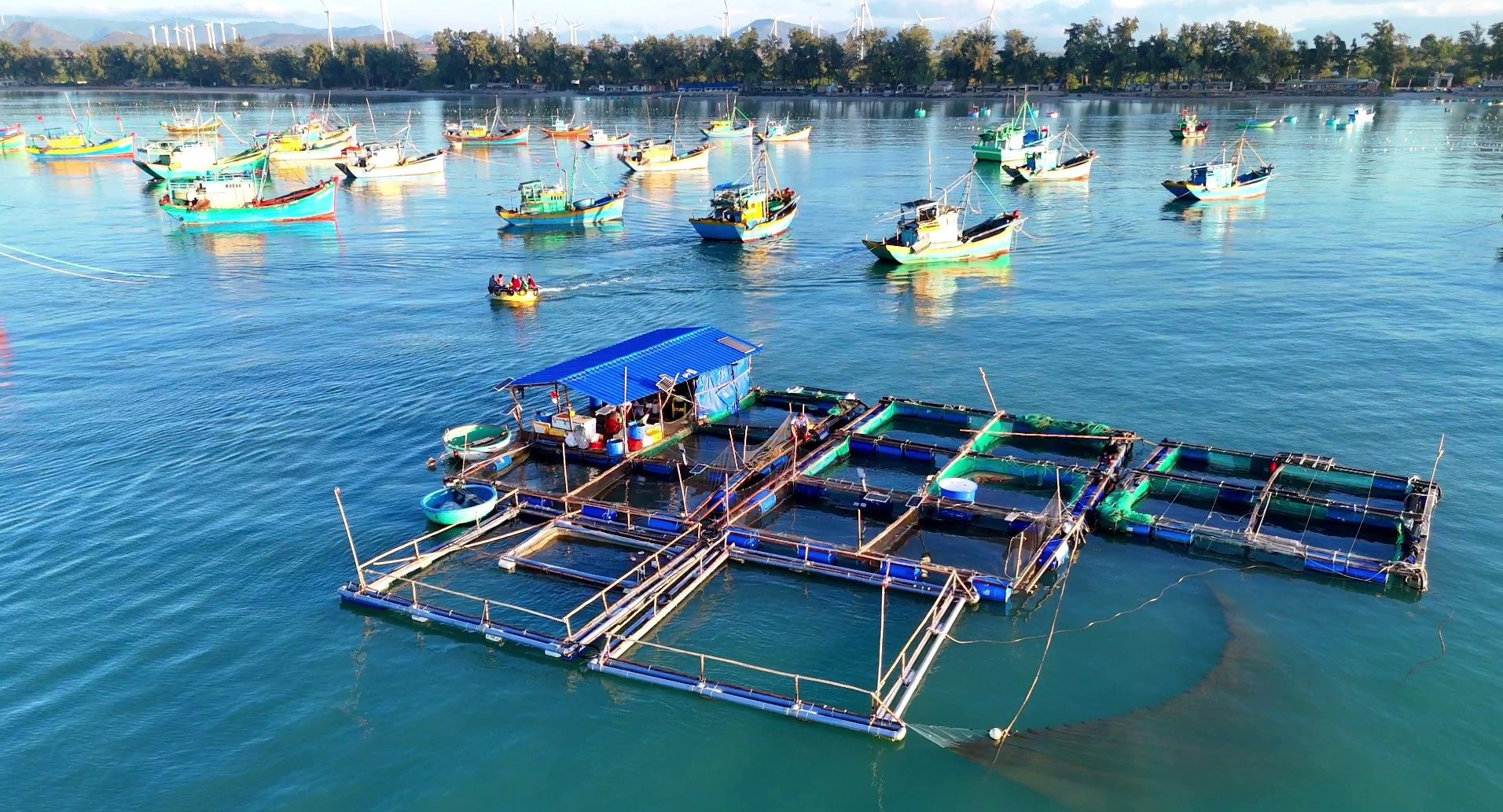
Quang's cage farm is where he raises squid and fish.
Taking us on a tour of the 12 floating cages anchored in Phuoc The fishing village, where Mr. Quang is raising squid, the sun-tanned man shared with us the process of achieving his success. Having worked in shrimp hatcheries in Vinh Tan commune, Mr. Quang had some understanding of the techniques of raising juvenile seafood, but applying them to squid farming proved to be far from simple. “In 2021, I experimented for the first time, buying squid eggs from fishermen, then putting them in cement tanks with oxygenated water and incubating them. After about 5-7 days, the eggs gradually hatched into baby squid. I thought I had succeeded, seeing the tiny squid swimming around, I was very happy. But after only a month, the baby squid slowly died.”
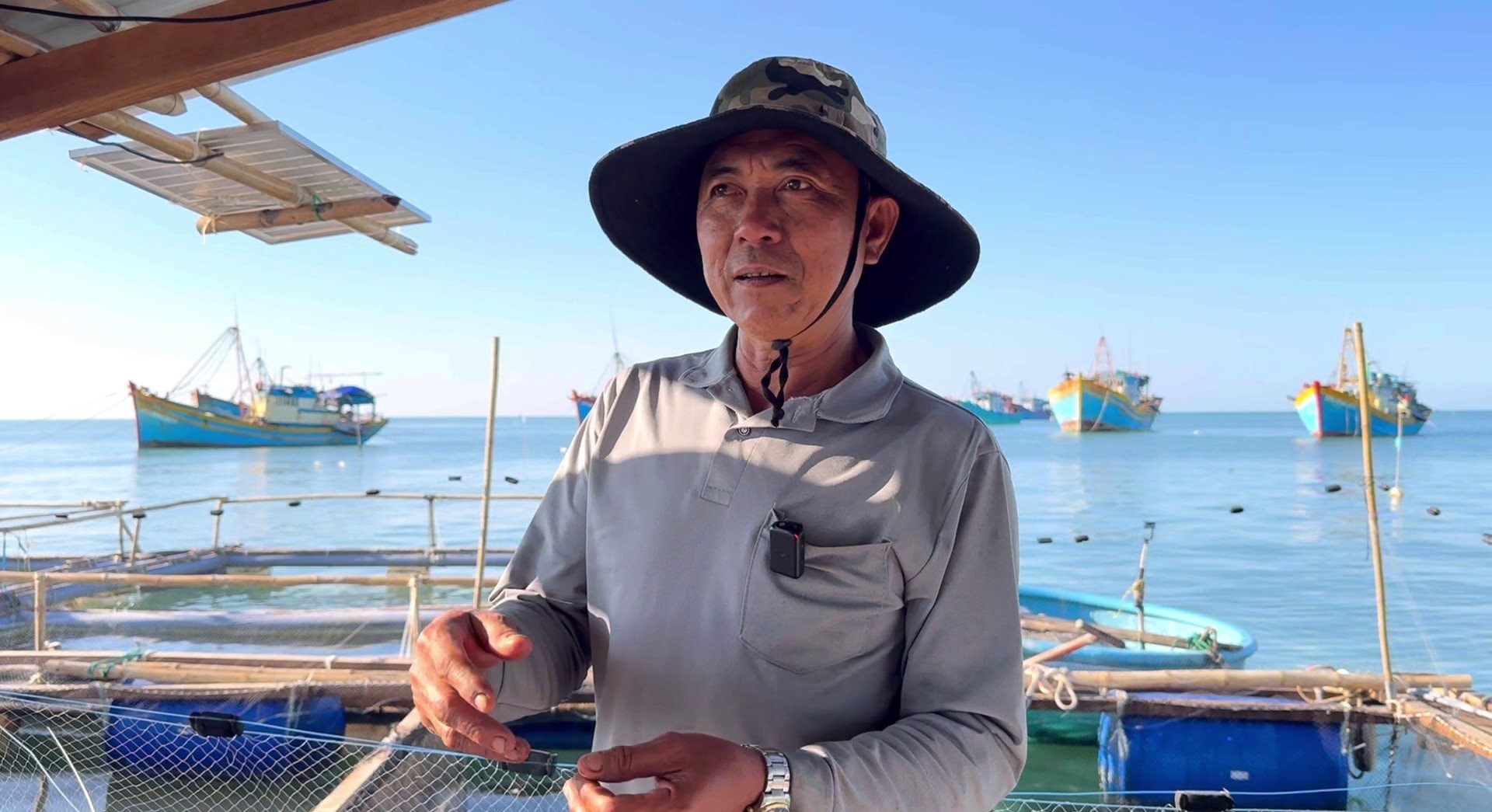
Mr. Mach Van Quang shared with us the journey that led him to where he is today.
Recalling that difficult period, Mr. Quang pondered for a moment before continuing: “Undeterred, I meticulously researched the habits of squid, investigated the causes, and built my own seawater filtration system to remove sediment and impurities, keeping only clean water for incubating squid eggs. When the eggs hatched into tiny larvae, I started feeding them live food such as artemia and post-larval shrimp… These are highly nutritious foods used as live food for crustaceans in their larval stage. Thanks to improved techniques and farming methods, after two months from incubation, the first batch of squid juveniles produced healthy offspring.” As he spoke, Mr. Quang couldn't hide the joy in his eyes, which bore the marks of time. After many failures, he successfully bred squid juveniles and sold them to fishermen in squid-farming areas such as Cam Ranh, Phu Yen , and Binh Dinh… During that time, he not only supplied the juveniles but also went to the rafts to guide the farmers on commercial squid farming techniques.
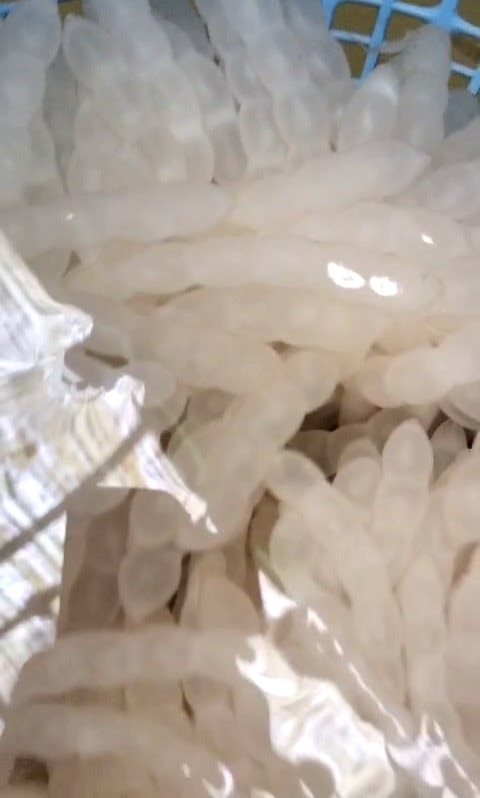
After numerous failures, Mr. Quang successfully bred squid eggs.
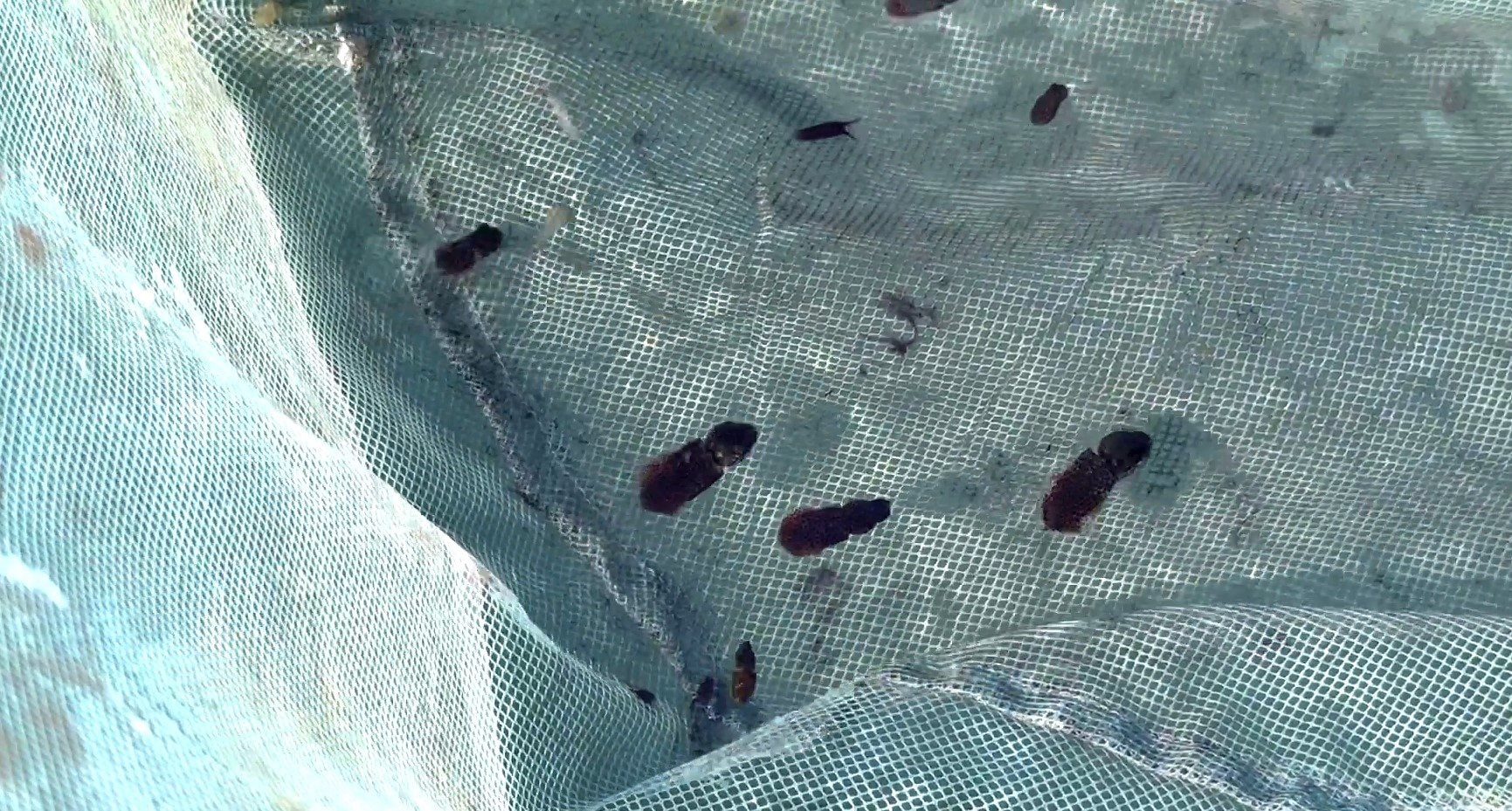
The marketable baby squid are growing and developing well.
To raise squid for commercial purposes
By 2023, Mr. Quang had partnered with a friend to build the first floating cages for raising squid in the sea in Binh Thuan . Leading us to four cages where squid, over a month old, were being raised, Mr. Quang slowly fed them while continuing to explain: “When the squid larvae are about 25-30 days old, I will transfer them to the floating cages to raise them directly in the sea into marketable squid. The most important thing in squid farming is having an abundant and uninterrupted food supply because we have to feed them 3-4 times a day. If we don't provide enough food, the squid will cannibalize each other, depleting the breeding stock. Especially, farmers need to be patient when feeding the squid. Because squid only eat floating food, if you hastily scatter too much food, it will fall to the bottom, leading to water pollution before the squid have a chance to eat it. Therefore, each feeding session takes more than an hour to ensure the squid are full and receive sufficient nutrition.”
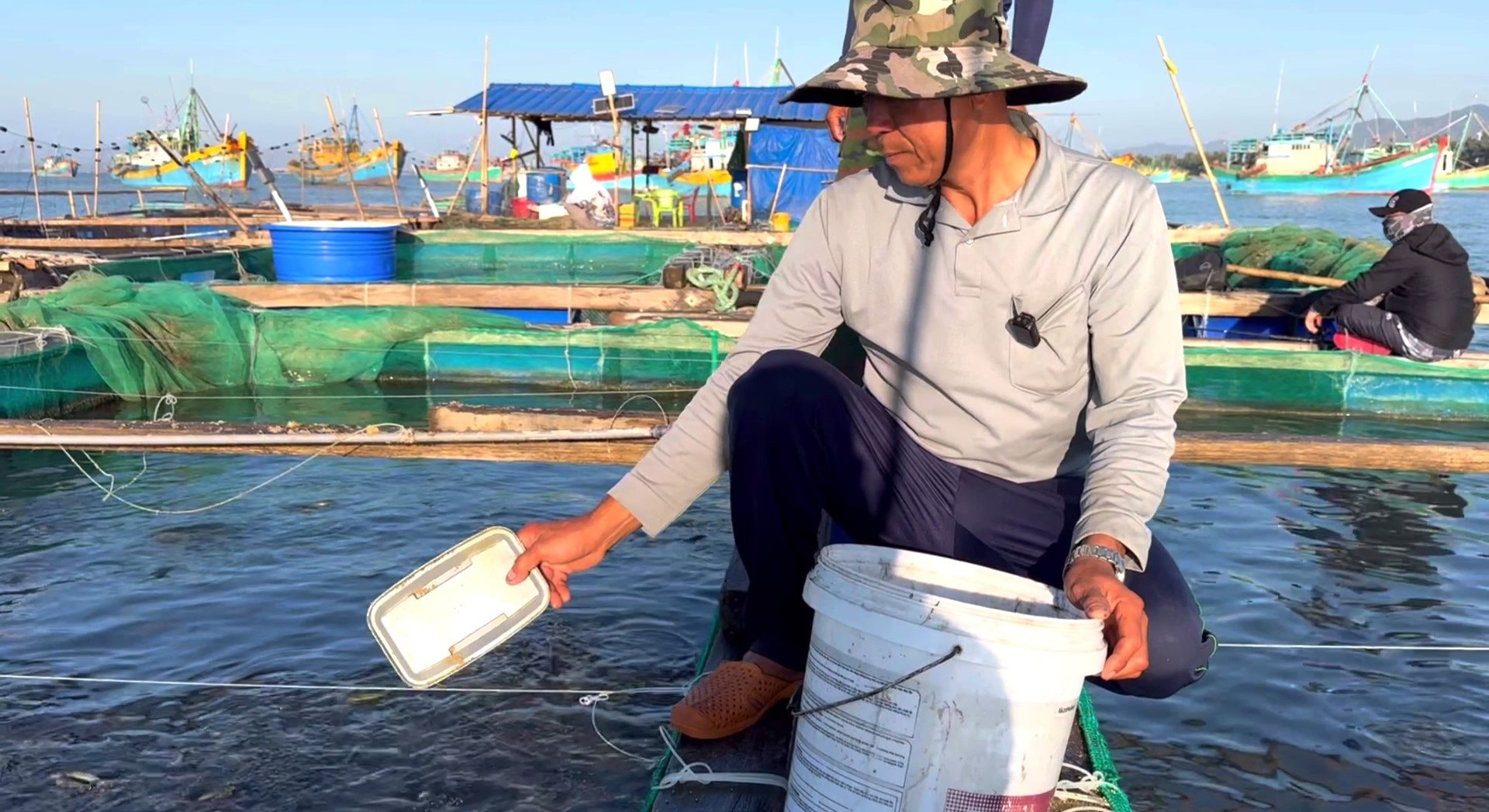
If there isn't enough food, squid will cannibalize each other.
After three successful farming cycles, Mr. Quang readily shared: “Due to the high initial investment, many people are hesitant to switch to other aquaculture. Actually, raising squid is easier than raising fish or shrimp. Squid are less prone to disease; as long as you have a reliable food source, they thrive. With 500 juvenile squid raised in one cage, after 5 months I harvest an average of 170-190 kg. At that time, female squid weigh 3-3.5 grams each, and male squid weigh 5-6 grams each. They are currently being purchased by traders at a stable price of 500,000-600,000 VND per kilogram.”
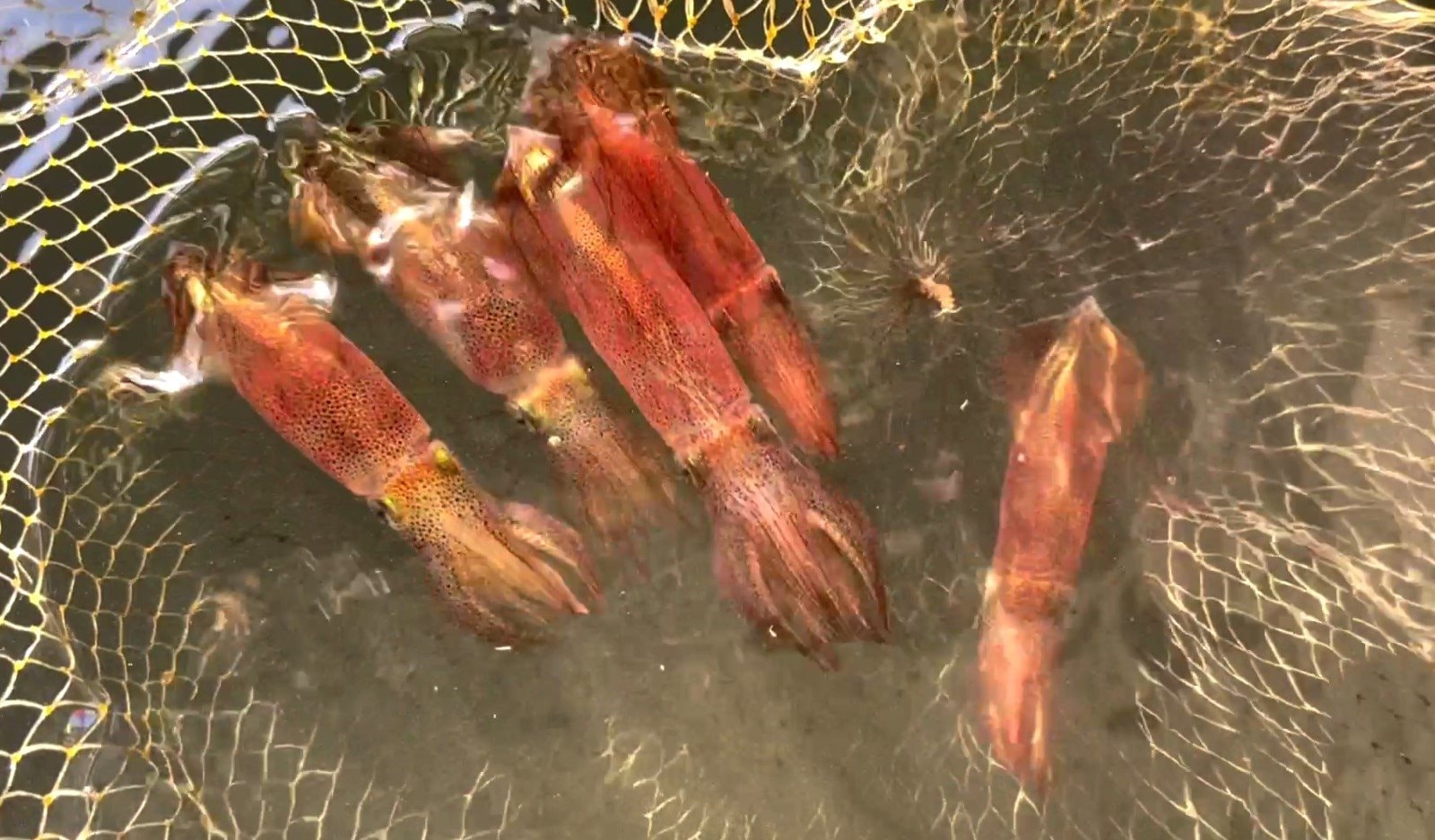
Squid are relatively disease-resistant; as long as their food source is readily available, they will thrive.
Compared to other coastal areas, the Bình Thuận sea region has many favorable factors for developing aquaculture. It experiences fewer storms and is less affected by river currents. The seabed is mainly composed of reefs and coral, so any spilled feed is easily washed away by the ebb and flow of the tides, making it very suitable for marine farming. However, most coastal communes in Tuy Phong district are flat beaches, making cage farming difficult and forcing fishermen to incur additional costs to move their rafts between the south and north seasons. “During the south season, the fishing village in Phước Thể is calm, so I keep my rafts there. Then, in October (lunar calendar), during the north season, I have to move the rafts to La Gàn beach in Bình Thạnh, because fish and squid raised in cages need calm water with minimal waves,” Quang explained.
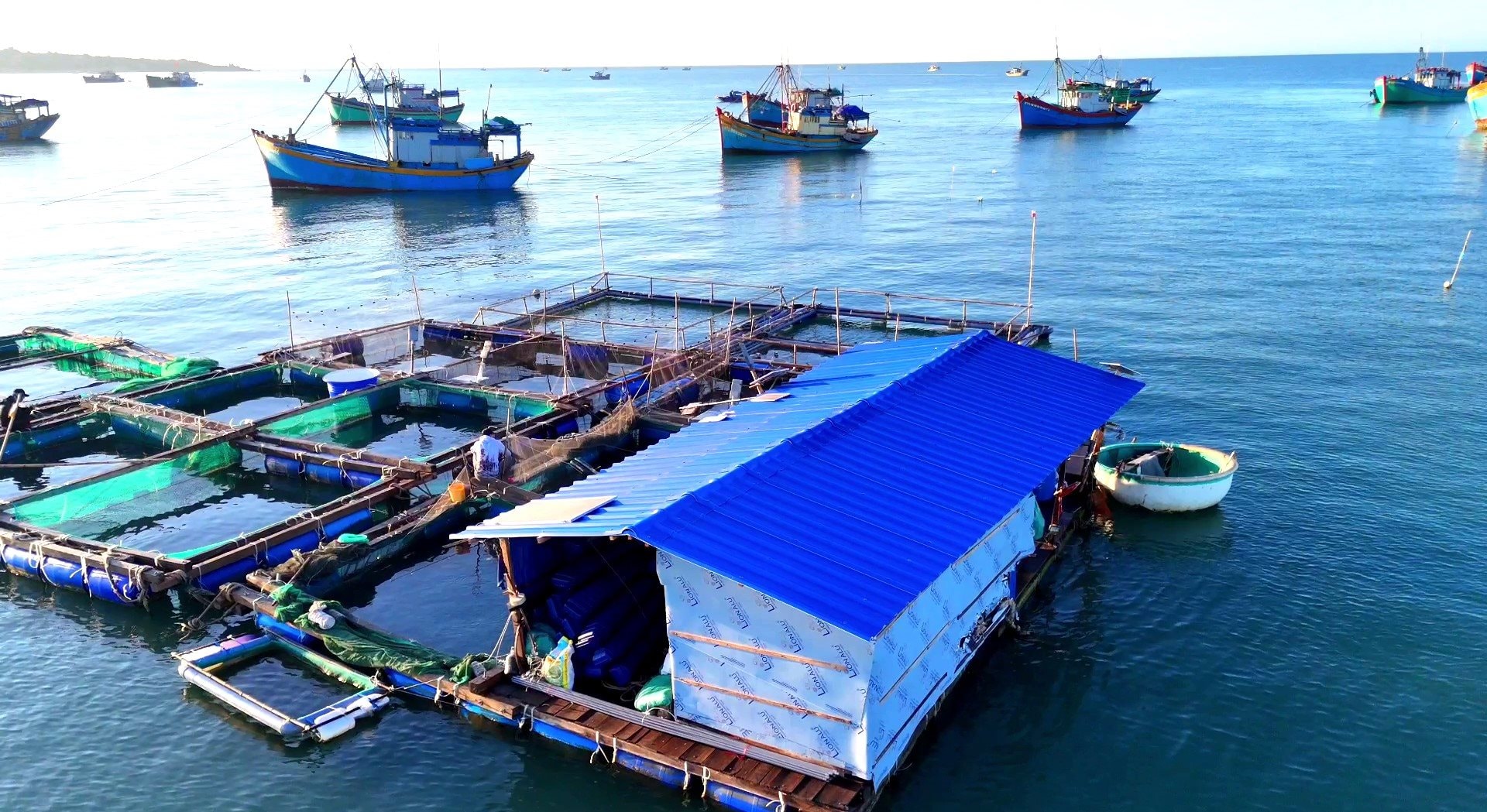
During the south monsoon season, he pulls his fish cages back to Phuoc The fishing village, and in the north monsoon season, he returns to Binh Thanh sea.
The Tuy Phong sea area also features the rare phenomenon of upwelling, where nutrient-rich water rises from the deep sea to the surface. This cool, nutrient-rich upwelling water helps many organisms thrive, resulting in abundant, fresh, and economically valuable seafood resources in the Binh Thuan sea area in general and Tuy Phong in particular. Therefore, squid from Tuy Phong, whether farmed or caught in the wild, will undoubtedly be crispier and sweeter than those from other sea areas.
Sustainable aquaculture trends
He is also the first fisherman in the district to experiment with raising brown snapper, alongside his previous practice of raising grouper. “Currently, I only invite friends and acquaintances to visit my raft and fish on weekends. When the model develops stably, I also want to combine it with bringing tourists to experience squid fishing and other fishing activities on-site, and provide food and drinks at the raft, similar to what Phu Quy district is doing. If Binh Thanh commune has this interesting experiential destination, it will stimulate local tourism development. Above all, from the success of raising squid, I want to guide local fishermen towards sustainable aquaculture, reducing exploitation as marine resources become increasingly depleted…” – Mr. Quang shared about his future plans.
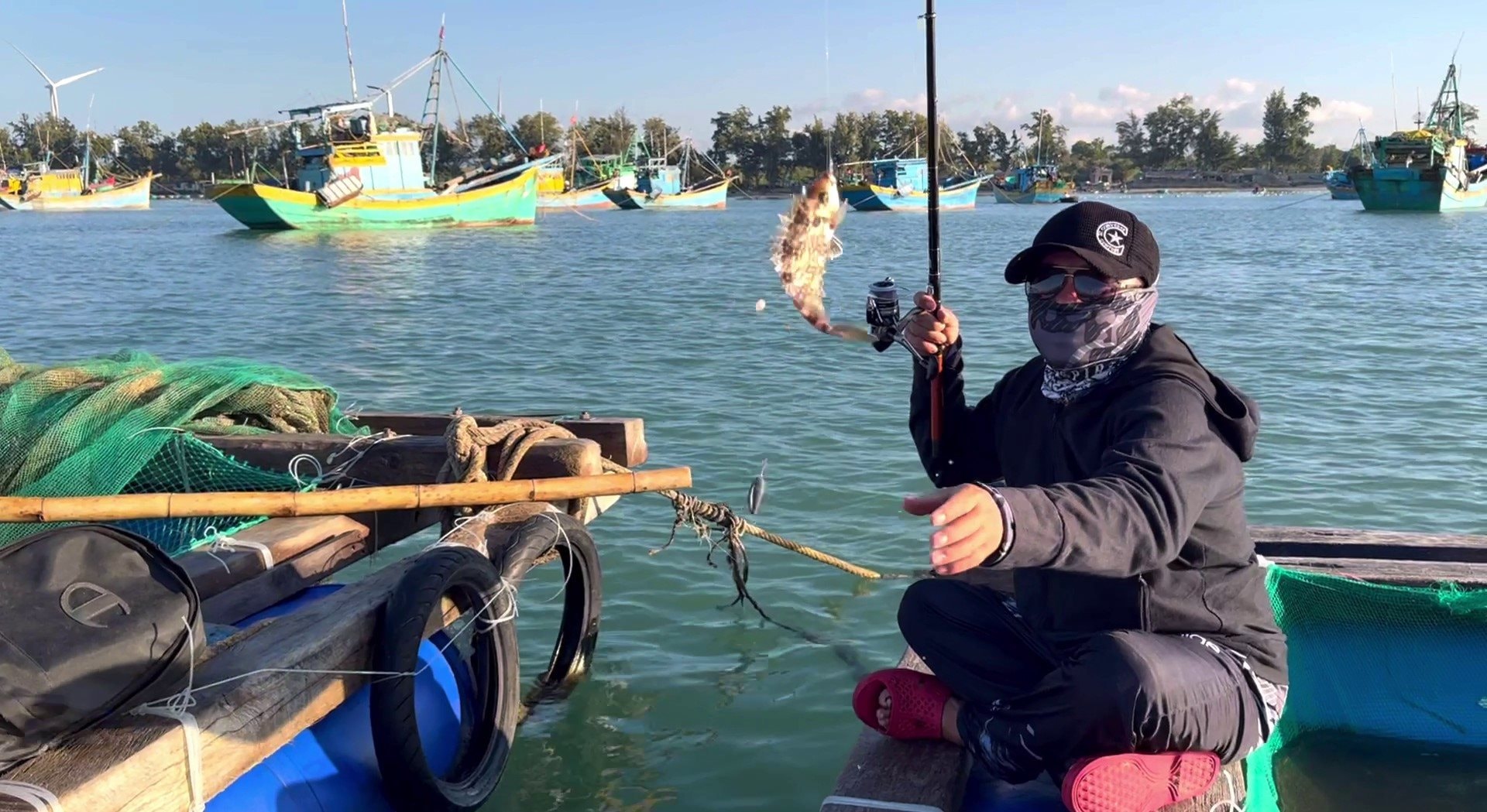
Friends often come to the raft to fish for sea bream and squid.
In recent years, marine aquaculture in the province has developed quite strongly, concentrated in the districts of Tuy Phong, Ham Thuan Nam, Phu Quy, and Phan Thiet City... The main species raised are marine fish such as grouper, snapper, sea bass, and various types of lobster, with a total annual harvest of about 500 tons of fish and shrimp. Therefore, marine aquaculture will become a trend in the future. Mr. Nguyen Van Chien - Deputy Director of the Department of Agriculture and Environment - believes that the province's potential for marine aquaculture is very large, especially in the context of increasingly depleted aquatic resources and the dependence on imports for raw materials for processing and export... In the coming time, the province's fisheries sector will significantly reduce the number of fishing vessels in coastal areas, contributing to solving the problem of transitioning from coastal fishing to more sustainable marine aquaculture. Marine aquaculture also presents a great opportunity to restore overexploited ecosystems and ensure the livelihoods of local people...
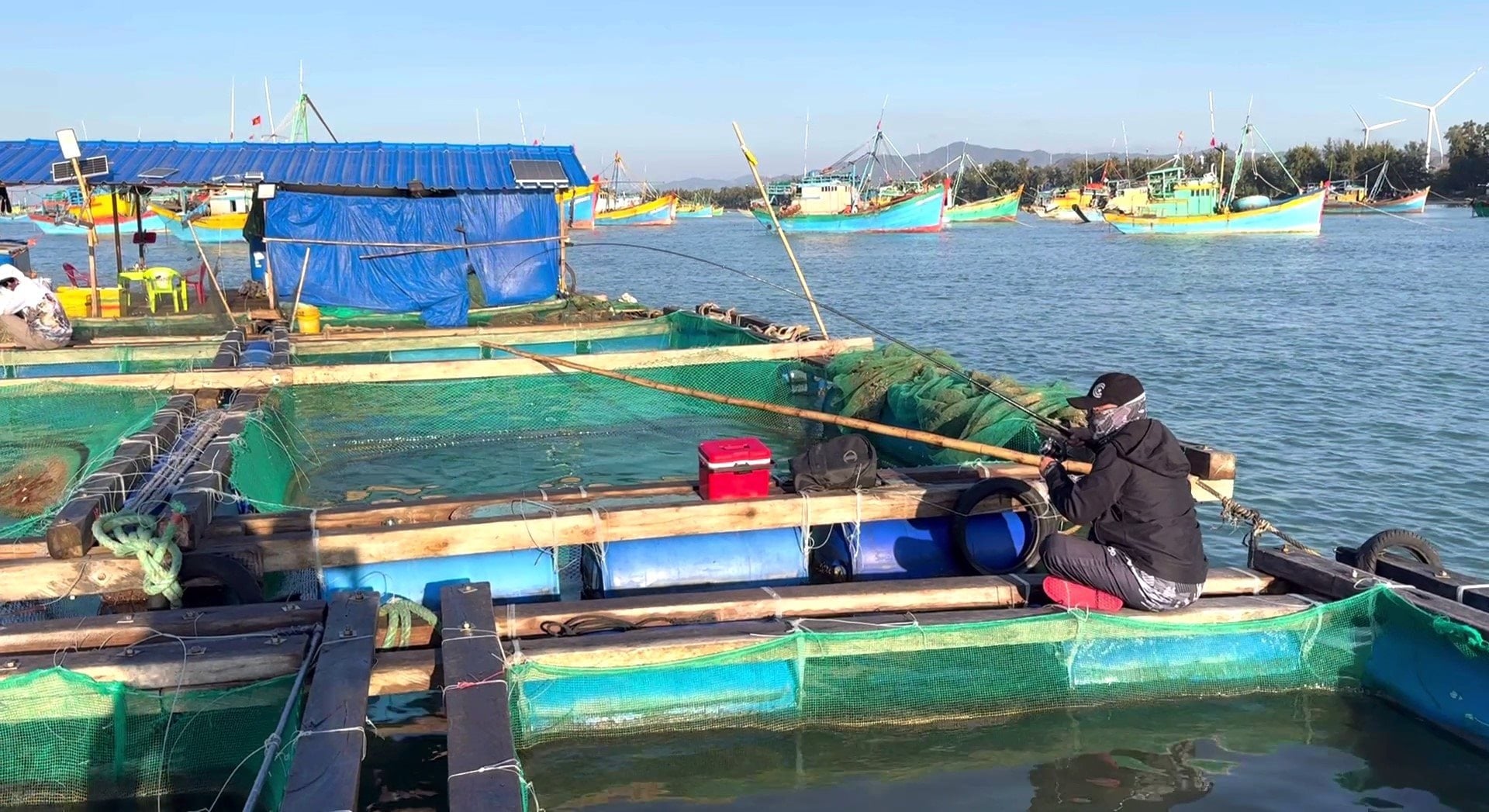
Marine aquaculture also presents a great opportunity to restore ecosystems that are being overexploited.
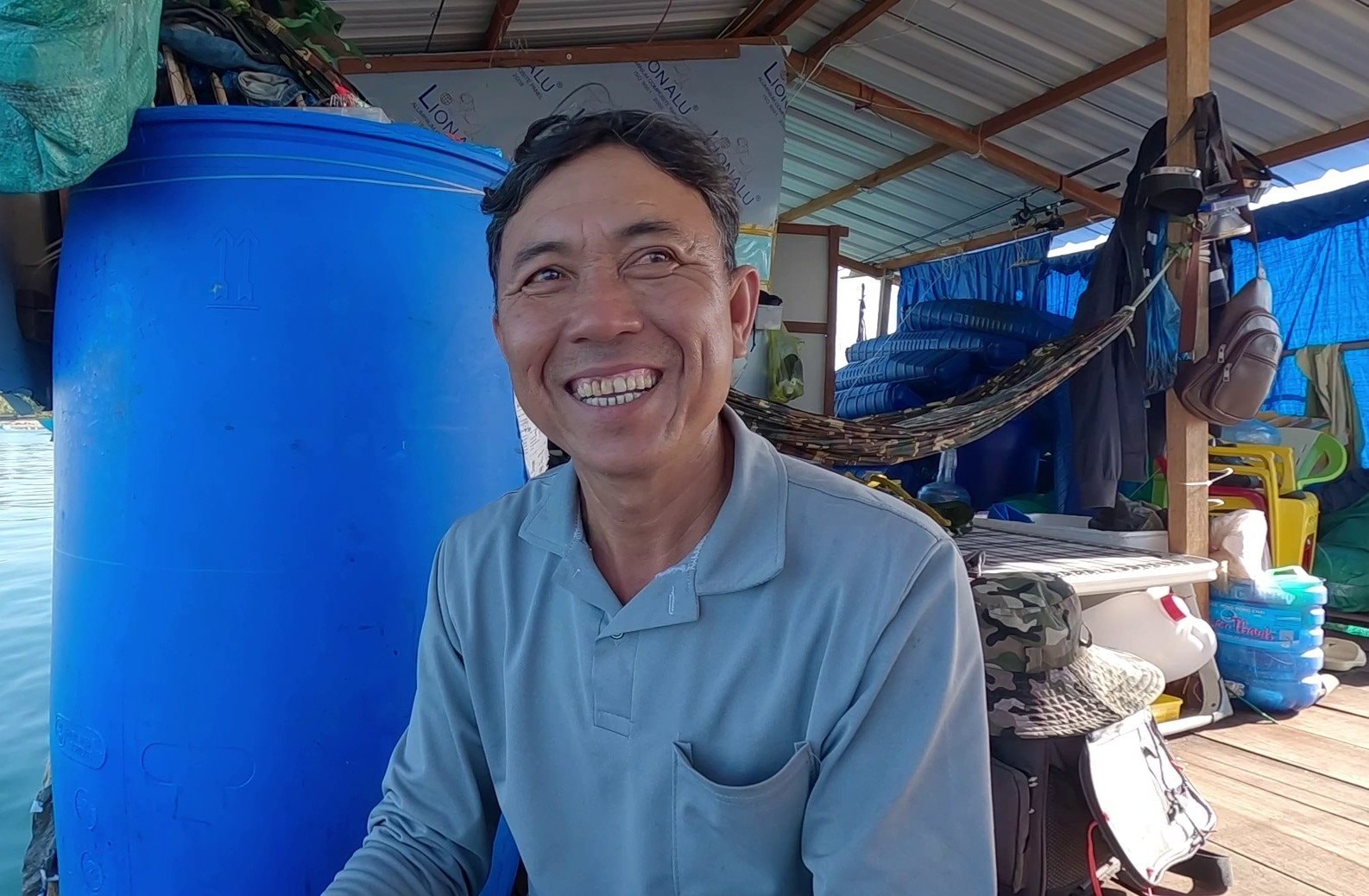
Quang happily shared his plans for the future.
Leaving Mr. Quang's raft as the sun was at its zenith, we suddenly thought that if his rafting area were as well-equipped to accommodate tourists as Phu Quy Island, we could sit on a breezy raft, enjoying a bowl of instant noodles with crispy, fresh squid that we caught ourselves – what could be better! Surely, that's also a dream not far off for him, given the ever-increasing supply of squid!
Source: https://baobinhthuan.com.vn/nguoi-dan-ong-lam-muc-la-sinh-soi-130684.html


![[Image] National Assembly discusses the implementation of the socio-economic development plan.](https://vphoto.vietnam.vn/thumb/1200x675/vietnam/resource/IMAGE/2026/04/20/1776696707422_ndo_br_img-20260420-185419-jpg.webp)
![[Photo] General Secretary and President To Lam meets with National Assembly delegates from ethnic minorities.](https://vphoto.vietnam.vn/thumb/1200x675/vietnam/resource/IMAGE/2026/04/20/1776696701056_a1-bnd-8331-3342-jpg.webp)








































































Comment (0)