

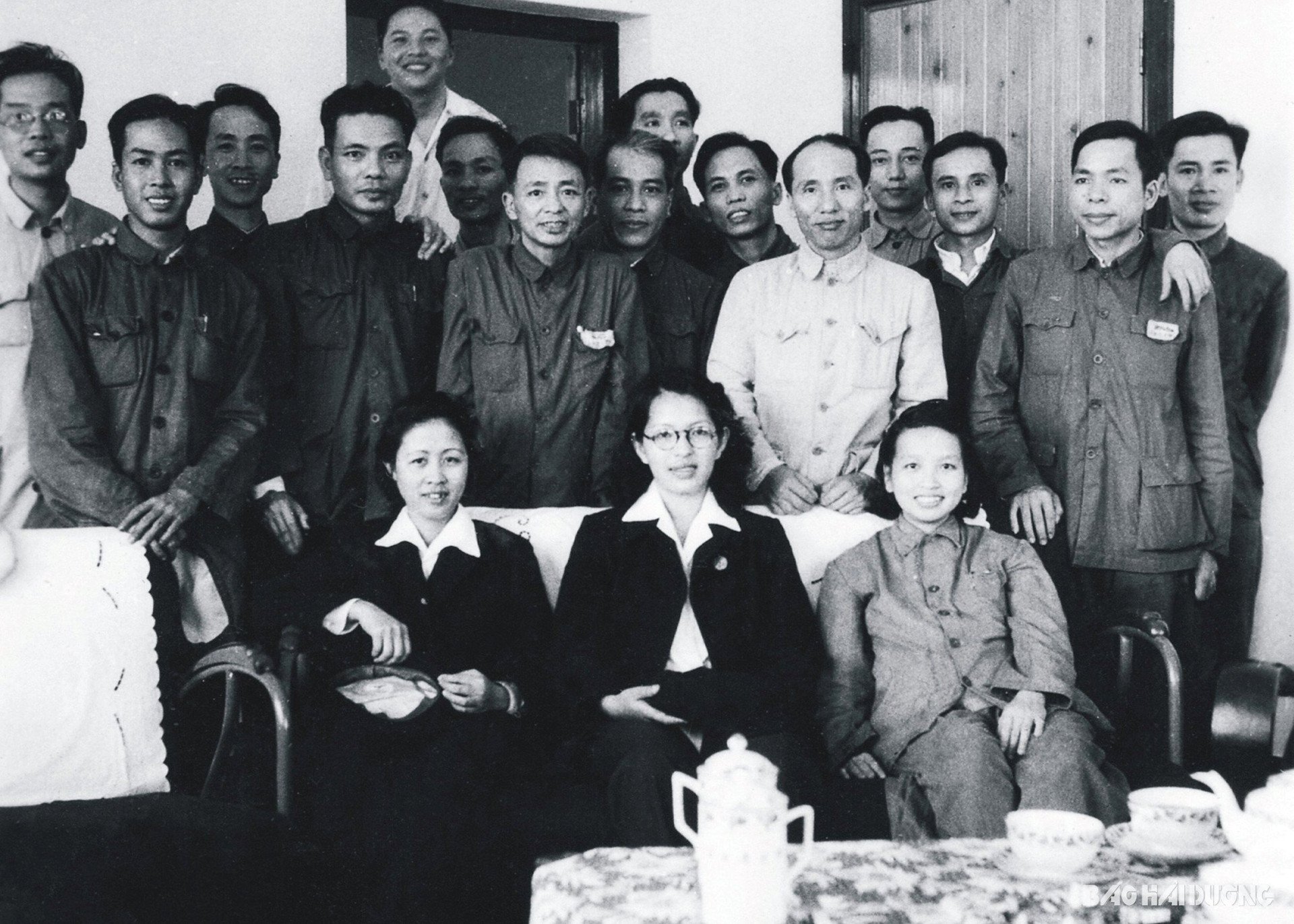
Opening the way for thought
For Hai Duong, Comrade Nguyen Luong Bang played a crucial role in disseminating the revolutionary line of Marxism-Leninism and the book "The Revolutionary Path" to the locality.
Through preserved documents, the people of Hai Duong accessed Marxism-Leninism through two channels. These were revolutionary documents and books brought in by the communication network between Hai Phong , Hong Kong, and Guangzhou, and those brought by members of the Vietnam Revolutionary Youth Association. Comrade Nguyen Luong Bang was the one who established and directly participated in maintaining the communication network between Hai Phong, Hong Kong, and Guangzhou, following the instructions of Comrade Nguyen Ai Quoc. This demonstrates the immense role of Comrade Nguyen Luong Bang in disseminating revolutionary ideology within the country, not only for the revolution in Hai Duong but for the revolution throughout the nation.
In Hai Duong, the book "The Revolutionary Path" was passed around and read by many young intellectuals, particularly in the districts of Thanh Ha, Kim Thanh, Kinh Mon, Chi Linh, and Hai Duong City. Simultaneously, several members of the Vietnam Revolutionary Youth Association, such as Nguyen Van Cu, Do Ngoc Du, and Tran Cung, came to Hai Duong to propagate Marxism-Leninism and build revolutionary bases. From here, Marxism-Leninism was widely disseminated among the people of Hai Duong, contributing to the establishment of revolutionary mass organizations and creating conditions for the birth and operation of several branches of the Vietnam Revolutionary Youth Association, significantly impacting the struggle movement in Hai Duong during 1928-1929.
Thanks to its early access to Marxism-Leninism and the establishment of numerous revolutionary bases, Hai Duong became one of the first localities to establish Communist Party branches to lead the revolutionary movement. Immediately after the founding conference of the Communist Party of Vietnam in Hong Kong (China), in the Mao Khe mining area (Dong Trieu town), Comrade Nguyen Van Cu established the Mao Khe Party branch. In early March 1930, in Do Xa village, Hoang Tan ward (Chi Linh city), Comrade Tran Cung established the Do Xa Party branch. These were the first two Communist Party branches of Hai Duong province.
The establishment of two Party branches in Hai Duong in 1930 was a crucial historical turning point, gradually shifting the local revolutionary movement from spontaneous to conscious action. These were important prerequisites for the proletarian revolutionary line to take root in the thoughts of every citizen of Hai Duong. Despite facing countless hardships and sacrifices, the people's faith in the ultimate victory of the Vietnamese revolution under the leadership of the Party never wavered.
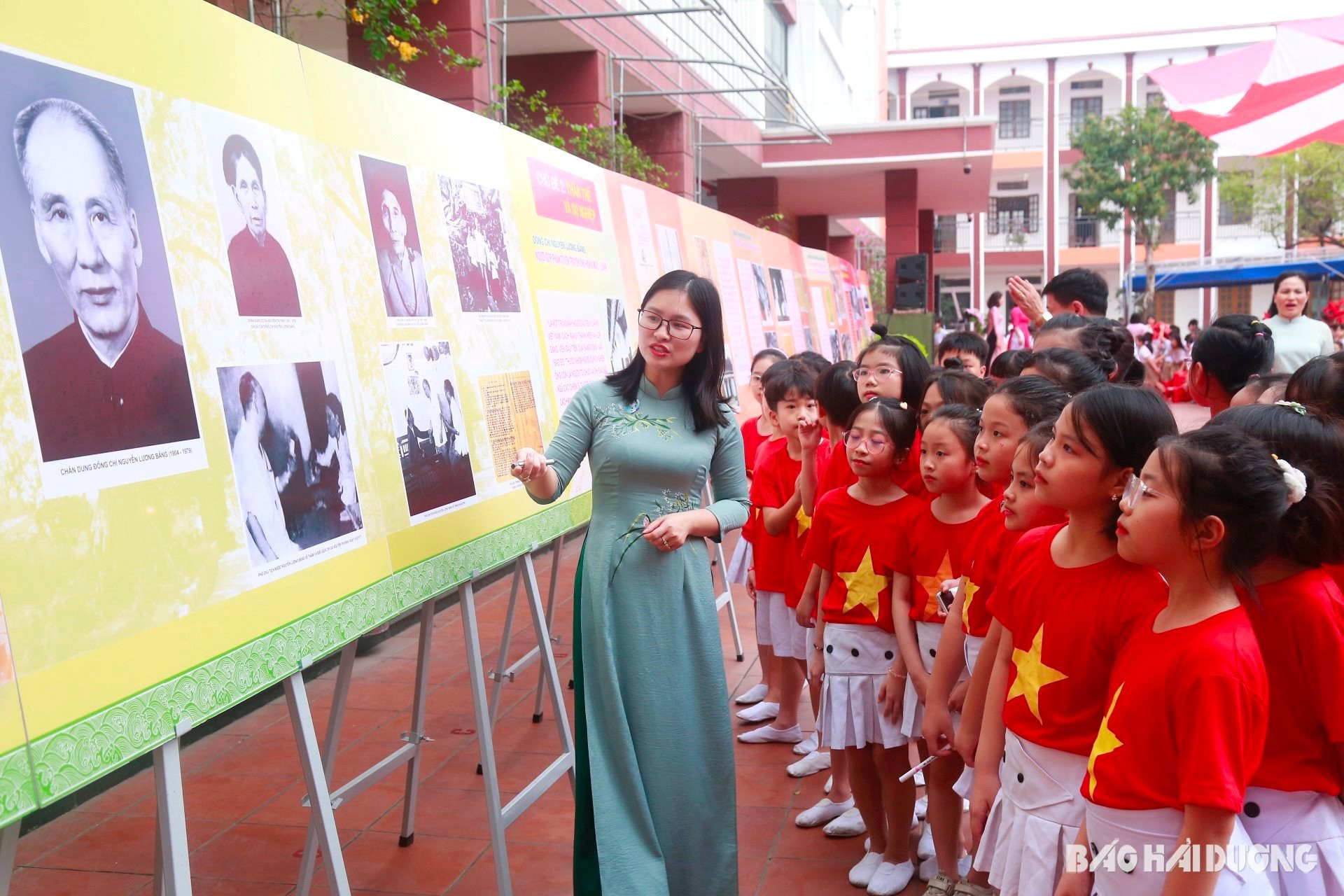
A bright spot in the darkness
During the years 1931-1935, when the Vietnamese revolution was plunged into a dark period under the repression and terror of the French colonialists, most Party organizations, revolutionary bases, and resistance movements were suppressed and drowned in bloodshed. In Hai Duong, the revolutionary activities of Comrade Nguyen Luong Bang helped Hai Duong become a rare bright spot in the gloomy picture of the Vietnamese revolutionary movement during this period.
In 1932, while imprisoned in Hai Duong Prison, Comrade Nguyen Luong Bang led a successful struggle, forcing the prison guards to concede to the prisoners' demands. This was the first organized struggle led by communist cadres that achieved victory within the prison walls, creating a great impact on patriotic intellectual youth and the people of Hai Duong at that time. The results of this struggle inspired subsequent struggles within Hai Duong Prison, leading to the establishment of a Party cell within the prison itself, namely Cell 10 - the underground army codenamed 7.11.51.
In late 1932, Comrade Nguyen Luong Bang and several other comrades successfully escaped from Hoa Lo Prison. Upon his release from the imperialist prison, on January 1, 1933, he returned to Pham Kha commune (Thanh Mien district). Finding Thanh Mien unsafe, he moved to Don hamlet (now part of Kinh Duong village, Thai Duong commune, Binh Giang district) to establish a revolutionary base and propagate revolutionary ideas. There, he integrated himself into the lives of the people and disseminated revolutionary ideology. By mid-1933, he published the newspaper Cong Nong (Workers and Peasants) and distributed leaflets to many places in the province. The Cong Nong newspaper was printed with purple ink on traditional Vietnamese paper, with 20 copies per issue. Its rich content introduced the Party, the leader Nguyen Ai Quoc, and Marxism-Leninism, thereby contributing to the revolutionary spirit among a segment of progressive youth who remained actively involved in Hai Duong City and several districts in the province. The French colonial authorities discovered the Công Nông (Workers and Peasants) newspaper and launched a relentless manhunt for its creators. To ensure his safety, Comrade Nguyễn Lương Bằng moved to another location to continue his activities. Consequently, the Công Nông newspaper ceased publication.
After Comrade Nguyen Luong Bang's departure, the revolutionary movement in Hai Duong province temporarily subsided. The French colonialists and their collaborators intensified their search, repression, and arrests of those with progressive ideas in the province. Although the revolutionary movement entered a dark period, the feelings, understanding, and faith in the Party of the people of Hai Duong never diminished. The bases and foundations within the people were maintained, waiting only for the opportune moment for the revolution to arrive so that the flame of struggle could once again ignite strongly.
In 1936, when the Vietnamese revolution had the opportunity to resume its activities, the Central Committee of the Party and the Northern Regional Party Committee directed the strengthening of the revolutionary movement in Hai Duong. This formed the basis for Hai Duong province soon becoming the center of activity for the Inter-Provincial Party Committee B. With the assistance of the Northern Regional Party Committee and the Inter-Provincial Party Committee B, from August 1938 onwards, four Party branches were established in the province: the Ninh Giang Waterworks Party Branch (Ninh Giang district), the Hai Duong City Party Branch, the Co Am commune Party Branch (Vinh Bao district), and the Ta Xa Party Branch (Hop Tien commune, Nam Sach district). The establishment of these Party branches affirmed the recovery of the revolutionary movement in Hai Duong after a period of decline and provided a basis for strengthening propaganda and mobilization efforts towards the establishment of the Hai Duong Provincial Party Committee when conditions were met. On June 10, 1940, in Ta Xa village, Hop Tien commune (Nam Sach district), the conference to establish the Provisional Provincial Party Committee of Hai Duong province took place - this event is considered the founding event of the Hai Duong Provincial Party Committee. The establishment of the Provincial Party Committee marked a qualitative leap in the maturity and development of the revolutionary movement throughout the province, despite the enemy's continued repression and terror.
The establishment of the Hai Duong Provincial Party Committee was the result of the dedication, sacrifice, and contributions of many generations of outstanding Party members and people in the province, among whom Comrade Nguyen Luong Bang's contribution was immense. With such contributions, it is not an exaggeration to say: "Comrade Nguyen Luong Bang laid the foundation for the birth of the Hai Duong Provincial Party Committee in 1940."
NGUYEN QUANG PHUC, Member of the Standing Committee, Head of the Propaganda Department of the Hai Duong Provincial Party CommitteeSource
![[Photo] The courage of new recruits of Brigade 144 on the training ground.](https://vphoto.vietnam.vn/thumb/1200x675/vietnam/resource/IMAGE/2026/05/27/1779881651341_anh-man-hinh-2026-05-27-luc-18-32-52.png)
![[Photo] The heat at the fireworks display site on the opening night of the Da Nang International Fireworks Festival 2026](https://vphoto.vietnam.vn/thumb/1200x675/vietnam/resource/IMAGE/2026/05/27/1779889741485_ndo_br_z7872039145157-fecaba5112f39e8352544099d7ef4738-5140-jpg.webp)















































![[Photo] The courage of new recruits of Brigade 144 on the training ground.](https://vphoto.vietnam.vn/thumb/402x226/vietnam/resource/IMAGE/2026/05/27/1779881651341_anh-man-hinh-2026-05-27-luc-18-32-52.png)

























Comment (0)