

She is Vo Thi Hong, the first woman from the Mekong Delta to be awarded the title of Hero of Labor at the young age of 36.

Ms. Vo Thi Hong
PHOTO: THANH QUAN
Footprints of messengers under artillery fire.
I arrived at the home of Mrs. Vo Thi Hong (commonly known as Bay Hong) as the afternoon sun was fading over the rice fields in Tuyen Thanh commune. It's hard to imagine that the golden hue of the rice fields, now so full of life, was once the murky red color of acidic soil.
Mrs. Bay Hong greeted me with a kind smile on her face, a quintessential Southern Vietnamese farmer's face. But when she showed me old photographs, I saw a different face, a face from a glorious past. She didn't talk much about her Hero of Labor title, but rather about her scars. Her hands were sun-tanned and covered in tiny scars – testaments to days of plowing the acidic soil.
"Back then, the line between life and death was as thin as a hair," Mrs. Bay recalled, her gaze distant towards the strip of land she called the "liberated zone." In 1971-1972, Mrs. Bay, then a young woman in her late teens or early twenties, worked in the fields while also serving as a liaison officer. The sound of the plows in the dry fields was often drowned out by the intense shelling. "While plowing, artillery fire would erupt, and before you could even react, you'd have to jump into the mud to avoid the bullets. It was extremely dangerous; it wasn't simply about farming to earn a living," Mrs. Bay recounted.
The steely resolve of a female wartime courier forged Bay Hong into a woman who never bowed her head in the face of adversity. After the country's reunification, she embarked on another battle: the battle against hunger and the harsh conditions of the Đồng Tháp Mười region, a land of acidic soil.
Taming the "iron buffalo"
Mrs. Bay Hong recounted that back then, Dong Thap Muoi was a desolate area, few dared to set foot there. The folk saying, "Mosquitoes buzz like flutes, leeches swarm like noodles," was not an exaggeration. Weeds grew taller than a person's head, and the soil was so acidic that rice plants would turn yellow and wither as soon as they took root. Local people looked at the 36 hectares of barren land and shook their heads in dismay.
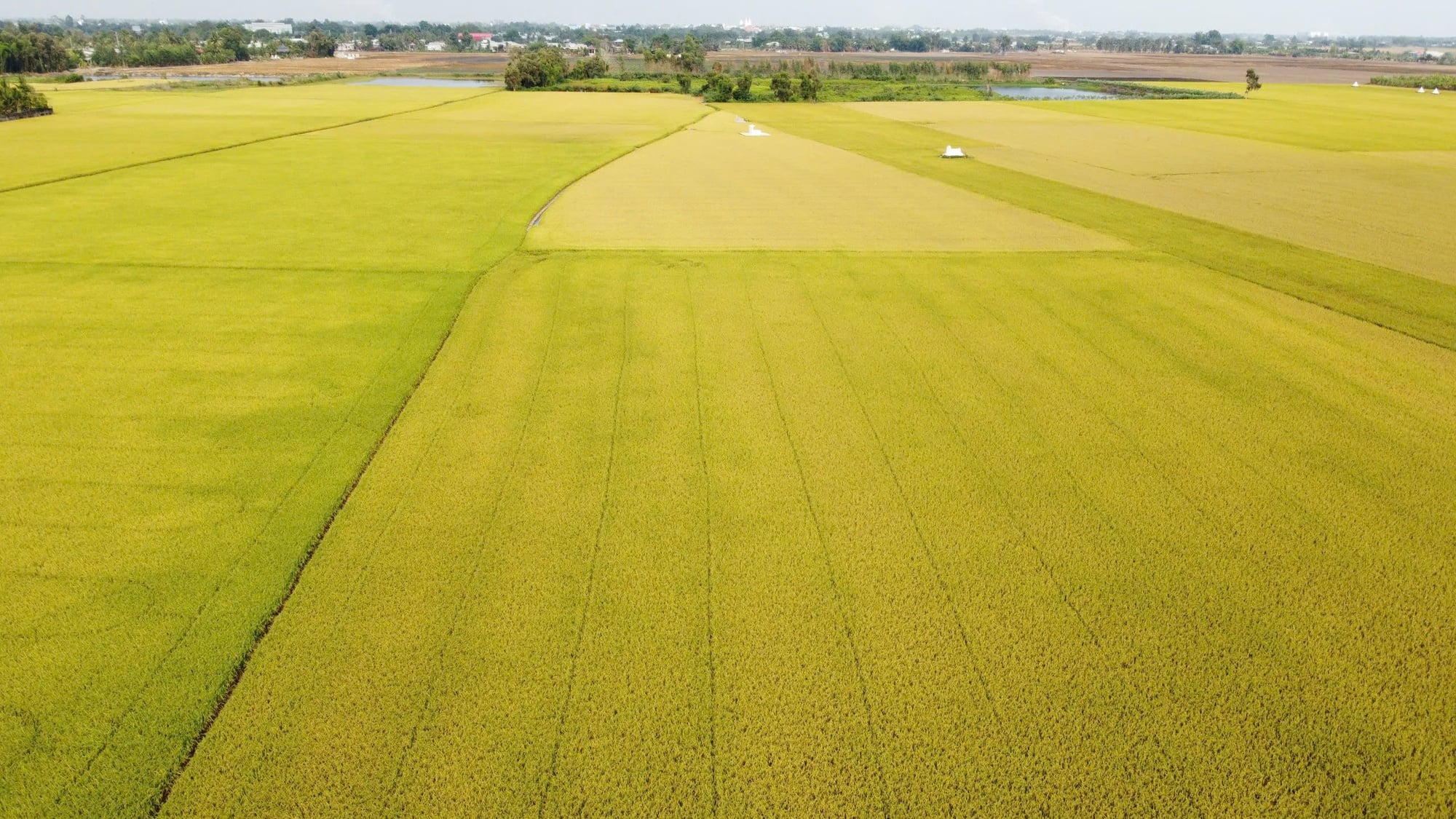
Today, the Đồng Tháp Mười region is bathed in the warm, bountiful color of ripening rice.
PHOTO: THANH QUAN
But Bay Hong was different. With her sharp mind, she understood that relying solely on bare hands and the strength of buffaloes would never overcome the saline soil. While others were hesitant, she was the only woman in the region who dared to take the wheel of the "iron buffalo." The image of the petite woman, with her hair tied up in a bun, controlling the tractor to tear through the reddish-brown topsoil, became a symbol of pioneering spirit.
"At that time, I was very passionate about agricultural extension. I listened to the radio at night and meticulously read newspapers during the day, learning from people's methods of rice cultivation and soil improvement. I didn't wait for the land to become 'pure' before starting; I forced it, bringing in water to wash away the acidity and irrigate the fields," Mrs. Bay Hong recalled.
Her decisiveness created a historical breakthrough. From fields that yielded only one meager crop of low-quality rice per year, with a meager yield of 1-2 tons, she dramatically increased production to 7-8 tons, then 10 tons per hectare. Word spread, and people from all over flocked to see "Mrs. Bay driving the tractor" and making a living . She didn't keep her secrets to herself. During training sessions and experience-sharing sessions by the fields, she wholeheartedly shared her knowledge, because for her, "if I'm well-fed while my neighbors are hungry, then that prosperity won't last."
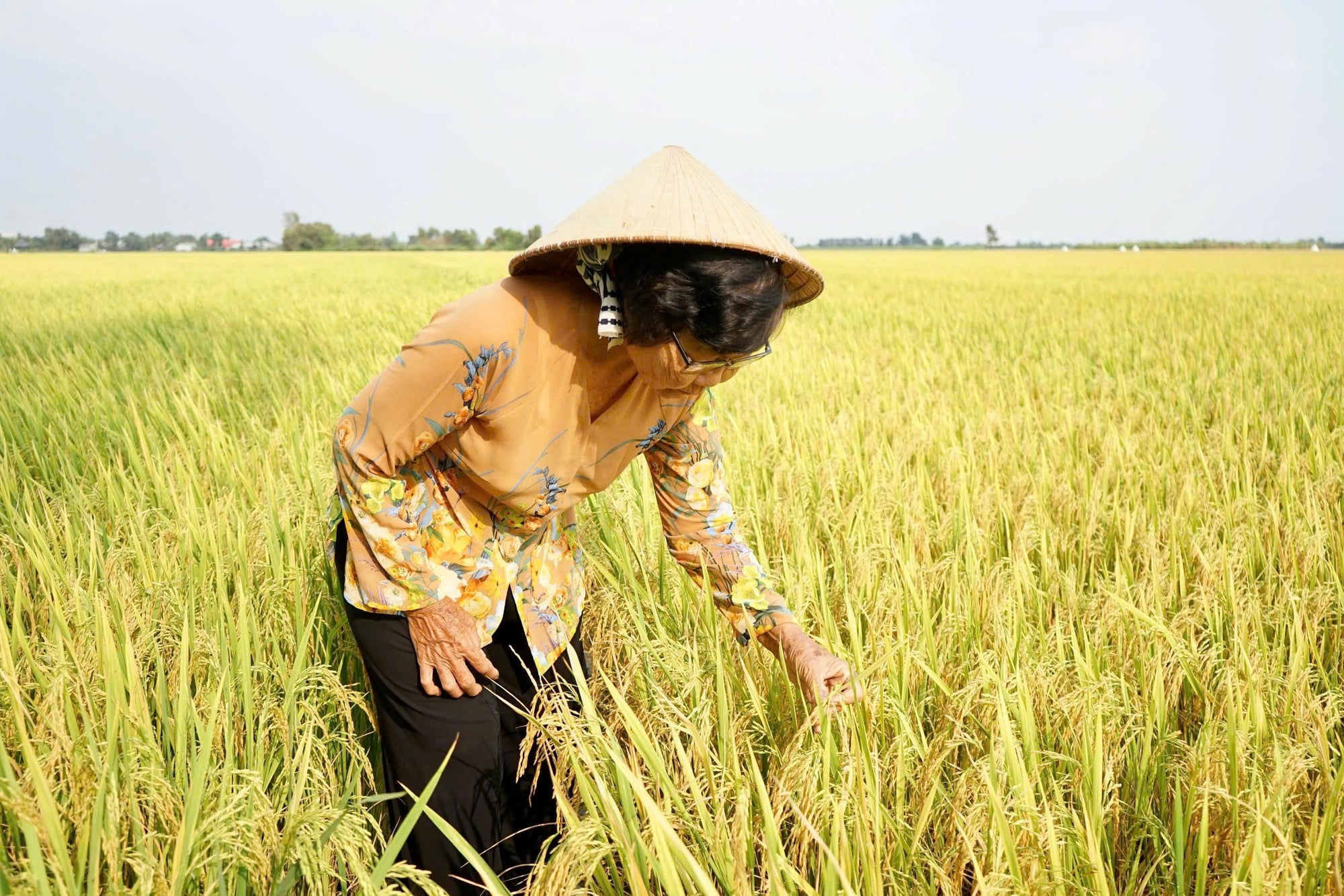
At the age of 76, Mrs. Bay Hong still goes to work in the fields every day.
PHOTO: THANH QUAN
"Southern girls are so talented!"
The most glorious milestone in Ms. Vo Thi Hong's life was in 1986, when, at the age of 36, she had the honor of representing Southern farmers in Hanoi at the National Congress of Heroic Emulation Fighters.
She recounted, her voice still filled with emotion: "Back then, I did it out of a sense of responsibility to the State, for the sake of my family, not thinking about becoming a hero. For the first time in my life, flying to the capital, meeting and shaking hands with Mr. Pham Van Dong, Mr. Truong Chinh, Ms. Ba Dinh, Ms. Ba Thi… was an unparalleled honor."
That day, the leaders embraced the petite woman and praised her, saying, "Southern women are so capable." The title of Hero of Labor that year was a recognition of a heart always burning with the desire to conquer nature.
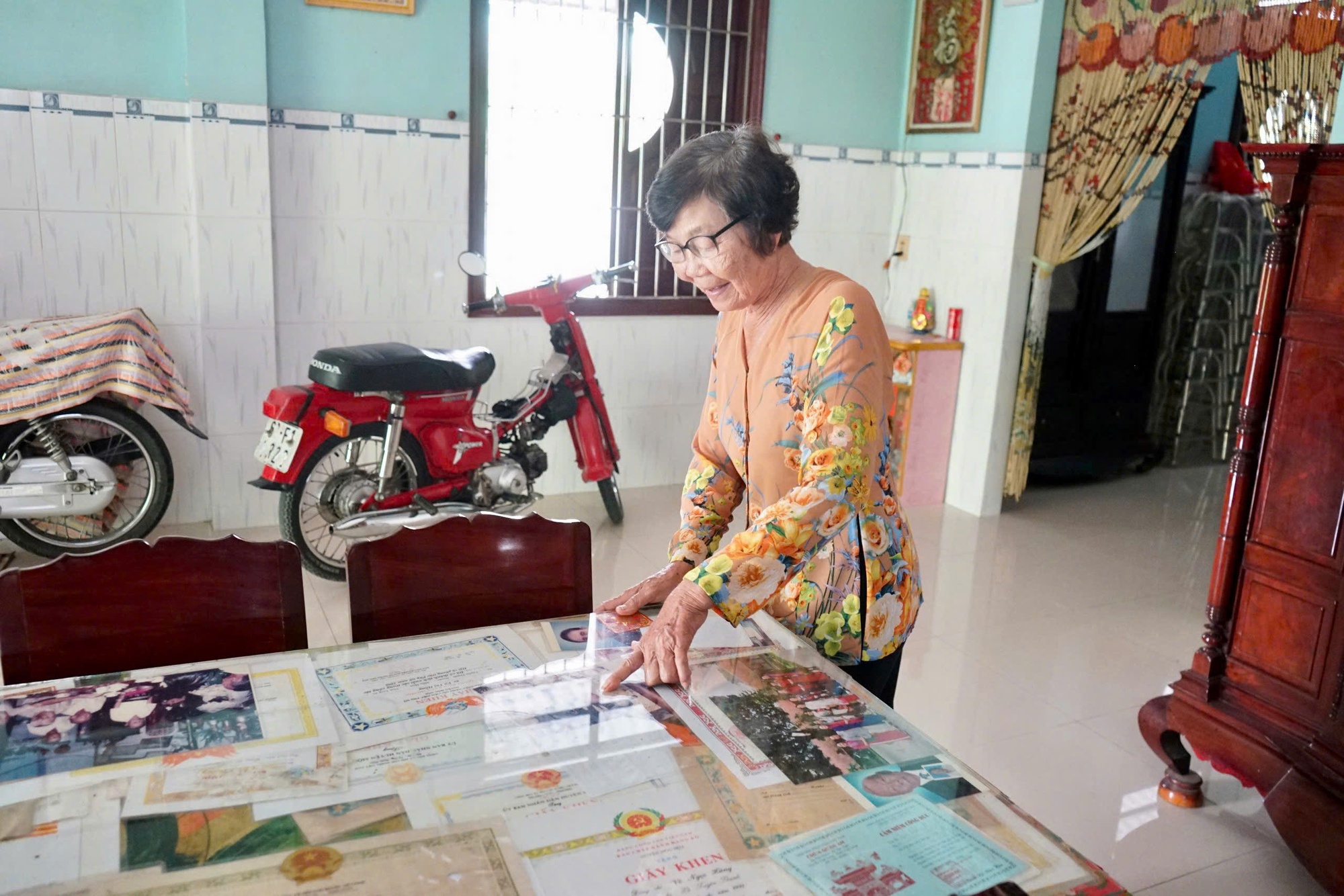
Mrs. Bay Hong carefully preserves old photographs from a time of hardship but also pride.
PHOTO: THANH QUAN
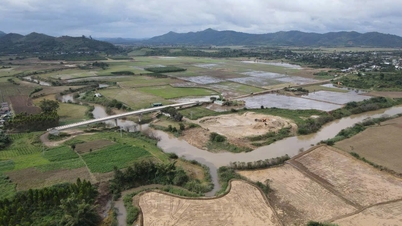
Even at 76, the spirit of a seasoned farmer is still evident in every gesture. Mrs. Bay Hong gestured towards the tall dam in the distance, her voice softening: "Farming is a thousand times easier now than it used to be. We have electricity for pumping water, and machines for sowing seeds and spraying pesticides. In the past, bringing water in required digging canals and ditches, which was incredibly difficult; we didn't even dare go out at night for fear of landmines and bullets. Looking at the fields now, I'm so happy I could cry."
The spacious house she currently lives in is the culmination of a lifetime of hard work, finally built in 2012. It's not just a place to live, but a small "museum" preserving her certificates and commemorative photos. Perhaps the most precious asset to her is the respect and gratitude of the younger generation. Even now, young people still seek her out to ask about her rice farming experience and the ethics of being a farmer.
Today, Dong Thap Muoi is no longer acidic, nor does it bear any trace of the desolate land it once was. But the story of the woman who drove the "iron buffalo" will forever be told through generations in this place.
Source: https://thanhnien.vn/nguoi-phu-nu-danh-thuc-vung-dat-phen-bang-con-trau-sat-185260427173850686.htm
































































































Comment (0)