

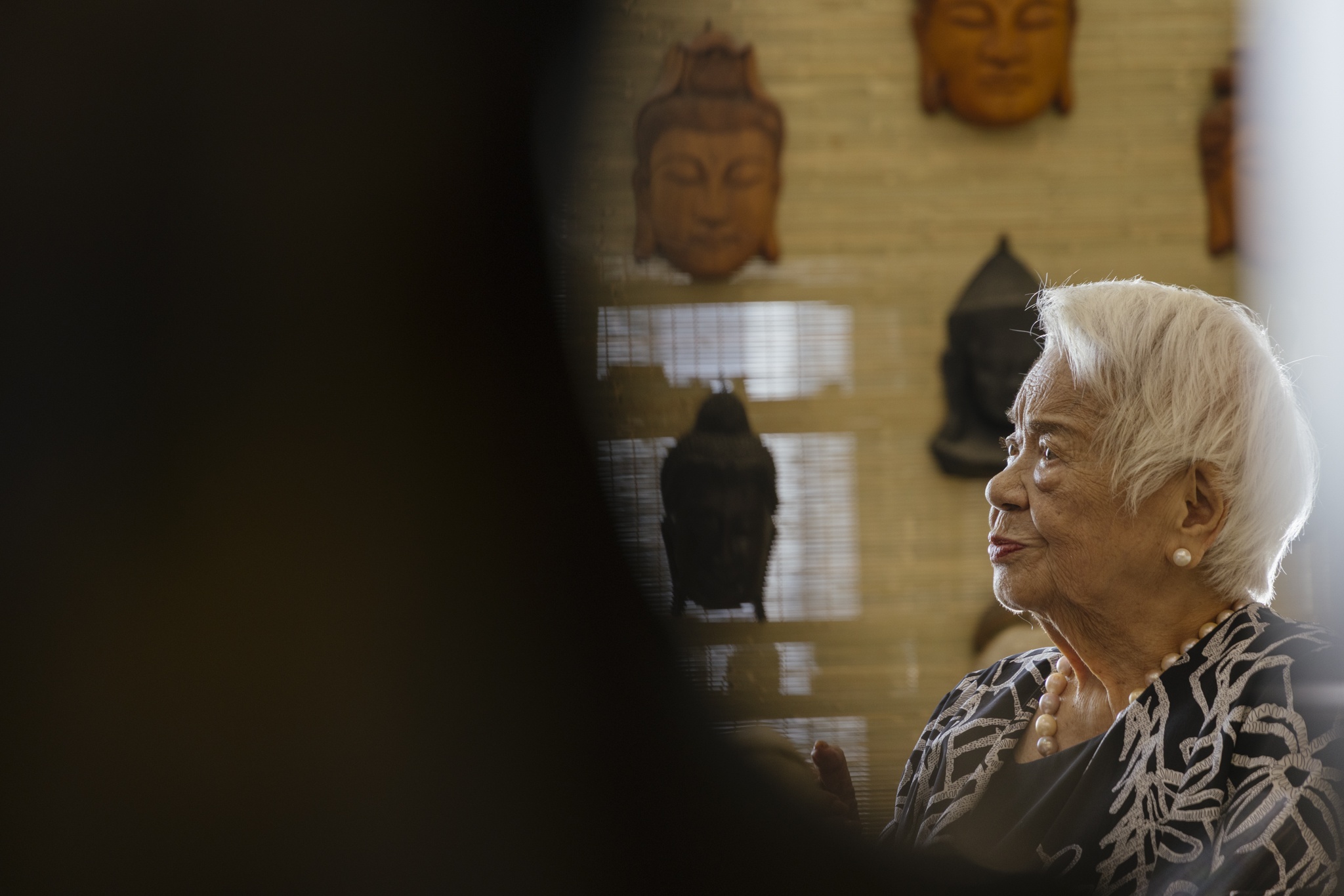
Having worked in weapons manufacturing in Tuyen Quang alongside Professor Tran Dai Nghia, and being the first female war correspondent in North Vietnam, writer Xuan Phuong (born in 1929) began writing at the age of 91. To this day, she maintains the habit of reading and working every day.
On the occasion of her memoir , "Carrying Burdens... Burdening Burdens...", being nominated for the 2025 National Book Award, Tri Thức - Znews had a conversation with the author about the work and why, at nearly 100 years old, she still hasn't stopped reflecting on the future of young people and the story of Vietnam.
Nearly a century of companionship with books.
- Madam, after being hospitalized in the middle of this year, how is your health now?
Early education instilled a love of books in children, treating them as close friends. As I grew up, books opened up unimaginable horizons for me.
Writer Xuan Phuong
- Last year I went in and out of the hospital 3-4 times, but by December I was feeling better, thanks to the medicine and a strict diet. Now I feel much better, I'm starting to walk again. I just went to Vung Tau and Phan Thiet. My legs are so tired from running around at home. My third memoir, about my years as a war correspondent, is also finished and has been submitted to the publisher. Now I feel much lighter.
Despite her health problems, she maintained a disciplined work routine. How did she manage to do that?
Even when I was in the hospital, the doctor said I was in critical condition, with tubes and bandages everywhere, I was still sitting and reading. This shows that I'm one of those people who truly value my time. I make the most of it, living fully and pursuing my hobbies. I've managed to do that, and I feel not proud, but satisfied.
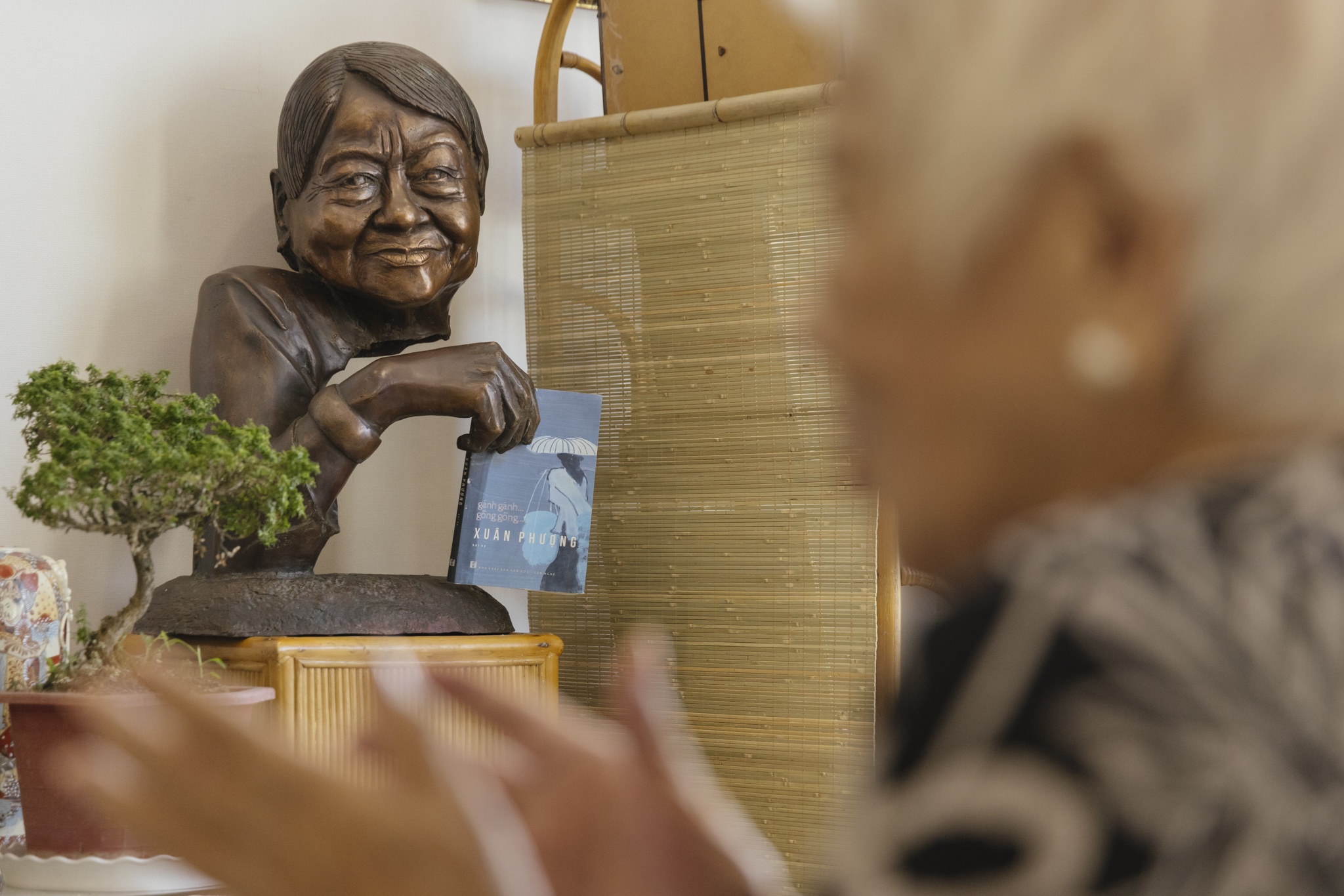 |
Born in 1929, Ms. Xuan Phuong has experienced and achieved success in various roles such as documentary film director, art gallery owner, and writer. |
- Is reading a hobby for her?
- I can say that, at 97 years old this year, there hasn't been a single day or night I haven't read. It's been a habit since I was a child; if I don't do it, it feels like something is missing. I started reading when I was 8 years old. Back then, my father was a teacher, and his children, even before they could read, had to look at pictures, and he would explain things to them. At 7, they were required to learn to read, and from 8 onwards, he gave each of us a children's book, and every week we had to write down what the book said. He punished us very carefully; if we didn't finish, we'd get a spanking on the bottom, not just a simple spanking.
The need to read has become as essential as eating, drinking, and sleeping. I've maintained that family education to this day, almost 100 years. Early education instills a love of books in children, treating them as close friends. As I grew up, books opened up unimaginable horizons for me, especially when I learned foreign languages. My grandfather made me learn both Vietnamese and French from the age of seven. Thanks to this, I inherited both Vietnamese culture (folk songs, proverbs) and French culture, finding inspiration in classical French writers.
- What kind of books did she usually read at that time?
- When I was little, I read children's books according to my grandfather's instructions, called " Pink Books ." Every week I had to summarize the content. Sometimes I'd spend the whole week playing, and at the end of the week, I'd be so scared that I'd open the book and copy down the illustrations under the pictures, even though I didn't understand anything. Then my grandfather would give me a few lashes. All four of my younger siblings were like that; my family was a "bookworm family."
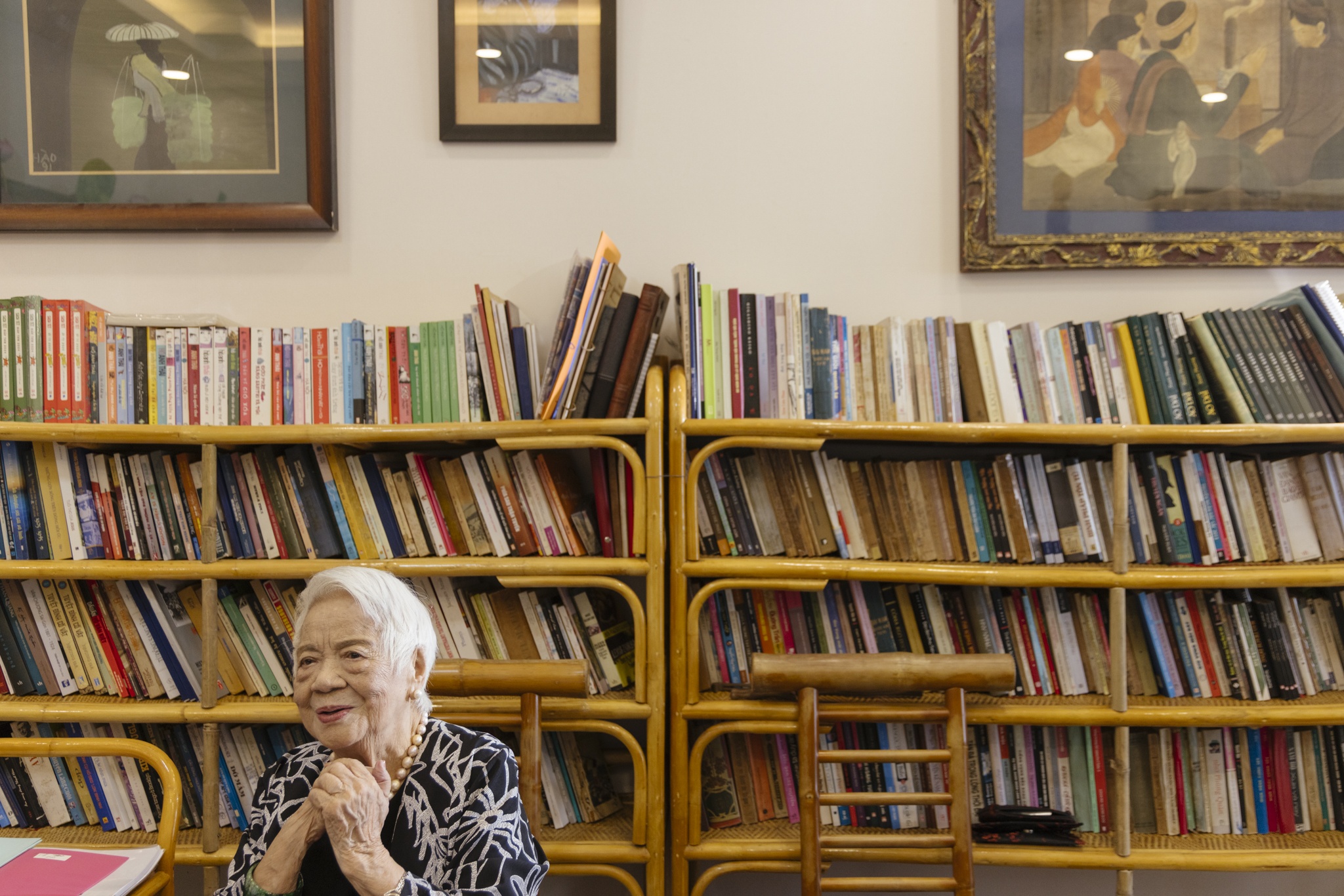 |
At the age of 97, Mrs. Xuan Phuong still maintains the habit of reading books every day, a practice she has upheld since she was 6 years old. |
The confrontation with the French general.
- Your house has as many as 10 boxes of books. Is there any book you'd like to share with the readers of Tri Thức - Znews?
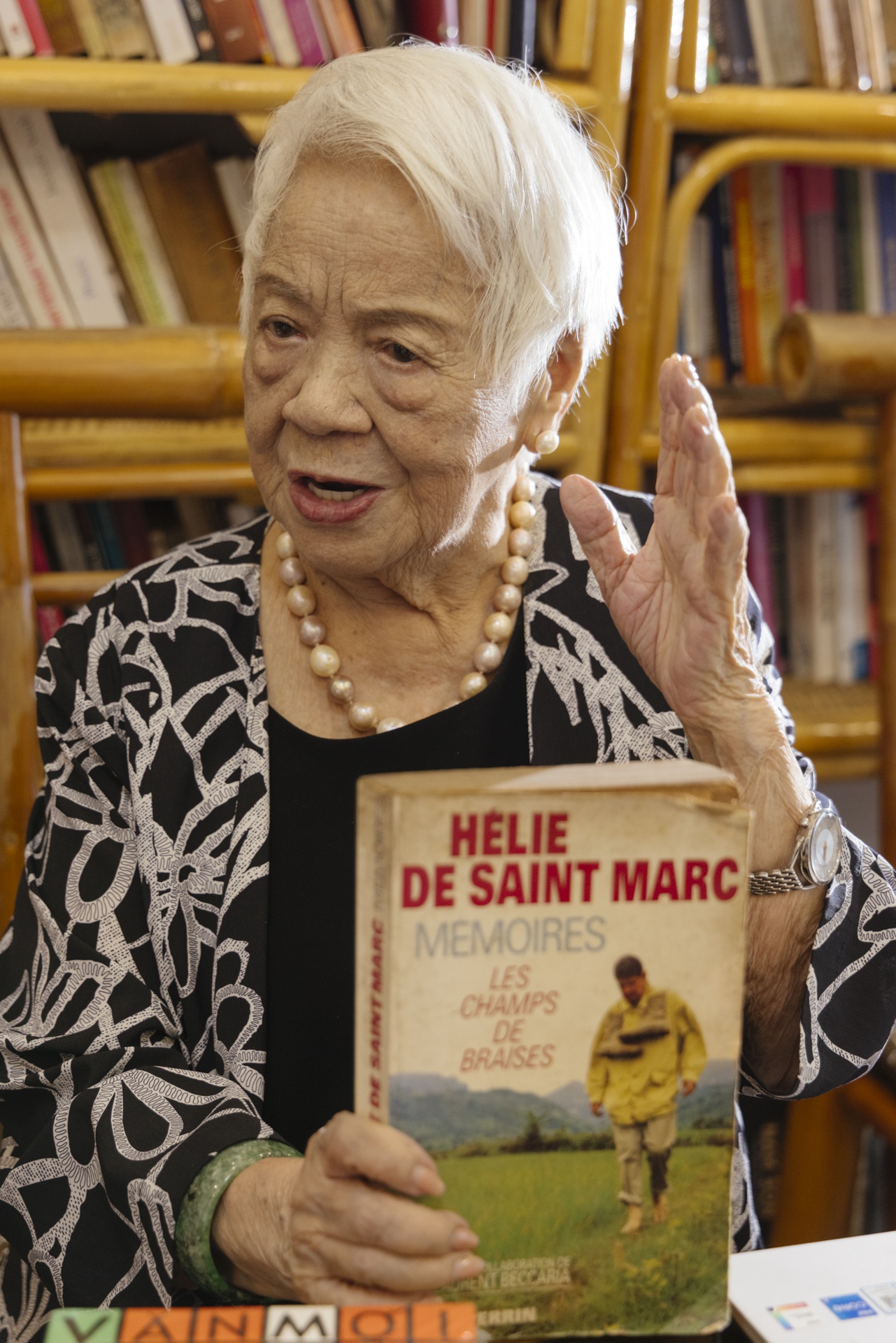
- There is the memoir Les champs de braises (Burning Fields) by the French general Hélie de Saint Marc, who participated in the Vietnam War and was later promoted to General.
I disagree with Mr. Hélie's statement that when he left Vietnam, he felt like a "traitor," and that many Vietnamese people cried. Only a few percent of the Vietnamese population followed him, and those people were insignificant. Don't assume that every Vietnamese person cried when he returned home; the Vietnamese people rejoiced when the French withdrew because they felt independent. There was nothing to cry about.
I had intended to write him a letter saying, "You're mistaken, because you said that less than 5% of the Vietnamese population sided with the French, but when you left, 95% of us were happy, so that 5% cannot represent Vietnam." After finishing the book "The Ao Dai ," I sent him a letter: "Sir, I want you to read this book of mine so that you understand whether Vietnamese people love their own nation, their country, or the French invaders."
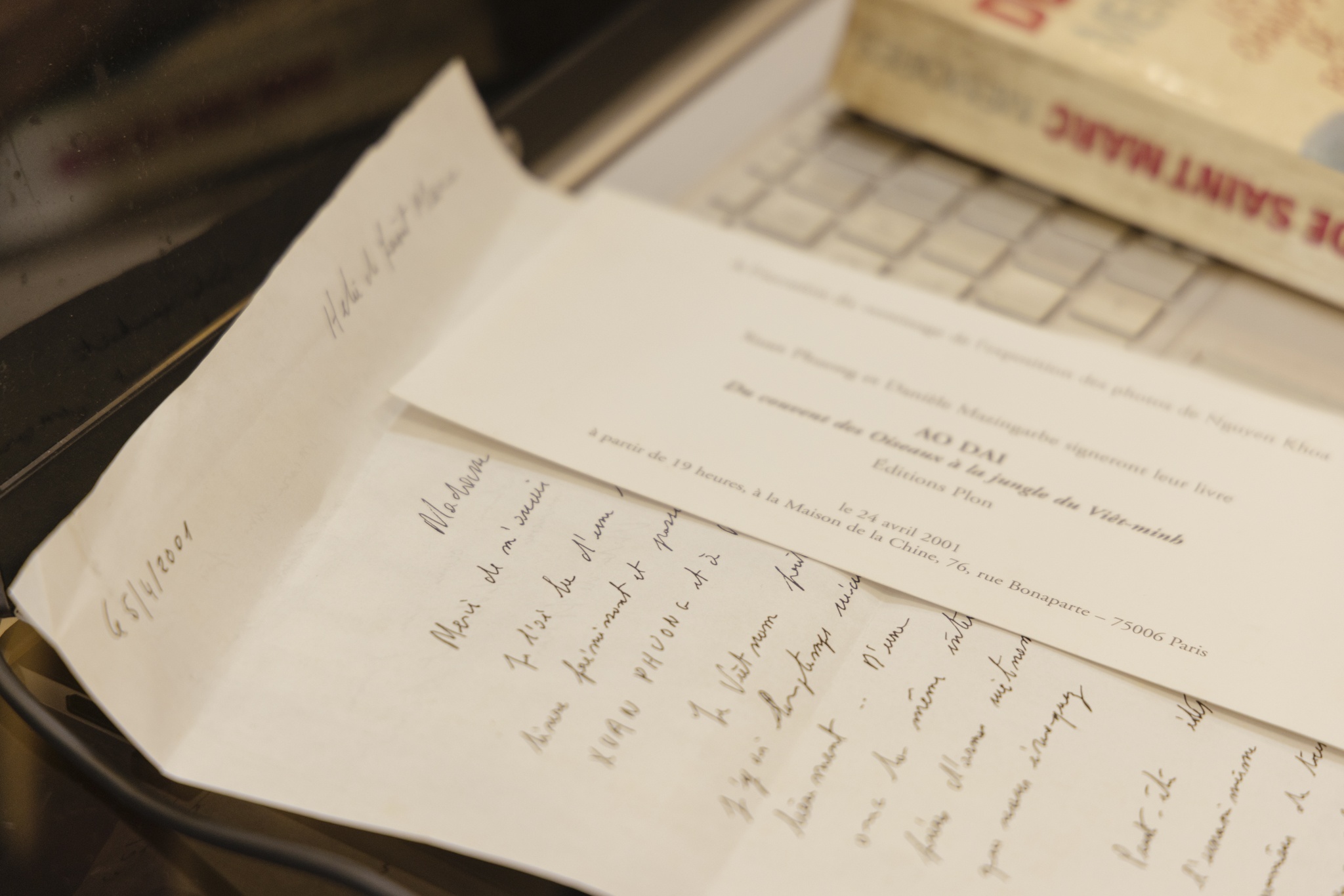  |
This is a letter from General Hélie de Saint Marc to writer Xuân Phượng after she refuted his inaccurate writings about Vietnam. |
He replied, and I kept the letter: “Dear Madam, thank you very much for giving me the book 'Ao Dai' . I read it in one sitting. It is a deeply moving and wonderful book. Xuan Phuong and Vietnam have entered my soul; I cannot forget that image, and my memories always return to Vietnam. When I read your objection, I was a little surprised because you were so subjective. But after reading your book, I understand that in this world, one must have love and understanding to truly know everything. Because I lacked love and understanding, I misunderstood.”
Later, the French national television station heard about this and offered a televised interview between him and me. We prepared very carefully for what we would discuss. Unfortunately, just a few days before the interview, he passed away due to old age, so the confrontation never happened, but the book and the letter remain.
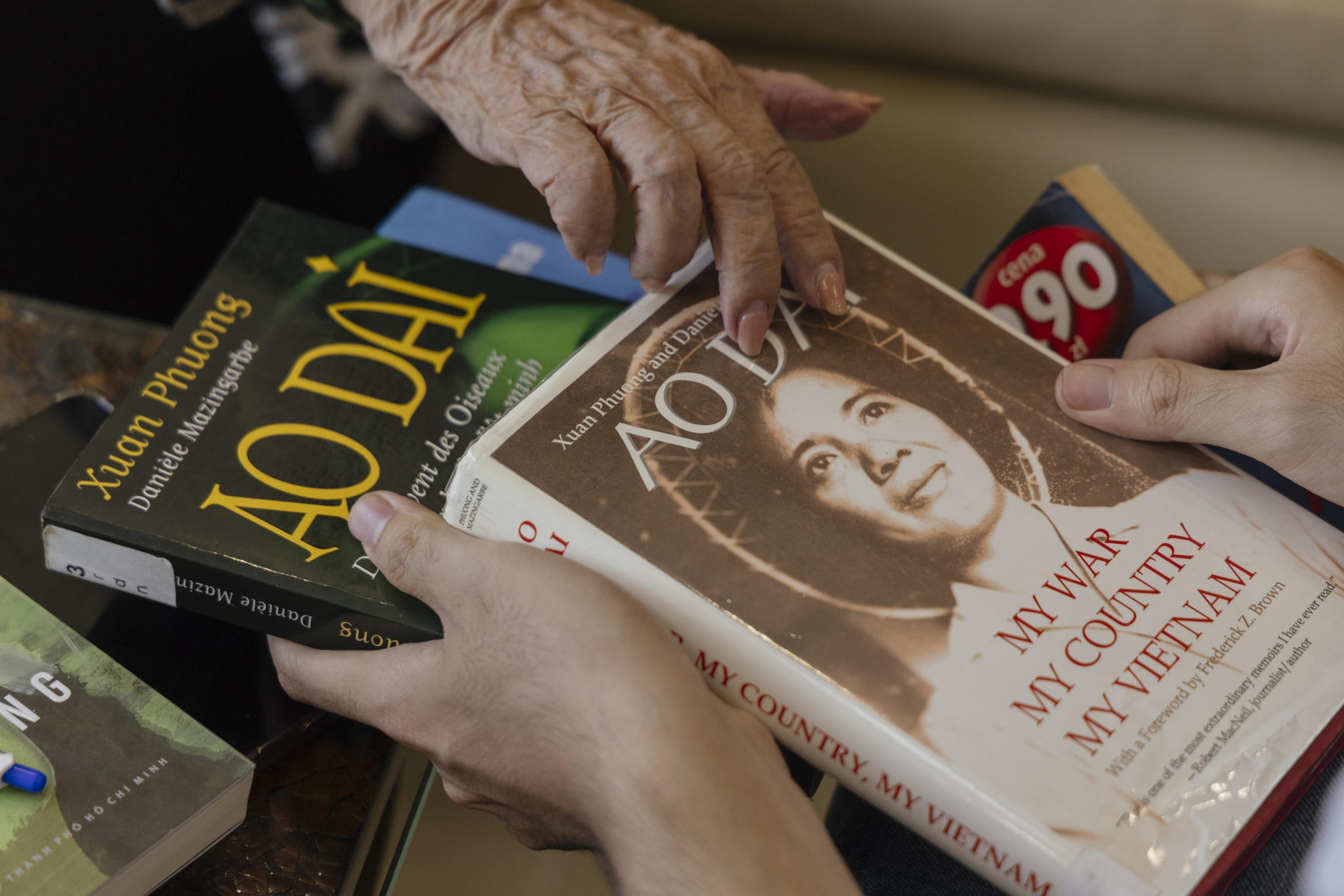 |
The memoir "Ao Dai" was published in France in 2001 and has since been translated into many languages, including English and Polish. |
The phoenix's wings flutter in search of spring.
- Your book "Carrying Burdens... Burdening Burdens..." has been nominated for the 2025 National Book Award. This is the fourth award for your work, after the awards from the Vietnam Writers Association and the Ho Chi Minh City Writers Association. How do you feel about that?
My children, this restored peace is the result of the sweat, tears, and blood of generations before us.
Writer Xuan Phuong
- At over 90 years old, receiving two awards made me think that it's not just any writer, but any person who has ever held a pen and created something and feels they can still contribute to life in this way. That happiness, it might sound a bit lofty, but it's truly something that money can't compare to. It brings immense spiritual comfort, knowing that one's life is still useful. Now, hearing that I'm about to receive another award, my joy isn't just doubled, it's multiplied a hundredfold.
- The book has achieved many successes and is especially well-received by young people. What are your feelings about that?
- Recently, I had the opportunity to return to the old revolutionary base, where I worked with Mr. Tran Dai Nghia making weapons in Tuyen Quang. There, I had the chance to speak with 1,500 students from Tuyen Quang Specialized High School. After I finished telling my story, almost all 1,500 students cried and expressed their emotions. They said that they had always been proud of their homeland, but after hearing me recount such true stories, they felt even happier and prouder.
That was like a tonic for me. I also had the opportunity to visit the home of an old friend from my days working in the military ordnance industry who had passed away. His son is currently a soldier in Vi Xuyen, and his grandson is a student at Tuyen Quang Specialized High School. Three generations have followed one another like that, and they all really enjoy my books.
I am delighted to see that the book has fulfilled my aspirations. The best part is that through this book, I can convey to my grandchildren: "Children, the peace we have achieved is the result of the sweat, tears, and blood of generations before us."
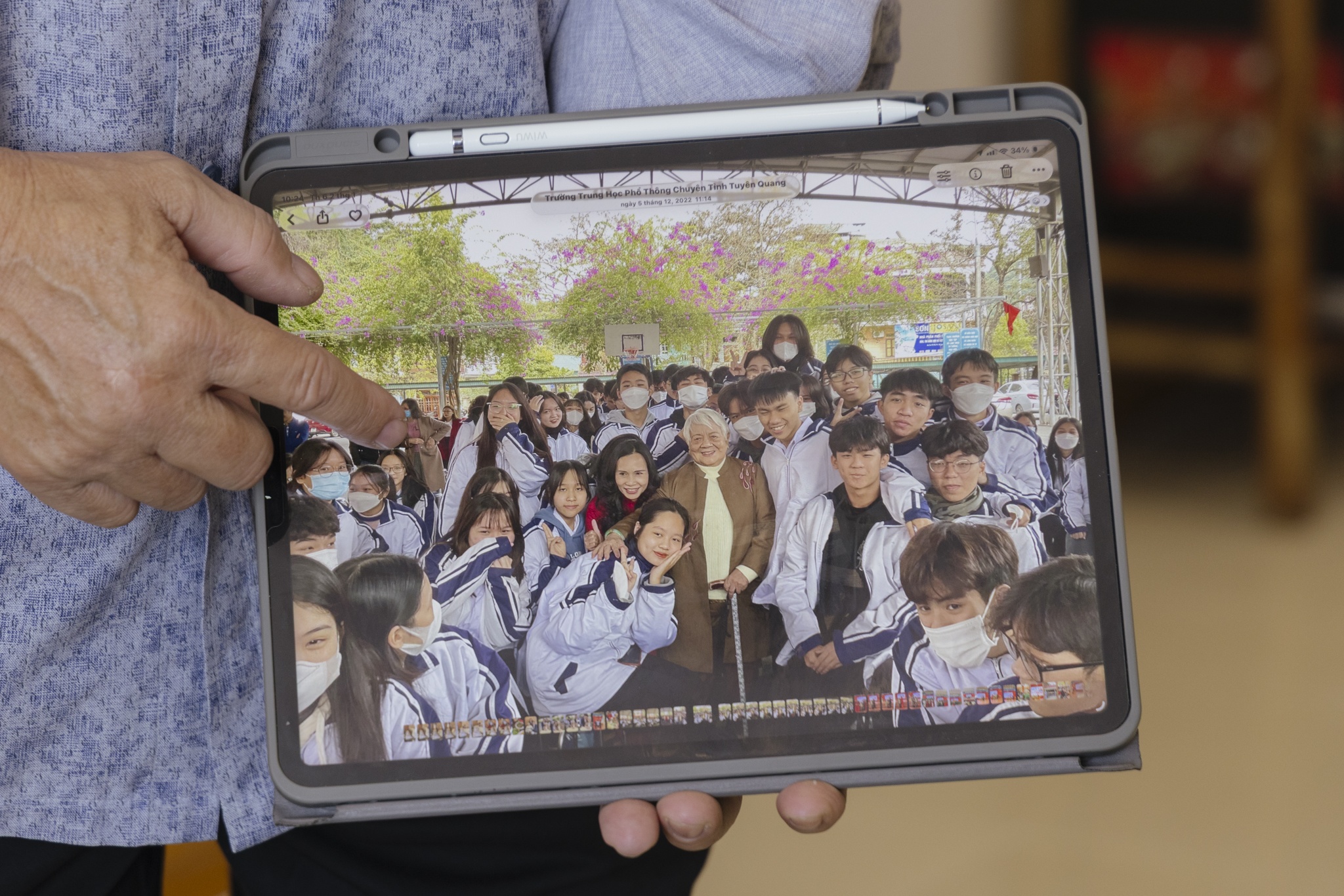 |
The 97-year-old writer hopes that young people will understand the value of peace through his memoirs. |
- She wrote a sentence that seems to encapsulate the spirit of the entire memoir: "Let the phoenix bird weep as it gropes its way to fly." Reading it, it's easy to understand that she's playing on words from the name Xuan Phuong. So, has she found her spring yet?
- Saying we've already found it sounds a bit subjective and unrealistic. Why? Because we're just an extremely small, the smallest part of a larger society.
To say whether I feel I have achieved my own "springtime" (in life) is true, I still have many things to ponder. My most important concern right now is about Vietnamese youth. They still have many things they need to change in their outlook on life, they need to improve themselves as individuals, and they need to live more meaningful lives.
 |
Source: https://znews.vn/cuoc-doi-chat-giua-nha-van-xuan-phuong-va-dai-tuong-phap-post1617004.html
![[Photo] General Secretary and President To Lam presides over a working session with the Central Policy and Strategy Committee on the development of the materials industry.](https://vphoto.vietnam.vn/thumb/1200x675/vietnam/resource/IMAGE/2026/05/21/1779359935432_a3-bnd-3129-1412-jpg.webp)



![[Photo] National Assembly Chairman Tran Thanh Man working with the Standing Committee of the Law and Justice Committee](https://vphoto.vietnam.vn/thumb/1200x675/vietnam/resource/IMAGE/2026/05/21/1779378929214_ndo_br_1-4610-jpg.webp)














































































Comment (0)