


Many universities offer programs in semiconductor circuit design.
The 2024 admissions season witnessed a trend where many universities tended to open more engineering programs. Even universities with a tradition of economics education, such as the Foreign Trade University of Hanoi and the National Economics University, also opened engineering majors.
However, the most significant highlight is that many universities are focusing on expanding and opening new programs in microelectronics and semiconductor integrated circuit design. This is not surprising, as the demand for human resources in this field is currently very high, with many large foreign companies investing and exploring investment opportunities in this sector in Vietnam. According to our reporter's observations, the University of Technology, Da Nang University, plans to open a new program in Electronic and Telecommunications Engineering (specializing in Microelectronics - Integrated Circuit Design); the Vietnam-Korea University of Information and Communication Technology, Da Nang University, is recruiting for four new programs/specializations, including Semiconductor Integrated Circuit Design; Da Nang University of Technology and Education; and the University of Science and Technology of Hanoi (USTH) have begun recruiting for the Semiconductor Integrated Circuit Technology program.
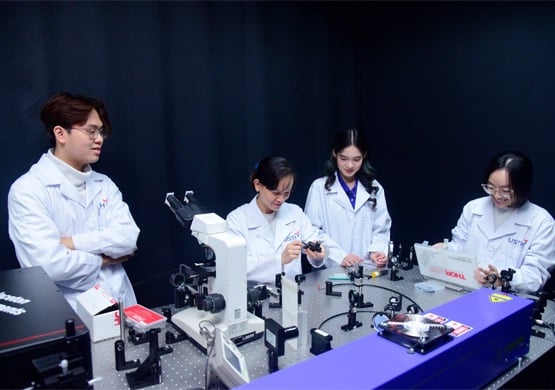
Furthermore, traditional universities such as Vietnam National University, Hanoi ; Vietnam National University, Ho Chi Minh City; Hanoi University of Technology; and Ho Chi Minh City University of Industry, which already have strengths in telecommunications and electronics training, are expected to expand their training to include integrated circuit design. The fact that many universities are focusing on opening, strengthening, and expanding integrated circuit design training is not accidental; it stems from the nation's development needs.
Sharing more about the reasons for opening the new major, Associate Professor Dr. Nguyen Hong Hai - Vice Rector of the University of Technology (Da Nang University) told reporters from the Newspaper of Journalists & Public Opinion that from 2024, the university will open a new major in "Microelectronics - Integrated Circuit Design," with an expected enrollment of about 100 students. According to Resolution No. 124 of the regular government meeting in July 2023, the Prime Minister concluded that the Ministry of Planning and Investment should lead and coordinate with the Ministry of Science and Technology; the Ministry of Information and Communications; and the Ministry of Education and Training to research and develop a plan for developing human resources for the semiconductor industry until 2030, which is expected to train approximately 30,000-50,000 personnel and experts for the semiconductor industry.
“The training of engineers capable of meeting the job requirements in semiconductor integrated circuit design companies has been a long-standing focus of the university. Many graduates from the university's Electronics and Telecommunications, Embedded Systems, Control and Automation Engineering, Mechatronics Engineering, and Information Technology departments are working at various integrated circuit design companies such as Synopsys, Renesas, Savarti, etc., in Da Nang,” Mr. Nguyen Hong Hai shared.
According to this source, in order to meet the increasing training needs in the future, the school will prioritize investing in facilities, laboratory systems, and strengthening the training of highly qualified lecturers through short-term and intensive training courses.
Commenting on this trend, many experts also believe that the fact that many universities are focusing on core training areas, aiming to train highly specialized human resources for a promising field like the semiconductor chip industry, is a very positive sign. Previously, universities often rushed to train students in economics-related majors. This was because opening such majors didn't require significant investment in facilities, while attracting students due to parental and student demand. However, nowadays, engineering training requires substantial investment in facilities, laboratories, and specialized programs. Therefore, the participation of many universities in this field is very positive.
A comprehensive strategy is needed.
In fact, training in semiconductor integrated circuit design is not new in Vietnam. Many Vietnamese universities have a long tradition of training in this field. According to Professor Nguyen Dinh Duc, there are currently about 35 universities with training programs or conversion programs from fields related to semiconductors and integrated circuits, of which 11 have traditional training programs closely aligned with this field.
Hanoi National University is a multidisciplinary training institution with a mission to fulfill national obligations. It currently offers approximately 20 training programs related to the semiconductor field, including: Electronics and Telecommunications, Electronic Engineering, Computer Engineering, Physics, Electronic Materials, Radio and Electronic Physics, Mechatronics, Information Technology, etc. With a team of leading experts, experience in project implementation, and international cooperation experience, the university trains students in design, manufacturing, packaging, testing, and application development within the semiconductor value chain.
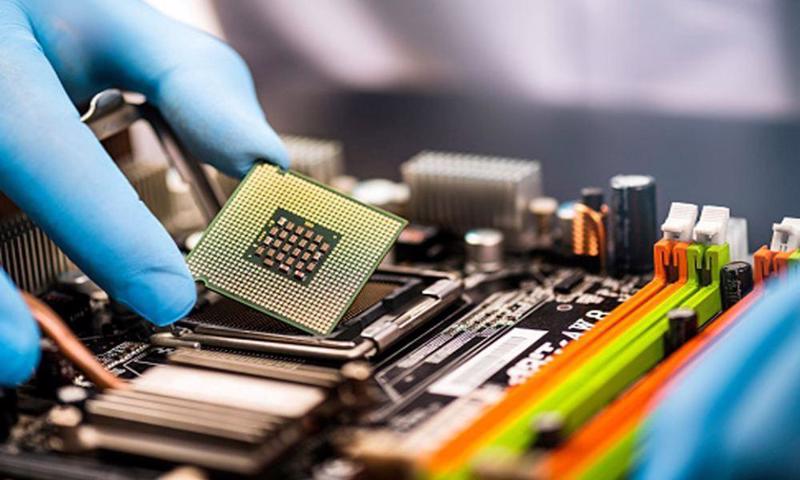
The fact that many universities are investing in expanding training programs related to technology and engineering is a very encouraging sign.
“If Vietnam aims for chip design, the fields that need further training investment are Electronics Engineering, Computer Engineering, and Physics. If it aims for chip manufacturing, it needs Physics, Automation, and Electronics… And if it aims for chip packaging, it needs Electronics, Chemistry, and Automation… Thus, market segments will require appropriate training programs. In short, a national scenario and strategy are needed in this field,” Professor Nguyen Dinh Duc stated.
According to Professor Nguyen Dinh Duc, Vietnam needs policies to encourage businesses to invest and collaborate with training institutions in developing human resources; attract talented researchers from both within and outside the country to teach at universities; and mobilize resources and the intellectual workforce of overseas Vietnamese. At the same time, it is necessary to increase investment in infrastructure and laboratories to ensure the quality of training; and increase investment in research projects to enhance research capacity in related fields.
In particular, policies and resources are needed to form strong research groups, international research teams, and centers of excellence in fields related to microchips and semiconductors within universities, research institutes, and businesses. On the other hand, universities also need to coordinate, review, and develop training programs according to the directions mentioned above; and share curricula, learning materials, and design software among training units.
Thus, it can be seen that training aligned with the needs and development requirements of the country is the right direction. However, to go far, Vietnamese universities need to cooperate and share information to build a comprehensive national strategy. Only when this is achieved can universities train a generation of high-quality engineers, creating a workforce that will serve as a foundation for the development of industries.
Trinh Phuc
Source











































































































Comment (0)